战略转移

Search documents
突发公告!日本巨头中国工厂停产 曾经员工上万人
Zhong Guo Jing Ying Bao· 2025-12-01 00:13
Core Insights - Canon's printer factory in Zhongshan has ceased operations as of November 21, 2023, due to severe market challenges and declining demand for laser printers in China [1] - The company has announced a temporary leave for employees until November 28, 2023, while settling accounts with staff and suppliers [1] Company Overview - Canon (Zhongshan) Office Equipment Co., Ltd. was established in June 2001 and is a key manufacturer of laser printers for Canon [2] - The factory has produced a total of 110 million laser printers by April 2022, with an industrial output value of nearly 3.2 billion yuan in 2022 [2] - The factory's workforce has significantly decreased from 3,372 employees in 2022 to approximately 1,400 by September 2025 [2] Market Dynamics - The laser printer market in China is experiencing intense competition, with domestic brands increasing their market share from 16% in 2010 to 42% in 2024 [1] - Canon's global market share for laser printers is projected to be 22.9% in 2024, but its share in the Chinese market is only 6.4% [1] - The decline in the laser printer market is attributed to a shift in orders to Southeast Asian factories and Canon's strategic focus on higher-margin businesses such as medical imaging and semiconductor equipment [2] Historical Context - The Zhongshan factory, which once employed over 10,000 workers around 2009-2010, has seen a drastic reduction in workforce due to rising labor costs and market pressures [2] - Previous reports indicated potential layoffs at Canon's facilities in China, including the closure of a small digital camera factory in Zhuhai [3]
“信仰品牌”倒下,又一段青春记忆被清空了
3 6 Ke· 2025-11-12 09:23
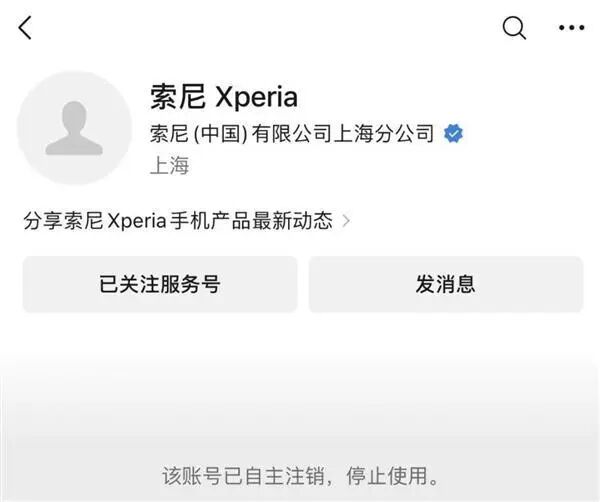
Core Insights - Sony has decided to withdraw its mobile phone business from the Chinese market, marking the end of its presence in a market it once dominated for over a decade [1][10][12] Group 1: Sony's Historical Context - Sony's journey began in 1946, founded by Masaru Ibuka and Akio Morita with an initial capital of 190,000 yen, leading to innovations like the first transistor radio and the Walkman [3] - The brand became synonymous with high-end technology in China after entering the market in the 1990s, with products like a 29-inch Trinitron TV priced at 18,000 yuan, equivalent to three years' salary for an average worker at the time [4][5] Group 2: Decline of Mobile Business - Sony's mobile phone division, originally a joint venture with Ericsson, saw a significant decline in sales, dropping from approximately 25 million units in 2015 to just over 3 million units by 2019, an 88% decrease [6][10] - The last model launched in China was the Xperia 5 V in September 2023, with subsequent models not being released in the market, indicating a strategic retreat [10][12] Group 3: Strategic Shift - Sony's CEO has emphasized that the company's core business now lies in gaming, music, and film, which account for over 60% of its consolidated sales revenue, suggesting a shift in focus away from mobile phones [12][15] - Despite the decline in mobile, Sony has maintained a strong position in other sectors, such as audio and imaging, where it leads the market with significant shares [15][16] Group 4: Market Dynamics - The Chinese smartphone market is highly competitive, with Sony's Xperia brand struggling against local giants like Huawei and Xiaomi, leading to its classification as "Others" with negligible market share [16] - Sony's high pricing strategy and lack of localized marketing have contributed to its failure to resonate with Chinese consumers, who favor more affordable and feature-rich alternatives [10][16]