打印机制造

Search documents
AI消费级打印机-TOP品牌专家交流会议
2026-01-22 02:43
Summary of XTO Company Conference Call Industry Overview - XTO Company operates in the desktop laser printing industry, having transitioned from educational hardware to this sector since 2021, leveraging its geek culture and innovative spirit to adapt quickly to market demands [1][3]. Key Points and Arguments Company Transformation and Market Position - XTO holds a 37% market share in the laser personal printer sector, positioning itself as a leading player [2]. - The company emphasizes product innovation and user experience, continuously upgrading its product line, including the S1 model [3][7]. Research and Development - XTO invests 15%-20% of its revenue annually in R&D, supported by a top-tier research team led by PhD-level talent [1][5]. - The company maintains a strong focus on product quality and user feedback, ensuring high standards from development to production [4][9]. Business Growth Drivers - Key growth drivers include new product iterations, enhanced marketing efficiency led by the CEO, and strong repurchase capabilities from accessories and consumables [1][7]. - The company is exploring diversification into other printing technologies, such as PDF and UV printing [4][6]. Safety Measures - XTO implements various safety measures for its desktop laser devices, including deep learning algorithms for fire detection and automatic parameter adjustments based on material properties [8]. Product Matrix and User Segmentation - The product matrix caters to diverse user groups, providing easy-to-use devices for hobbyists and efficient, stable equipment for small and medium businesses (SMBs) [9]. Profitability and Revenue Streams - XTO maintains a gross margin above 50%, attributed to high product performance and brand influence, while also addressing internal cost inefficiencies [10][11]. - Accessories and consumables contribute approximately 10% to the company's revenue, with plans to enhance this segment through proprietary materials [12]. Competitive Landscape - XTO faces competition from companies like Anker and TuoZhu, but differentiates itself through its experience and focus on laser engraving rather than 3D printing [13]. Future Directions - The company plans to launch a new version of the S1 model in 2026, expand into the UV printing market, and continue enhancing its laser technology [24]. - XTO is also focusing on localizing its operations in Europe and Latin America to reduce reliance on the U.S. market [22]. Community and Direct-to-Consumer Strategy - XTO's independent site revenue accounts for 62%, achieved through a direct-to-consumer model and community engagement strategies [20][21]. Brand Image and Customer Engagement - The company allows trade-ins for older models, which, while not significantly impacting transaction volume, enhances brand image by emphasizing safety and reliability [23]. Additional Important Insights - XTO's XCS platform is positioned as a leader in AI capabilities within the desktop laser and 3D printing sectors, with potential future monetization of its features [17]. - The company is committed to continuous improvement in user experience, leveraging feedback and internal testing to refine its products [18].
撬动战略咨询107期《战略算法》:揭三大实战百亿增长逻辑
Sou Hu Cai Jing· 2025-12-17 04:41
Core Insights - The article discusses how Chinese companies are navigating uncertainty to find growth opportunities, emphasizing the importance of cultural, technological, and demand-driven strategies in achieving success in a changing global landscape [1] Group 1: Cultural Strategy - The evolution of Eastern culture from a marketing tool to a solid business foundation is highlighted, with the example of Wangba Tea, which established a strategic positioning of "Modern Eastern Tea" and developed a replicable global operating system. Its GMV increased from 1.2 billion to over 29.5 billion in three years, with projected revenue of 12.4 billion in 2024 and a 20% year-on-year growth in the first half of 2025, demonstrating the cultural value's ability to transcend regions and become a global currency [6] Group 2: Technological Strategy - The article notes that Chinese technology has evolved from merely addressing availability issues to defining quality standards. The case of Pantum printers is presented, which established itself as a "Chinese printer leader" and achieved continuous market expansion. In 2024, Pantum's revenue reached 4.6 billion, marking eight consecutive years of the highest global growth rate, with a 21% growth from January to July 2025, positioning "Chinese standards" as a fundamental industry cornerstone [9] Group 3: Demand Strategy - The shift from conceptual innovation to demand reconstruction in smart technology is discussed, with the example of Shufude smart beds, which created a new category in the intelligent sleep market. The brand achieved a scale of 1 billion in three years and received the world's first L4-level smart bed certification, expanding its stores from 0 to 200, successfully elevating "smart" from a product feature to a core value in health [11] Group 4: Consulting Firm Achievements - Leverage Consulting has successfully developed notable cases for brands like Wangba Tea, Shufude smart beds, and Pantum printers, assisting 62 companies in achieving breakthrough growth over the past decade. The firm is recognized as a global innovator in strategic positioning and has received the "Management Science Award" in China, with its unique "Positioning Equation" theory published in the MIT Sloan Management Review [13]


AstroNova's Q3 Earnings Climb Y/Y on ToughWriter Printer Growth
ZACKS· 2025-12-16 18:40
Core Insights - AstroNova, Inc. (ALOT) shares increased by 11.3% following the earnings report for the quarter ending October 31, 2025, contrasting with a 0.3% decline in the S&P 500 index during the same period [1] - The company reported a fiscal third-quarter 2026 adjusted net income of $0.20 per share, more than tripling from the previous year's figure [1] Financial Performance - Revenues for the quarter were $39.2 million, a decline of 3.1% from $40.4 million in the same period last year [2] - Despite the revenue drop, net income rose 57.5% year over year to $0.4 million from $0.2 million, while non-GAAP net income surged 198.6% to $1.5 million [2] - Gross profit increased by 3.5% year over year to $14.2 million, with gross margin improving by 230 basis points to 36.2% [3] - On a non-GAAP basis, gross profit rose 5.9% to $14.6 million, with the margin expanding by 320 basis points to 37.2% [3] - Adjusted EBITDA was $4.2 million, up 29.3% from the prior year, with the margin increasing to 10.7% from 8% [3] Segment Performance - In the Product Identification (Product ID) segment, revenues rose 2% year over year to $26.8 million, driven by a 16% increase in Mail & Sheet/Flat Pack Printers [4] - Operating income for the Product ID segment remained flat at $1.9 million, but increased by 50% on a non-GAAP basis to $2.9 million, with an operating margin of 10.6% [4] - The Aerospace segment reported revenues of $12.3 million, down 12.7% from the prior year, but operating profit rose 39.4% to $4.5 million, with an operating margin expanding to 36.8% from 23% [5] Management Insights - CEO Jorik Ittmann highlighted operational efficiency and strategic focus, particularly in the Product ID business, contributing to customer satisfaction and internal performance [6] - The company is undergoing cultural and organizational shifts, emphasizing transparency and decision-making speed, while completing a $3 million annualized cost reduction program [7] Operational Drivers - The revenue decline was attributed to tough comparisons in Aerospace aftermarket sales, but sequential gains of 8.5% from Q2 FY26 indicated internal improvements and favorable market dynamics [8] - Gross margin improvements were supported by productivity initiatives and a stronger product mix, particularly in the Aerospace segment [9] Guidance and Developments - AstroNova reaffirmed its full-year fiscal 2026 revenue guidance of $149 million to $154 million, implying fourth-quarter revenues between $36 million and $41 million [10] - The company refinanced its lending agreement on favorable terms, reducing total debt by $6.4 million year to date and generating $8.1 million in operating cash flow during the first nine months of fiscal 2026 [11]


AstroNova(ALOT) - 2026 Q3 - Earnings Call Transcript
2025-12-10 14:32
Financial Data and Key Metrics Changes - Gross profit for Q3 was $14.2 million, up 3.5% year-over-year, with gross margin expanding by 240 basis points despite lower revenue [7] - Year-to-date gross profit was $38.5 million, or 34.1% of sales, reflecting a $1.5 million decline from the previous year due to an unfavorable product mix [7] - Net income was $0.4 million, or $0.05 per share, indicating improved financial performance [9] - Adjusted EBITDA was $4.2 million, up 29% from the prior year, with an adjusted EBITDA margin of 10.7% for Q3 [9] Business Line Data and Key Metrics Changes - Product ID segment saw revenue growth in Q3, with mill and sheet flat pack printer sales up 14% due to productivity improvements [4] - Sales of legacy desktop label printers increased nearly 5% year-over-year and 6% sequentially [5] - Aerospace operating income for the quarter was $4.5 million, up 39% from last year, driven by cost reductions and a shift towards ToughWriter systems [8] Market Data and Key Metrics Changes - Orders totaled $35.9 million in Q3, down $1.7 million year-over-year, with a decline in Product ID orders due to delays in renewing blanket orders [12] - Aerospace orders increased by 24% year-over-year, benefiting from improving production schedules at major OEMs [6] Company Strategy and Development Direction - The company is focused on improving customer engagement, operational performance, and building a culture of accountability [4] - Ongoing transition to autonomous ink printhead platform aims to enhance supply chain flexibility [15] - The company is investing in growth by adding new sales talent and employing digital marketing outreach campaigns [15] Management's Comments on Operating Environment and Future Outlook - Management expressed confidence in the ability to improve performance and deliver a stronger AstroNova, reiterating guidance for full-year revenue of $149 million to $154 million [16] - The upcoming expiration of a major royalty agreement in September 2026 is expected to provide a $2.2 million annualized margin tailwind [8] Other Important Information - Cash provided from operations in Q3 was $3.4 million, attributed to strong cash earnings and reduced working capital requirements [9] - The company refinanced its credit facility, extending maturity to 2028 and consolidating foreign debt into U.S. dollars, which provides greater flexibility [10] Q&A Session Summary - There were no questions during the Q&A session, and management concluded the call without further inquiries [17][18]
AstroNova(ALOT) - 2026 Q3 - Earnings Call Transcript
2025-12-10 14:30
Financial Data and Key Metrics Changes - Gross profit for Q3 was $14.2 million, up 3.5% year-over-year, with gross margin expanding 240 basis points on lower revenue [9] - Year-to-date fiscal 2026 gross profit was $38.5 million, or 34.1% of sales, reflecting a $1.5 million decline from the same period last year due to a less favorable product mix [9] - Net income was $0.4 million, or $0.05 per share, indicating improved financial performance this quarter [11] - Adjusted EBITDA was $4.2 million, up 29% from the prior year, with an adjusted EBITDA margin of 10.7% for Q3 [11] Business Line Data and Key Metrics Changes - Product ID segment saw year-over-year revenue growth in Q3, with sales up 14% in the mill and sheet flat pack printer business [5] - Aerospace operating income for the quarter was $4.5 million, up 39% from last year, driven by cost reductions and a shift towards ToughWriter systems [10] - Orders for Product ID were impacted by delays in renewing blanket orders, while Aerospace experienced strong order activity from major OEMs [14] Market Data and Key Metrics Changes - Orders totaled $35.9 million in Q3, down $1.7 million from the prior year, with a decline in Product ID backlog not fully offset by growth in Aerospace backlog [14][15] - Aerospace remains a stable and profitable business, with orders increasing 24% year-over-year and expectations for continued demand [7] Company Strategy and Development Direction - The company is focused on improving customer engagement, operational performance, and building a culture of accountability [5] - Ongoing transition to autonomous ink printhead platform aims to enhance supply chain flexibility [18] - The company is investing in growth by adding new sales talent and employing active digital marketing outreach campaigns [17] Management's Comments on Operating Environment and Future Outlook - Management expressed confidence in the ability to improve performance and deliver a stronger, more resilient AstroNova [18] - The company reiterated guidance for full-year fiscal 2026 revenue of $149 million to $154 million, with an expected adjusted EBITDA margin of 7.5% to 8.5% [18] Other Important Information - The company refinanced its credit facility, extending maturity to 2028 and consolidating foreign debt into U.S. dollars, which provides greater flexibility [12] - Cash provided from operations in Q3 was $3.4 million, attributed to strong cash earnings and reduced working capital requirements [11] Q&A Session Summary - There were no questions during the Q&A session, and management concluded the call without further inquiries [19][20]
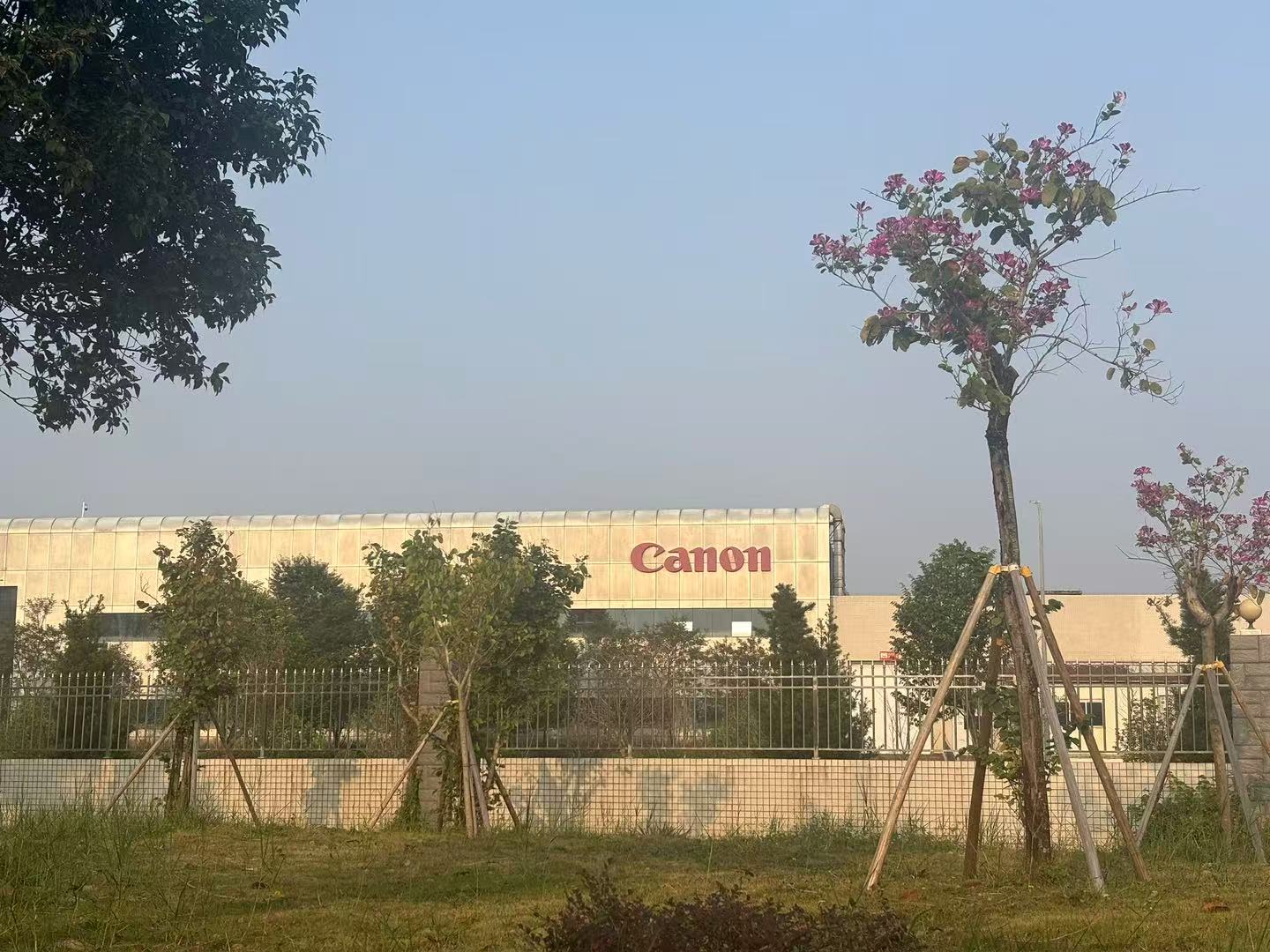
中山佳能工厂员工:这一天还是来了,赔偿没有网传夸张
3 6 Ke· 2025-12-09 02:16
Core Viewpoint - Canon's laser printer factory in Zhongshan, Guangdong, officially ceased operations due to ongoing operational difficulties, affecting over a thousand employees who are now awaiting compensation plans [1][4]. Company Summary - Canon (Zhongshan) Office Equipment Co., Ltd. has been a major industrial enterprise in Zhongshan since its establishment in 2001, with a cumulative industrial output value of nearly 50 billion yuan and tax contributions of approximately 2.3 billion yuan from 2010 to 2020 [4][11]. - The factory's production peaked in 2022 with over 110 million units, making it a core production base for Canon in China [6]. - The factory's operational decline was marked by a significant drop in annual orders from several hundred thousand units to only a few thousand units in recent years, leading to a reduction in workforce from around 6,000 to just over 1,000 employees [7][10]. Employee Compensation and Transition - Employees are reportedly receiving compensation packages that exceed the legal standard, with some receiving around 400,000 yuan, which includes various forms of economic support [4][9]. - Canon has committed to considering employee interests in accordance with local laws and regulations, and is working with local government and labor organizations to facilitate reemployment opportunities [9]. Industry Context - The closure of Canon's factory reflects a broader decline in the laser printer market, with IDC forecasting a 5% decrease in A4 laser printer shipments and a 10% decrease in A3 shipments in China by mid-2025 [10]. - The rise of domestic printer brands and government procurement policies favoring local products have intensified competition for Canon, which has seen its market share in China drop from 16% in 2010 to an expected 42% in 2024 for domestic brands [10]. - Canon's production model in Zhongshan primarily focused on OEM manufacturing, which has resulted in lower profit margins and a reliance on order volume and cost control [10][11]. Strategic Shift - As labor and production costs in the Pearl River Delta region have increased, Canon has shifted its production capacity to Southeast Asia, while focusing on higher-end industries in China, such as smart home appliances and new energy technologies [11]. - Canon's remaining production facilities in China continue to operate normally, with the company aiming to strengthen its market presence and achieve its goal of becoming the number one company in the Canon Group by 2035 [11].

新东方员工发文吐槽「加班成奴」,账号被秒封!公司回应;负债238亿拟花1.8亿炒股?乐视网:被误读;美光停止向消费者销售存储产品
雷峰网· 2025-12-05 00:44
Group 1 - Micron Technology has decided to exit the consumer storage market, ceasing production of PC-grade SSDs and memory products, focusing instead on high-performance AI chip demands [4][5] - The decision comes as major tech companies, including Samsung and SK Hynix, have also reduced memory production, leading to a global shortage of memory for consumer devices [4][5] - Micron aims to enhance long-term business performance by concentrating on core enterprise and commercial sectors, which are experiencing significant growth due to AI [4][5] Group 2 - LeEco reported a debt of 238 billion yuan and plans to invest 180 million yuan in stock trading, which has sparked public debate [7][8] - The company clarified that a significant portion of the investment is in "risk-free" assets, such as government bond repurchases, rather than speculative trading [7][8] - LeEco relies on operational income and copyright revenues from popular shows like "Empresses in the Palace" to sustain its workforce [8] Group 3 - Canon's Zhongshan factory has announced generous severance packages for laid-off employees, with compensation reaching up to 400,000 yuan [10][11] - The compensation plan includes a formula that significantly exceeds legal standards, providing a substantial financial cushion for affected workers [10][11] - Canon is actively assisting employees in finding new job opportunities, including hosting recruitment events and providing recommendation letters from management [12] Group 4 - Amazon's AGS division is undergoing significant leadership changes, with the departure of Vice President Yang Jun amid a broader restructuring [16][17] - The company has initiated a large-scale layoff plan, affecting various management levels, as it seeks to streamline operations [16][17] - The ongoing changes reflect a challenging environment for Amazon's global selling operations, with expectations of further layoffs in the near future [16][17] Group 5 - Xiaomi's President Lu Weibing announced a strategic focus on AI, emphasizing the integration of AI with physical products and services [21][22] - The company has ramped up investments in AI, with a reported increase of over 50% in funding for AI initiatives in recent quarters [21][22] - Xiaomi aims to position itself as a leader in AI technology, leveraging top talent to enhance its capabilities in this area [21][22] Group 6 - BYD is implementing a "flawless operation" initiative in its battery factories, aiming for zero defects in product manufacturing [31] - The initiative is part of a broader strategy to enhance manufacturing efficiency and meet the growing demand for high-quality battery products [31] - BYD's goal is to achieve industry-leading management standards within a few months, aligning with external customer expectations [31] Group 7 - Eight major e-commerce platforms, including JD.com and Meituan, have signed a commitment to establish self-regulatory norms for AI technology applications [32][33] - The commitment aims to ensure transparency in AI-generated content and protect consumer rights by implementing clear labeling and monitoring practices [32][33] - This initiative marks a significant step towards responsible AI usage in the e-commerce sector, addressing growing concerns over AI's impact on consumer interactions [32][33]




50000页“超激鼓”技术,终结企业办公的“打印焦虑”
Jiang Nan Shi Bao· 2025-12-04 10:10
Core Insights - The article highlights the revolutionary impact of the "Super Drum" laser printer, which addresses long-standing issues in traditional laser printers, such as high printing costs, insufficient durability, and frequent malfunctions, thereby enhancing office printing quality and efficiency [1] Group 1: Lifespan Breakthrough - In laser printers, consumables significantly affect user experience and overall costs, with toner cartridges accounting for nearly 48% of the market share due to their limited lifespan [2] - The "Super Drum" laser printer features a core imaging component lifespan of at least 50,000 prints, equivalent to three traditional toner cartridges, allowing for stable operation without the need for core component replacement for 3-5 years [2] Group 2: Cost Reduction - Traditional laser printer costs are primarily driven by consumable and maintenance expenses, with original toner cartridges costing around 360 yuan for 1,000 pages, resulting in a per-page cost of 0.33 yuan [3] - The "Super Drum" laser printer reduces the per-page cost to 0.047 yuan by offering a lifespan of at least 50,000 pages, while its design minimizes maintenance frequency and costs, leading to better overall ownership cost control [3] Group 3: Quality and Reliability Enhancement - The "Super Drum" laser printer maintains high-quality printing throughout its lifecycle, addressing the common perception of quality degradation in traditional printers and meeting the high standards required by modern businesses [4] - With a performance of 50,000 pages featuring almost zero paper jams and malfunctions, the "Super Drum" printer enhances reliability, aligning with the demands of high-intensity commercial environments [4] - The introduction of the "Super Drum" printer signifies a shift in the industry from a consumable profit model to a user-centered long-term value model, setting new standards for durability and reliability [4]
【财闻联播】六大行:全面停售5年期大额存单!中国药品价格登记系统上线
券商中国· 2025-12-02 11:01
Macro Dynamics - The launch of China's drug price registration system aims to provide a transparent and authoritative platform for domestic and foreign pharmaceutical companies to declare drug prices, facilitating the globalization of innovative drugs and attracting high-quality foreign drugs into the Chinese market [2] Automotive Industry - In October 2025, the total import and export value of automotive goods reached $25.31 billion, with a month-on-month increase of 1.7% and a year-on-year increase of 9.5%. The import value was $3.68 billion, down 4.6% month-on-month and down 17.5% year-on-year, while the export value was $21.63 billion, up 2.9% month-on-month and up 15.9% year-on-year [3] Childcare Subsidies - Hainan Province announced a childcare subsidy plan, providing an annual subsidy of 3,600 yuan per child for infants under three years old, effective from January 1, 2025 [4][5] Economic Impact of Brexit - The UK Prime Minister acknowledged that the Brexit agreement has severely harmed the UK economy, emphasizing the need to reduce friction and establish closer ties with the EU for economic recovery [6] Financial Institutions - Major banks in China have stopped offering 5-year large-denomination time deposits, with a shift towards shorter-term products. The Agricultural Bank of China has also removed 5-year products from its offerings [7] Market Data - On December 2, A-shares saw a collective decline, with the Shanghai Composite Index down 0.42% and the Shenzhen Component Index down 0.68%. The total trading volume was approximately 1.593 trillion yuan, a decrease of about 280.5 billion yuan from the previous trading day [8] - In Hong Kong, the Hang Seng Index rose 0.24%, while the Hang Seng Tech Index fell 0.37%. Notably, shares of electric vehicle manufacturers and pharmaceutical companies experienced significant declines [9] Company Dynamics - China National Airlines has completed a change in leadership, with registered capital increasing from approximately 16.2 billion yuan to 17.448 billion yuan [10] - Canon announced the cessation of operations at its Zhongshan printer factory due to a long-term decline in the global laser printer market, which has led to a significant reduction in orders [11] - Dream Home Furniture reported a significant stock price increase, warning that further abnormal price movements may lead to a suspension of trading for verification [12] - *ST Dongtong announced that its stock may be delisted due to fraudulent information disclosure in annual reports from 2019 to 2022 [13]

佳能中山工厂宣布关闭 经营困难持续加剧
Xi Niu Cai Jing· 2025-12-02 01:48
Group 1 - Canon (Zhongshan) Office Equipment Co., Ltd. has announced its closure due to a rapidly changing market environment, particularly the continuous decline of the LBP (Laser Beam Printer) market and the rapid rise of domestic LBP brands in China [5] - Established in 2001, Canon Zhongshan was a key player in Canon's strategy in the Chinese market, producing both color and black-and-white laser printers, with a cumulative production of 110 million printers by 2022 [5] - Canon's overall operations are facing challenges, with a downward revision of its profit forecast for 2025 due to U.S. tariff policies, reducing the consolidated operating profit target from 460 billion yen to 451 billion yen and the net profit target from 330 billion yen to 325.5 billion yen [5] Group 2 - In 2022, Canon closed its 32-year-old Zhuhai factory, citing a significant decline in the global camera market and unprecedented operational difficulties [6]