
执行规范化建设

Search documents
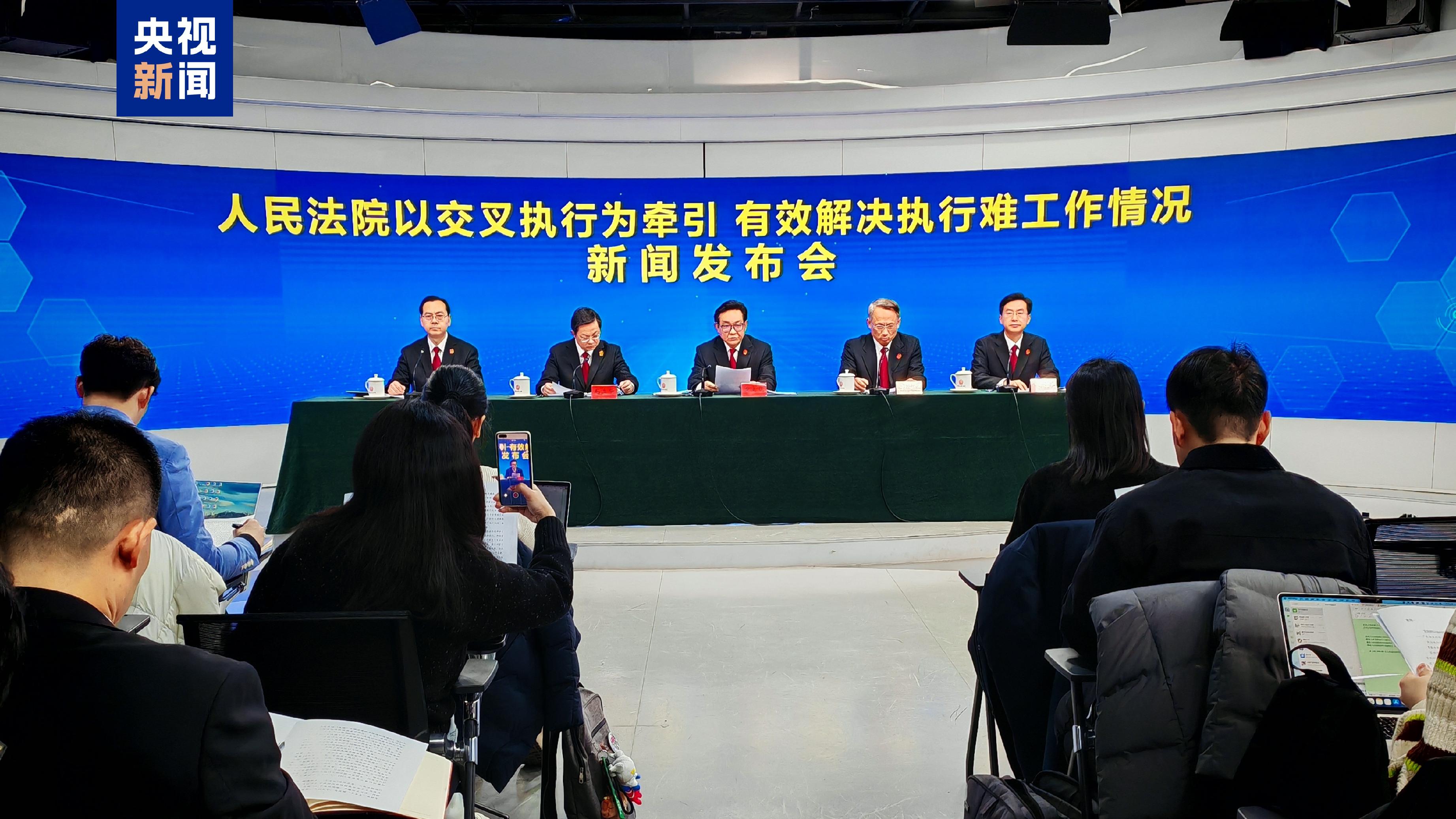
最高法:以交叉执行为牵引 有效解决执行难
Jing Ji Guan Cha Wang· 2026-01-26 02:55
二是立审执"一盘棋"效能有效发挥。 三是交叉执行攻坚克难成效显著。重点聚焦人民群众关注的"骨头案""信访案""疑难案""长期未结案",全面推进交叉执行落地落实。2023年10月以来,全国 法院已交叉执行47.7万件,22.25万件难案积案取得实质进展或者化解,执行到位金额1668.82亿元,基本实现交叉执行全国法院(除西藏部分地区以外)"全覆 盖"。 四是执破衔接激活市场要素动能释放。贯彻落实党的二十届四中全会重大部署,推动司法判决执行与破产制度有机衔接。全力开展"终本出清"活动,累计 963.82万件终本案件通过执破衔接、恢复执行、被执行人自动履行等退出终本程序;此外,移送破产案件4.84万件,1.58万家企业实现"出清"。通过执行与 破产全方位衔接,实现僵尸企业"移得出"、危困企业"治得早",最大程度以法治化方式促推要素市场化配置。 经济观察网据央视新闻客户端消息,今天,最高人民法院召开新闻发布会,介绍"人民法院以交叉执行为牵引、有效解决执行难"的相关情况。 近年来,人民法院持续深化执行改革,稳步推进执行工作规范提升三年专项行动,在以交叉执行为牵引,立审执协调、终本出清、失信惩戒分级分类、队伍 建设协同支 ...

广东法院首执案件执行完毕率、执行到位率均优于全国平均水平
Nan Fang Du Shi Bao· 2025-07-25 11:39
Group 1 - The meeting emphasized the need for Guangdong courts to fully implement the Central Committee's directives on enhancing trial work in the new era, focusing on the goals and tasks of execution work [1] - In the first half of the year, Guangdong courts handled 426,000 execution cases, an increase of 18% year-on-year, and disbursed 68.137 billion yuan, with a 32% improvement in disbursement efficiency [1] - The execution work is facing challenges such as a large volume of cases and the need to clear historical cases, requiring a collaborative approach and reliance on party leadership [1][2] Group 2 - The focus is on addressing issues like clearing historical cases, locating individuals and assets, and asset liquidation, while leveraging the current reform window to deepen reforms and innovate mechanisms [2] - There is a call to strengthen execution supervision and management, improve the clarity of execution powers and responsibilities, and ensure the implementation of regulations to prevent judicial interference [2]
河南郑州:实施“7﹢1”举措推进执行规范化建设
Ren Min Wang· 2025-05-21 00:50
Core Viewpoint - The Zhengzhou Intermediate People's Court has implemented the "Seven Musts" and "One Explanation" measures to enhance execution transparency and public trust in the judicial system, ensuring that parties involved in judicial cases feel fairness and justice [1][2][3] Group 1: Execution Norms - The "Seven Musts" execution behavior norms include timely notifications and legal document deliveries to parties involved in execution cases, ensuring they are informed of case progress [2][3] - Specific requirements include notifying parties within ten days of receiving an execution application, delivering legal documents within 24 hours when taking coercive measures, and informing third parties of debt obligations before execution [2][3] Group 2: Transparency and Efficiency - The implementation of the "Seven Musts" aims to enhance the transparency of the execution process, improving both execution efficiency and quality [3] - The court has also introduced measures to explain circumstances when seizing property that exceeds the debt amount, ensuring that the execution process is fair and considerate [3] Group 3: Public Engagement and Oversight - The Zhengzhou courts have actively promoted the "Seven Musts" by displaying the content in public areas, encouraging community supervision of the execution process [3] - There is an emphasis on monitoring the implementation of these norms to ensure compliance and effectiveness in execution practices [3]