
执破衔接

Search documents
司法护航信用经济建设
Xin Lang Cai Jing· 2026-02-07 22:52
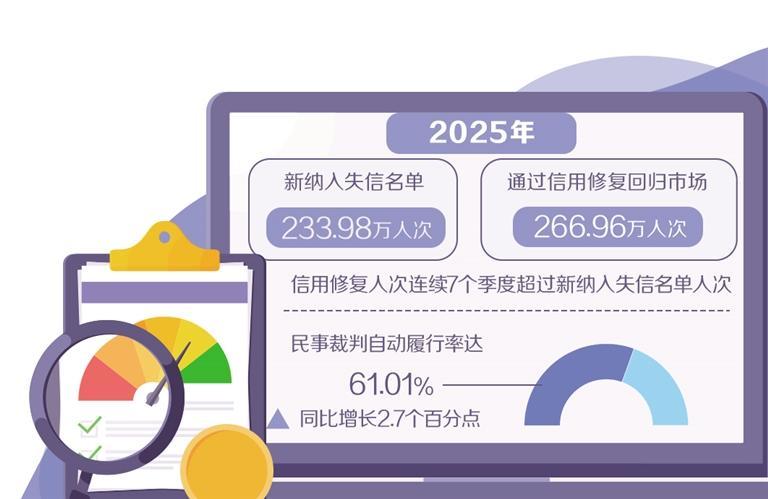
Group 1 - In 2025, a total of 233.98 million new entries were added to the list of dishonest individuals, while 266.96 million individuals were restored to the market through credit repair [2] - The Supreme People's Court reported that the automatic compliance rate for civil judgments reached 61.01% in 2025, an increase of 2.7 percentage points year-on-year, with an execution completion rate of 39.29% [2] - The court has focused on "bone cases," "petition cases," "difficult cases," and "long-standing unresolved cases," achieving substantial progress in executing 47.7 million cross-executions since October 2023 [3] Group 2 - The Supreme People's Court has implemented a mechanism to connect execution with bankruptcy, facilitating the exit of "zombie enterprises" and early treatment of distressed companies [3] - In 2025, a total of 4.461 thousand individuals were legally held accountable for refusing to execute judgments, indicating a strong stance against dishonest behavior by judicial authorities [2] - A notable case involved a private listed company in Shenzhen that, despite facing over 100 billion yuan in debt, successfully completed a restructuring plan that cleared 100% of its debts amounting to 16 billion yuan [5]

退渔还耕,2.45万亩盐碱地如何变良田?
Xin Lang Cai Jing· 2026-02-03 21:52
Core Viewpoint - The article discusses the successful execution of a project aimed at converting saline-alkali land back to arable land in Yancheng, Jiangsu Province, where 662 shrimp farming structures were dismantled to facilitate agricultural development, highlighting the collaborative efforts of various judicial bodies to balance ecological restoration and the livelihoods of local farmers [1][7]. Group 1: Project Background - A state-owned enterprise developed approximately 24,500 acres of saline-alkali land in the late 1990s, which was later leased to farmers for aquaculture [1]. - The project aims to "return fishing to farming" during the 14th Five-Year Plan period, with a focus on ensuring food security and high-standard farmland construction [1][2]. Group 2: Execution Challenges - The execution faced significant resistance from farmers who were reluctant to vacate 443 acres of land, leading to potential conflicts [2][3]. - The complexity of the situation was compounded by the presence of 662 shrimp ponds and multiple layers of sub-leasing among farmers [2][4]. Group 3: Collaborative Execution Strategy - The Jiangsu High Court implemented a "three-part method" to address the challenges, which included separate resolution of disputes, phased delivery of land, and step-by-step construction of agricultural land [4][5]. - The execution involved a collaborative effort among the Nanjing Maritime Court, Yancheng Intermediate Court, and Dongtai Court, leveraging their respective resources for effective execution [4][5]. Group 4: Resolution and Outcomes - By the autumn of the previous year, the involved parties had voluntarily dismantled the shrimp farming facilities and returned the land, allowing for the timely progress of the saline-alkali land restoration project [7]. - The first season of rice cultivation on the reclaimed land yielded an impressive average of 950 pounds per acre, demonstrating the successful transformation from saline-alkali land to high-standard farmland [7]. Group 5: Broader Implications - The article highlights Jiangsu's pioneering efforts in integrating execution with bankruptcy procedures, which has led to the successful rehabilitation of 328 distressed enterprises, positioning the province as a leader in this area nationally [8]. - The use of technology, such as electronic seals and IoT monitoring, has facilitated a more humane and efficient execution process, benefiting over 4,251 enterprises [9].
“执破衔接”助上市民企160亿元债务100%清偿
Zhong Guo Jing Ying Bao· 2026-02-01 09:28
Group 1 - The core viewpoint of the articles highlights the effective integration of execution and bankruptcy processes to address the issues of "zombie enterprises" and struggling companies, facilitating market-oriented resource allocation through legal means [2] - In 2025, courts processed a total of 9.6382 million concluded cases, with 48,400 bankruptcy cases transferred and 15,800 enterprises successfully cleared [2] - The Shenzhen Intermediate People's Court utilized the "execution and bankruptcy connection" mechanism to assist a private listed company facing over 10 billion yuan in debt and at risk of delisting, thereby restoring its credit and aiding its recovery [3][4] Group 2 - The Shenzhen-based group, once a prominent player in the decoration and renovation industry, was identified as having potential for revival through bankruptcy reorganization, leading to the acceptance of its reorganization application by the Shenzhen Intermediate People's Court [4] - The reorganization plan was approved, and within a critical window, the court coordinated nationwide efforts to unfreeze 49 accounts across 39 courts in 14 provinces within three days, enabling the successful execution of the reorganization plan [4] - The company managed to achieve 100% repayment of 16 billion yuan in debt through a combination of cash settlements, debt retention, trust arrangements, and debt-to-equity swaps, ultimately allowing it to return to the market and restore operational vitality [4]
法院多措并举解决执行难
Xin Lang Cai Jing· 2026-01-28 19:57
Core Insights - The Jilin Provincial High Court aims to maintain its leading position in execution work quality by implementing comprehensive cross-execution efforts and enhancing preemptive governance measures, achieving an execution rate of 98.6% in 2022, ranking first nationally for three consecutive years [1][2] Group 1: Execution Work - In 2022, Jilin courts accepted 147,600 execution cases and concluded 145,500 cases, maintaining a high execution rate of 98.6% [1] - The court focuses on three categories of key cases: those with strong correlations, concentrated public complaints, and long-standing unresolved cases, utilizing systematic screening and feedback mechanisms to ensure efficient execution [1] Group 2: Governance and Resource Management - The Jilin court emphasizes preemptive governance by enhancing property preservation efforts and establishing a mediation mechanism that integrates successful mediation with execution [1] - The court is managing the termination of execution procedures by concentrating judicial resources on cases with assets, thereby improving efficiency in handling execution cases [2] Group 3: Market Dynamics and Corporate Restructuring - The Jilin court is actively addressing execution backlog while facilitating the exit of non-viable market entities through efficient bankruptcy liquidation processes, effectively clearing a significant number of "zombie companies" [2] - For viable companies, the court employs bankruptcy reorganization and settlement strategies to help them overcome crises, particularly in complex cases involving multiple creditors and unfinished housing projects [2]
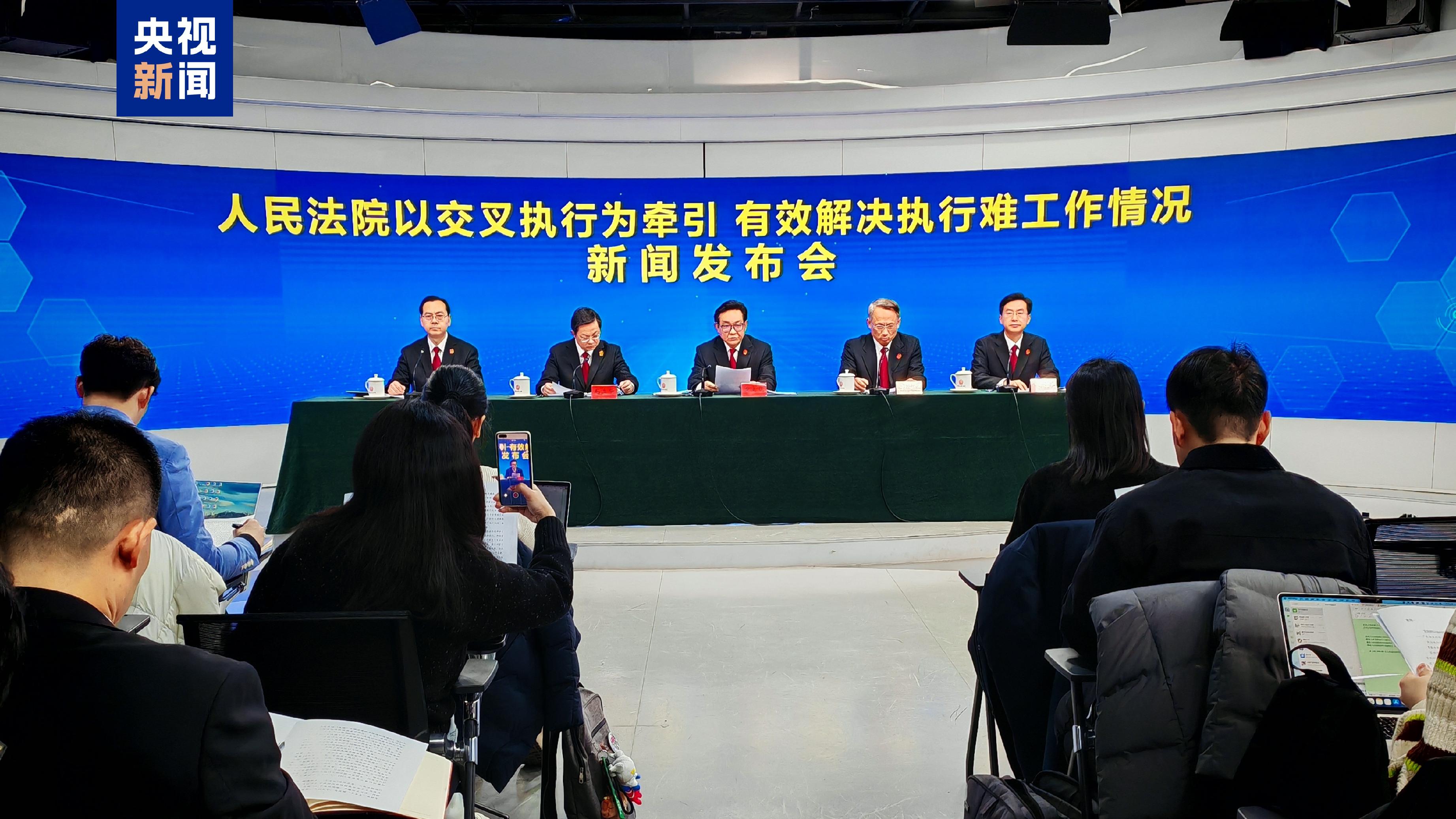
最高法:以交叉执行为牵引 有效解决执行难
Jing Ji Guan Cha Wang· 2026-01-26 02:55
Core Viewpoint - The Supreme People's Court has introduced measures to effectively address the challenges of enforcement through cross-execution, highlighting significant improvements in execution efficiency and quality over the past three years [1][4]. Group 1: Execution Quality and Efficiency - Execution quality has consistently improved, with the automatic compliance rate for civil judgments exceeding 60%, reaching 61.01%, a year-on-year increase of 2.7 percentage points [4]. - The execution case volume has increased by 15.43%, with an execution rate of over 50%, at 50.59%, and a completion rate nearing 40%, at 39.29%, both showing an increase of nearly 8 percentage points over three years [4]. - The total amount executed has reached approximately 2.2 trillion yuan, maintaining above 2 trillion yuan for three consecutive years [4]. Group 2: Cross-Execution Achievements - Since October 2023, courts nationwide have implemented cross-execution on 477,000 cases, with 222,500 difficult cases making substantial progress or being resolved, resulting in an executed amount of 166.88 billion yuan [5]. - The cross-execution initiative has achieved near-complete coverage across national courts, excluding certain areas in Tibet [5]. Group 3: Market Activation through Execution and Bankruptcy - The integration of judicial enforcement with bankruptcy systems has been emphasized, with 963,820 cases cleared through various execution methods, and 48,400 bankruptcy cases transferred, leading to 15,800 enterprises achieving "clearing" [5]. - This approach aims to facilitate the exit of "zombie enterprises" and early intervention for distressed companies, promoting market resource allocation through legal means [5]. Group 4: Credit Economy and Trustworthiness - The classification and targeted approach to credit punishment have been reinforced, with 2.34 million new entries into the dishonesty list last year, while 2.67 million individuals were rehabilitated through credit restoration [6]. - A total of 18.65 million individuals complied with obligations due to the pressure of dishonesty penalties, and 4,461 individuals were prosecuted for evading enforcement [6]. Group 5: Standardization and Supervision in Execution - A comprehensive three-year action plan has been launched to enhance execution work standards across 27 procedural aspects, aiming for scientific and high-quality development [6]. - The execution team has been strengthened, with 810 individuals held accountable for cross-execution tasks, marking an 86.21% increase in accountability measures compared to the previous year [6]. Group 6: Legal Measures and Innovations - Enhanced litigation preservation measures have been implemented to reduce malicious debt evasion, alongside the establishment of an "execution suggestion" system to address internal bottlenecks [7]. - Efforts are being made to correct excessive or out-of-scope preservation actions, utilizing "live sealing and live deduction" methods to minimize the impact on parties and business operations [7].
江苏法院为51名工人解决忧“薪”事,入选最高院典型执行案例
Yang Zi Wan Bao Wang· 2026-01-04 14:42
Group 1 - The case highlights the effective use of the "execution and bankruptcy connection" mechanism by the court to resolve wage arrears issues efficiently [2] - A pet food company in Jiangsu, facing internal disputes and unable to pay over 380,000 yuan in wages to 51 workers, was forced to close [1] - The court facilitated the quick disposal of perishable inventory, generating over 80,000 yuan to mitigate losses, while also initiating bankruptcy proceedings to ensure workers received their wages [1][2] Group 2 - The execution court's proactive approach in transitioning from execution to bankruptcy procedures provided a model for handling complex wage arrears cases involving multiple stakeholders [2] - The shareholders of the company, initially uncooperative, ultimately paid the remaining execution funds during the bankruptcy review process, allowing the workers to withdraw their bankruptcy application [1]
最高法典型案例:为处理“执行不能”涉众型欠薪案件提供范本
Xin Lang Cai Jing· 2025-12-31 04:32
Core Viewpoint - The Supreme People's Court has effectively utilized the execution-to-bankruptcy transition mechanism to address "execution inability" cases involving wage arrears, providing a model for handling such cases involving multiple stakeholders [1][3]. Group 1: Case Handling and Mechanisms - The Supreme People's Court has guided local courts to enhance execution supervision through cross-execution, resolving long-standing cases related to wage arrears for migrant workers and labor disputes [1]. - Various local courts have employed unique execution measures, such as leveraging government-court collaboration to resolve execution deadlocks and using cross-execution to efficiently control assets for the benefit of workers [1][3]. - In a specific case involving a pet food company, the court utilized the execution-to-bankruptcy transition mechanism to address wage arrears, leading to the successful collection of wages for 51 workers after the company was unable to pay its debts [2][3]. Group 2: Impact and Significance - The Supreme People's Court emphasized that these typical cases are representative and provide guidance for lower courts, promoting effective wage arrears governance and creating a favorable social atmosphere for protecting workers' rights [3]. - The case exemplifies a proactive approach by the execution court, which not only focused on existing asset liquidation but also initiated bankruptcy proceedings to ensure workers received their due wages [2][3].
最高法:将加大对涉农民工工资等欠薪案件执行力度
Xin Lang Cai Jing· 2025-12-31 03:25
Core Viewpoint - The Supreme People's Court has released typical cases of governance on wage arrears, emphasizing the legal protection of workers' wage rights, particularly for migrant workers, and highlighting various effective execution measures taken by local courts [1]. Group 1: Case Summaries - Case 1: The court in Chuzhou, Anhui, utilized a government-court linkage mechanism to resolve execution difficulties, successfully freezing receivables from schools to ensure payment of over 1.16 million yuan to 61 workers [2][3][5]. - Case 2: The court in Wenzhou, Zhejiang, implemented a cross-execution mechanism, coordinating with other courts to secure the payment of over 1.39 million yuan to 62 migrant workers within a month [6][7]. - Case 3: The court in Suqian, Jiangsu, effectively managed the liquidation of perishable goods to recover 380,000 yuan owed to 51 workers, transitioning to bankruptcy proceedings to ensure payment [8][9][10]. - Case 4: The court in Jinshan, Shanghai, employed punitive measures against a non-compliant employer, leading to the full payment of wages owed to seven workers through coercive actions [11][12]. - Case 5: The court in Ganzhou, Jiangxi, facilitated a self-disposal process for a packaging company to quickly liquidate assets worth over 1.5 million yuan to pay 61 workers, demonstrating effective conflict resolution [13][14][15]. - Case 6: The court in Guanxian, Shandong, conducted thorough field investigations to uncover rental income, leading to the successful payment of over 600,000 yuan to 34 workers [16]. Group 2: Mechanisms and Strategies - The "government-court linkage" mechanism has proven crucial in executing cases related to wage arrears, enhancing efficiency and pressuring non-compliant parties to fulfill their obligations [5]. - The "cross-execution" mechanism allows for coordinated efforts across different jurisdictions, showcasing the advantages of information sharing and asset control in resolving wage disputes [7]. - The integration of execution and bankruptcy procedures provides a model for addressing complex wage arrears cases, ensuring that workers' rights are prioritized even in challenging circumstances [10]. - The use of punitive measures and collaborative enforcement strategies effectively deters non-compliance and reinforces the legal framework protecting workers' rights [12].
“十五五”部署推动“执破衔接”,提高破产启动意愿仍是挑战| 解读“十五五”
Di Yi Cai Jing· 2025-11-24 12:06
Core Viewpoint - The integration of judicial enforcement and bankruptcy systems is essential for effectively revitalizing seized and frozen assets, as outlined in the "14th Five-Year Plan" [1][4]. Group 1: Judicial Mechanism and Bankruptcy Integration - The mechanism of integrating judicial enforcement with bankruptcy, known as "executive transfer to bankruptcy," has been in place since 2015 and aims to facilitate the transition of cases from enforcement to bankruptcy proceedings [3][4]. - The increase in court enforcement cases has led to a rise in enterprises facing asset seizures, resulting in significant economic resources being "frozen" and hindering market activity [2][5]. - The "executive transfer to bankruptcy" mechanism has faced challenges, including difficulties in initiating procedures and insufficient rescue functions for market entities [3][6]. Group 2: Challenges and Future Directions - There are several constraints to advancing the integration of judicial enforcement and bankruptcy, such as insufficient institutional supply and difficulties in initiating transfer procedures [6][8]. - The current bankruptcy system is perceived as harsh on debtors, leading to a lack of motivation for both creditors and debtors to initiate bankruptcy proceedings [7][9]. - Recent amendments to the bankruptcy law aim to encourage debtors to enter bankruptcy proceedings, but overall, the bankruptcy framework still requires optimization [9].