执行难解决

Search documents
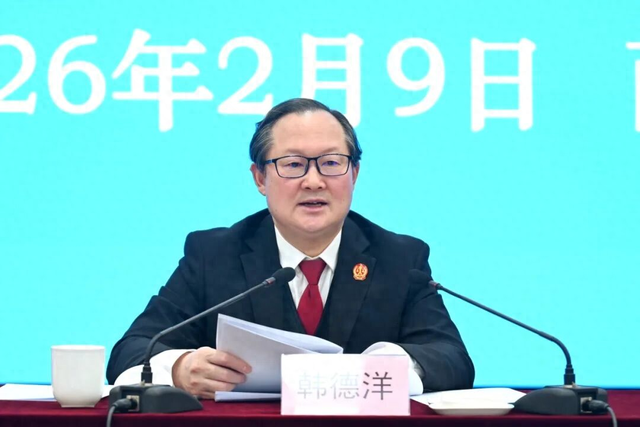
陕西省中级法院院长会议召开
Huan Qiu Wang· 2026-02-10 04:13
Core Viewpoint - The meeting emphasized the importance of adhering to the absolute leadership of the Party in court work and outlined the key tasks for the courts in Shaanxi Province for 2026, marking the beginning of the "15th Five-Year Plan" [3][4]. Group 1: Key Tasks for 2026 - The courts will focus on enhancing judicial authority and public trust, improving mechanisms for judicial fairness and evaluation, and better fulfilling their roles in punishing crimes and protecting the people [3][4]. - The "1281" work plan will guide the courts to maintain the correct political direction in judicial adjudication, promote the rule of law in the economy, and ensure social fairness and justice [3][4]. Group 2: Eight Key Focus Areas - Strengthening legal work in petitioning and conflict resolution, integrating the "Fengqiao Experience" to enhance the legal prevention of disputes [4][5]. - Ensuring national political security and social stability through strict enforcement of criminal laws and policies [5][6]. - Promoting economic development and fairness through civil and commercial law, enhancing judicial protection in key sectors [5][6]. - Enhancing administrative trial supervision to improve administrative governance efficiency [6][7]. - Focusing on ecological and environmental judicial protection, addressing issues like the Qinling "Five Chaos" and the Yellow River ecological challenges [6][7]. - Implementing measures to resolve execution difficulties and improve the execution process [6][7]. - Advancing judicial system reforms and modernizing trial work [7]. - Strengthening party discipline and building a competent judicial team [7].

失信名单人数连续两年下降
2 1 Shi Ji Jing Ji Bao Dao· 2026-01-26 14:33
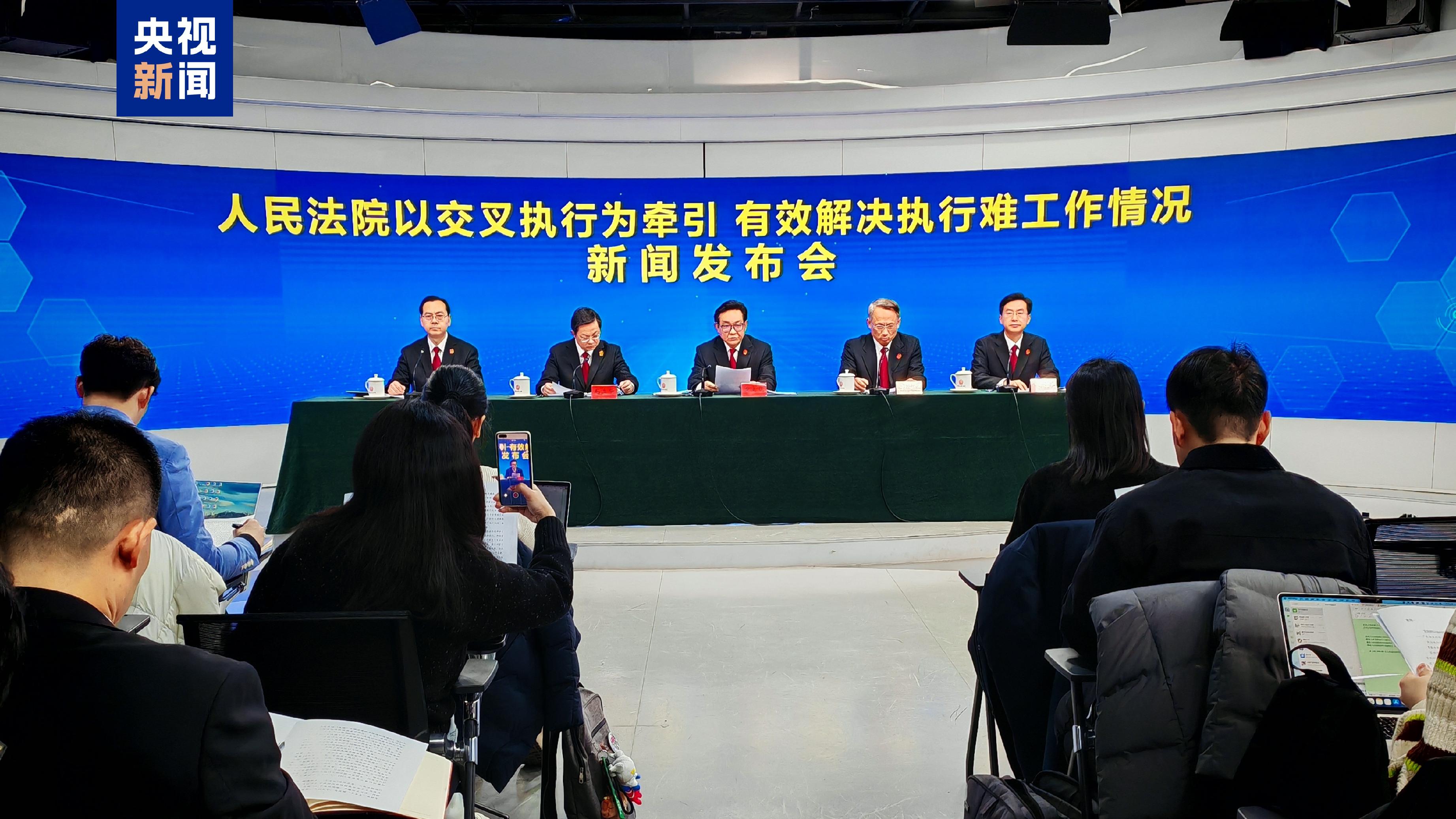
Group 1 - The Supreme People's Court held a press conference on January 26, highlighting the effectiveness of cross-execution in addressing enforcement difficulties [1] - In 2025, 2.33 million new entries were added to the dishonesty list, while 2.67 million individuals were restored to the market through credit repair, marking a continuous trend where credit repair instances exceeded new dishonesty entries for seven consecutive quarters [1] - A total of 18.65 million individuals voluntarily fulfilled their obligations due to the pressure of dishonesty sanctions, indicating a decline in the number of individuals on the dishonesty list for the second consecutive year [1] Group 2 - In 2025, the automatic compliance rate for civil judgments exceeded 60%, reaching 61.01%, an increase of 2.7 percentage points year-on-year [2] - Despite a 15.43% year-on-year increase in the number of enforcement cases, the enforcement rate surpassed 50%, reaching 50.59%, with a completion rate of nearly 40% at 39.29%, showing an increase of nearly 8 percentage points over the past three years [2] - The total amount of enforcement reached approximately 2.2 trillion yuan, maintaining over 2 trillion yuan for three consecutive years, reflecting progress towards the public's expectation of "easy enforcement" [2] - Since October 2023, national courts have executed 477,000 cross-execution cases, with 222,500 difficult cases making substantial progress or being resolved, resulting in an enforcement amount of 166.88 billion yuan, achieving near nationwide coverage of cross-execution [2]
最高法:以交叉执行为牵引 有效解决执行难
Jing Ji Guan Cha Wang· 2026-01-26 02:55
Core Viewpoint - The Supreme People's Court has introduced measures to effectively address the challenges of enforcement through cross-execution, highlighting significant improvements in execution efficiency and quality over the past three years [1][4]. Group 1: Execution Quality and Efficiency - Execution quality has consistently improved, with the automatic compliance rate for civil judgments exceeding 60%, reaching 61.01%, a year-on-year increase of 2.7 percentage points [4]. - The execution case volume has increased by 15.43%, with an execution rate of over 50%, at 50.59%, and a completion rate nearing 40%, at 39.29%, both showing an increase of nearly 8 percentage points over three years [4]. - The total amount executed has reached approximately 2.2 trillion yuan, maintaining above 2 trillion yuan for three consecutive years [4]. Group 2: Cross-Execution Achievements - Since October 2023, courts nationwide have implemented cross-execution on 477,000 cases, with 222,500 difficult cases making substantial progress or being resolved, resulting in an executed amount of 166.88 billion yuan [5]. - The cross-execution initiative has achieved near-complete coverage across national courts, excluding certain areas in Tibet [5]. Group 3: Market Activation through Execution and Bankruptcy - The integration of judicial enforcement with bankruptcy systems has been emphasized, with 963,820 cases cleared through various execution methods, and 48,400 bankruptcy cases transferred, leading to 15,800 enterprises achieving "clearing" [5]. - This approach aims to facilitate the exit of "zombie enterprises" and early intervention for distressed companies, promoting market resource allocation through legal means [5]. Group 4: Credit Economy and Trustworthiness - The classification and targeted approach to credit punishment have been reinforced, with 2.34 million new entries into the dishonesty list last year, while 2.67 million individuals were rehabilitated through credit restoration [6]. - A total of 18.65 million individuals complied with obligations due to the pressure of dishonesty penalties, and 4,461 individuals were prosecuted for evading enforcement [6]. Group 5: Standardization and Supervision in Execution - A comprehensive three-year action plan has been launched to enhance execution work standards across 27 procedural aspects, aiming for scientific and high-quality development [6]. - The execution team has been strengthened, with 810 individuals held accountable for cross-execution tasks, marking an 86.21% increase in accountability measures compared to the previous year [6]. Group 6: Legal Measures and Innovations - Enhanced litigation preservation measures have been implemented to reduce malicious debt evasion, alongside the establishment of an "execution suggestion" system to address internal bottlenecks [7]. - Efforts are being made to correct excessive or out-of-scope preservation actions, utilizing "live sealing and live deduction" methods to minimize the impact on parties and business operations [7].