
批评和自我批评

Search documents
学习时报:“党内政治空气的清洁剂”
Xin Lang Cai Jing· 2026-02-07 07:23
Group 1 - The core viewpoint emphasizes the importance of normal criticism and self-criticism as a means to purify the political environment within the party, likening it to an "air cleaner" for political air [1][4] - Since the 18th National Congress, party organizations have integrated criticism and self-criticism into various political activities, leading to a continuously improving political ecology [2] - Despite progress, there are still significant issues such as insufficient recognition of the importance of criticism, avoidance of direct criticism, and superficial implementation of feedback mechanisms [2] Group 2 - To ensure the effectiveness of criticism and self-criticism, it is essential to institutionalize and normalize these practices, reinforcing ideological guidance and enhancing action awareness among party members [3] - A problem-oriented approach is necessary to enhance the effectiveness of criticism, focusing on specific manifestations of issues within the party's political life [3] - Establishing robust institutional safeguards and accountability measures is crucial, including integrating criticism practices into party assessments and ensuring follow-up on identified issues [3]
思想体悟丨开展严肃认真的党内政治生活
Zhong Yang Ji Wei Guo Jia Jian Wei Wang Zhan· 2025-12-29 00:56
Core Viewpoint - The emphasis on serious intra-party political life is crucial for the governance and unity of the Communist Party, serving as a foundation for strict party management and political discipline [10][11][17]. Group 1: Importance of Intra-Party Political Life - Serious intra-party political life is fundamental for comprehensive strict governance of the party, with the need to manage the party starting from intra-party political life [3][10]. - The quality of intra-party political life directly influences the conduct of party members and leaders, affecting their strength and credibility [4][12]. - A healthy intra-party political life is essential for maintaining the party's vitality and ensuring the correction of erroneous thoughts, which can otherwise lead to significant losses for the party [11][12]. Group 2: Mechanisms and Practices - The party has established basic norms for intra-party political life, including criticism and self-criticism, democratic centralism, and strict party discipline, which are vital for the party's growth and success [9][10]. - The Central Committee has placed greater emphasis on serious intra-party political life and the purification of the political ecosystem since the 18th National Congress, with guidelines established to support these efforts [9][10]. - Various local party organizations are implementing measures to strengthen and standardize intra-party political life, including educational activities and supervision mechanisms [20][21][24]. Group 3: Challenges and Continuous Improvement - Despite notable achievements in enhancing intra-party political life, challenges remain, and addressing these issues requires persistent effort [18]. - The focus is on transforming the results of serious intra-party political life into sustained motivation for the party's development, ensuring a clean environment for capable individuals to thrive [18]. - Continuous innovation and improvement in practices related to intra-party political life are necessary to maintain the party's leadership core and adapt to new realities [18].

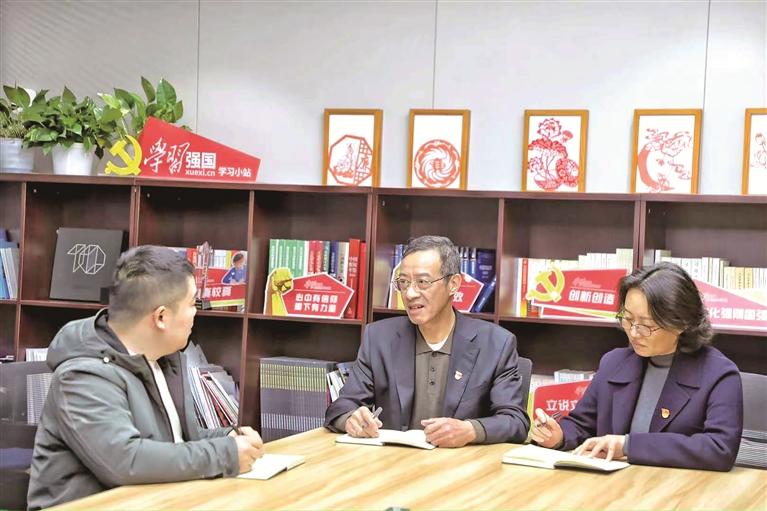
以辩证思维科学准确把握与开展批评和自我批评
Ren Min Ri Bao· 2025-10-13 09:24
Core Points - The importance of criticism and self-criticism as essential tools for maintaining the health and integrity of the party is emphasized by General Secretary Xi Jinping [1][2][17] - The practice of criticism and self-criticism is seen as a means to enhance the capabilities and qualities of party members, ensuring continuous improvement and development [1][17] Group 1: Theoretical Insights - Criticism and self-criticism serve as a "sharp weapon" for the party, revealing contradictions and providing solutions, thus playing an irreplaceable role in the development of the party's cause [2][4] - The dialectical function of criticism and self-criticism is highlighted, where it acts as a "negative intermediary" that facilitates the transition from old to new states through constructive negation [4][5] Group 2: Practical Applications - The effectiveness of criticism and self-criticism is noted to have dual aspects, with the potential for both constructive and destructive outcomes depending on the approach taken [5][6] - Specific strategies for conducting criticism and self-criticism are outlined, emphasizing the need for sincerity, methodical approaches, and the importance of distinguishing between constructive and destructive criticism [7][14] Group 3: Balancing Principles - The balance between principles and flexibility in criticism is crucial, requiring adherence to core values while adapting methods to specific situations [14][15] - Achieving a balance between current and long-term perspectives is essential, ensuring that immediate issues are addressed without losing sight of future goals [16][17]
以辩证思维科学准确把握与开展批评和自我批评(深入学习贯彻习近平新时代中国特色社会主义思想)
Ren Min Ri Bao· 2025-10-12 22:10
Core Viewpoint - The emphasis on criticism and self-criticism as essential tools for maintaining the health of the party and enhancing the capabilities of its members is highlighted, with a call for their consistent application in daily work [1][17]. Group 1: Importance of Criticism and Self-Criticism - Criticism and self-criticism are described as sharp weapons for strengthening the party and maintaining its health, serving as vital means to enhance and regulate political life within the party [2][4]. - The historical significance of criticism and self-criticism is noted, having played a crucial role in the party's development and individual growth throughout various stages of revolution, construction, and reform [1][3]. Group 2: Functions of Criticism and Self-Criticism - From an epistemological perspective, criticism and self-criticism act as a "calibrator" for truth, facilitating a continuous cycle of practice and understanding [3]. - Criticism and self-criticism are seen as a "negative intermediary" that promotes development through the dialectical process of negation, leading to constructive change within the party [4]. Group 3: Practical Challenges and Solutions - The article identifies common issues in the practice of criticism and self-criticism, such as becoming ineffective or superficial, and emphasizes the need for a deeper understanding of its dual nature—both constructive and destructive [5][6]. - It suggests that effective criticism should be based on public interest, sincerity, and appropriate methods, avoiding personal biases and focusing on objective issues [7][14]. Group 4: Strategies for Effective Criticism and Self-Criticism - The importance of timing in criticism is emphasized, advocating for immediate feedback on minor issues while allowing for more time to analyze complex problems [9]. - The article discusses the balance between public and private criticism, suggesting that public criticism can foster collective learning, while private criticism is better for sensitive topics [10]. Group 5: Balancing Principles and Flexibility - A balance between principled and flexible approaches to criticism is necessary, ensuring that criticism is both constructive and respectful of individual differences [14][15]. - The need for a dynamic balance between current issues and long-term goals is highlighted, encouraging a strategic approach to criticism that supports ongoing improvement and development [16].