
技术经理人

Search documents
武汉一年新增近1700名技术经理人,产业集群效应加速显现
Chang Jiang Ri Bao· 2026-02-09 12:09
Core Insights - Wuhan Wuchuangtong Technology Service Co., Ltd. has successfully trained nearly 1,700 technical managers through 10 specialized training sessions by 2025, transitioning from individual growth to collective symbiosis in technical management [1] - The establishment of the first technical manager practice workstation in Central China in collaboration with Wuhan University of Technology has significantly improved service levels by integrating university achievements, enterprise needs, and market resources [1] - The third Wuhan Technical Manager Competition attracted over 300 participants, marking the largest scale in its history, and resulted in the launch of the "Wuhan Initiative," a national first for the technical manager industry [1] Group 1 - The "Wuchuangtong 'Zhi' Run Plan" roadshow competition has been designed to create a precise bridge between quality projects and professional technical transfer talents, matching 42 quality projects with experienced "science and technology matchmakers" since its launch in Q4 2025 [2] - The continuous upgrade of the "Wuchuangtong" science and technology service platform aims to create a digital hub for technical managers, utilizing intelligent algorithms for precise matching of enterprise needs, technological achievements, financial capital, and professional services [2] - The introduction of the "Technical Manager Partner" program has attracted over 50 experts from various fields, enhancing the core network with market-oriented incentives and collaboration mechanisms [2] Group 2 - In 2026, the company plans to deepen the training system for technical managers at initial, intermediate, and advanced levels, optimize collaboration mechanisms and platform layout, and actively participate in the construction of an industry credit evaluation system [2]
安徽加码支持技术经理人
第一财经· 2026-01-30 04:13
Core Viewpoint - Anhui Province is enhancing support for technical managers to facilitate the transformation of scientific and technological achievements into marketable products [3][4]. Group 1: Policy Initiatives - The "Measures for Strengthening the Construction of Technical Manager Teams in Anhui Province" will be implemented starting January 30, 2026, alongside the first local regulations for the cultivation and development of technical managers in China, effective February 1, 2026 [3][4]. - Technical managers are defined as professionals involved in the transfer, transformation, and industrialization of scientific achievements, providing services related to finance, law, and intellectual property [3][4]. Group 2: Development and Training - Anhui Province has been actively building its technical manager workforce through training programs, establishing technical manager firms, and including technical managers in professional title evaluations, with 1,075 technical managers trained in 2025 and a total of over 4,600 trained to date [4][6]. - The "Keda Silicon Valley" has established a market-oriented technical manager firm and has created a team structure to continuously explore technological achievements, recruiting 102 university managers and 41 technical managers, identifying over 780 convertible scientific achievements [5][6]. Group 3: Future Support and Incentives - The new measures will provide support in areas such as education, evaluation, management, and incentives for technical managers, including the exploration of degree programs and various revenue-sharing models [6]. - Previous policies have allocated 10 million yuan annually to support the development of the technology service industry and the training of technical managers, focusing on services like achievement evaluation and demand matching [6].

安徽加码支持技术经理人:设股权激励,允许收益分成
Di Yi Cai Jing· 2026-01-30 03:43
Core Viewpoint - Anhui Province is set to implement a series of measures to strengthen the development of technical managers, which are crucial for the transformation of scientific and technological achievements into industrial applications [2][3]. Group 1: Policy Support - The "Several Measures to Strengthen the Construction of Technical Manager Teams in Anhui Province" will take effect on January 30, with the first local regulations for cultivating technical managers starting on February 1 [2]. - The measures include support in areas such as talent cultivation, evaluation management, incentives, and work formats [4]. Group 2: Role of Technical Managers - Technical managers are defined as professionals involved in the transfer, transformation, and industrialization of scientific achievements, providing services related to finance, law, and intellectual property [2]. - They serve as a crucial link between technology and industry, facilitating the long and challenging process of transforming scientific results into marketable products [2]. Group 3: Training and Development - Anhui Province aims to cultivate 1,075 technical managers by 2025, with a cumulative total of over 4,600 trained to date [3]. - The establishment of market-oriented technical manager offices, such as the one created by Keda Silicon Valley, is part of the strategy to enhance the technical manager workforce [3]. Group 4: Incentive Mechanisms - Keda Silicon Valley has introduced a "721" equity incentive model, allocating 70% of benefits to the original invention team, 20% to new research institutions, and 10% to technical managers [3]. - The measures also allow for the extraction of a certain percentage of income from technology transfer for rewarding technical managers [4]. Group 5: Future Directions - The initiative includes exploring educational programs for technical managers, such as a master's program in technology transfer at the University of Science and Technology of China [4]. - The province has committed to an annual budget of 10 million yuan to support the development of the technology service industry and the cultivation of technical managers [4].
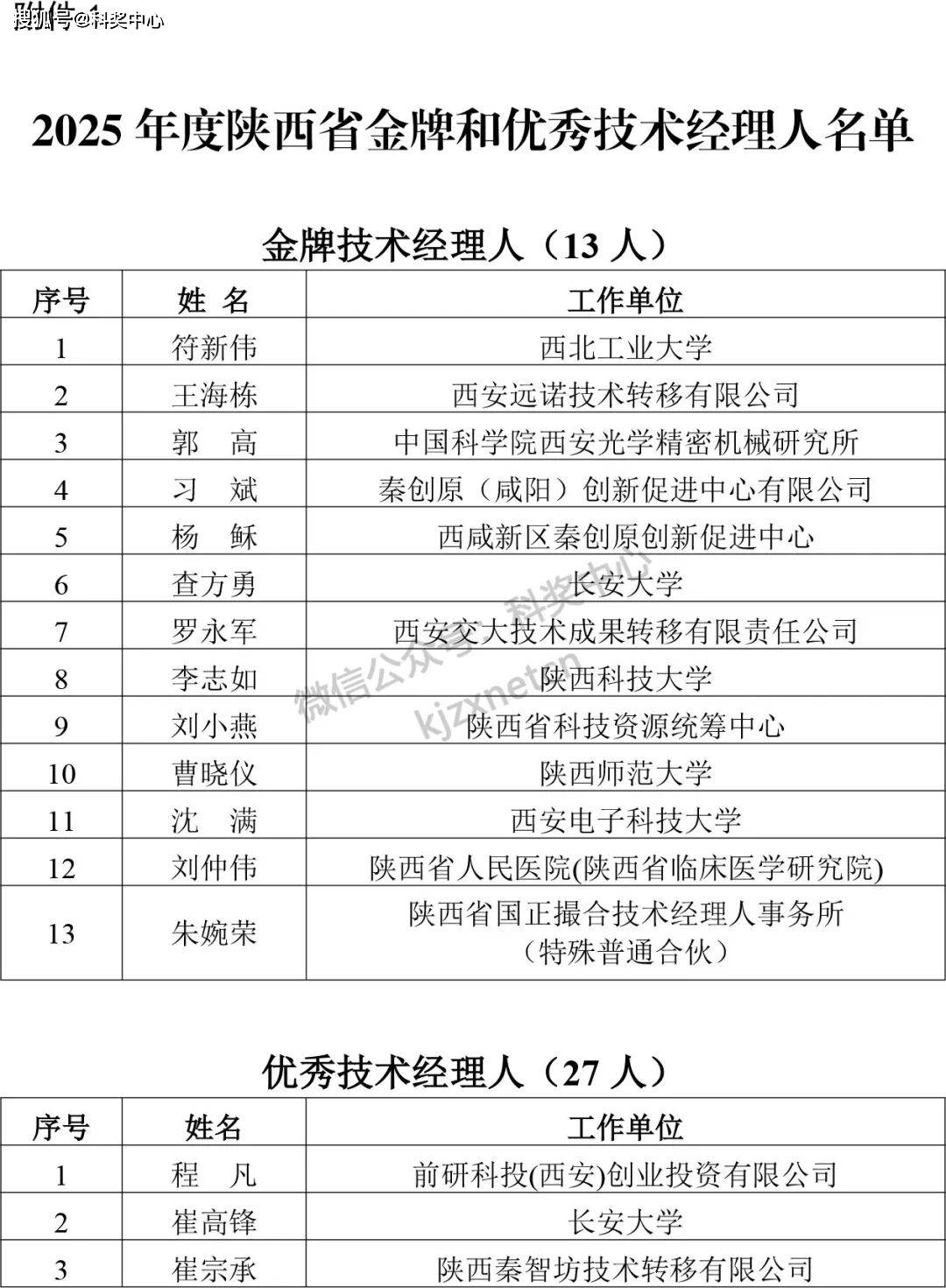
2025年度陕西省技术经理人认定名单、金牌和优秀技术经理人名单公布
Sou Hu Cai Jing· 2026-01-01 17:59
Core Viewpoint - The recognition of 426 individuals as technical managers in Shaanxi Province for the year 2025 aims to enhance the professional development pathway for technical managers and improve evaluation and incentive mechanisms [1]. Group 1: Recognition of Technical Managers - A total of 426 individuals have been recognized as technical managers for the year 2025 in Shaanxi Province [1]. - Among the recognized, 13 individuals have been selected as "Gold Medal Technical Managers" and 27 as "Outstanding Technical Managers" [1]. Group 2: Evaluation and Selection Process - The selection process involved multiple stages including formal review, expert evaluation, and public announcement [1].
上海涌现一批“科学家合伙人”
Di Yi Cai Jing Zi Xun· 2025-12-28 13:49
Core Viewpoint - The article discusses the challenges and advancements in technology transfer and commercialization in China, highlighting the gap in technology achievement conversion rates compared to developed countries, and the emergence of specialized technology transfer institutions in Shanghai to bridge this gap [2][3]. Group 1: Technology Transfer Challenges - China has a significant number of patent applications and research funding, but the technology achievement conversion rate has only improved from 25% in 2010 to 35%, still lagging behind developed nations [2]. - The gap between laboratory samples and market-ready products is referred to as the "valley of death," which many institutions are trying to bridge [2]. Group 2: Emergence of Specialized Institutions - Shanghai is fostering a variety of service entities, including technology trading venues and specialized technology transfer institutions, to enhance technology commercialization [3]. - New service institutions are evolving from traditional roles of simple matchmaking to becoming "scientist partners," engaging in value creation and risk investment [3]. Group 3: Successful Case Studies - The Shanghai-based institutions have facilitated over 300 projects in various fields, achieving a total technology transaction amount of nearly 2 billion yuan and market financing exceeding 2.6 billion yuan [4]. - A notable project involved a natural product synthesis biotechnology initiative led by academicians, where the institution played a crucial role in commercialization and operational support, resulting in significant funding and infrastructure development [4][5]. Group 4: Role of Technology Managers - Technology managers are identified as key assets in the technology transfer process, acting as project leaders and ensuring effective collaboration between research teams and commercial entities [6][9]. - The article emphasizes the need for a comprehensive service platform that integrates technology management, concept validation, financial support, and industry engagement to overcome commercialization barriers [6]. Group 5: Educational and Institutional Support - Shanghai is enhancing the training of technology managers through partnerships with universities and establishing specialized educational programs to develop a skilled workforce in technology transfer [11]. - The city is implementing policies to elevate the status of technology managers, including career development pathways and recognition in professional evaluations [11].

上海涌现一批“科学家合伙人”
第一财经· 2025-12-28 13:44
Core Viewpoint - China's technology achievement transformation rate has improved from 25% in 2010 to 35% in 2023, but it still lags behind developed countries. The gap between laboratory samples and commercial products is referred to as the "valley of death," which new professional groups and technology service institutions in Shanghai are attempting to bridge [3][5]. Group 1: Technology Transfer Institutions - Specialized technology transfer institutions are key players in promoting the transformation of scientific achievements and facilitating the market-oriented allocation of technological elements. Traditional institutions face challenges due to weak professional capabilities and single income sources [5]. - Shanghai is fostering a diverse range of service entities, including technology trading venues and functional platforms for technology achievement transformation, to innovate models such as "incubation-investment combination" and "service in exchange for equity" [5][8]. - New service institutions in Shanghai have evolved from simple matchmaking roles to becoming "scientist partners," engaging in innovation discovery, value co-creation, and resource integration throughout the entire process of scientific achievement transformation [5][6]. Group 2: Case Studies and Achievements - The case of the natural product synthesis biotechnology project illustrates the importance of professional intervention. Despite having renowned academicians as founders, the project struggled with commercialization until a dedicated team took over operational responsibilities, leading to significant funding and infrastructure development [6][7]. - Since its establishment, the technology transfer company has facilitated over 300 projects across various fields, achieving a total technology transaction amount of nearly 2 billion yuan and cumulative market financing exceeding 2.6 billion yuan [6]. Group 3: Evolving Business Models - The involvement of specialized technology transfer institutions is transforming Shanghai's technology service industry from a reliance on transaction income and government subsidies to a focus on value-driven technology investment banking models [8]. - A comprehensive service platform is proposed, integrating technology managers, concept validation, financial empowerment, and industry activation to address the challenges of technology achievement transformation [8][9]. Group 4: Role of Technology Managers - Technology managers are becoming core assets in the transformation ecosystem, evolving from simple connectors to complex product managers who oversee the entire process from technology evaluation to commercialization [10][12]. - Shanghai is enhancing the training of technology managers through partnerships with universities and establishing a talent development framework to improve their professional recognition and societal status [14].

填平“样品”到“商品”的鸿沟,上海涌现一批“科学家合伙人”
Di Yi Cai Jing· 2025-12-28 12:46
Core Insights - The transformation of scientific and technological achievements in China is hindered by a lower conversion rate compared to developed countries, with the rate increasing from 25% in 2010 to 35% in recent years [1] - A new professional group known as "technical managers" is emerging in Shanghai to bridge the gap between innovation and industry, acting as key facilitators in the technology transfer process [1] Group 1: Role of Technical Managers - Technical managers are evolving from simple connectors to complex roles akin to product managers, essential for the commercialization of scientific research [7] - They are positioned as "investment banking project leaders," collaborating closely with research teams from the project selection stage to oversee technology evaluation and commercialization strategies [4][7] - The growth of technical managers is supported by educational initiatives from institutions like Shanghai Jiao Tong University and Tongji University, which provide specialized training and practical experience [9] Group 2: Innovation in Technology Transfer - Shanghai is fostering a diverse ecosystem of technology transfer entities, moving away from traditional models reliant on transaction fees and government subsidies to a more market-oriented approach [2][4] - New service models such as "incubation-investment combination" and "technical manager as CEO" are being explored to enhance the value of technology transfer services [2][4] - The involvement of specialized technology transfer institutions has led to significant achievements, including over 300 projects in various fields and a total technology transaction amount nearing 2 billion yuan [3] Group 3: Challenges and Solutions - Traditional technology transfer faced inefficiencies due to misalignment between supply and demand, with scientists struggling to find buyers for their innovations [6] - The new approach involves "cleaning" and "packaging" technologies to make them market-ready, addressing issues of pricing and compliance that previously hindered transactions [6] - The integration of technical managers into the process is seen as crucial for overcoming the barriers in technology commercialization, ensuring that both technical and business perspectives are considered [3][4]
江苏首届技术经理人竞技赛落幕
Xin Hua Ri Bao· 2025-12-19 19:59
Core Insights - The first Jiangsu Technical Manager Competition concluded with awards for 4 "Leading Technical Managers," 10 "Top Ten Technical Managers," 15 "Outstanding Technical Managers," and 10 "Outstanding Service Cases" [1] - The event, initiated in July, focused on key sectors such as biomedicine, information communication, and advanced materials, gathering over 400 technology demands and achievements (patents) and attracting more than 70 excellent technical managers [1] Group 1 - Zhang Jiayu and Wang Yao's team, along with Gu Xian, Zhang Xiang, and Ge Libo, were recognized as "Leading Technical Managers" for their contributions [1] - Zhang Jiayu and Wang Yao's team, with over 10 years of industry experience, facilitated the transformation of the "Zero Energy Consumption Radiation Cooling Material" project, leading to the establishment of the technology company Moguang New Energy Technology (Suzhou) Co., Ltd., which secured nearly 100 million yuan in financing [1] - Zhang Jiayu emphasized the role of technical managers in "value translation" to bridge the gap between research outcomes and industrial application [1] Group 2 - The event facilitated 20 projects with a total value of nearly 200 million yuan, including 6 technology achievements that led to the establishment of new companies [2] - Three projects received over 100 million yuan in investments from Jiangsu Province's strategic emerging industry fund and Tencent Holdings [2] - Zhang Yuanyuan, General Manager of Nanjing Rundao Technology Service Co., Ltd., was recognized for her outstanding service case, successfully matching the research team from Changzhou University with the West-to-East Gas Transmission Company's Nanjing Measurement Research Center for a collaborative project [2]
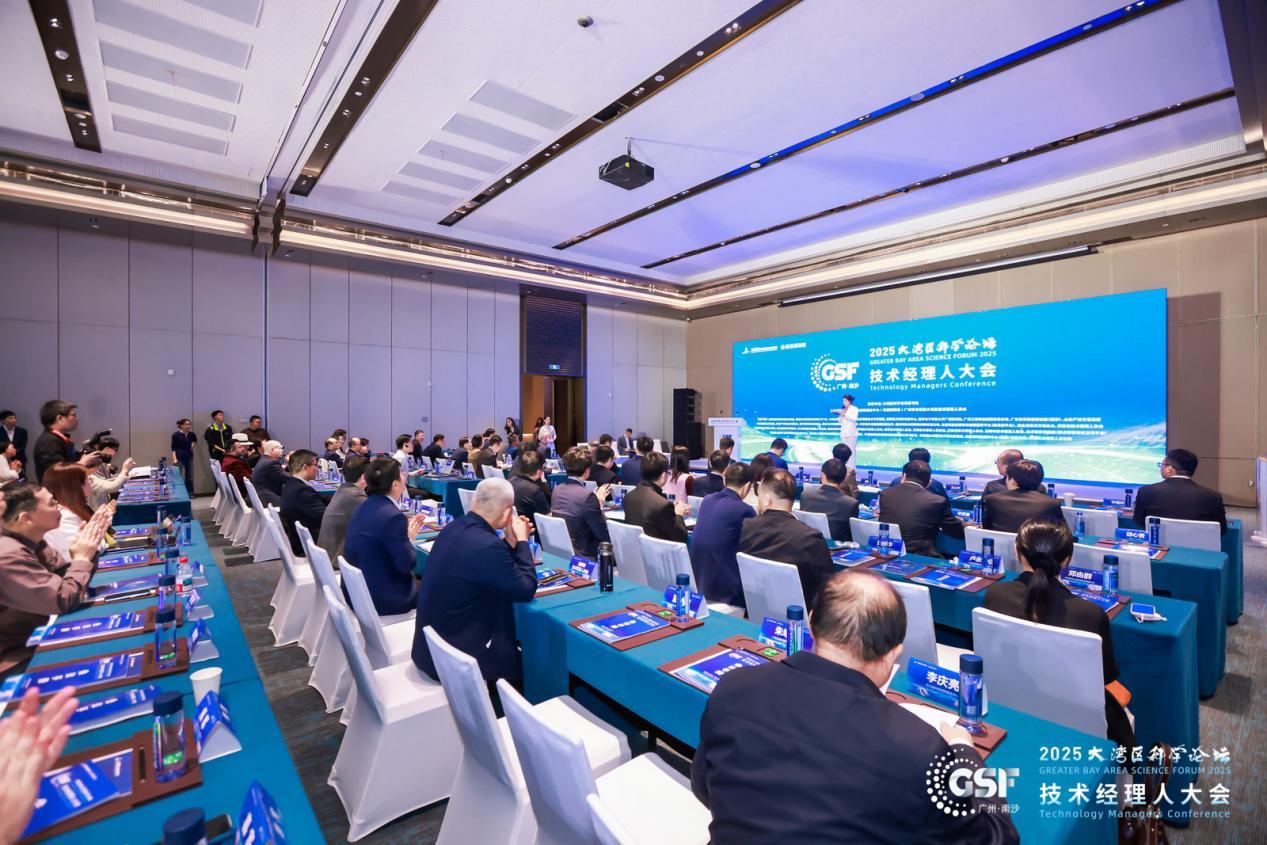
湾区潮涌AI为翼 技才擎领产创扬帆——2025 大湾区科学论坛技术经理人大会成功举办
Feng Huang Wang Cai Jing· 2025-12-07 06:56
Core Insights - The conference focused on the integration of technology transfer mechanisms and the development of technology managers, aligning with national strategic goals for enhancing innovation and commercialization in the Greater Bay Area [1][5][9] Group 1: Conference Overview - The Greater Bay Area Science Forum Technology Manager Conference was successfully held in Guangzhou, emphasizing the importance of deepening the reform of technology transfer mechanisms and strengthening the technology manager workforce [1][5] - The event featured a diverse range of participants, including government officials, industry leaders, and representatives from academic institutions and financial organizations, highlighting the collaborative nature of the conference [2][3] Group 2: Technology Transfer and Collaboration - The conference introduced an innovative "on-site + conference" model to facilitate the transition of technology from laboratories to markets, aiming to establish the Greater Bay Area as a global hub for technology transfer and commercialization [3][5] - The gathering of top research institutions and technology transfer organizations from various economic regions in China aimed to break down regional barriers and enhance the flow of technology resources and services [5][10] Group 3: Initiatives and Achievements - The establishment of the Guangdong-Hong Kong-Macao Greater Bay Area Technology Manager Association was announced, which aims to create a collaborative network for technology managers and enhance the efficiency of technology transfer [11][10] - A digital identity certification system for technology managers was signed, utilizing blockchain technology to create a reliable and traceable professional identity, addressing long-standing issues in the industry [15][13] Group 4: Practical Outcomes - The conference included practical sessions where technology managers facilitated direct interactions between enterprises and research institutions, resulting in preliminary cooperation agreements [8][16] - The release of the "2025 Key Technology Demand List" was a significant outcome, focusing on high-end manufacturing and artificial intelligence, providing clear guidance for matching research capabilities with market needs [23][22] Group 5: Future Directions - The conference emphasized the need for continuous collaboration and innovation in technology transfer, with a focus on creating a sustainable and effective platform for ongoing engagement and resource sharing [34][32] - The integration of AI and digital tools in the technology transfer process was highlighted as a key strategy for enhancing efficiency and effectiveness in matching supply and demand [32][21]
苏州发布“星火培育计划”
Su Zhou Ri Bao· 2025-12-03 00:32
Group 1 - The "Spark Cultivation Program" was launched in Suzhou, aiming to recruit and train 3,000 technical managers over the next three years to address the urgent need for technological achievements in industries [1] - Suzhou has implemented innovative mechanisms such as "pay after use," "research first then equity," and a "global patent pricing system" to facilitate technology transfer [1] - The technology achievement supermarket launched this year has gathered over 10,000 technological achievements from more than 90 universities, with a total value exceeding 14 billion yuan [1] Group 2 - The first Advanced Technical Manager Transformation Competition features three main tracks: youth innovation, international docking, and laboratory transformation integration, with 13 high-quality projects selected from over 200 submissions [2] - The projects focus on key industries in Suzhou, including electronic information, artificial intelligence, biomedicine, and advanced materials, showcasing the diverse potential and innovative vitality of the transformation track [2] - The source of these projects includes top universities and research institutions such as Shanghai Jiao Tong University, University of Cambridge, University of Oxford, Hong Kong Polytechnic University, and Gusu Laboratory [2]