投科技

Search documents
三家股份行AIC,快速出手!
Jin Rong Shi Bao· 2026-01-07 10:48
Core Insights - The establishment of three AICs (Asset Investment Companies) by domestic joint-stock banks marks a significant shift in China's AIC landscape, moving from a state-owned bank-dominated model to a more diversified competitive structure [4][5] Group 1: Investment Activities - Since their inception in November 2025, the three AICs have collectively invested nearly 7 billion yuan (approximately 1 billion USD) in sectors such as new energy and smart vehicles [1][4] - Xinyin Investment, the first to launch, has invested over 6 billion yuan (approximately 870 million USD) in various projects, including a 251.5 million yuan (approximately 36 million USD) investment in Fujian Hengshen Electronic Materials Technology Co., holding an 11.09% stake [2][3] - Xinyin Investment also participated in a 1 billion yuan (approximately 140 million USD) strategic investment in Jiangxi Ganfeng Lithium Technology Co., focusing on the lithium battery industry [2] Group 2: Strategic Focus - The initial investments by the three AICs are concentrated on technology innovation, green low-carbon initiatives, and specialized enterprises, particularly in the lithium battery supply chain, smart automotive sector, and clean energy [4][5] - The investment strategy emphasizes a combination of equity and debt, ensuring compatibility with existing equity structures and focusing on long-term value creation [4][5] Group 3: Industry Evolution - The rapid establishment and investment activities of these AICs indicate a shift in the AIC market dynamics, moving towards a "5+3" competitive landscape, which includes five state-owned banks and three joint-stock banks [4][5] - The joint-stock banks' AICs are expected to fill the financing gap for technology-oriented SMEs, transitioning from traditional credit tools to platforms that empower innovation [5][6] Group 4: Future Outlook - The future of AICs may extend beyond non-performing asset management to include diversified areas such as industry funds, special investments, and ESG projects, enhancing capital management and strategic flexibility for large banks [6] - Xinyin Investment plans to increase investments in fields like new energy, artificial intelligence, and advanced manufacturing, while also seeking private equity investment licenses to support "hard technology" enterprises [6]
投中榜·2025年度榜单评选盛大开启
投中网· 2026-01-05 07:32
Core Viewpoint - The article emphasizes the transformation and value return in the Chinese private equity industry as it shifts from scale expansion to a focus on quality and deep value, marking a new phase in 2025 [2][3]. Group 1: Industry Trends - In 2025, the Chinese private equity sector has moved towards a focus on survival quality and deep value, with a rational fundraising market and an emphasis on optimizing investment portfolios and exit efficiency [3][4]. - The trend of "investing early, investing small, and investing in technology" has become irreversible, with over 10,000 investment cases recorded in the VC/PE market from January to November 2025, a year-on-year increase of over 30% [3][4]. - The electronic information sector contributed more than 3,000 investment cases, accounting for nearly one-third of the total market, followed by advanced manufacturing and healthcare sectors [4]. Group 2: Exit Strategies - The exit ecosystem in private equity is undergoing significant changes, with mergers and acquisitions (M&A) emerging as a core exit strategy alongside IPOs, driven by domestic capital market reforms and industry consolidation needs [4][5]. - The total transaction amount in the Chinese M&A market reached 12.7 trillion yuan from January to November 2025, a substantial year-on-year increase of 51.64% [4]. - The diversification of exit channels, including S funds, provides valuable liquidity for existing assets, indicating a more mature and flexible exit strategy focused on value realization [4][5]. Group 3: Policy and Market Environment - The year 2025 marks a critical turning point, with clear policy directions supporting the "financial powerhouse" strategy, the implementation of venture capital regulations, and optimized equity investment ratios for insurance funds [5]. - The acceleration of AI commercialization, continuous breakthroughs in renewable energy technologies, and a steady increase in the approval of innovative drugs in biomedicine provide rich investment opportunities [5]. - A diverse and stable funding structure is being established with participation from national mother funds, social security science and technology funds, local state-owned capital, industrial capital, and foreign funds [5]. Group 4: Future Outlook - The hard technology investment sector is entering a fruitful harvest period, with a noticeable return of capital wealth effects, particularly in semiconductor and AI fields [6]. - Notable companies in hard technology, such as Muxi Co., Moer Thread, and Biran Technology, have recently completed IPOs, providing substantial returns for investors [6]. - The return of the "Best Return Investor" award in the 2025 investment rankings signifies the maturation of the industry cycle and the diversification of exit channels, attracting more patient capital to invest in the future [6][9].


世纪华通参投摩尔线程浮盈超6亿元,上市公司加码“投科技”
Nan Fang Du Shi Bao· 2025-12-11 09:52
Core Viewpoint - Century Huatong's investment in the technology company Moore Threads is expected to significantly impact its net profit for the fourth quarter of 2025, with an estimated contribution of 640 million yuan, representing approximately 53% of the company's audited net profit for 2024 [1][5]. Group 1: Investment Details - Century Huatong's wholly-owned subsidiary, Shanghai Shengqu Shuming Enterprise Management Co., Ltd., holds a 7.3121% stake in Guosheng Capital, which owns approximately 19.59 million shares of Moore Threads [3]. - Moore Threads, known as the "first domestic GPU stock," saw its share price increase by 468.78% on its debut, reaching 650 yuan per share, with a market capitalization exceeding 300 billion yuan [3]. - As of December 10, Moore Threads' share price rose to 735 yuan, resulting in a total market capitalization of 345.5 billion yuan [3]. Group 2: Market Context - The capital market has shown a strong enthusiasm for technology companies this year, with many tech IPOs experiencing significant price increases post-listing [1]. - Several A-share listed companies have engaged in direct investments or indirect holdings in technology startups, marking a trend of investment in technological innovation [1][6]. - The investment in Moore Threads is part of a broader trend where listed companies are increasingly investing in technology firms to enhance their growth and market valuation [7]. Group 3: Company Background - Century Huatong was established in 2005 and listed on the Shenzhen Stock Exchange in July 2011, initially focusing on automotive parts before transitioning to the internet gaming industry in 2014 [5]. - The company has diversified its operations to include internet gaming, automotive parts manufacturing, artificial intelligence cloud data, and brain science research, among other fields [5]. - Tencent is noted as a significant shareholder in Century Huatong, indicating strong backing from major industry players [5].

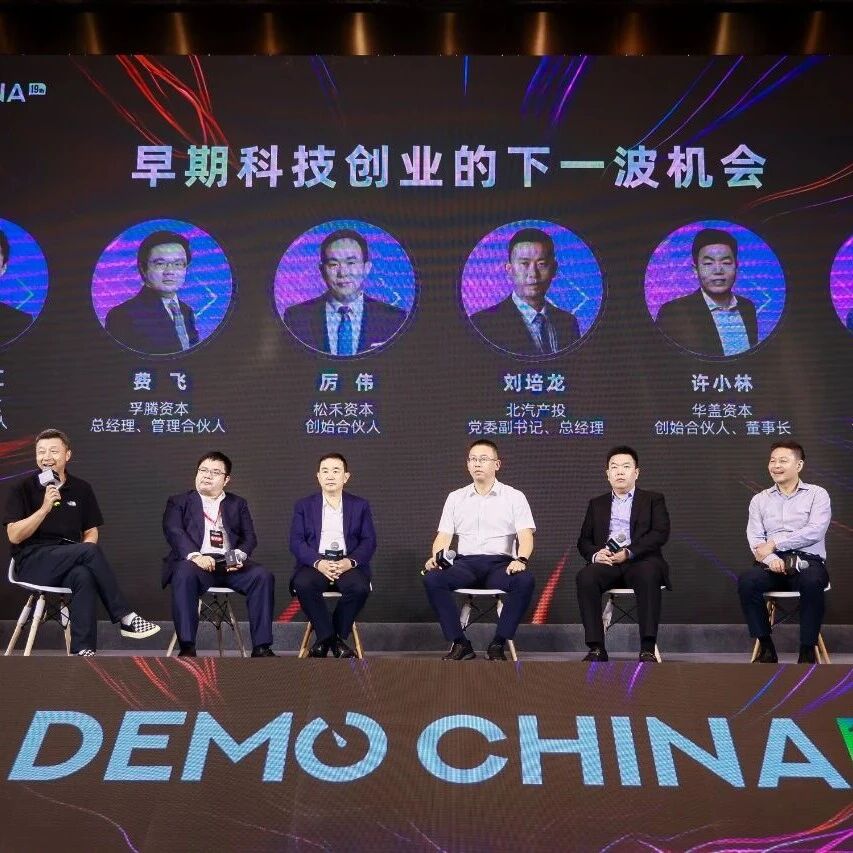
下一波科技创业新命题:厘清“投早”边界,剖析科学家真实创业路径
创业邦· 2025-10-17 03:24
Core Insights - The article discusses the significant opportunities in early-stage technology entrepreneurship, particularly in the context of the hard technology era, as highlighted during the 2025 DEMO CHINA conference [2][4][6]. Group 1: Investment Opportunities - The new industrial cycle presents major opportunities in specific sectors, emphasizing the importance of defining "early" in investment strategies [4][6]. - The concept of "three infinities" (infinite life, infinite intelligence, infinite energy) is identified as the best investment opportunities for the next decade [5][11]. - Investment institutions are focusing on early-stage investments, particularly in hard technology, with a notable shift from internet-based entrepreneurship to hard technology entrepreneurship [6][13]. Group 2: Characteristics of Successful Entrepreneurs - Successful scientists transitioning to entrepreneurs must shift their mindset from technical to commercial thinking and learn to build effective teams [19][21]. - The success rate of scientists as entrepreneurs is low, with a statistic indicating only about 4% success for those directly transitioning from academia [20][21]. - Combining scientific expertise with industry experience in leadership roles increases the likelihood of success in entrepreneurial ventures [21][24]. Group 3: Investment Strategies and Definitions - The definition of "early" in investment varies by industry, with some sectors requiring ongoing financing before reaching maturity [14][16]. - Investment strategies should focus on companies that have not yet developed mature products, with a flexible understanding of what constitutes "early" [12][14]. - The importance of finding a suitable CEO or team leader is emphasized as a critical factor for successful investments in scientific ventures [17][20]. Group 4: Industry Trends and Market Dynamics - The article notes a resurgence in China's medical innovation sector, with a significant increase in investment activity observed in recent quarters [9][10]. - The integration of artificial intelligence into various sectors is seen as a major trend, with numerous investment opportunities arising from its application in daily life [10][11]. - The conference highlighted the need for collaboration between scientists and industry professionals to enhance the success rate of new ventures [22][24].
【重磅发布】来觅研究院2025年上半年PE/VC市场报告
Wind万得· 2025-07-17 22:30
Core Viewpoint - The private equity and venture capital market in China is experiencing a recovery in fundraising and investment activities, driven by supportive government policies and an increase in market confidence, particularly in early-stage investments and technology sectors [2][4][10]. Group 1: Fundraising Situation - In the first half of 2025, 3,050 new private equity and venture capital funds were established, representing a year-on-year increase of 5.8%, with a total subscription scale of 898.6 billion RMB, up 18.2% year-on-year [2][12]. - The average subscription scale for newly established funds reached 295 million RMB, reflecting a year-on-year growth of 11.7% [12]. - The number of small-scale funds (under 1 billion RMB) has increased, indicating a recovery in the participation of private capital, with 1,926 funds established in this category, up 94 from the previous year [19]. Group 2: Government Guidance Funds - Over 40 government guidance funds were established in the first half of 2025, with a focus on enhancing the "patience attribute" and improving error tolerance mechanisms [3][25]. - The return requirements for these funds have been relaxed, with some regions allowing a return ratio as low as 0.4 times the investment [25]. - The establishment period for these funds has been extended to 15-20 years, allowing for more sustainable investment strategies [25]. Group 3: Investment Analysis - A total of 4,523 financing cases were recorded in the first half of 2025, a slight decrease of 2.6% year-on-year, with disclosed financing amounts totaling 152.36 billion RMB, down 15.7% [3][29]. - Early-stage financing (A-round and earlier) accounted for 68.3% of all cases, indicating a continued preference for smaller, earlier investments [32]. - The technology sector, particularly electronics, information technology, and healthcare, accounted for 63.5% of financing cases, highlighting the focus on innovation-driven industries [3][29]. Group 4: Market Dynamics - The market is witnessing a trend towards normalization and regulatory improvements, with a focus on enhancing transaction efficiency and reducing disputes over valuations [27]. - The S-fund market is evolving with new policies aimed at attracting diverse funding sources, including insurance and bank wealth management products [27]. - The overall investment environment is stabilizing, with a notable concentration of financing activities in economically developed regions, where the top ten cities accounted for 88.3% of financing cases [34].