
全生命周期金融服务

Search documents
青岛金融新政精准服务海洋产业
Zhong Guo Zi Ran Zi Yuan Bao· 2026-01-22 03:28
Core Viewpoint - The Qingdao Municipal Financial Office, in collaboration with several local financial and regulatory bodies, has issued a "Financial Support for the Full Lifecycle Development of the Marine Industry Work Plan" to integrate various financial resources and create a comprehensive financial service model for the marine industry [1][2]. Group 1: Initial Stage of Enterprises - The work plan focuses on addressing financing bottlenecks during the startup phase of marine enterprises by leveraging marine industry funds and enhancing technology innovation support [1]. - It encourages banks and insurance institutions to establish marine-specific branches to accelerate the aggregation of marine financial resources [1]. Group 2: Growth Stage of Enterprises - The plan emphasizes financial empowerment for enterprises in their growth phase, particularly through innovative financing methods such as intellectual property pledge financing and specialized credit products like fishing vessel and marine area usage rights mortgages [2]. - It promotes the use of big data to improve credit approval efficiency and introduces services like "Qing担·海洋e担" to enhance financing guarantees [2]. Group 3: Mature Stage of Enterprises - Financial institutions are encouraged to provide comprehensive services, including technology transformation loans and cross-border settlement solutions, to support the scaling of mature enterprises [2]. - The plan also includes tools for mergers and acquisitions and risk hedging, alongside the development of digital supply chain financial scenarios [2]. Group 4: Listing Stage of Enterprises - The work plan aims to enhance listing services for enterprises, facilitating capital market access through partnerships with stock exchanges and providing full-process listing guidance [2]. - It focuses on improving corporate governance and operational performance to prepare enterprises for public offerings [2]. Group 5: Overall Impact - The issuance of the work plan represents a practical step in Qingdao's efforts to deepen the "finance + industry" mechanism and align financial services with the development needs of the marine industry [2]. - The Qingdao Municipal Financial Office will continue to strengthen inter-departmental collaboration and ensure the effective implementation of the plan to support the full-chain development of marine enterprises [2].
三家股份行AIC,快速出手!
Jin Rong Shi Bao· 2026-01-07 10:48
Core Insights - The establishment of three AICs (Asset Investment Companies) by domestic joint-stock banks marks a significant shift in China's AIC landscape, moving from a state-owned bank-dominated model to a more diversified competitive structure [4][5] Group 1: Investment Activities - Since their inception in November 2025, the three AICs have collectively invested nearly 7 billion yuan (approximately 1 billion USD) in sectors such as new energy and smart vehicles [1][4] - Xinyin Investment, the first to launch, has invested over 6 billion yuan (approximately 870 million USD) in various projects, including a 251.5 million yuan (approximately 36 million USD) investment in Fujian Hengshen Electronic Materials Technology Co., holding an 11.09% stake [2][3] - Xinyin Investment also participated in a 1 billion yuan (approximately 140 million USD) strategic investment in Jiangxi Ganfeng Lithium Technology Co., focusing on the lithium battery industry [2] Group 2: Strategic Focus - The initial investments by the three AICs are concentrated on technology innovation, green low-carbon initiatives, and specialized enterprises, particularly in the lithium battery supply chain, smart automotive sector, and clean energy [4][5] - The investment strategy emphasizes a combination of equity and debt, ensuring compatibility with existing equity structures and focusing on long-term value creation [4][5] Group 3: Industry Evolution - The rapid establishment and investment activities of these AICs indicate a shift in the AIC market dynamics, moving towards a "5+3" competitive landscape, which includes five state-owned banks and three joint-stock banks [4][5] - The joint-stock banks' AICs are expected to fill the financing gap for technology-oriented SMEs, transitioning from traditional credit tools to platforms that empower innovation [5][6] Group 4: Future Outlook - The future of AICs may extend beyond non-performing asset management to include diversified areas such as industry funds, special investments, and ESG projects, enhancing capital management and strategic flexibility for large banks [6] - Xinyin Investment plans to increase investments in fields like new energy, artificial intelligence, and advanced manufacturing, while also seeking private equity investment licenses to support "hard technology" enterprises [6]
从“融资”向“融智”跨越 一家县域农商银行的科技金融蝶变之路
Jin Rong Shi Bao· 2025-12-25 03:20
Core Insights - The article highlights the proactive role of Hai'an Rural Commercial Bank in supporting technology-driven enterprises, showcasing its innovative financial services tailored to the needs of high-tech companies [1][2][3]. Group 1: Financial Support and Growth - Hai'an Rural Commercial Bank provided a loan of 10 million yuan to Nantong Sifang New Materials Co., Ltd., which has grown from a 30 million yuan output to 280 million yuan, demonstrating the bank's commitment to nurturing local tech enterprises [1]. - The bank has supported 547 technology-based enterprises, with a total credit loan balance of 9.566 billion yuan, reflecting its significant impact on the local tech ecosystem [2]. Group 2: Innovative Credit Assessment - The bank has established a new evaluation system that shifts focus from traditional asset-based assessments to evaluating future value and core capabilities of enterprises, allowing for more flexible credit support [2]. - This new model emphasizes the importance of intellectual property and cash flow over fixed assets, enabling tech companies to secure funding based on their innovation potential [2][3]. Group 3: Specialized Service Mechanisms - Hai'an Rural Commercial Bank has implemented a "six-special" mechanism to create a specialized service team for tech enterprises, ensuring tailored financial solutions [4]. - The bank launched Jiangsu's first financial service standard for tech enterprises, which aims to standardize and enhance service quality and efficiency [5]. Group 4: Comprehensive Product Offerings - The bank has developed a diverse product matrix that addresses the financial needs of tech enterprises at different growth stages, from startup loans to specialized financing for mature companies [6]. - Specific products include "Tech Innovation Loans" and "Talent Loans," designed to support various aspects of enterprise development [6]. Group 5: Ecosystem Building and Collaboration - Hai'an Rural Commercial Bank positions itself as a resource connector, collaborating with government and industry bodies to enhance support for tech enterprises [7]. - The bank has implemented differentiated interest rates for tech companies, resulting in a 70 basis point reduction in average loan rates compared to the previous year, thereby reducing financing costs for businesses [7].
从“及时雨”到“合伙人”——金融与科创企业共生样本观察
Zhong Guo Zheng Quan Bao· 2025-12-22 00:54
Core Insights - The article emphasizes the importance of financial support for technology innovation enterprises, highlighting the need for tailored financial services throughout their growth stages [1][4][13] Group 1: Financial Support for Technology Enterprises - Technology innovation enterprises face unique challenges such as being asset-light, having long R&D cycles, and high-risk factors, necessitating diverse financial needs at different growth stages [1][9] - Financial institutions are innovating their products and services to provide a "precise drip irrigation" and "full-cycle companionship" financial service system to support these enterprises [1][4] Group 2: Case Study of Kanglin Biotechnology - Kanglin Biotechnology, established in 2015, faced significant challenges as a "three-no" enterprise (no collateral, no income, no profit) during its early stages, which is representative of the industry [2][3] - The company received a critical 5 million yuan credit loan from Zhejiang Commercial Bank based on the founder's academic background and technology patents, which helped it transition to clinical trials [3] - The financial support evolved from 5 million yuan to a combination of 70 million yuan, facilitating clinical trials and equity financing [3] Group 3: Collaborative Growth Plans - In Anhui, many technology enterprises are signing "joint growth plans" with financial institutions, fostering deeper cooperation [4][5] - The "joint growth plan" offers advantages such as medium to long-term loans, increased loan amounts, and flexible interest rates [5] Group 4: Implementation and Results - The "joint growth plan" has proven effective in supporting companies like Wanhao Energy, which received 30 million yuan in credit support to address cash flow pressures [6][8] - The plan has evolved to a 2.0 version, enhancing the depth and breadth of bank-enterprise cooperation, including a revenue-sharing model [6][12] Group 5: Innovative Financing Models - The "Zhejiang Science and Technology Joint Loan" model was introduced to address the limitations of single bank services, allowing multiple banks to provide credit support to a single technology enterprise [10][11] - This model has led to improved credit efficiency and broadened financing channels for enterprises, with 27 banks participating and issuing loans totaling 10.87 billion yuan [12] Group 6: Risk Mitigation and Market Stability - The collaborative approach of multiple banks helps to distribute risks and stabilize the financing environment for technology enterprises, preventing irrational competition among banks [13]
加强科技型企业全生命周期金融服务(记者手记)
Ren Min Ri Bao· 2025-10-12 21:59
Core Viewpoint - The implementation of the "first set" insurance compensation policy aims to promote innovation and alleviate market entry challenges for new technologies and materials, thereby enhancing manufacturers' confidence in research and development [1][2]. Group 1: Policy Implementation - The recent notification by relevant authorities outlines the compensation policy for the first set of major technological equipment insurance and the first batch of new materials insurance, which has garnered attention from business operators [1]. - Since 2015, China has been implementing a compensation mechanism for the first set of major technological equipment insurance, with recent optimizations in coverage, insurance rates, and application processes to better support the market entry of innovative products [2]. Group 2: Financial Support for Innovation - The first set and first batch insurance products are seen as essential components of optimizing financial services throughout the entire lifecycle of technology, supporting various stages from research and development to market promotion [2]. - Financial institutions have been innovating products and increasing support for technology companies, including the introduction of insurance for concept validation and pilot testing, which aids in transitioning technology from laboratory to production [2]. Group 3: Challenges and Recommendations - Despite the acceleration of technological innovation and the emergence of new industries, there are still shortcomings in financial service supply compared to market demand, necessitating improved risk management and assessment capabilities within the insurance industry [3]. - To enhance the effectiveness of technology finance, it is recommended to strengthen policy coordination and data sharing across departments, which would improve the willingness of enterprises to purchase insurance and expand service coverage [3].
浙江省首批“浙科联合贷”落地 杭州银行携手同业全生命周期陪伴科技企业成长壮大
Zhong Guo Jing Ji Wang· 2025-09-22 12:33
Core Viewpoint - Hangzhou Bank is committed to serving the real economy and has successfully launched the "Zheke United Loan," a new financing model for technology enterprises, reflecting its long-term efforts in building a specialized technology financial service system [1] Group 1: Overview of "Zheke United Loan" - "Zheke United Loan" is guided by multiple financial and governmental bodies, aiming to address the financing challenges faced by technology enterprises throughout their lifecycle [2] - The loan program includes three sub-products: "Inclusive United Loan," "Growth United Loan," and "Leading United Loan," tailored to meet the diverse financial needs of technology enterprises at different stages [2] Group 2: Focus on Inclusive Financing - The program emphasizes inclusive finance, targeting small and micro technology enterprises that require assistance [3] - A joint service team was established between Hangzhou Bank and Industrial and Commercial Bank of China to provide tailored support to high-growth technology enterprises [3] Group 3: Growth Financing Solutions - The "Growth United Loan" has been customized for a startup medical enterprise, providing a credit line of 12 million yuan with a loan rate 26 basis points lower than the average [5] - This support has enabled the enterprise to meet its funding needs for research, production, and expansion [5] Group 4: Large Demand Financing - The "Leading United Loan" is designed for mature technology enterprises with significant funding needs, offering high credit limits and long terms [6] - A collaboration with Minsheng Bank has facilitated a project that supports a digital healthcare enterprise, enhancing its capacity for innovation and service quality [6] - The program integrates various resources to provide stable and diverse financial support for technology enterprises throughout their growth lifecycle [6]

“贷”动成长、“贷”动升级、“贷”出活力 金融“活水”激活经济发展强劲动力
Yang Shi Wang· 2025-09-20 03:49
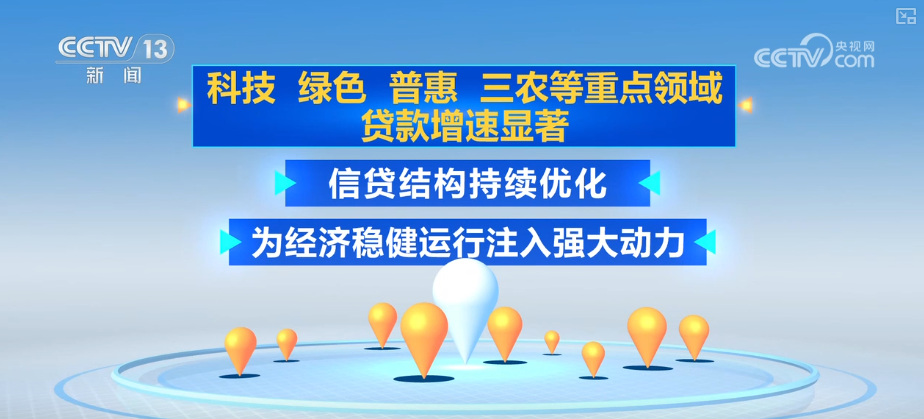
Core Insights - The People's Bank of China reported that in the first eight months of 2025, RMB loans increased by 13.46 trillion yuan, with over 90% of new loans directed towards enterprises, totaling 12.22 trillion yuan, indicating strong financial support for the real economy [1] - Key sectors such as technology, green finance, inclusive finance, and agriculture have seen significant loan growth, optimizing the credit structure and injecting strong momentum into the economy [1] Group 1: Technology and Innovation Financing - In 2025, loans to the manufacturing sector showed significant improvement compared to the previous year, particularly for technology-driven enterprises, reflecting high demand for new financing [2] - A financial institution quickly responded to the strong demand for technology loans, providing 50 million yuan to support critical development areas of a company within a week [3] - Anhui province launched a "Joint Growth Plan" to support technology enterprises, attracting over 100 financial institutions, with one "little giant" enterprise receiving 70 million yuan in credit to address urgent R&D funding needs [4][5] Group 2: Agricultural Financing - Since 2025, agricultural loans have been on the rise, with tailored financial services like "fishing boat loans" and "broccoli loans" addressing the unique needs of farmers and fishermen [8] - The Agricultural Bank of China in Tianjin has issued over 30 million yuan in loans to nearly 30 fishermen by integrating fishing vessel valuation and subsidy programs [11] - In Jiangsu province, the introduction of "broccoli loans" has enabled over 30 major growers to expand their planting areas, enhancing production capacity [13] Group 3: Green Finance Initiatives - Local financial institutions have collaborated with industry associations to launch specialized loan products, such as a 50 million yuan "broccoli loan" to support the high-quality development of the broccoli industry [15] - In the context of carbon neutrality goals, innovative financial products have been introduced, such as a 10 million yuan loan for a new materials company aimed at energy-saving technology upgrades, with a 15% lower interest rate compared to traditional loans [16][18] - The establishment of a carbon emission monitoring system in the copper industry has enabled financial institutions to develop differentiated credit policies, supporting low-carbon transitions effectively [20][22][24][27]

全生命周期金融服务,助力“硬科技”企业风雨中长跑
证券时报· 2025-05-26 09:05
Core Viewpoint - "Hard technology" companies in China are facing unprecedented opportunities and challenges in the wave of technological innovation, supported by financial institutions throughout their development stages [1] Financial Support for Technology Innovation - Financial institutions have provided tailored financial services across the lifecycle of "hard technology" companies, from inclusive loans for startups to cross-border financial services for mature companies [1] - The financial system has actively implemented national strategies to support technological innovation, resulting in a significant increase in loans to technology-based SMEs, reaching a balance of 3.3 trillion yuan, with a year-on-year growth of 24% [4] Case Studies of Financial Support - UBTECH Robotics, known as the "first humanoid robot stock," received a 10 million yuan inclusive loan from China Bank during its startup phase, which was crucial for its growth [3] - Longsi Technology faced funding pressures during its product development phase but received timely support from China Bank's "Tech Innovation Loan," which provided unsecured loans [7] - JingTai Technology received 150 million yuan in "Tech Innovation Loans" from China Bank in 2022, which significantly supported its daily operations and R&D [8] Innovation in Financial Services - Shenzhen has seen continuous innovation in financial services, with institutions launching products like "Tech Startup Pass" and "Soaring Loan" to cater to high-growth technology companies [6] - By the first quarter of this year, the loan balance for technology-based enterprises in Shenzhen reached 1.23 trillion yuan, ranking among the highest in the country [6] Expanding Market Opportunities - In response to external changes, technology companies are accelerating innovation and domestic substitution, with 2025 recognized as a pivotal year for humanoid robot commercialization [10] - Multi-tiered capital markets are becoming fertile ground for the growth of technology innovation companies, with various boards supporting strategic emerging industries [10] International Expansion - Technology companies are increasingly looking to expand into overseas markets, with plans to accelerate business development in regions like Europe and the Middle East [11] - Cross-border financial services from institutions like China Bank have been essential for companies like Yujiang Technology in their global expansion efforts [11]


全生命周期金融服务 助力“硬科技”企业风雨中长跑
Zheng Quan Shi Bao· 2025-05-25 18:13
Group 1 - The core viewpoint emphasizes the significant opportunities and challenges faced by "hard technology" companies in China, highlighting the essential role of financial institutions in providing tailored financial services throughout the company's lifecycle [1][2][3] - Financial institutions have actively implemented national strategies to support technological innovation, resulting in a continuous increase in loans to technology-based SMEs, with a loan balance of 3.3 trillion yuan as of March 2025, reflecting a year-on-year growth of 24% [3][4] - The development of innovative financial services, such as "Tech Startup Pass" and "Soaring Loan," has been promoted in Shenzhen, leading to a loan balance of 1.23 trillion yuan for technology companies, positioning Shenzhen as a leader in this sector [4][5] Group 2 - The support from capital markets has been crucial for companies like UBTECH Robotics, which has transformed from a startup to a leading enterprise in the robotics industry, benefiting from significant financial backing during its growth [2][6] - Financial institutions have adjusted their lending practices to support unprofitable tech startups, with banks like China Bank providing unsecured loans to facilitate their growth [5][6] - The introduction of a specialized evaluation model for tech companies by China Bank has enhanced the approval process for loans, particularly for AI-related enterprises, indicating a proactive approach to risk management [6][7] Group 3 - In response to external market changes, technology companies are accelerating innovation and exploring overseas markets, with plans to expand into regions like Europe and the Middle East [7][8] - The establishment of a "Technology Board" in the bond market aims to improve the efficiency of issuing technology innovation bonds, addressing the structural mismatch between traditional credit and the needs of tech innovation [7][8] - Companies like Yujiang Technology have successfully expanded their global presence, supported by comprehensive cross-border financial services from institutions like China Bank, which assist in international investment and capital management [8][9]