绿色投资

Search documents
气候风险:金融监管机构的作用(英)2026
IMF· 2026-03-02 08:40
Investment Rating - The report does not explicitly provide an investment rating for the industry. Core Insights - Financial regulators should prioritize building resilience in financial institutions and ensuring market fairness, efficiency, and transparency in the context of climate-related risks [11] - Regulatory approaches must align with international standards and utilize existing tools to address climate-related risks effectively [13][21] - Emerging market jurisdictions need to assess the severity of climate risks on their financial sectors and adjust regulatory priorities accordingly [14][49] Summary by Sections I. Introduction - Financial regulators are increasingly confronted with their roles in addressing climate risks, with significant discussions and efforts emerging over the past decade [15] - The need for regulatory action is particularly pressing in emerging market economies facing growing climate-related risks [15] II. Regulatory and Supervisory Approaches - Regulators should focus on their core responsibilities and avoid intervening to promote green investments, which are typically driven by the private sector [12][17] - Climate-related risks must be integrated into the regulatory framework to ensure financial stability and market integrity [18][36] - High-quality, comparable data is essential for effective regulation and supervision of climate-related risks [24] III. Banking Regulation and Supervision - Regulatory expectations should be established for governance, risk management, and climate-related risk disclosures in banks [27][29] - The regulatory framework must evolve to incorporate climate-related risks without fundamentally altering existing structures [22][32] IV. Insurance Regulation and Supervision - Insurance regulators must adopt tailored strategies to address climate-related risks, focusing on governance and risk management [37][38] - The unique challenges faced by life and non-life insurers regarding climate risks necessitate specific regulatory considerations [39][40] V. Securities Market Regulation and Supervision - Securities regulators are addressing climate-related issues within their frameworks, including the demand for climate risk disclosures from investors [43] - International standards for climate-related disclosures are being developed to enhance consistency and comparability in financial markets [44] VI. Considerations for Emerging Markets - Emerging market regulators should evaluate the materiality of climate risks to their core missions and allocate resources accordingly [49][51] - Capacity-building efforts in these jurisdictions should incorporate climate risks as fundamental components of regulatory frameworks [52]
ESG投资“虚火”渐熄:万亿资金告别绿色标签,回归财务基本面
2 1 Shi Ji Jing Ji Bao Dao· 2026-02-09 11:41
Core Insights - The trend of sustainable issues returning to financial relevance is a key focus for 2026, as highlighted by MSCI's head of Sustainable and Climate Research for Greater China, Guo Sipin [1] - Despite global policy fluctuations, the scale of sustainable investment assets continues to rise, with MSCI's sustainable and climate index surpassing $1 trillion by 2025 [1] - Investors' growing recognition of the financial importance of sustainability and climate issues is influencing corporate ESG disclosure practices [1][2] Group 1: ESG Investment and Financial Relevance - ESG investment value is increasingly rooted in solid corporate fundamentals, moving away from mere conceptual speculation [2] - Events such as environmental damage, safety incidents, and antitrust investigations can lead to stock price declines and reputational damage, representing real financial risks [2] - MSCI's data since 2013 shows that companies with higher ESG ratings consistently outperform their lower-rated peers, with excess returns driven by profit growth rather than valuation expansion [2] Group 2: Corporate Disclosure and Market Trends - The percentage of MSCI ACWI constituents setting climate goals has increased from less than 10% a decade ago to nearly 60% by the end of 2025, driven by investor pressure [2] - In Europe, the introduction of comprehensive EU legislation has led to growth in disclosure rates, while in the Americas, despite a slowdown due to policy environments, disclosure continues to expand [3] - The market's assessment framework is evolving, with increasing demands for information quality and a shift from simple "green" labels to a focus on specific performance metrics [3] Group 3: Emerging Industries and Green Technology - High-growth sectors like data centers are now subject to strict ESG evaluation frameworks, with carbon emissions and energy consumption becoming key investor concerns [4] - The global carbon emissions from data centers account for approximately 2%-5%, with high growth rate predictions prompting investor scrutiny [4] - In green technology investments, companies that generate revenue from scalable, verified technologies significantly outperform those relying on early-stage technologies [4] Group 4: Climate Risk Management in Financial Institutions - Climate issues have transitioned from strategic declarations to urgent risk management challenges for financial institutions, with global regulators incorporating climate factors into supervisory frameworks [6] - Chinese banks face the highest median transition risk among 27 jurisdictions, indicating a need for improved climate risk management preparedness [6] - The proportion of Chinese banks disclosing climate risk management efforts is expected to rise from 20% in 2023 to nearly 40% by 2025 [6] Group 5: Integration of Climate Data in Banking - Climate data is becoming an essential tool for banks, particularly in risk management and client services, influencing the issuance of green bonds and financial solutions [7] - Banks are integrating climate risks into traditional risk management frameworks, assessing potential credit losses from high-carbon assets and extreme weather impacts [7] - The Asia-Pacific region, while facing high physical risk exposure, is also a center for green technology innovation and investment opportunities [7][8] Group 6: Challenges in Data Availability - The analysis of climate risks at the asset level faces challenges related to data availability, particularly for supply chain and overseas assets [8] - Future sustainable and climate analysis is expected to shift from disclosure tools to core decision-making instruments within financial institutions [8]
申万宏源证券赵伟:扩内需看服务消费 增活力靠服务业开放
Shang Hai Zheng Quan Bao· 2026-02-04 18:12
Core Insights - The article emphasizes the importance of "consolidating the foundation" and "comprehensive efforts" as dual guiding principles for China's economic strategy in 2026, the first year of the 14th Five-Year Plan [1][2] - Key areas of focus include service consumption, "new" infrastructure, and green investment, which are expected to significantly influence the economic trajectory for the year [1][3] Economic Strategy - "Consolidating the foundation" refers to strengthening the industrial system, market foundation, and institutional framework established during the 13th Five-Year Plan [2] - "Comprehensive efforts" indicates an acceleration in policy implementation across development and reform sectors [2] - The concept of "strategic initiative" highlights the increased proactivity of the government in coordinating domestic economic work and international trade dynamics [2] Growth Drivers - The two main drivers for economic growth in 2026 are the sustained release of service demand and increased investment in "new" infrastructure and green transformation [3][4] - Service consumption is expected to gain momentum as GDP per capita surpasses $10,000, leading to a shift from goods consumption to service consumption [3] Investment Focus - Three key investment directions are identified: 1. Continuous investment in emerging industries such as artificial intelligence, commercial aerospace, high-end equipment, and biomanufacturing, where China has established global advantages [4] 2. "New" infrastructure aimed at enhancing economic system efficiency, including digitalization and transportation hub development [4] 3. Green transformation investments aligned with carbon neutrality goals, focusing on foundational capabilities like carbon tracking and upgrades to energy systems [4] Service Sector Opportunities - The service sector is viewed as a significant "investment blue ocean" and innovation platform, requiring new supply models and physical scenarios to support service consumption [5][6] - Government investment in public services has been increasing since 2025, creating favorable conditions for service consumption [6] - The aging population and changing demographics present ongoing opportunities in healthcare, wellness, and lifestyle services, driving market expansion in these areas [6]

马来西亚投资发展局局长助理: 冀吸引中国先进技术投资
2 1 Shi Ji Jing Ji Bao Dao· 2026-02-03 13:58
Core Viewpoint - The cooperation between ASEAN and China is deepening and becoming more integrated, as highlighted by the remarks of Herni, Assistant Director of the Malaysian Investment Development Authority, during an APEC investment group seminar [1] Group 1: Investment Cooperation - APEC members shared best investment practices, indicating a positive trend in investment cooperation [1] - Malaysia aims to attract more potential investments by sharing its investment framework [1] Group 2: Trade and Investment Landscape - China has been Malaysia's largest trading partner for 16 consecutive years and a major source of investment [1] - Malaysia's vision includes attracting investments from countries like China, supported by the "2030 New Industrial Master Plan" focusing on five key priority areas, including advanced technology sectors like semiconductors and aerospace [1] Group 3: Green Investment Strategy - The green sector is a key focus area for Malaysia, which has established a green investment strategy to attract and promote green investments [1]
申万宏源赵伟:2026年中国经济瞄准服务消费与“新”新基建
Xin Hua She· 2026-01-31 14:16
Core Viewpoint - The core viewpoint emphasizes the importance of "consolidating the foundation and making comprehensive efforts" for China's economic stability in 2026 amidst a complex environment [1] Group 1: Economic Foundations - "Consolidating the foundation" refers to the reinforcement and deepening of the industrial system, market foundation, and institutional framework established during the 14th Five-Year Plan [1] - "Comprehensive efforts" indicates that the pace of policy implementation and advancement in development and reform-related areas will accelerate [1] Group 2: Key Economic Drivers for 2026 - Service consumption is expected to see a significant release of pent-up demand due to the ongoing implementation of service industry opening policies [1] - The "new" new infrastructure focuses on systematically reducing social logistics costs through digitalization and intelligent methods, enhancing the efficiency of economic operations by strengthening urban transportation hubs and developing multimodal transport [1] - Green investment will continue to promote the green transformation of industries in line with the "dual carbon" goals [1]
【财经分析】跟踪可持续关键指数资金破万亿美元 全球转型债券发展走向深水区
Xin Hua Cai Jing· 2026-01-30 05:23
Group 1 - The core point of the article highlights the historic milestone of sustainable finance, with funds tracking MSCI sustainable and climate indices surpassing $1 trillion, indicating a deepening and irreversible trend in capital markets towards sustainability and climate factors [1][2] - The shift in capital logic is evident as sustainable investment asset management scales continue to rise, reflecting a profound change from short-term policy chasing to anchoring on long-term financial fundamentals [2][3] - Companies with high ESG ratings have consistently outperformed their lower-rated peers, with excess returns primarily driven by profit growth and improvements in fundamentals, reinforcing the notion that ESG is a quality filter for corporate fundamentals [2][3] Group 2 - The proportion of publicly listed companies setting climate goals has surged from less than 10% to nearly 60% over the past decade, particularly in the Asia-Pacific region, driven by both investor and policy pressures [2][3] - Financial institutions are increasingly integrating climate factors into core risk management rather than treating them as background considerations, marking a significant evolution in financial management capabilities [2][3] - The transition in the bond market reflects a growing demand for credible, quantifiable, and actionable "transition narratives" from companies, moving beyond simple "green" labels [4][5] Group 3 - The transition bond market serves as a critical window to observe the evolving requirements of capital markets, where financing is still heavily concentrated on mitigation efforts, with a notable gap in funding for adaptation and physical risk mitigation [4][5] - Companies aiming to issue transition bonds or secure green finance must provide comprehensive climate goals, including detailed implementation paths and third-party verification, to meet capital market expectations [4][5] - Enhanced, quantifiable metrics are essential for presenting a complete and credible transition narrative to capital markets, with leading institutional investors focusing on asset-level assessments of specific physical risks [5][6]
“十五五”时期如何充分发挥生态环境政策对扩大内需、拉动增长的作用?
Zhong Guo Huan Jing Bao· 2026-01-25 23:33
Group 1: Economic Development Strategy - The core viewpoint emphasizes the importance of domestic demand-driven economic growth, with a focus on consumption and investment as key drivers for sustainable development [1] - The "15th Five-Year Plan" aims to enhance ecological policies to stimulate domestic demand and promote green transformation [1][3] Group 2: Green Investment and Infrastructure - The construction of ecological infrastructure is identified as a crucial engine for driving green domestic demand, with an estimated investment of 803.74 billion yuan in pollution control for 2024 [4] - The government is expected to play a leading role in guiding social capital towards ecological investments, creating new economic growth points [2][4] Group 3: Green Consumption and Standards - Activating green consumption is essential for linking high-level ecological protection with quality living, with new consumption scenarios emerging from the "Beautiful China" initiative [6][7] - The enhancement of ecological standards is necessary to stimulate greater green consumption, with a focus on electric vehicles and energy-efficient appliances [8][9] Group 4: Technological Innovation - Technological innovation is highlighted as a core driver for green transformation, with a focus on key technology breakthroughs and the commercialization of research outcomes [10] - The establishment of a national platform for ecological technology transfer aims to support enterprises in achieving green and low-carbon development [10] Group 5: Global Green Trade - The expansion of green trade is seen as a way to enhance domestic industries' international competitiveness, with projections indicating a significant market growth for green products by 2030 [11] - The strategy includes aligning domestic green standards with international ones to facilitate better integration into global green trade [11]
A股ESG强制披露“首考”进行时 投资者“阅卷”如何识金
Zhong Guo Zheng Quan Bao· 2026-01-25 21:58
Group 1 - The core focus of the articles is the increasing importance of ESG (Environmental, Social, and Governance) disclosures among listed companies in the A-share market, especially with the mandatory disclosure of sustainability reports starting in 2026 [1][2] - Investors are encouraged to develop effective methods for evaluating ESG reports to avoid "greenwashing" risks and to identify companies that are genuinely committed to sustainable practices [1][2] - The shift from voluntary to mandatory ESG reporting is expected to enhance the completeness and comparability of reports, particularly in environmental data such as greenhouse gas emissions [2][3] Group 2 - Key areas of focus for evaluating ESG management include the clarity of disclosure boundaries, the quality of data, and the establishment of reduction targets and pathways [3][4] - Governance and social indicators that reflect long-term development potential are often overlooked, yet they are crucial for assessing a company's ESG performance [4][5] - Industry-specific scoring checklists are recommended to identify material issues that have both substantive impact and financial significance [5][6] Group 3 - The credibility of ESG data is increasingly reliant on third-party verification, which is becoming more prevalent among major companies [6][7] - Investors should focus on the authority of verification agencies and the scope of the verification to assess the reliability of ESG reports [7][8] - High-quality verification can enhance a company's score in mainstream ESG ratings, although it is not a direct indicator of higher valuation [8][9] Group 4 - The quality of ESG reporting is expected to lead to valuation differentiation in the market, with companies that provide incomplete or low-quality disclosures facing potential valuation discounts [9][10] - The mandatory disclosure will likely foster structural investment opportunities, encouraging competition among companies in terms of efficiency metrics related to energy consumption and emissions [10][11] - Enhanced ESG data quality may lead to the creation of new ESG index products and investment tools, benefiting both passive and active investment strategies [10][11]
迎接ESG大考,险企数据中心碳排高
2 1 Shi Ji Jing Ji Bao Dao· 2026-01-22 06:44
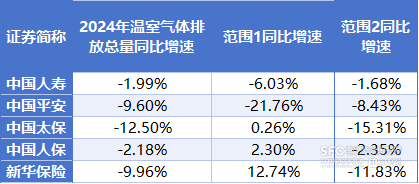
Core Viewpoint - The upcoming ESG evaluation for A-share listed insurance companies is drawing significant market attention, with a focus on their carbon emissions and customer service complaints as they prepare for mandatory disclosures by January 2026 [2][3]. Group 1: ESG Reporting and Carbon Emissions - All five major A-share listed insurance companies, including China Life, Ping An, China Pacific, PICC, and New China Life, are required to disclose their latest annual ESG reports within three months [2]. - The first national standard for financial ESG evaluation has been released, providing a clear scoring framework for the insurance industry [2]. - The total carbon emissions of these five companies show a downward trend, with the highest reduction reaching 12.5% [2][6]. - China Life has the highest total carbon emissions at 67.61 thousand tons, while PICC has the lowest at 1.76 thousand tons, indicating significant disparities in emissions across the industry [6]. Group 2: Green Investments - The total scale of green investments by the five insurance companies exceeds 1 trillion yuan, with China Life leading at nearly 535 billion yuan [11][12]. - Green insurance products are also being developed, with significant coverage amounts reported by various companies, such as China Life providing risk coverage exceeding 18 trillion yuan [11][12]. Group 3: Customer Complaints - New China Life has seen a dramatic increase in customer complaints, with a year-on-year rise of 71.52%, totaling 134,293 complaints [15][16]. - The complaint volume per billion yuan of premium for New China Life is 0.87, which is relatively high compared to other companies [15][16]. - The insurance industry is facing scrutiny regarding customer service quality, which is a critical aspect of the social dimension of ESG [15][17].






德意志银行董事总经理穆勒:资金正在更换配置方式
第一财经· 2026-01-19 08:50
Core Viewpoint - The key discussion at the World Economic Forum (WEF) 2026 is how funds can find certainty amid global trade tensions and policy uncertainties, with the International Monetary Fund (IMF) projecting a global economic growth rate of 3.1% for 2026 [2] Group 1: AI and Investment Shifts - AI is being discussed within the framework of real economic constraints, with generative AI transitioning from a software focus to impacting energy, infrastructure, and natural resource demands [5] - The expansion of AI and data centers is driving investments in power grid infrastructure, with European utility companies reallocating funds towards transmission and distribution network upgrades [5] - Water management is identified as a long-term investment opportunity, with projects focusing on water reuse, leak control, and smart networks gaining traction [5] Group 2: Sustainable Investment Trends - There is no directional reversal in green investments; rather, a pragmatic adjustment is occurring, with sustainable investments being integrated into broader investment strategies alongside AI and infrastructure [7] - Investors are shifting from concentrated bets on single themes to more goal-oriented portfolio construction, viewing sustainability as a tool for managing long-term transition risks [7] - The evaluation of AI's long-term value must consider energy, infrastructure, and resource security, as the supply of critical materials is highly concentrated [7] Group 3: Policy Signals and Funding Flows - The effectiveness of discussions at the WEF in influencing policy and funding flows hinges on the clarity of actionable signals rather than mere statements [9] - Key indicators include alignment of policy dynamics with existing official roadmaps and collective goals, as well as specific commitments that facilitate cross-border capital flows [9] - The connection between discussions on AI and financing solutions for critical constraints like electricity and water resources is crucial for attracting private funding [9]