抗肥胖药物

Search documents
不要贸然停药!较低剂量的司美格鲁肽能更好维持减肥效果
GLP1减重宝典· 2025-12-31 10:59
Core Viewpoint - GLP-1 agonists, such as semaglutide and tirzepatide, are popular weight loss medications, but a significant number of users discontinue their use within a year due to various factors, including cost, side effects, and prescription limitations [5][7]. Group 1: Usage and Effects of GLP-1 Agonists - In 2021, approximately two-thirds of individuals in the U.S. who started using GLP-1 agonists stopped within a year [5]. - The World Health Organization estimates that over 1 billion people are currently obese, representing one-eighth of the global population [7]. - Studies indicate that when individuals stop using GLP-1 agonists, many regain some weight, as the body naturally attempts to maintain its set weight [10]. Group 2: Weight Loss Outcomes - In a study involving around 800 participants, those who injected semaglutide weekly lost an average of 10.6% of their body weight over four months, but one-third of those who switched to a placebo regained nearly 7% of their weight after 11 months [12]. - Another trial showed that participants lost an average of 17.3% of their weight after more than a year of treatment, but about two-thirds of this weight was regained after one year without clinical intervention [12]. - An observational study found that 44% of individuals who lost at least 2.3 kg and then stopped semaglutide regained at least 25% of their weight within a year [12]. Group 3: Health Risks Associated with Discontinuation - Discontinuation of semaglutide not only leads to weight regain but also results in the rebound of health risk factors such as blood pressure, blood sugar, and cholesterol levels [13]. - Patients who had been on semaglutide for over four months showed a decrease in waist circumference, but those who switched to a placebo began to regain abdominal fat, which is linked to health issues like fatty liver disease [12][13]. Group 4: Recommendations for Discontinuation - It is suggested that individuals gradually reduce their dosage of GLP-1 agonists rather than stopping abruptly to mitigate rebound hunger [14]. - Continuous monitoring of appetite and weight is recommended for those who voluntarily stop medication, with a suggestion to resume medication if weight increases by 5 pounds (2.5 kg) [14]. - For those who must stop using GLP-1 agonists, maintaining dietary changes, exercise, and psychological counseling is essential [15]. Group 5: Optimal Dosing Strategies - Research presented at the European Obesity Congress indicated that starting patients on the lowest effective dose of anti-obesity medications can lead to significant weight loss while minimizing side effects [17]. - In a study of 2,246 individuals, those on a weight management program lost an average of 14.9 kg over 76 weeks, with the average maximum dose of semaglutide being 0.77 mg [17]. - Another study demonstrated that a weekly dose of 0.5 mg of semaglutide resulted in an approximate 11% weight loss in patients with a BMI over 30 [19].


诺和诺德(NVO.US)Wegovy与礼来(LLY.US)Mounjaro7月在印度销售额环比翻倍
智通财经网· 2025-08-07 12:49
Group 1 - Novo Nordisk's Wegovy and Eli Lilly's Mounjaro saw sales in India double in July compared to June, indicating strong demand for these obesity treatments [1] - Wegovy's sales reached 5,000 units with a revenue of 70 million INR (approximately 797,000 USD), while Mounjaro's sales hit 157,000 units with a revenue of 470 million INR [1] - Novo Nordisk's Q2 sales were 76.857 billion DKK, a 13% year-over-year increase, with a net profit of 26.503 billion DKK, up 32% [2] Group 2 - Eli Lilly reported Q2 revenue of 15.6 billion USD, a year-over-year increase of approximately 38%, but faced challenges with its oral weight loss drug underperforming expectations [2] - Novo Nordisk is advancing its research on Amycretin for weight management and has initiated the REDEFINE11 study to explore CagriSema's potential [2] - As of the latest trading, Novo Nordisk's stock rose by 8% in pre-market, while Eli Lilly's stock fell by 7.8% [3]


司美格鲁肽复方制剂创造减肥新纪录,反超替尔泊肽!
GLP1减重宝典· 2025-06-26 03:35
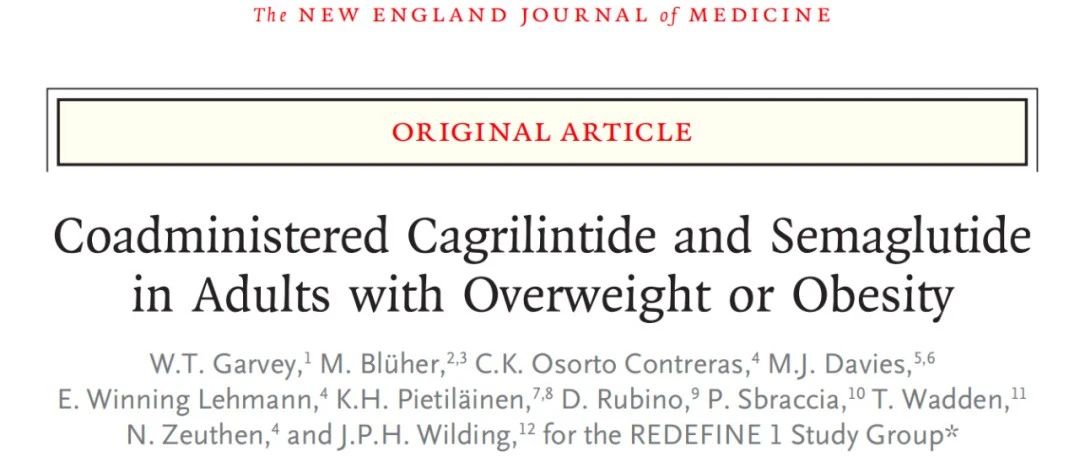
Core Viewpoint - Semaglutide, developed by Novo Nordisk, has significantly impacted the weight loss market with over $7.8 billion in global sales in Q1 this year, approved for treating type 2 diabetes and obesity [2] - Tirzepatide, developed by Eli Lilly, is rapidly gaining ground, showing superior weight loss results compared to Semaglutide in recent studies [4][5] Group 1: Clinical Trial Results - In the SURMOUNT-5 trial, Tirzepatide led to an average weight loss of 20.2% (approximately 22.8 kg) over 72 weeks, with 31.6% of participants losing 25% or more of their body weight [5] - The REDEFINE 1 trial showed that the combination of Cagrilintide and Semaglutide (CagriSema) resulted in an average weight loss of 20.4% (approximately 26.6 kg) over 68 weeks, outperforming both Semaglutide and Cagrilintide alone [8] - In the REDEFINE 2 trial, CagriSema achieved an average weight loss of 13.7% in type 2 diabetes patients, significantly higher than the 3.4% in the placebo group [10][13] Group 2: Safety and Side Effects - CagriSema treatment was associated with a higher incidence of gastrointestinal adverse events (79.6%) compared to the placebo group (39.9%), though most symptoms were mild to moderate [8][13] - In the REDEFINE 2 trial, 72.5% of CagriSema participants reported gastrointestinal side effects, again higher than the 34.4% in the placebo group [13] Group 3: Market Outlook - The combination of Semaglutide and Cagrilintide shows potential to become a significant player in the obesity treatment market, alongside Semaglutide and Tirzepatide [14] - The results from recent clinical trials suggest that CagriSema may redefine the competitive landscape of weight loss medications, particularly in both diabetic and non-diabetic populations [14]