
抢占制高点

Search documents
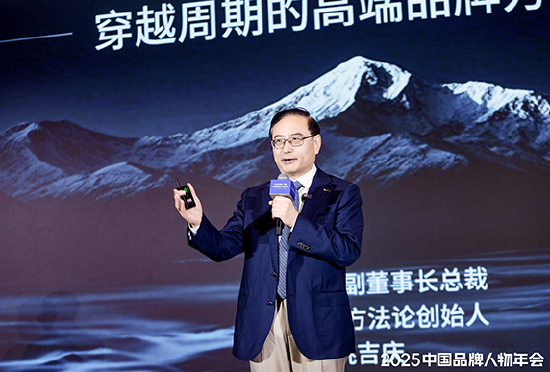
慕思集团副董事姚吉庆:穿越周期的高端品牌方法论
Xin Lang Cai Jing· 2026-01-19 07:08
Core Viewpoint - The 20th China Brand Person Annual Conference emphasizes the theme "Who Earns Respect for China" and aims to gather insights and power for the development of Chinese brands, showcasing the evolution and future opportunities in brand building [3][16]. Group 1: High-End Brand Methodology - The founder of the high-end brand methodology shared insights from 30 years of experience in building brands like Vatti, Oppein, and Mousse, highlighting the importance of adapting Western management theories to the Chinese market [3][17]. - The methodology focuses on "seizing the high ground and building deep moats" as a way to navigate through market cycles and establish high-end brands [4][18]. - A high-quality development cycle is proposed, emphasizing increased investment in technology and product innovation to create unique selling points and achieve high standards, quality, and profitability [6][20]. Group 2: Key Challenges for High-End Brands - Three critical barriers for entrepreneurs aiming to establish high-end brands include system management, long-term commitment, and understanding market trends [7][21]. - System management requires a comprehensive tactical approach, moving beyond traditional advertising to a structured strategy that includes a "Nine Virtues Training" for brand success [7][21]. - Long-term commitment is essential, as demonstrated by successful brands like Moutai and Casarte, which persisted through initial losses to achieve growth [8][22]. Group 3: Strategic High Grounds and Moats - Four strategic high grounds identified are strategy, organizational culture, product, and brand, which are essential for establishing a high-end brand [8][22]. - Building three moats is crucial: a digital intelligence moat, a marketing moat, and a service and experience moat, which collectively enhance brand competitiveness [12][25]. - The digital intelligence moat involves restructuring ecosystems through digital transformation, while the marketing moat focuses on creating brand asset value through effective campaigns [12][25][26]. Group 4: Market Opportunities - The current era presents a unique opportunity for Chinese brands to transition from manufacturing powerhouses to brand leaders, with examples like Huawei and BYD reshaping the global brand landscape [14][27]. - The call to action encourages companies to move away from price wars and strive for true pricing power, aiming to create iconic brands that resonate on the global stage [14][27].

魏建国:谋定先手棋,助中国科技勇立潮头
Huan Qiu Wang Zi Xun· 2025-12-16 23:21
Core Viewpoint - The article emphasizes the importance of "proactive layout" in the context of global technological competition, suggesting that early strategic planning is crucial for future technological leadership and high-quality development [1][2]. Group 1: Proactive Layout - "Proactive layout" is defined as surpassing conventional thinking and planning ahead, where being early presents opportunities while being late may lead to significant gaps [1]. - The example of the electric vehicle industry illustrates that early investments in battery research and charging infrastructure have positioned China as a leader, with annual production surpassing 14 million units, accounting for over 50% of global output [1]. - The urgency of "proactive layout" is highlighted by the increasing technological restrictions imposed by Western countries, necessitating early strategic actions to mitigate risks [1]. Group 2: Strategic Directions - The article outlines three main strategies for advancing "proactive layout": 1. Advancing into "deep space and deep sea" to seize future technological opportunities, exemplified by the Chang'e 6 mission and the "Dream" deep-sea drilling vessel [2]. 2. Waging war on "bottleneck" technologies, emphasizing self-reliance in core technologies, as demonstrated by breakthroughs in high-end bearings and Huawei's HarmonyOS [3]. 3. Racing ahead in "future tracks" to become leaders in innovation, with examples including quantum computing and brain-machine interface technologies [3]. Group 3: Importance of Seizing High Ground - The concept of "seizing the high ground" is likened to cultivating superior crops in a vast field, where identifying advantageous positions can lead to defining industry standards [4]. - The article stresses the urgency of competing in the "future track," asserting that high ground must be actively seized rather than passively awaited [5].