
护栏战略

Search documents
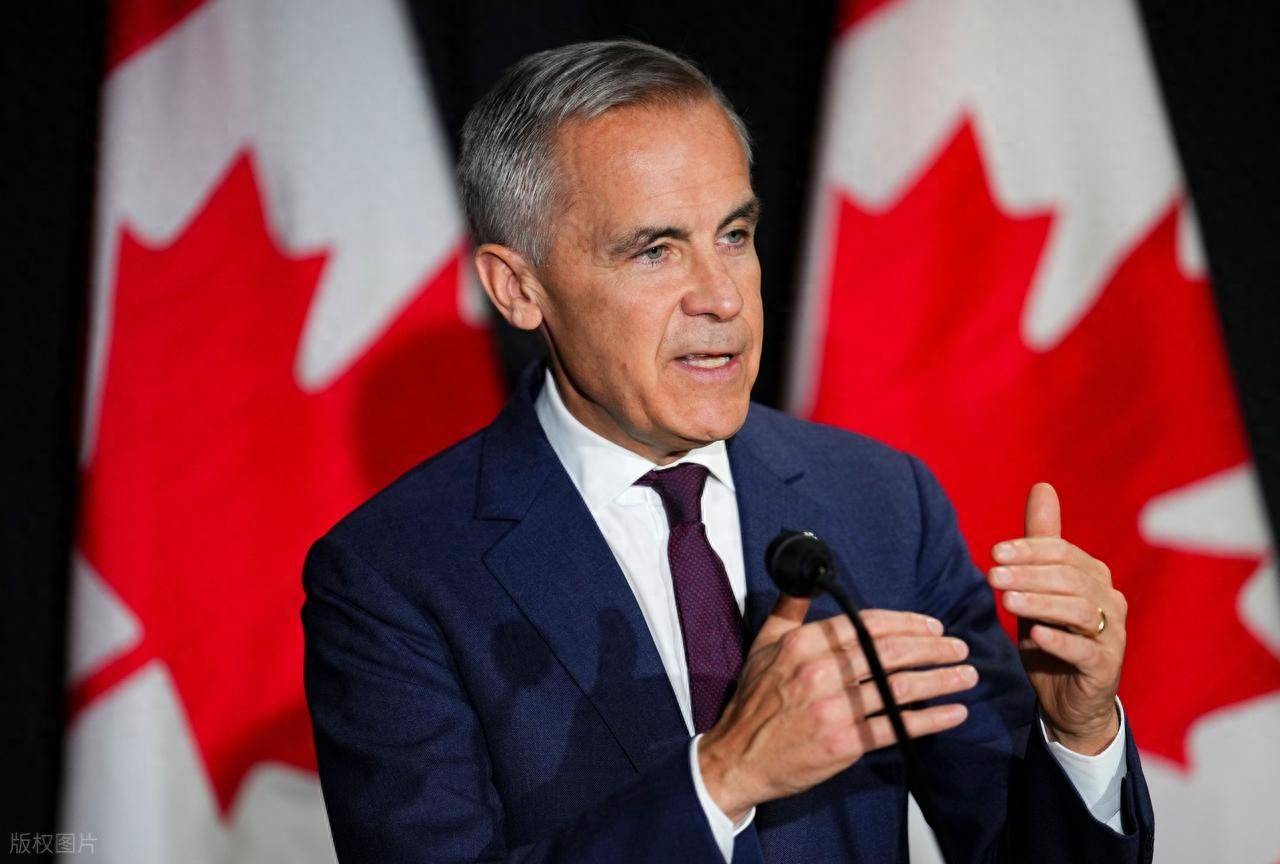
卡尼误判了,川普的三记重拳,让加拿大大祸临头,后悔也已经晚了
Sou Hu Cai Jing· 2025-12-29 09:04
Core Viewpoint - Canada is facing significant economic challenges due to the policies of the Trump administration, which have severely impacted trade relations between the U.S. and Canada, particularly in the automotive and oil industries, as well as in key sectors like aerospace and technology [1][3]. Group 1: Impact on Automotive Industry - The Trump administration imposed a 15% tariff on automotive parts exported from Canada to the U.S., citing "national security," which has severely affected Ontario's automotive production and related industries, leading to significant job losses and a nearly 30% reduction in automotive exports [5]. Group 2: Impact on Oil Industry - Canada has suffered over 6 billion CAD in direct losses annually due to the Trump administration's demand to lower oil pricing to 80% of Texas prices, which is perceived as exploitation under the guise of fair trade [6]. Group 3: Broader Economic Implications - The U.S. has restricted foreign capital in critical sectors, including aerospace, finance, and high technology, while unilaterally declaring Canada's Northwest Passage as an "international waterway," infringing on Canadian sovereignty [8]. - The Canadian government, under Mark Carney, initially aimed to align with the U.S. against China but has realized that the U.S. views Canada as a subordinate rather than an ally, leading to a reassessment of its foreign policy [9]. Group 4: Challenges in China Relations - Efforts to mend relations with China have been complicated by past grievances, including the Huawei incident and scrutiny of Chinese investments, which have damaged trust between the two nations [11]. - China has imposed a 75.8% deposit on Canadian canola, significantly affecting farmers in Saskatchewan and disrupting a major export channel for Canadian agricultural products [13]. Group 5: Structural Vulnerabilities - Over 70% of Canada's exports depend on the U.S., making the economy vulnerable to external shocks, particularly as the pandemic has highlighted weaknesses in supply chains [15]. - The Canadian government is attempting to implement a 65 billion CAD export support plan and other measures to attract foreign investment, but these efforts reveal a deep-seated anxiety about dependency on the U.S. [19]. Group 6: Future Outlook - As the 2026 USMCA agreement review approaches, Canada is taking steps to limit unconditional access to key resources for the U.S., recognizing the exploitative nature of the relationship [19]. - Despite having critical resources like lithium and cobalt, uncertainty in policy and unclear attitudes are causing investors to hesitate, while the U.S. continues to assert its dominance in the region [19].

特朗普访华前夕,美债恐出现抛售潮,财长紧急踩刹车:中美是盟友
Sou Hu Cai Jing· 2025-12-06 05:12
Group 1 - The core point of the article revolves around the recent communication between President Trump and China, indicating a potential shift in U.S.-China relations, with Trump expressing a desire to visit China in April next year, suggesting long-term considerations beyond immediate economic issues [1] - The U.S. Treasury Department's report on foreign investors selling U.S. Treasury bonds indicates a decline in foreign holdings from $9.2662 trillion in August to $9.249 trillion in September, signaling a warning for the U.S. global monetary system if this trend continues [3] - China remains a significant holder of U.S. debt, with approximately $700.5 billion in U.S. Treasury bonds, and any increase in Chinese bond sales could trigger global financial market panic, while large-scale purchases could support the U.S. debt and stabilize the dollar's status [5] Group 2 - The successful issuance of $4 billion in sovereign bonds by China, with a subscription scale of $118.2 billion and a subscription multiple of 30 times, reflects international investors' confidence in China's economic strength, which may influence Trump's urgency to visit China [7] - Trump's potential support for the appointment of Hassett as the Federal Reserve Chair indicates his ongoing focus on financial control and the implications for U.S. monetary policy [8] - The increasing military capabilities of China, including advancements in aircraft and naval power, have led to a cautious approach from the U.S. regarding military conflict, with Trump likely aiming to promote a strategy to manage differences and avoid confrontation with China [10]
