指数收益

Search documents
短期波动后,A股港股还会继续向上吗?|第413期直播回放
银行螺丝钉· 2025-10-28 14:03
Core Viewpoint - The article discusses the significant rise in A-shares and Hong Kong stocks over the past year, exploring the reasons behind this increase, the current valuation of RMB assets, and the potential for future market growth [1][18]. Group 1: Market Trends - In a bull market, fluctuations are normal, and corrections are common even during significant upward trends [3][4]. - Historical data shows that even during major bull markets, such as in 2007, there were multiple corrections exceeding 10% [5][9]. - The index tends to rise over the long term, with past crises only causing temporary fluctuations [9]. Group 2: Recent Performance - As of mid-September 2024, A-shares and Hong Kong stocks have risen significantly from a historical low valuation of 5.9 stars to around 4.1-4.2 stars [15][19]. - The past year has seen A-shares and Hong Kong stocks leading global markets, with the MSCI World Index rising by 22.98% and the Hang Seng Index increasing by 55.93% [21]. Group 3: Reasons for Market Growth - The first reason for the recent rise is valuation improvement, as the previous bear market had driven valuations to extremely low levels, with A-shares and Hong Kong stocks being 50% lower than the global average [19][20]. - The second reason is the improvement in liquidity, aided by favorable policies and market conditions, including the Federal Reserve's interest rate cuts and domestic supportive measures [26][28]. Group 4: Earnings Growth - There are signs of improvement in earnings, particularly in the technology and pharmaceutical sectors, which have shown significant growth [30][32]. - The technology sector in Hong Kong saw a remarkable earnings growth of 128.92% year-on-year in Q1 2025, although growth rates slowed to 51.24% in Q2 [32]. - Consumer sectors in A-shares have shown stable earnings growth, but the growth rate has slowed recently [34][38]. Group 5: Future Market Outlook - If the Federal Reserve continues to lower interest rates and domestic conditions remain accommodative, there is potential for further market growth, especially if earnings continue to improve [40].


上证综合全收益指数上涨0.44%,前十大权重包含农业银行等
Jin Rong Jie· 2025-06-03 08:02
Core Points - The Shanghai Composite Total Return Index increased by 0.44%, closing at 3766.89 points with a trading volume of 468.29 billion [1] - Over the past month, the index has risen by 2.23%, 1.03% over the last three months, and 0.42% year-to-date [1] - The index includes stocks and depositary receipts listed on the Shanghai Stock Exchange, accounting for dividend income [1] Index Composition - The top ten weighted stocks in the index are: Kweichow Moutai (3.67%), Industrial and Commercial Bank of China (3.66%), Agricultural Bank of China (3.39%), China Petroleum (2.58%), Bank of China (2.24%), China Merchants Bank (1.72%), China Life Insurance (1.53%), Yangtze Power (1.42%), China Shenhua Energy (1.25%), and China Telecom (1.20%) [1] - The index is composed entirely of stocks from the Shanghai Stock Exchange, with a 100% market share [1] Industry Breakdown - The industry composition of the index is as follows: Financials (26.27%), Industrials (18.53%), Information Technology (10.43%), Materials (8.07%), Consumer Staples (7.48%), Energy (7.02%), Consumer Discretionary (6.32%), Health Care (5.94%), Utilities (4.94%), Communication Services (3.76%), and Real Estate (1.24%) [2] - Securities are included in the index based on their market capitalization and time since listing, with specific rules for risk warnings and delisting [2]




防守反击:普通人投资理财的唯一正确姿势
Hu Xiu· 2025-05-28 12:53
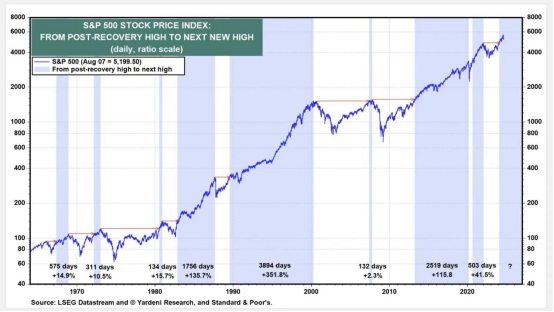
Group 1 - The core idea emphasizes that quick reactions in investing often stem from fear and greed rather than informed decision-making [2][6][8] - Ordinary investors tend to rely on instinctual responses, which can lead to poor investment choices during market volatility [3][4][6] - The article suggests that true investment opportunities are rare, and most market movements are oscillatory rather than trending [7][24] Group 2 - The concept of "defensive counterattack" is introduced, highlighting the need for ordinary investors to adopt a mindset of caution and strategy [10][17][29] - Key strategies include fishing in less crowded markets, focusing on long-term trends, and developing a "dull sensitivity" to market noise [10][18][43] - The importance of having a simple reaction framework to avoid emotional trading is emphasized, suggesting that investors should prepare for various market scenarios [50][53][54] Group 3 - The article discusses the significance of understanding market trends over focusing on minute details, particularly for non-professional investors [22][29] - It highlights the historical performance of indices like the S&P 500, indicating that long-term investment strategies can yield positive results despite market fluctuations [24][27] - The need for a well-structured investment portfolio that aligns with realistic return expectations is stressed [55] Group 4 - The article outlines four key strategies for defensive counterattack: fishing in less crowded areas, grasping the overall market trend, developing dull sensitivity, and having a unique investment strategy [10][18][43][54] - It emphasizes that ordinary investors should set lower return expectations and focus on consistent execution of their investment plans [55] - The necessity of having contingency plans for market changes is highlighted, allowing investors to remain calm and make informed decisions during volatility [53][54]