
探索宇宙

Search documents
新春走基层丨跨越半球的坚守,他们奔赴一场“宇宙之约”
Xin Hua She· 2026-02-21 05:13
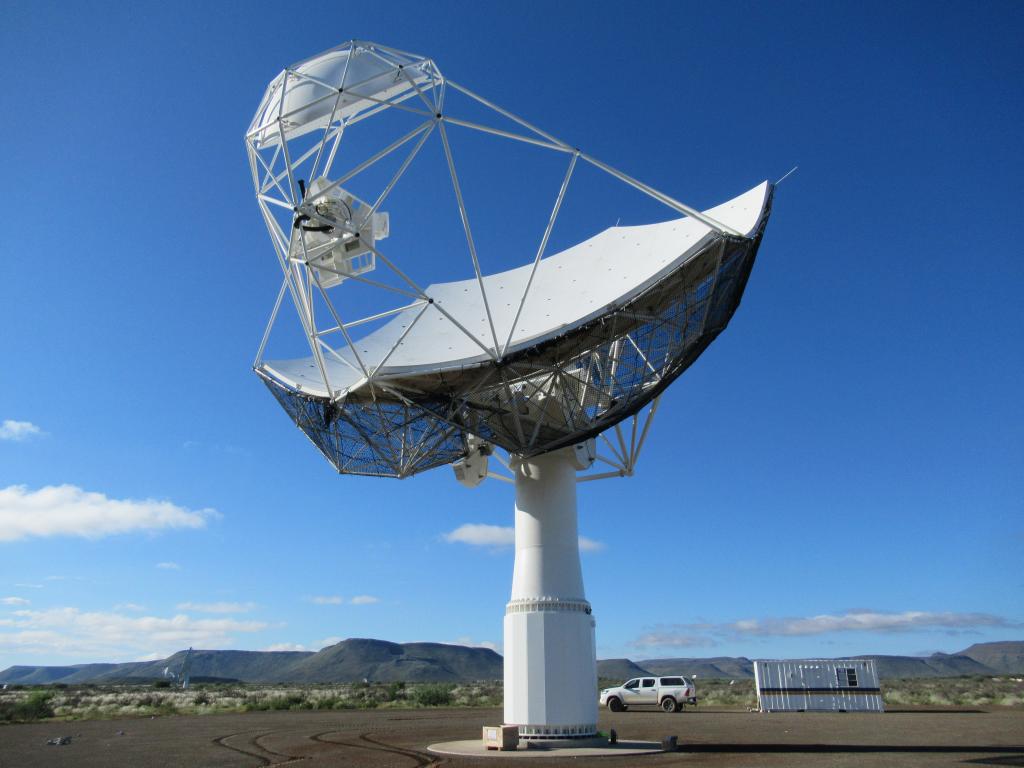
Core Insights - The SKA (Square Kilometre Array) project is a significant international scientific initiative aimed at constructing the world's largest radio telescope, with a total receiving area of approximately 1 square kilometer, to aid in the exploration of cosmic mysteries [3][4] Group 1: Project Overview - The SKA project involves collaboration among multiple countries, with China contributing 64 mid-frequency antennas, which are being developed and constructed by the China Electronics Technology Group Corporation [3][4] - The project is currently in a critical construction phase, with a goal to complete the installation of 28 antennas within the year [3] Group 2: Technical Challenges - Engineers are focused on balancing scientific objectives with technical, scheduling, and cost considerations, while also ensuring minimal interference with existing equipment at the site [3][4] - The servo control system is crucial for the antennas' precise operation, and engineers are continuously optimizing parameters and algorithms to enhance performance in response to environmental challenges [4][7] Group 3: Team Dynamics and Collaboration - The project team maintains regular communication with international partners through daily and weekly meetings to ensure adherence to safety and quality standards [4] - Team members in South Africa and those in China are collaborating effectively, sharing technical insights and learning from each other's experiences to improve future projects [7]

新春走基层|跨越半球的坚守,他们奔赴一场“宇宙之约”
Xin Lang Cai Jing· 2026-02-21 04:52
Core Viewpoint - The SKA (Square Kilometre Array) project, an international scientific initiative, is progressing with the construction of the world's largest radio telescope in South Africa's Karoo region, with China contributing 64 mid-frequency antennas [3][5]. Group 1: Project Overview - The SKA aims to build a total receiving area of approximately 1 square kilometer to aid in the exploration of cosmic mysteries [3]. - The project is entering a critical construction phase, with a target to complete 28 antennas within the year [3]. Group 2: Team Efforts and Challenges - Zhang Lei, the project leader, is coordinating efforts across multiple sites, ensuring that safety and quality standards are met [5]. - The team is facing challenges such as optimizing the servo control system for antenna precision and addressing environmental factors that may affect performance [5][8]. Group 3: International Collaboration - The project involves collaboration with international partners, with regular meetings to track progress and share technical expertise [5][8]. - The team is learning from international feedback to enhance their future projects [8]. Group 4: Cultural Aspects - Despite being away from home during the Chinese New Year, the team maintains a sense of celebration and camaraderie, reflecting cultural traditions [6][8].
太力科技:公司将坚定地做好当下,持续深耕核心技术,不断提升现有产品的性能与可靠性
Zheng Quan Ri Bao· 2025-11-25 11:40
Core Insights - The exploration of finding a "second Earth" represents a grand vision for humanity, providing vast opportunities and challenges for the aerospace industry [2] - The company is committed to enhancing its core technologies and improving the performance and reliability of existing products [2] - The company will also explore the research and innovation of related frontier technologies to ensure adequate technical and product reserves for aerospace missions [2]

【人民日报】探索宇宙,是人类对自身命运的思考
Ren Min Ri Bao· 2025-08-25 00:38
Core Insights - The article discusses the current state of astronomy and its impact on human life, highlighting the importance of exploring the universe and understanding its mysteries [1][7]. Group 1: Historical Context and Development - China is one of the earliest and fastest-developing countries in astronomy, with significant contributions to ancient natural sciences and astronomical observations dating back to the 21st century BC [2]. - The invention of the telescope by Galileo in 1610 marked a revolutionary moment in astronomy, leading to significant advancements in human understanding of the universe over the past 400 years [2][3]. Group 2: Breakthroughs in Astronomy - The 21st century has seen a surge in revolutionary discoveries in astronomy, providing new perspectives on the formation and evolution of celestial bodies and the laws of the universe [3][4]. - Major breakthroughs include advancements in understanding dark matter and dark energy, as well as the detection of gravitational waves, which have spurred the development of high-tech innovations [3][4]. Group 3: China's Contributions and Technological Advancements - China's astronomical research has made significant strides, with world-class research teams and leading technologies, exemplified by projects like the Guo Shoujing Telescope and the "Chinese Sky Eye" [4][5]. - The country has established a strong foundation in various fields of astronomy, contributing to significant advancements in cosmology, galaxy studies, and lunar exploration [4][5]. Group 4: Future Directions and Strategic Goals - The National Space Science Medium- and Long-term Development Plan (2024-2050) outlines strategic goals for China's exploration of the universe, focusing on five major scientific themes and 17 priority development directions [6]. - The exploration of the universe is seen as a vital pathway for understanding the world and driving advancements in high-tech fields, with implications for national strength and global cooperation [6][7]. Group 5: Significance of Space Exploration - Exploring the universe is crucial for discovering new resources, expanding human living space, and addressing environmental challenges on Earth [7]. - The endeavor fosters international collaboration and enhances national competitiveness, while also deepening humanity's understanding of its own existence and the cosmos [7].
探索宇宙,是人类对自身命运的思考(院士讲科普)
Ren Min Ri Bao· 2025-08-22 22:06
Group 1: Development of Astronomy - Astronomy is one of the earliest and fastest-developing natural sciences in China, with significant historical contributions to global astronomy [2] - The invention of the telescope by Galileo in 1610 marked a revolutionary advancement in astronomy, leading to a new era of exploration [2] - The continuous technological breakthroughs in telescopes over the past 400 years have resulted in major discoveries and advancements in human understanding of the universe [2][3] Group 2: Breakthroughs in Contemporary Astronomy - The 21st century has seen significant revolutionary achievements in astronomy, marking a golden age of rapid development and breakthroughs [3] - Current astronomical research focuses on stars, black holes, galaxies, and the large-scale structure of the universe, enhancing understanding of cosmic laws [3] - The detection of gravitational waves has led to advancements in high-tech applications, pushing the boundaries of quantum precision measurement [3] Group 3: China's Advancements in Astronomy - China's astronomical research and technology have made significant progress, establishing world-class research teams and leading technological capabilities [4] - Major scientific projects like the Guo Shoujing Telescope and the "Chinese Sky Eye" have gained international attention, contributing to fields such as gravitational wave detection and lunar exploration [4] - China's astronomy research plays a crucial role in national needs, supporting areas like lunar and deep space exploration, satellite precision tracking, and space weather monitoring [4] Group 4: Future Directions in Space Exploration - The National Space Science Medium- and Long-term Development Plan (2024-2050) outlines strategic goals for China's space exploration, focusing on five major scientific themes [5] - Space exploration is a vital pathway for understanding the objective world and serves as a source for high-tech advancements, driving developments in various technological fields [5] - Recent achievements in astronomy and space technology have showcased China's scientific strength and sparked public interest in cosmic exploration [5] Group 5: Significance of Space Exploration - Space exploration is crucial for discovering new resources, supporting economic development, and expanding human living space in response to environmental challenges [6] - It fosters international cooperation and advances scientific and technological progress, potentially revealing the nature of dark matter, dark energy, and black holes [6] - The exploration of the universe symbolizes national strength and enhances competitiveness, while also prompting reflections on humanity's destiny [6]