政治较量

Search documents
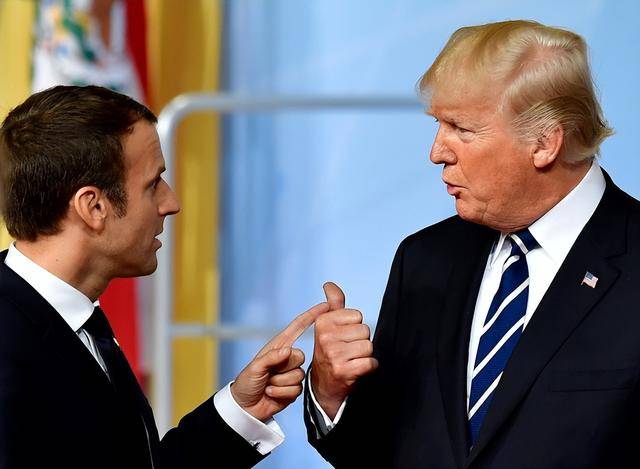
特朗普通告全球,将对法国加税200%,不到24小时,马克龙喊话中国
Sou Hu Cai Jing· 2026-01-22 10:33
Group 1 - Trump threatened to impose a 200% tariff on French wine and champagne, which could significantly impact France's economy, as wine exports to the U.S. exceed €4.5 billion annually, affecting 600,000 jobs and a high-value industry chain [1][3][5] - If the tariff is implemented, the price of French wine in the U.S. could triple, making champagne a luxury item and potentially driving French wine merchants out of the market [5][7] - The tariff threat is rooted in France's refusal to join the U.S.-led Gaza Peace Committee, highlighting a broader political struggle between the U.S. and France, with France also opposing U.S. positions on issues like digital service taxes [5][7][8] Group 2 - At the Davos Forum, Macron did not directly confront Trump but emphasized that Europe needs respect rather than bullying, advocating for European strategic autonomy [8][10] - Macron expressed a desire for increased Chinese investment in green industries, indicating a shift towards China as a potential partner amid U.S. pressures, aiming for a balanced cooperation model [10][12] - The EU-China trade relationship is significant, with bilateral trade expected to approach $800 billion by 2025, indicating deep integration in supply chains and technology [12][14] Group 3 - The tariff situation serves as a warning from the U.S. to France and Europe, reflecting a transactional approach where compliance is rewarded, and dissent is punished [7][16] - France's response marks a significant moment in transatlantic relations, indicating a potential fracture in the alliance as it asserts its independence from U.S. influence [16] - China's role in this geopolitical landscape is evolving, as it becomes a sought-after partner for both France and Europe, emphasizing the need for stable and pragmatic cooperation [16]

美国政坛大转变!全部女官员集结对飚白宫,特朗普这次麻烦大了
Sou Hu Cai Jing· 2025-12-01 08:14
Core Insights - The article discusses the rise of female political candidates in the U.S. and their significant victories in local elections, which pose a challenge to Trump and the Republican Party [1][3][5] Group 1: Election Outcomes - Democratic female candidates achieved notable victories in the 2025 local elections, surprising many Republicans who underestimated their impact [3] - In Virginia, Abigail Spanberger, a former CIA officer, won the governorship with 56.2% of the vote by focusing on everyday issues like high rent and healthcare costs [3] - In New Jersey, Mikie Sherrill became the first Democratic female governor with 57% of the vote, emphasizing a message of improving lives rather than opposing Trump [5] - Zolan Mamdani, a 34-year-old Muslim, became the first millennial mayor in New York City, advocating for rent freezes and taxing the wealthy, which resonated with young voters [5] Group 2: Strategic Shifts - Female candidates have shifted their campaign strategies from relying on gender identity to presenting actionable policies that resonate with voters [7][10] - They have effectively transformed voter anger into electoral power, contrasting with Trump's previous strategy of creating division [7] Group 3: Political Dynamics - The article highlights a significant political shift where female politicians are no longer just symbols but are becoming decision-makers, challenging Trump's authority [15] - The emergence of a "female political alliance" led by figures like Pelosi and Harris is reshaping the political landscape, focusing on real political power rather than symbolic representation [15] Group 4: Contextual Factors - The rise of female political power coincides with a government shutdown affecting 750,000 federal employees, which has led to a decline in Trump's approval ratings to -18%, a historic low [17][19] - Trump's controversial statements and actions, such as his refusal to attend the G20 summit, have further isolated him and diminished his support among the electorate [19] Group 5: Future Implications - The upcoming 2026 midterm elections present a critical moment for both parties, with Democrats poised to leverage their recent successes while Republicans remain on the defensive [22] - The article suggests that the political landscape is entering a new phase driven by women's issues and everyday concerns, indicating a potential long-term shift in American politics [22]

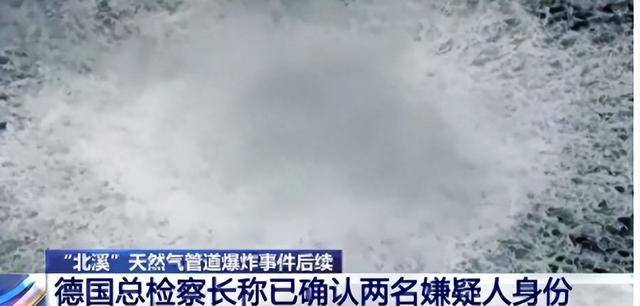
真相即将水落石出!北溪天然气管道嫌犯被捕,欧洲出卖了乌克兰?
Sou Hu Cai Jing· 2025-08-24 07:27
Core Viewpoint - The arrest of a suspect in the Nord Stream pipeline bombing marks a significant development in a case that has been shrouded in mystery since its occurrence in September 2022, raising questions about the geopolitical implications and the potential consequences for the involved parties [1][3][12]. Group 1: Incident Details - On August 21, 2024, Italian police arrested a Ukrainian man named Serhiy K. in Rimini, following a European arrest warrant issued by the German Federal Prosecutor's Office [3]. - The German authorities accused Serhiy K. of coordinating the operation that involved using a rented sailboat to place explosives in the Baltic Sea, resulting in multiple ruptures of the Nord Stream 1 and 2 pipelines [5]. - The explosions were detected on September 26, 2022, with seismic measurements indicating underwater blasts equivalent to magnitudes of 1.8 and 2.3, leading to significant methane leaks from the pipelines [7][10]. Group 2: Economic Impact - The destruction of the Nord Stream pipelines had severe repercussions for Europe, which relies heavily on energy imports, with over 90% of its energy needs met externally, and approximately 30% of its natural gas sourced from Russia [14]. - Following the explosions, natural gas prices in Europe surged sixfold, and industrial electricity prices exceeded €300 per megawatt-hour, causing major companies like BASF to relocate production to the U.S. [16]. - The energy crisis contributed to a 1.8% decline in the EU's GDP in 2023, marking the largest drop since the eurozone's inception [16]. Group 3: Geopolitical Implications - The investigation into the bombing has been complicated by political dynamics, with Germany's judicial actions raising questions about international cooperation and the potential for political maneuvering among nations [12][18]. - The European Commission's recent shift in energy policy, including placing the Nord Stream pipelines on a strategic infrastructure list, suggests a nuanced approach to future energy relations with Russia [18]. - Accusations have emerged regarding the involvement of various parties, with some suggesting that the Ukrainian military orchestrated the attack, while others point to U.S. support as a critical factor in the operation's execution [20][24].