
教育经费分配机制

Search documents
2026财政花钱,怎样更好“投资于人”?
Yang Shi Wang· 2025-12-30 01:50
Group 1 - The core viewpoint of the article emphasizes the need for increased fiscal spending in 2026, focusing on consumer promotion and social welfare [1] - The national fiscal work conference has outlined plans to expand the fiscal expenditure framework and optimize the scope and standards of national subsidies [1] - The professor from Central University of Finance and Economics predicts that national subsidy funds will double in 2025 compared to 2024, indicating a positive outlook for 2026 [3] Group 2 - Employment is highlighted as the most significant aspect of people's livelihoods, with a focus on stabilizing existing jobs and enhancing skills to increase income [6] - Tax reforms, including seven special additional deductions for personal income tax, are expected to increase disposable income for citizens [7] - The government plans to increase subsidies for urban and rural residents' pension insurance and social security, thereby reducing financial concerns for citizens [7] Group 3 - A new mechanism for educational funding distribution is necessary due to the declining school-age population, particularly in preschool, which will impact middle school enrollment [10] - Fiscal spending must adjust to demographic changes, directing more funds to urban areas and regions experiencing population inflow [10] - The government aims to enhance higher education capacity to meet the demand for quality university education [10] Group 4 - There is a push for fiscal resources to be directed more towards grassroots levels, particularly in areas with population inflow [13] - The government intends to reduce specific transfer payments while increasing general transfer payments to local governments, allowing for greater financial autonomy [13] - This approach aims to ensure that fiscal resources effectively support the livelihoods of populations in areas experiencing growth [13]

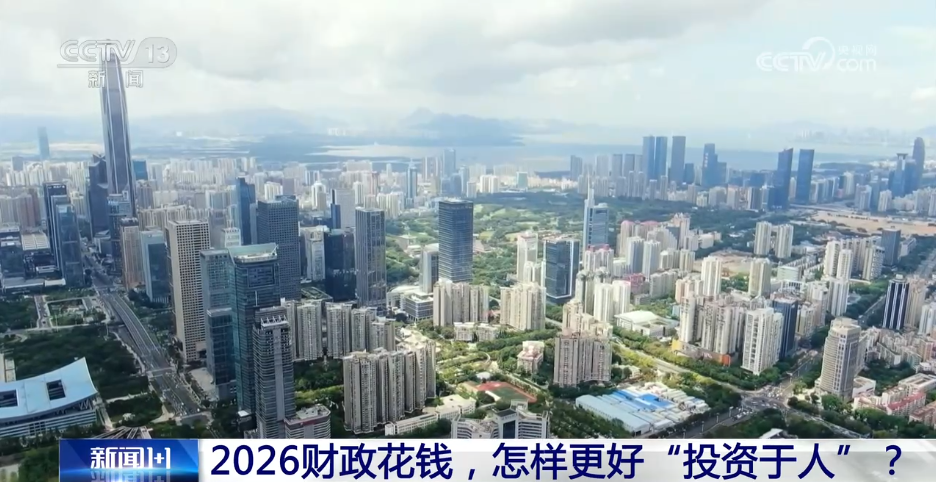
新闻1+1丨2026财政花钱,怎样更好“投资于人”?
Yang Shi Wang· 2025-12-29 22:12
Group 1: Fiscal Policy and Spending - The national fiscal work conference has decided to expand the fiscal spending scope for the upcoming year, focusing on promoting consumption and ensuring social welfare [1] - In 2025, the national subsidy funds are expected to double compared to 2024, indicating a significant increase in funding scale for 2026 [3] - The subsidy range will expand from home appliances to include digital products like computers and mobile phones, with local governments encouraged to tailor subsidies to their specific consumption needs [3] Group 2: Employment and Social Security - Employment is highlighted as the most critical aspect of people's livelihoods, with a focus on stabilizing existing jobs and enhancing skill development to increase income [5] - Tax deductions, particularly for individual income tax, have been increased, leading to a rise in disposable income for citizens [6] - The government plans to raise the subsidy standards for urban and rural residents' pension and social security, thereby reducing financial concerns for citizens and strengthening the social safety net [6] Group 3: Education Funding Mechanism - Changes in school-age population demographics necessitate adjustments in fiscal spending, with a focus on directing funds towards urban areas and regions experiencing population inflow [8] - There is a need to expand higher education capacity to meet the demand for quality university education among the populace [8] Group 4: Central and Local Government Spending Responsibilities - The government is pushing for fiscal funds to be directed more towards grassroots levels, particularly in areas with population inflow, while also increasing local spending responsibilities [10] - The approach includes reducing specific transfer payments and increasing general transfer payments to enhance local financial autonomy for better allocation towards public welfare [10]