国补政策

Search documents
ST易购(002024) - 2026年3月22日投资者关系活动记录表
2026-03-23 01:52
Group 1: Investor Relations Activity - The event was a site visit at Suning Max Chengdu Tianfu Interchange Store on March 22, 2026 [1] - Participants included representatives from Changjiang Appliances, Wufeng Fund, Jiutai Fund, and Beijing Xinsun Capital [1] - The company ensured compliance with information disclosure regulations, maintaining the accuracy and completeness of shared information [1] Group 2: Store Insights and Market Conditions - Investors learned about the store's basic conditions, implementation of national subsidy policies, and performance across various categories [1] - Discussion included market conditions for new and old residential areas, as well as the business of renovating old neighborhoods [1] - The company highlighted marketing strategies, consumer trends, and the provision of home appliance and home decoration services [1] Group 3: Business Expansion and Product Experience - The meeting covered topics such as store expansion and strategies for penetrating lower-tier markets [1] - Investors experienced new products introduced in the store during the visit [1]

2500亿元国债支持以旧换新,今年家电消费仍有提质扩容潜力
第一财经· 2026-03-05 05:54
Core Viewpoint - The government work report for 2026 emphasizes the promotion of consumer goods consumption through a special long-term bond of 250 billion yuan to support the replacement of old products, alongside a 100 billion yuan fiscal-financial collaboration fund to boost domestic demand [3][4]. Group 1: Government Support and Policies - The government has allocated 250 billion yuan for special bonds to support the replacement of old consumer goods, indicating a strong commitment to enhancing consumer spending [3]. - A special fund of 100 billion yuan will be established to promote domestic demand, utilizing methods such as loan interest subsidies, financing guarantees, and risk compensation [3]. - The scope of subsidies has been narrowed to three key areas: automobiles, home appliances, and digital smart products, with expectations for the subsidy scale to exceed market forecasts this year [3][4]. Group 2: Industry Insights and Expectations - The home appliance market is expected to see significant growth due to the positive impact of government subsidies, with a focus on quality improvement and market expansion [3][4]. - The digital industry is anticipated to experience a notable recovery in mid-to-low-end products and replacement demand, particularly in smart wearable devices and lower-tier markets [4]. - The current subsidy policy is viewed as a crucial catalyst for the consumer market in 2026, driving the green and intelligent transformation of the home appliance sector [4]. Group 3: Market Dynamics and Challenges - Despite the positive effects of subsidies, the home appliance industry is still facing challenges related to supply-demand mismatches, necessitating a more refined operational approach to activate user demand [4]. - The core issue in the market remains the mismatch between supply and demand, which requires a breakdown and reorganization of the market to create more user value [4].

春节消费观察: 从“换机热”看上海智能终端产业“千亿突围”
Zhong Guo Zheng Quan Bao· 2026-02-26 21:03
Core Viewpoint - The recent "National Subsidy" policy has significantly boosted consumer electronics sales in Shanghai, with a notable increase in both online and offline purchases during the Spring Festival period, indicating a strong recovery in consumer spending [1][4]. Group 1: National Subsidy Policy Impact - The implementation of the "National Subsidy" policy has led to a surge in consumer interest, particularly in offline stores, where the new "instant lottery" system for subsidies has simplified the process and increased participation [2][3]. - Consumers are experiencing high success rates in the offline subsidy lottery, which has become a key attraction for purchasing decisions, with reports of nearly 100% success rates in some stores [3][4]. - The combination of "National Subsidy," store-specific discounts, and trade-in offers has created a compelling value proposition for consumers, driving foot traffic to retail locations [3][4]. Group 2: Market Dynamics and Consumer Behavior - The rising prices of storage chips are creating a complex environment for consumer electronics, as manufacturers face pressure to either raise prices or maintain them while managing profit margins [6][8]. - Consumers are exhibiting a "fear of missing out" mentality, leading to increased urgency in purchasing decisions, as they worry about potential price hikes and the diminishing availability of subsidies in the future [7][8]. - The overall sentiment among consumers reflects a cautious optimism, balancing the benefits of current subsidies against the backdrop of anticipated price increases in electronic products [6][8]. Group 3: Industry Growth and Future Outlook - The Shanghai smart terminal industry is on track to exceed 300 billion yuan by 2027, with plans to cultivate globally influential consumer brands and significant production targets for AI-enabled devices [9][10]. - The upcoming 2026 China Household Appliances and Consumer Electronics Expo is expected to showcase advancements in consumer electronics, highlighting the rapid development of AI-integrated products [10][11]. - Shanghai's robust ecosystem, including over 1,200 integrated circuit companies and a large talent pool in artificial intelligence, positions the city as a leader in the smart terminal industry, fostering innovation and collaboration across the supply chain [11].
【太平洋研究院】2月第四周线上会议(总第47期)
远峰电子· 2026-02-24 22:58
Group 1: Key Themes and Insights - The article outlines a series of online meetings focusing on various sectors, including technology, tourism, agriculture, and consumer electronics, scheduled from February 23 to February 27 [1][2][30]. - The meetings aim to provide insights into market trends, product pricing, and investment opportunities following the Chinese New Year holiday [1][2][30]. Group 2: Sector-Specific Summaries - **Domestic Tourism and Transportation Data**: A session on February 23 will analyze domestic tourism and transportation data during the Spring Festival, highlighting travel trends and consumer behavior [1][5]. - **Product Pricing Updates**: On February 24, a discussion will cover updates on key product prices during the holiday period, along with investment perspectives [1][9]. - **Agricultural Sector Performance**: A session will focus on the performance of pig farming companies in 2025, providing a detailed analysis of expected earnings [1][15]. - **Air Conditioning Industry**: The air conditioning sector will be discussed on February 24, emphasizing how national subsidy policies are driving industry growth and creating structural opportunities [1][24]. - **Home Appliance Industry Trends**: A session on February 25 will explore the trends in the ice washing industry, particularly the shift towards smart and refined products amid market pressures [1][24]. - **Refrigeration Industry Dynamics**: On February 26, the meeting will address the K-shaped differentiation trend in the refrigeration industry and its implications for industry transformation [2][28]. - **Duty-Free and Transportation Data**: A session will analyze duty-free shopping and outbound transportation data in Hainan, providing insights into consumer spending patterns [2][28]. - **Television Industry Innovations**: The final session on February 27 will focus on the television industry, discussing the accelerated adoption of miniled technology and the trend towards larger, high-end screens [2][28].
今年首批625亿国补改变发放方式
Nan Fang Du Shi Bao· 2026-02-19 23:10
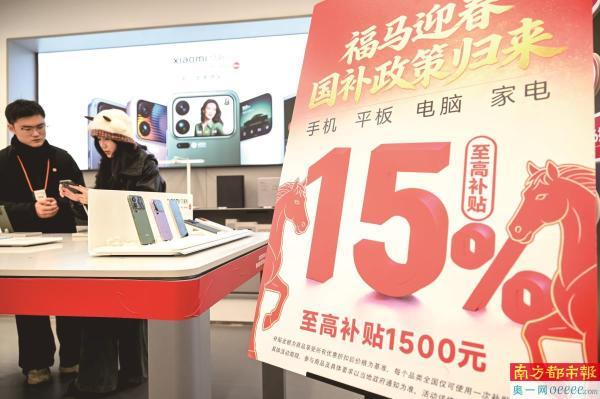
Group 1 - The core point of the article highlights the successful implementation of the first batch of national subsidies, amounting to 62.5 billion yuan, which has positively impacted consumer spending during the Spring Festival holiday [2][3] - In January, the old-for-new consumption policy benefited 16.13 million people, generating sales of 92.56 billion yuan in automobiles, home appliances, and digital products, with significant sales in six categories of home appliances and four categories of digital products [2][3] - The new subsidy policy has shifted from a "universal distribution" approach to a "targeted, timed, and quantified" distribution method, focusing on offline consumption [2][3][4] Group 2 - The national subsidy policy has been refined to ensure balanced and orderly use of funds, with a focus on timely distribution and monitoring of local implementation [3][4] - The subsidy categories have been narrowed down to six types of home appliances, emphasizing green and intelligent consumption, while new categories such as smart glasses have been added [5][6] - Local subsidies are increasingly directed towards offline retail, with measures taken to enhance the accessibility of subsidies for rural residents [7][8]
新春走基层 | “国补”送来“真金白银”支持 科技年货走进千家万户
Yang Shi Wang· 2026-02-19 05:56
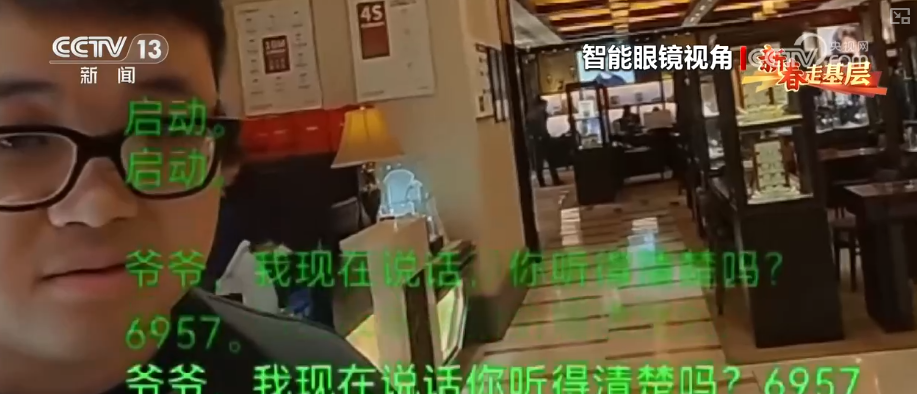
Core Insights - The introduction of the "National Subsidy" policy in 2026 marks the first time smart glasses are included in the support range, providing a 15% subsidy on sales prices, capped at 500 yuan [1][3][9] - The policy is expected to significantly boost sales and market opportunities for smart glasses, as companies adapt to consumer needs and enhance product features [5][11][14] Group 1: Market Dynamics - The smart glasses store in Hangzhou has seen increased foot traffic and sales due to the "National Subsidy" and effective product demonstrations by staff [3][5] - The company is responding to consumer feedback by accelerating product updates from once a month to every two weeks, indicating a commitment to rapid innovation [5][7] - The upcoming Spring Festival is a critical sales period, prompting the company to introduce new features such as ticket synchronization and red envelope functions [5][9] Group 2: Company Strategy - The company emphasizes the importance of maintaining consumer trust, especially after past delays in product delivery that led to negative feedback [7][9] - A successful launch of the Spring Festival version of the smart glasses was achieved after rigorous testing, showcasing the company's dedication to quality and customer satisfaction [9][11] - The leadership believes that the "National Subsidy" reflects strong governmental support for tech innovation, which could accelerate industry growth [9][14]
【新春走基层】以旧换新购年货 乡村消费再升级
Yang Shi Wang· 2026-02-15 12:17
Group 1 - The core viewpoint of the news is that the upgraded "National Subsidy" policy has been fully implemented, enhancing rural consumption during the Spring Festival [1] - The implementation of the "National Subsidy" policy has led to a significant increase in orders for home appliances, particularly in rural areas [3] - There has been a notable surge in sales of major appliances such as air conditioning sets and wall-mounted washing machines, with sales increasing over six times year-on-year in rural counties [5] Group 2 - The logistics improvements have facilitated a rise in the volume of orders for trade-in products at the beginning of the year [3] - Regions like Heilongjiang, Hunan, and Guizhou have experienced substantial growth in orders for subsidized products like televisions, air conditioners, and refrigerators [5]

视频丨非遗“潮品”、“数字好物”今年办年货就按这个清单来!
Yang Shi Xin Wen Ke Hu Duan· 2026-02-14 12:50
Core Insights - The article highlights the evolving trends in purchasing traditional and modern goods for the upcoming Chinese New Year, showcasing a blend of cultural heritage and technological innovation [3][4][6]. Group 1: Traditional Cultural Products - The Hebei Weixian paper-cutting, a national intangible cultural heritage with over 200 years of history, is gaining popularity as a symbol of good fortune during the New Year [3]. - Local schools in Weixian are teaching children the art of paper-cutting, ensuring the tradition's continuity for future generations [3]. Group 2: Technological Innovations - New technology products, such as smart glasses and digital companions, are becoming popular choices for New Year gifts, reflecting a shift in consumer preferences towards innovative items [4][6]. - The introduction of government subsidies for smart glasses has led to increased sales, with features like first-person perspective recording and seamless interaction with smartphones [6]. Group 3: Duty-Free Shopping Trends - The implementation of the new duty-free policy in Hainan has made it easier for consumers to purchase a wider variety of goods, enhancing the shopping experience for both tourists and local residents [7][9]. - Local residents can now enjoy significant discounts and promotional offers at duty-free stores, encouraging them to buy New Year goods [10]. Group 4: Sales Performance - Sales of electronic products in duty-free stores have surged, with some locations reporting over a 120% increase in sales compared to the previous year [11]. - Consumers can benefit from substantial discounts, with potential savings of up to 2400 yuan when combining government coupons and promotional offers [11].
2.13犀牛财经晚报:A股蛇年收官日三大指数均跌超1%
Xi Niu Cai Jing· 2026-02-13 10:24
Group 1 - The A-share market experienced a decline on the last trading day of the Year of the Snake, with major indices falling over 1% and total trading volume below 2 trillion yuan [1] - The military industry sector saw gains due to international tensions, while sectors like photovoltaic equipment and steel faced significant declines [1] - Analysts suggest that investors should "hold stocks over the holiday" as a new market trend is expected post-holiday [1] Group 2 - The China Securities Regulatory Commission (CSRC) has imposed penalties on Tianfeng Securities for illegal financing and information disclosure violations related to the Wuhan Contemporary Technology Industry Group [2] - Tianfeng Securities and its former executives face fines totaling 34.8 million yuan, with lifetime market bans for key individuals [2] - The Shanghai and Shenzhen Stock Exchanges have issued notifications to standardize investor education and compliance requirements for bond repurchase transactions [2] Group 3 - TrendForce predicts that HBM4 validation will be completed by Q2 2026, driven by increasing GPU demand from AI infrastructure expansion [3] - The global DRAM/NAND Flash market is expected to reach $75.51 billion by Q4 2025, with a quarter-on-quarter growth of 29.2% [4] - The lithium carbonate price surged in January 2026, with battery-grade prices rising by 28.15% to 152,500 yuan per ton [4] Group 4 - The Chinese gaming market reported actual sales revenue of 32.468 billion yuan in January 2026, reflecting a year-on-year growth of 4.47% [5] - Huawei's former multimedia technology department head was arrested for bribery, highlighting internal compliance issues [5] - Luxury brands LV, Dior, and Tiffany were fined over 36 billion won in South Korea for customer information leaks [6] Group 5 - Pinduoduo established two new affiliated companies in Shanghai with a combined registered capital of 15 billion yuan, indicating potential supply chain upgrades [7] - Haoyou Engineering won a $4 billion contract for the NFPS COMP5 project in Qatar, with the company's share exceeding $800 million [8] - Qiaoyin Co. terminated its artificial intelligence headquarters project due to changes in investment conditions [9] Group 6 - Juguang Technology announced plans for shareholders to reduce their stakes by up to 2.33% of the company's total shares [10] - Yatai Group intends to sell a 20.81% stake in Northeast Securities, with the transaction subject to uncertainties [11] - Warner Pharmaceuticals reported a 46.95% increase in net profit for 2025, reaching 241 million yuan [12] - Lianrui New Materials achieved a 16.42% increase in net profit for 2025, totaling 293 million yuan [14] - Huayin Technology expects a 24.28% decrease in net profit for 2025, projecting 313 million yuan [15] - Ruijun New Materials reported a 23.48% increase in net profit for 2025, amounting to 311 million yuan [16] - Qizheng Tibetan Medicine's net profit grew by 10.98% in 2025, reaching 646 million yuan [17]


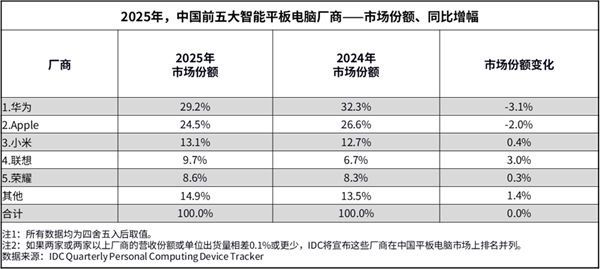
2025年中国平板电脑出货量排名:华为稳居第一 苹果、小米紧随
Ju Chao Zi Xun· 2026-02-13 07:30
Core Insights - The Chinese tablet market is projected to reach a shipment volume of 33.76 million units in Q4 2025, reflecting a year-on-year growth of 13.1%, with a 7.2% increase in Q4 alone [1] - The "National Subsidy" policy has positively influenced consumer confidence and purchasing decisions, leading to an improved willingness to upgrade devices [1] - Market growth is transitioning from being policy-driven to being driven by product features and consumer demand as the "National Subsidy" policy begins to tighten in some regions [1] Market Performance - In Q4 2025, the Chinese tablet market experienced a year-on-year shipment growth of 7.2%, supported by an ongoing device upgrade cycle and continuous product feature enhancements by manufacturers [1] - Huawei maintained its leading position with a market share of 29.2%, despite a decline of 3.1% from the previous year [2] - Apple ranked second with a market share of 24.5%, showing a year-on-year increase in shipment volume [3] Manufacturer Analysis - Xiaomi held the third position with a market share of 13.1%, achieving double-digit growth in annual shipments [3] - Lenovo and Honor ranked fourth and fifth, with market shares of 9.7% and 8.6% respectively, with Lenovo experiencing a notable increase of 3.0% year-on-year [2] - Huawei's new product, the MatePad Edge, integrates PC-level systems and enhances the tablet's positioning for office and multi-scenario use, maintaining high market attention [2] Future Outlook - The expansion of the user base provides a solid foundation for device upgrades, although rising costs are increasing market uncertainties [3] - There is an urgent need for deeper exploration of AI and scenario-based upgrade paths in the industry [3]