
财政转移支付

Search documents
中央转移支付再超10万亿!四川、河南、湖南、湖北、河北,分得最多
商业洞察· 2026-03-31 09:22
Core Viewpoint - The article discusses the continuous increase in central government fiscal transfers to local governments in China, which exceeded 10 trillion yuan for the third consecutive year, highlighting the disparities in economic levels and fiscal conditions among different regions [3][12]. Group 1: Fiscal Transfer Overview - The central government allocated a total of 101,925.14 billion yuan in fiscal transfers to local governments for 2025 [11]. - The fiscal transfer system aims to equalize public service levels across regions, with wealthier provinces supporting poorer ones [8][9]. - The trend shows a steady increase in fiscal transfers, particularly during years of significant economic disruption, such as 2020 and 2022 [14]. Group 2: Regional Distribution of Transfers - The provinces receiving the highest fiscal transfers in 2025 include Sichuan (6,839.97 billion yuan) and Henan (5,967.89 billion yuan), both showing increases from the previous year [26]. - Other provinces in the top ten for fiscal transfers include Hunan, Hubei, Hebei, and Heilongjiang, with a consistent pattern of central and western regions receiving the most support [27][30]. - The design of the fiscal transfer system reflects a redistribution mechanism where eastern coastal regions contribute more to support the development of central and western regions [30]. Group 3: Population and Fiscal Capacity Factors - Population size significantly influences the allocation of fiscal transfers, with larger provinces like Henan and Sichuan benefiting due to their substantial public service needs [35]. - The fiscal self-sufficiency of provinces also plays a crucial role, as regions with lower self-generated revenue rely more heavily on central transfers [36][60]. - The article emphasizes that while fiscal transfers provide essential support, the long-term financial stability of regions depends on their economic development and industrial capacity [60][61]. Group 4: Per Capita Transfer Analysis - Tibet leads in per capita fiscal transfers, receiving 74,700 yuan per person, significantly higher than other regions [43]. - The top ten regions for per capita transfers are predominantly in the western and northeastern parts of China, indicating a correlation between lower economic capacity and higher transfer amounts [44][50]. - The article concludes that while fiscal transfers can provide temporary relief, enhancing local economic capabilities is essential for sustainable development [60][61].


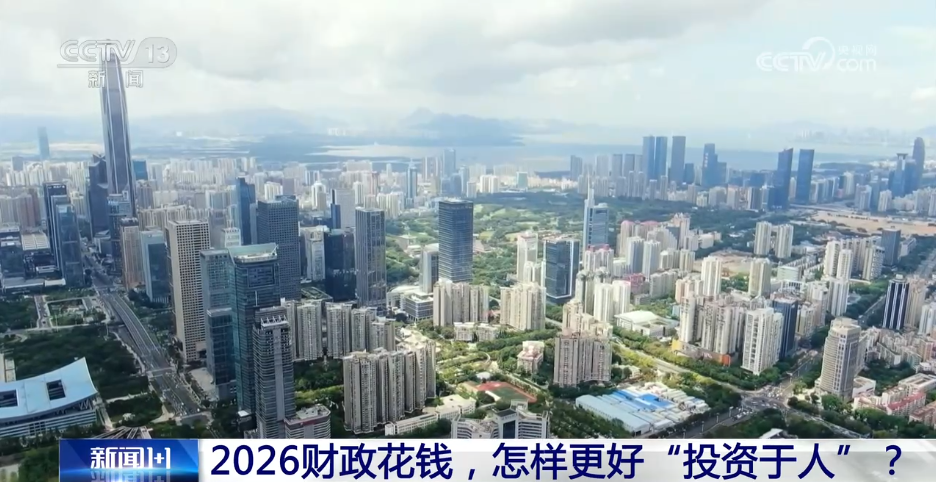
新闻1+1丨2026财政花钱,怎样更好“投资于人”?
Yang Shi Wang· 2025-12-29 22:12
Group 1: Fiscal Policy and Spending - The national fiscal work conference has decided to expand the fiscal spending scope for the upcoming year, focusing on promoting consumption and ensuring social welfare [1] - In 2025, the national subsidy funds are expected to double compared to 2024, indicating a significant increase in funding scale for 2026 [3] - The subsidy range will expand from home appliances to include digital products like computers and mobile phones, with local governments encouraged to tailor subsidies to their specific consumption needs [3] Group 2: Employment and Social Security - Employment is highlighted as the most critical aspect of people's livelihoods, with a focus on stabilizing existing jobs and enhancing skill development to increase income [5] - Tax deductions, particularly for individual income tax, have been increased, leading to a rise in disposable income for citizens [6] - The government plans to raise the subsidy standards for urban and rural residents' pension and social security, thereby reducing financial concerns for citizens and strengthening the social safety net [6] Group 3: Education Funding Mechanism - Changes in school-age population demographics necessitate adjustments in fiscal spending, with a focus on directing funds towards urban areas and regions experiencing population inflow [8] - There is a need to expand higher education capacity to meet the demand for quality university education among the populace [8] Group 4: Central and Local Government Spending Responsibilities - The government is pushing for fiscal funds to be directed more towards grassroots levels, particularly in areas with population inflow, while also increasing local spending responsibilities [10] - The approach includes reducing specific transfer payments and increasing general transfer payments to enhance local financial autonomy for better allocation towards public welfare [10]
中经评论:兜牢基层“三保”底线为何重要
Jing Ji Ri Bao· 2025-12-22 00:07
Core Viewpoint - The central government is prioritizing the "three guarantees" (basic livelihood, wages, and operational stability) for local governments, emphasizing the need for financial support to address local fiscal difficulties and ensure the implementation of policies that affect citizens' lives [1][2][3] Group 1: Financial Support and Budget Allocation - The central government has allocated 566 billion yuan for urban housing security projects and 4,166 billion yuan for medical insurance and construction funding, indicating a proactive approach to bolster local financial capabilities [1] - In 2023, the central government's transfer payments to local governments are set at 10.34 trillion yuan, reflecting an 8.4% increase, with a focus on enhancing general transfer payments to improve local fiscal capacity [2] Group 2: Long-term Institutional Arrangements - The "three guarantees" require not only short-term funding but also long-term institutional arrangements to enhance local governments' revenue-generating capabilities [3] - Recommendations include optimizing the tax structure, improving local tax systems, and reforming the fiscal relationship between central and local governments to ensure sustainable financial health for localities [3] Group 3: Expenditure Management - Emphasis is placed on prioritizing "three guarantees" in fiscal expenditures, ensuring that funds are allocated effectively to support basic services and operational needs [2][3] - There is a call for optimizing expenditure structures and enhancing the efficiency of fiscal policies to ensure that financial resources are used effectively in supporting the "three guarantees" [3]
兜牢基层“三保”底线为何重要
Xin Lang Cai Jing· 2025-12-21 22:46
Core Viewpoint - The article emphasizes the importance of ensuring the "three guarantees" (basic livelihood, salary, and operational stability) at the grassroots level, highlighting the need for practical support and long-term institutional arrangements to address local fiscal challenges and enhance revenue sources [2][3][4]. Group 1: Financial Support and Budgeting - The central government has allocated significant funds to support grassroots "three guarantees," including 566 billion yuan for urban housing subsidies and 4,166 billion yuan for medical insurance subsidies and construction [2]. - In 2023, the central government's transfer payments to local governments amounted to 10.34 trillion yuan, representing an 8.4% increase, with a focus on enhancing general transfer payments to improve local fiscal capacity [3]. Group 2: Addressing Local Fiscal Challenges - Local governments are facing considerable fiscal pressure due to declining land transfer revenues and difficulties in certain industries, necessitating comprehensive measures to alleviate these financial strains [3]. - It is crucial to prioritize "three guarantees" in fiscal spending and ensure adequate budget allocations to maintain basic services and operational functions [3]. Group 3: Long-term Institutional Arrangements - The article advocates for long-term institutional reforms to enhance local governments' revenue-generating capabilities, including optimizing tax structures and improving the relationship between central and local finances [4]. - Establishing a robust mechanism for fiscal transfers and promoting reforms at the county level are essential for ensuring sustainable financial support for the "three guarantees" [4]. Group 4: Cost Management and Efficiency - Emphasis is placed on the need for cost-saving measures and optimizing expenditure structures to enhance the effectiveness of fiscal policies and the efficiency of fund utilization [4][5]. - The article calls for strict control over general expenditures and a focus on using financial resources effectively to support the "three guarantees" and promote development [5].

不止县城:三四线城市的“公务员经济”困局,往后日子可能更难
Sou Hu Cai Jing· 2025-12-14 13:46
Core Viewpoint - The economic model of small towns and counties in China is heavily reliant on government employment and transfers, leading to unsustainable financial practices and a lack of competitive industries [1][3][5]. Group 1: Economic Structure - Many small towns have a high number of government employees relative to their population, with some counties having over 100 administrative bodies and thousands of civil servants [1][3]. - By 2020, labor compensation for civil servants accounted for 34% of total government expenditures in China, a figure that is increasing, indicating a growing financial burden without a corresponding increase in revenue [3][5]. - The reliance on land sales for fiscal revenue has diminished, with some counties depending on land finance for over 60% of their income, leading to severe financial strain as land sales decline [6][8]. Group 2: Population Dynamics - There is a significant outflow of young, capable individuals from small towns, leaving behind an aging population and reducing the consumer base [4][5]. - The competition for civil service positions has intensified, with the 2024 national civil service exam attracting over 2.83 million applicants, reflecting a lack of viable job alternatives in these regions [7][9]. Group 3: Business Environment - Many small towns have seen a surge in commercial developments that ultimately fail, leading to increased debt and financial losses for local governments [4][6]. - The emergence of low-paid temporary workers has created a distorted labor market, where low wages hinder consumer spending and further strain local economies [5][8]. Group 4: Future Outlook - The current economic model is unsustainable, as it relies on government spending rather than fostering new wealth creation through industry and innovation [9][10]. - Some small towns are exploring alternative economic models, such as tourism and e-commerce, but these require significant investment and time to develop [8][9].

9座城市,落户门槛仍高于50%
Sou Hu Cai Jing· 2025-12-12 02:20
Core Insights - The article discusses the significant reduction in the household registration (hukou) barriers in China from 1999 to 2024, highlighting a drop from 98.8% to 12.6% in the weighted average of urban hukou thresholds [4][16]. Group 1: Hukou Policy Changes - The hukou system has undergone substantial reforms since its inception in 1997, with the central government playing a crucial role in driving these changes through various policy documents [24][27]. - The research covers 332 cities, analyzing their hukou policies from 1996 to 2024, revealing that the barriers to urban residency have decreased significantly, especially in lower-tier cities [8][16]. Group 2: Current Hukou Thresholds - As of 2024, major cities like Beijing, Shanghai, and Guangzhou still maintain high hukou barriers, with Beijing's openness at only 0.19% [5][17]. - In contrast, many lower-tier cities have achieved near-zero thresholds, with 48.49% of cities reporting no barriers to residency [16][18]. Group 3: Factors Influencing Hukou Reforms - Economic conditions, local government policies, and public service quality are key factors influencing the willingness of cities to lower hukou barriers [27][28]. - The competition among cities for population and economic growth has also prompted many to relax their hukou policies to attract talent and investment [28][30]. Group 4: Future Directions - The trend suggests that while hukou barriers in first-tier cities may gradually decrease, the process will be slow and contingent on improvements in public service capacity [33]. - A proposed reform direction includes decoupling public services from hukou status, allowing for a more flexible approach to residency and service provision [33][34].
中国36个主要城市转移支付收入出炉,哪些城市获得财政支持多
Di Yi Cai Jing· 2025-11-30 22:20
Core Insights - The article discusses the fiscal support provided by central and local governments to major cities in China, specifically focusing on four direct-controlled municipalities, 27 provincial capitals, and five separately planned cities, analyzing their financial data for 2024 [2][5]. Fiscal Support Analysis - The total transfer payments received by the four direct-controlled municipalities significantly exceed those of other cities, with Chongqing leading at 2491.65 billion, followed by Beijing at 1834.31 billion, Shanghai at 1188 billion, and Tianjin at 883.62 billion [5][6]. - Seven cities received over 500 billion in upper-level subsidies, with Harbin, Wuhan, Guangzhou, Xi'an, Hangzhou, Changchun, and Hefei receiving 799.33 billion, 786.88 billion, 635 billion, 573.25 billion, 564.69 billion, 555.09 billion, and 540.37 billion respectively [7]. - The structure of transfer payments varies among cities, with Harbin, Wuhan, and Changchun relying heavily on general transfer payments, while Guangzhou received the most from tax refunds, indicating a stronger incentive for economically developed areas [7]. Transfer Payment Categories - The transfer payment system includes general and special transfer payments aimed at addressing fiscal imbalances and promoting equal access to public services [4]. - The general transfer payments are designed to balance fiscal capacity across regions, while special transfer payments are allocated for specific purposes as defined by laws and regulations [4]. Budget Execution and Adjustments - Recent years have seen an increase in transfer payments from central and provincial governments, with many cities reporting significant increases in actual transfer income compared to budgeted amounts [9]. - For instance, Shanghai's actual transfer income was 1188 billion, exceeding the budgeted 833.8 billion by 42.5%, attributed to additional central government funding for infrastructure and energy-saving projects [10]. - Wuhan's general and special transfer payments also exceeded budgeted figures, reflecting increased support from central and provincial governments for social security and industry [11].

我国36个主要城市转移支付收入出炉,哪些城市获得财政支持多
第一财经· 2025-11-30 14:53
Core Viewpoint - The article analyzes the fiscal support provided by the central and local governments to major cities in China, focusing on the financial data from 2024 fiscal reports of four municipalities, 27 provincial capitals, and five separately planned cities, highlighting the importance of these cities in regional and national economic growth [2]. Fiscal Support Analysis - The total transfer payments received by the four municipalities significantly exceed those of other cities, with Chongqing leading at 2491.65 billion yuan, followed by Beijing at 1834.31 billion yuan, Shanghai at 1188 billion yuan, and Tianjin at 883.62 billion yuan [5]. - Seven cities received over 500 billion yuan in upper-level subsidy income, with Harbin, Wuhan, Guangzhou, Xi'an, Hangzhou, Changchun, and Hefei receiving 799.33 billion, 786.88 billion, 635 billion, 573.25 billion, 564.69 billion, 555.09 billion, and 540.37 billion yuan respectively [7]. - The structure of transfer payments varies among cities, with Harbin, Wuhan, and Changchun relying heavily on general transfer payments, while Guangzhou benefits more from tax refunds, indicating a stronger incentive for economically developed regions [7]. Transfer Payment Categories - The transfer payment system includes tax refunds, general transfer payments, and special transfer payments, aimed at addressing fiscal imbalances and promoting equal access to public services across regions [4]. - In 2024, Guangzhou's tax refund income decreased by 0.4% to 296.7 billion yuan, while general transfer payments dropped by 21.7% to 259.1 billion yuan, attributed to the absence of special subsidy funds from the previous year [8]. - The overall trend shows an increase in transfer payments, with cities like Shanghai exceeding their budgeted amounts significantly, indicating a growing reliance on central government support [11]. Specific City Insights - Wuhan's general and special transfer payment revenues were budgeted at 314.1 billion and 57.3 billion yuan, respectively, but the final figures were 509.56 billion and 136.23 billion yuan, reflecting increased support from central and provincial governments [13]. - Nanjing received only 254.73 billion yuan in upper-level subsidy income, ranking 32nd among the 36 cities, while its upper-level transfer expenditures were 434.45 billion yuan, indicating a significant fiscal imbalance [8].

财政部回答每经记者提问:疫情对财政收支影响总体可控,将加大对湖北等地转移支付力度
Mei Ri Jing Ji Xin Wen· 2025-11-24 08:07
Group 1 - The State Council's joint prevention and control mechanism held a press conference on March 3 to discuss fiscal and tax policy support for epidemic prevention and resumption of production [2] - The Ministry of Finance's Social Security Department Director Fu Jinling acknowledged that the epidemic has had a certain impact on the fiscal revenue and expenditure of Hubei province and other severely affected areas, but this impact is considered to be temporary [4] - Fu Jinling stated that the overall scale of fiscal revenue and expenditure in China is large, and there is considerable room for structural adjustment. The impact of the epidemic on fiscal revenue and expenditure is manageable, and epidemic prevention expenditures are guaranteed [7] Group 2 - The Ministry of Finance plans to coordinate epidemic prevention and economic development, making fiscal policies more proactive and adjusting the structure of fiscal expenditures. Increased transfer payments to local governments, especially in severely affected provinces like Hubei, will be prioritized to ensure support for epidemic prevention and livelihood expenditures [7] - Comprehensive fiscal and tax measures will be implemented to minimize the impact of the epidemic on fiscal revenue and expenditure [7]

于长革:加力提效强化民生财力保障
Jing Ji Ri Bao· 2025-09-24 00:06
Group 1 - The core viewpoint of the articles emphasizes the importance of fiscal support for improving people's livelihoods and the ongoing efforts to enhance public service provision through increased budget allocations [1][2][3][4] - In August, the national general public budget revenue reached 1.24 trillion yuan, showing a year-on-year growth of 2%, while fiscal expenditure continued to grow rapidly, reflecting a proactive fiscal policy [1] - The central government has increased funding for key areas such as education, social security, and healthcare, with total expenditures in these sectors approaching 4.5 trillion yuan, marking growth rates of 6.1% and 5.9% respectively [2] Group 2 - There is a need to address the imbalances and inadequacies in public services, as many citizens still face challenges in employment, education, healthcare, and elderly care [2][3] - The government is urged to optimize the expenditure structure to enhance the capacity for guaranteeing and improving people's livelihoods, focusing on eliminating unreasonable and non-performance expenditures [4] - Increasing transfer payments to local governments is crucial for improving the equity of basic public services, especially in financially constrained regions [3][4]