数商融合

Search documents
乘“数”而上 “数商”融合|数商融合智能创新服务中心
Sou Hu Cai Jing· 2026-02-01 03:50
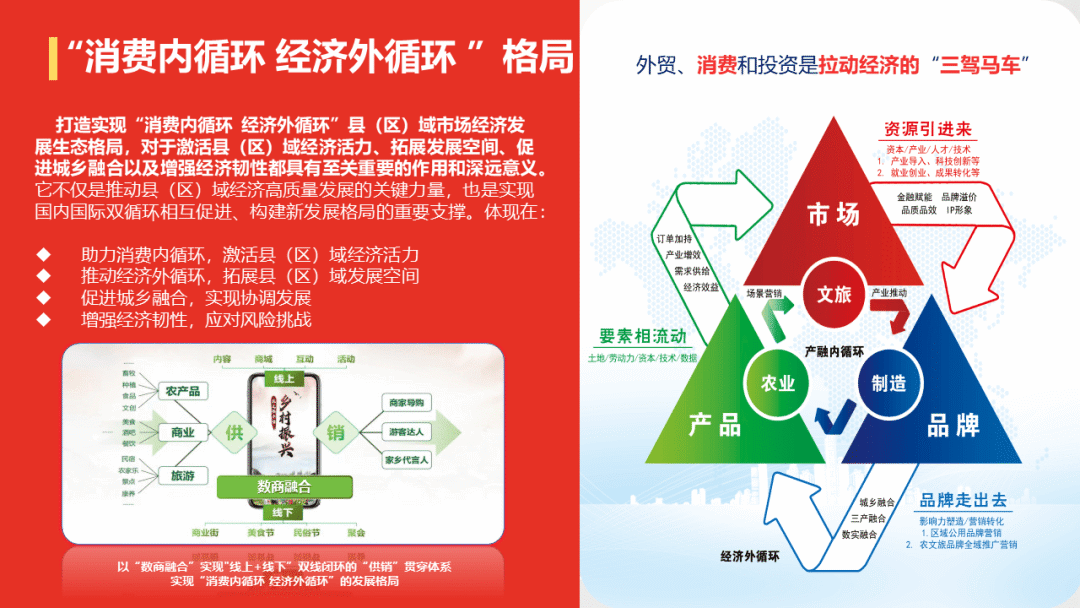
Core Viewpoint - The article discusses the establishment of a "Digital Business Integration Smart Innovation Service Center" aimed at enhancing local economies through the integration of technology and commerce, promoting a dual circulation economic model of "internal consumption and external economy" [7][20]. Group 1: Project Overview - The project focuses on leveraging artificial intelligence and digital integration to boost consumption and provide services to local areas, utilizing platforms such as the "Digital Business Integration Service Cloud" and "AI Digital Creative Platform" [7][19]. - It aims to create a comprehensive consumption scene that integrates various resources including agriculture, culture, tourism, and commerce, thereby fostering a high-quality local economic development model [7][20]. Group 2: Implementation Strategies - The initiative includes the development of an AI-powered tourism assistant that provides real-time local information, ticket booking, and recommendations for food and lodging, enhancing the visitor experience [19]. - A new retail model is proposed that combines online and offline shopping, allowing consumers to experience products in-store while also benefiting from convenient online purchasing and delivery options [20]. Group 3: Economic Impact - The project is expected to stimulate local consumption by offering promotional activities such as subsidies and free orders, thereby extending the consumption chain beyond single tourist attractions [20]. - The establishment of the AI Smart Broadcasting Innovation Service Center will provide businesses with new marketing channels, enabling continuous interaction with consumers and promoting product sales through various digital formats [20].

“人工智能+消费”迎机遇!五部门联合印发催生数万亿新增市场!
Sou Hu Cai Jing· 2025-11-28 02:27
Group 1 - The core viewpoint emphasizes the importance of expanding domestic demand as a strategic foundation for economic growth, focusing on enhancing people's livelihoods and promoting consumption [1][7] - The implementation plan aims to achieve three trillion-level consumption sectors and ten hundred-billion-level consumption hotspots by 2027, with a goal of establishing a high-quality development pattern of positive interaction between supply and consumption by 2030 [1][9] - The "14th Five-Year Plan" highlights the need for coordinated regional development, rural revitalization, and a green transformation of the economy, while ensuring social welfare and promoting consumption [1][7] Group 2 - The Ministry of Commerce plans to develop health consumption and digital consumption, aiming to create new growth points in consumption through the integration of artificial intelligence [2][8] - The National Development and Reform Commission emphasizes technological innovation and the promotion of smart terminals to enhance traditional industries [2][8] - The Ministry of Industry and Information Technology focuses on product and scenario innovation, advocating for a shift from mere product purchases to subscription-based lifestyles [2][8] Group 3 - The concept of "consumption internal circulation and economic external circulation" is proposed to enhance the synergy between government management, business environment improvement, and financial empowerment of physical commerce [4][19] - The establishment of "Smart Innovation Service Centers" aims to integrate digital and physical commerce, promoting high-quality economic development in counties and districts [5][23] Group 4 - The "Artificial Intelligence+" initiative aims to enhance service consumption by integrating digital technologies into various sectors, including entertainment, e-commerce, and elder care [8][11] - The focus on digital economy development emphasizes the need for deep integration between digital and physical economies, enhancing data infrastructure and market systems [10][11] Group 5 - The strategy includes promoting urban-rural integration, agricultural modernization, and the fusion of culture, tourism, and agriculture to create a comprehensive supply chain [19][30] - The approach advocates for a shift from raw material sales to value-added products and services, enhancing the overall agricultural supply chain [19][30]
“辽源市社会组织数商融合服务云平台”体验展示空间落地启动
Sou Hu Cai Jing· 2025-10-25 00:49
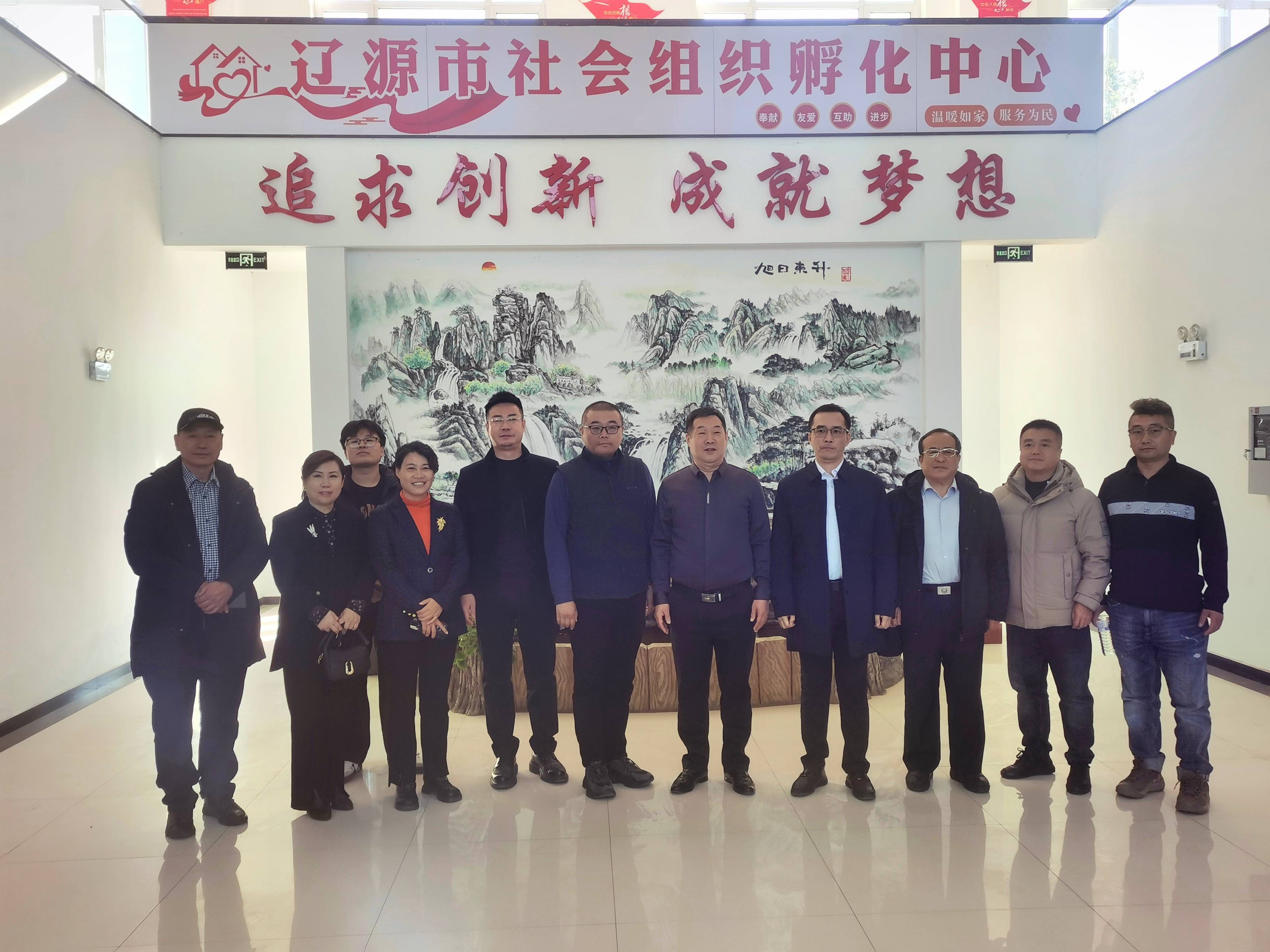
Core Viewpoint - The "Liaoyuan Social Organization Digital Business Integration Service Cloud Platform" has been officially launched, aiming to enhance local economic development through the integration of technology and social organizations [17]. Group 1: Platform Overview - The platform is developed by the New Intelligence Production Power (Liaoyuan) Reception Hall, linking social organizations with digital businesses from Beijing to promote high-quality development [17]. - It focuses on "technology empowerment, digital business integration, boosting consumption, and serving local needs" as its core principles [17]. Group 2: Objectives and Features - The initiative aims to create new consumption scenarios and models in Liaoyuan, integrating resources from agriculture, culture, tourism, health, education, and commerce [17]. - It seeks to establish a comprehensive regional consumption scene that includes dining, accommodation, transportation, tourism, shopping, and entertainment [17]. - The platform promotes a development pattern of "internal consumption circulation and external economic circulation," aiming to stimulate employment and enhance industrial efficiency [17].
袁帅:数商融合科技赋能集市经济,提振区域经济发展消费势能
Sou Hu Cai Jing· 2025-08-04 00:01
Core Insights - The "market economy" is a vital component of regional commercial activities, closely linked to residents' daily lives, fulfilling diverse consumer needs, and stimulating regional economic vitality [1][3][5] Group 1: Market Economy and Consumer Trends - The rise of "market economy" reflects a new consumption trend, with creative, non-heritage, and eco-friendly markets becoming popular among young consumers [3][5] - Urban "morning and night markets" demonstrate positive impacts on local economies, enhancing cultural engagement and connecting rural products directly to consumers [3][6] Group 2: Local Economic Impact - The market economy serves as a direct carrier of consumption, rooted in local culture, offering a variety of goods and services that attract both residents and tourists [5][6] - It creates a vibrant shopping atmosphere, stimulating consumer desire and driving growth in related industries such as dining, accommodation, and transportation [5][6] Group 3: Rural Revitalization - The market economy provides a platform for rural products to reach end consumers, increasing product value and farmer income, thus fostering rural economic growth [6] - It facilitates material exchange and personnel flow between urban and rural areas, optimizing rural industrial structures [6] Group 4: Digital Integration and Innovation - The integration of digital technology into the market economy breaks traditional limitations, allowing products to reach broader markets through e-commerce and live streaming [8][10] - Digital tools enhance consumer access to market information, streamline shopping experiences, and improve supply chain efficiency through data analysis [8][10] Group 5: Regional Economic Development - Smart technology enhances urban governance and service levels, supporting policy-making, market regulation, and financial innovation [10] - The establishment of a "trustworthy data space" aids in improving the business environment and addressing financing challenges for enterprises [10]