
数字信贷

Search documents
Strategy Unveils $44 Billion Plan to Buy More Bitcoin, Driven By MSTR and STRC Shares
Yahoo Finance· 2026-03-23 14:56
Core Viewpoint - The company plans to issue $44 billion in common and preferred equity to support its Bitcoin purchasing strategy, with a focus on raising additional funds through preferred shares [1]. Group 1: Equity Issuance - The company has gained the ability to issue an additional $21 billion in common stock (MSTR) and $21 billion in variable rate preferred shares (STRC), along with $2.1 billion in convertible preferred shares (STRK) [1]. - The variable rate preferred share (STRC) has raised over $1.5 billion this month due to increased investor interest, following a dividend hike to 11.5% [2]. - STRC traded above its $100 par value for several days, indicating potential issuance for Bitcoin purchases, but has since traded below that threshold for seven consecutive days [3]. Group 2: Bitcoin Acquisitions - The company acquired 1,031 Bitcoin for $76.6 million, marking its smallest purchase in a month, funded through common stock [5]. - The total Bitcoin stockpile has reached 762,099 Bitcoin, valued at over $54 billion, resulting in an unrealized loss of nearly $3.3 billion with an average purchase price of $75,694 per Bitcoin [7]. Group 3: Market Context - The company's stock price increased by 2% to $138, while Bitcoin was trading around $71,420, recovering from weekly losses [6]. - The firm has shifted towards "digital credit" by utilizing preferred shares as an alternative funding source, despite the additional costs incurred [4].
Strategy Spends $200 Million on Bitcoin, Raises STRC Dividend Yet Again
Yahoo Finance· 2026-03-02 15:22
Core Viewpoint - The company has made its third-largest Bitcoin purchase of the year, acquiring $200 million worth of Bitcoin, which has resulted in a total holding of approximately 720,750 Bitcoin valued at about $49.5 billion [1]. Group 1: Bitcoin Purchases and Holdings - The recent purchase consisted of around 3,000 Bitcoin at an average price of approximately $67,700 each [1]. - The company has been experiencing an unrealized loss since Bitcoin fell below $76,000, with its holdings down $5.3 billion on paper as Bitcoin traded around $68,452 [2]. - The company’s stock price increased nearly 6% to about $137, although it has decreased almost 60% over the past six months [2]. Group 2: Funding and Financial Strategies - The company raised $33 million more than it spent on Bitcoin by issuing variable rate preferred stock, which has been termed "digital credit" by the co-founder [3]. - The monthly dividend for the STRC preferred stock was raised to 11.5%, marking the seventh adjustment to enhance its attractiveness since its introduction [3]. - The company raised $7.1 million through STRC, which is significantly lower than the $230 million raised from common shares, aiming to maintain Bitcoin inflow without diluting common shareholders [4]. Group 3: Financial Position and Market Sentiment - The company has accumulated billions in cash to pre-pay dividends, although concerns have been raised regarding its long-term ability to sustain these payments [5]. - A prediction market indicated a 15% chance that the company would sell Bitcoin this year, a decrease from 28% a month prior [5]. - Following a fourth-quarter loss of $12.4 billion due to volatility in its holdings, the company emphasized its commitment to digital credit and a long-term Bitcoin strategy [6].
Metaplanet Posts $605 Million Loss After Spending Billions on Bitcoin
Yahoo Finance· 2026-02-16 17:27
Core Viewpoint - Metaplanet has reported significant financial losses due to the decline in Bitcoin prices, reflecting the challenges faced by firms heavily invested in digital assets. Financial Performance - Metaplanet disclosed a full-year loss of ¥95 billion (approximately $605 million) against revenues of ¥8.9 billion (around $58 million) [1] - The company's Bitcoin holdings, totaling 35,100, were valued at $2.4 billion, representing a 37% unrealized loss of about $1.4 billion since the initial investment of nearly $3.8 billion at an average price of $107,000 per Bitcoin [2][3] Stock Performance - The company's stock price increased slightly to ¥326, but has seen a decline of over 62% in the past six months, paralleling a 65% drop in shares of a competitor, Strategy [4] Revenue Sources - Metaplanet's revenue primarily comes from premiums on writing options, which surged to ¥7.9 billion (approximately $51 million) from ¥691 million (around $4.5 million) year-over-year [5] Investment Strategy - The company has been modeling its strategy on Michael Saylor's approach and made significant Bitcoin purchases when prices exceeded $100,000 [6] - Metaplanet increased its Bitcoin holdings by 25% with a $630 million purchase in September and a $615 million purchase in October [7] Capital Raising Initiatives - Metaplanet has introduced MERCURY and MARS as new funding sources, moving beyond common equity to create a more resilient growth platform [8]
数字信贷的兴起与监管:印尼的经验教训
Shi Jie Yin Hang· 2026-01-21 23:10
Investment Rating - The report does not explicitly provide an investment rating for the industry Core Insights - The rise of digital lending in Indonesia has significantly impacted the financial landscape, with over 40% of borrowers having taken at least one fintech loan by the end of the sample period [3][10] - Digital lenders have expanded financial inclusion by reaching previously unbanked households, although their geographical coverage remains limited and primarily focuses on consumer financing [3][12] - A notable portion of borrowers transitioned from high-interest fintech loans to cheaper conventional credit over time, but high default rates persist among those who initially relied on digital loans [3][13] - Recent regulatory reforms, such as interest rate caps and unified reporting standards for digital and traditional loans, have been assessed for their impact on credit market stability and consumer protection [3][14] Summary by Sections Introduction - Indonesia has made significant progress in financial inclusion, driven by a wave of retail financial product innovations, particularly digital lending since around 2020 [9][10] - The expansion of fintech loans raises questions about their effectiveness in enhancing financial inclusion in underserved urban areas and supporting small business lending [9][10] Data and Methodology - The analysis is based on a unique dataset of over 139,865 anonymized personal credit records from a private credit bureau in Indonesia, covering the period from 2018 to 2024 [22][24] - The dataset allows tracking individual credit histories and understanding the role of fintech loans in the emerging digital financial ecosystem [10][11] Findings on Credit Market Trends - The average borrower in Indonesia has seen a steady increase in credit volume, with significant regional disparities in credit access and borrower characteristics [36][39] - Fintech loans, while growing rapidly, still represent a small portion of total credit, accounting for about 5% of all loans [54][55] - The majority of digital loans are used for consumption rather than productive investments, indicating a potential limitation in supporting economic growth [62][63] Borrower Characteristics and Behavior - Fintech borrowers tend to be younger, more likely to be entrepreneurs, and concentrated in urban areas, contrasting with traditional borrowers [58][59] - Borrowers who start with fintech loans exhibit higher default rates compared to those who begin with traditional loans, with a difference of 5 to 7 percentage points [13][73] Regulatory Impact - Recent regulations aimed at supporting financial inclusion have inadvertently restricted credit access for unbanked households, as lenders shift focus to lower-risk borrowers [14][15] - The report emphasizes the importance of non-traditional credit information in lending to unbanked households, highlighting the role of private credit bureaus [14][15]
Semler Scientific 董事长 Eric Semler 呼吁股东投票支持与 Str...
Xin Lang Cai Jing· 2025-12-30 00:55
Group 1 - The chairman of Semler Scientific, Eric Semler, is urging shareholders to vote in favor of the merger with Strive, with a special shareholder meeting scheduled for January 13 [1] - According to the plan, SMLR shareholders will receive ASST stock at a ratio of 21.05:1 [1] - The merger is expected to allow shareholders to participate in the growth of a leading digital credit company, and post-merger, the company will hold nearly 13,000 BTC, positioning it among the top five publicly traded companies with Bitcoin as a strategic reserve asset [1]


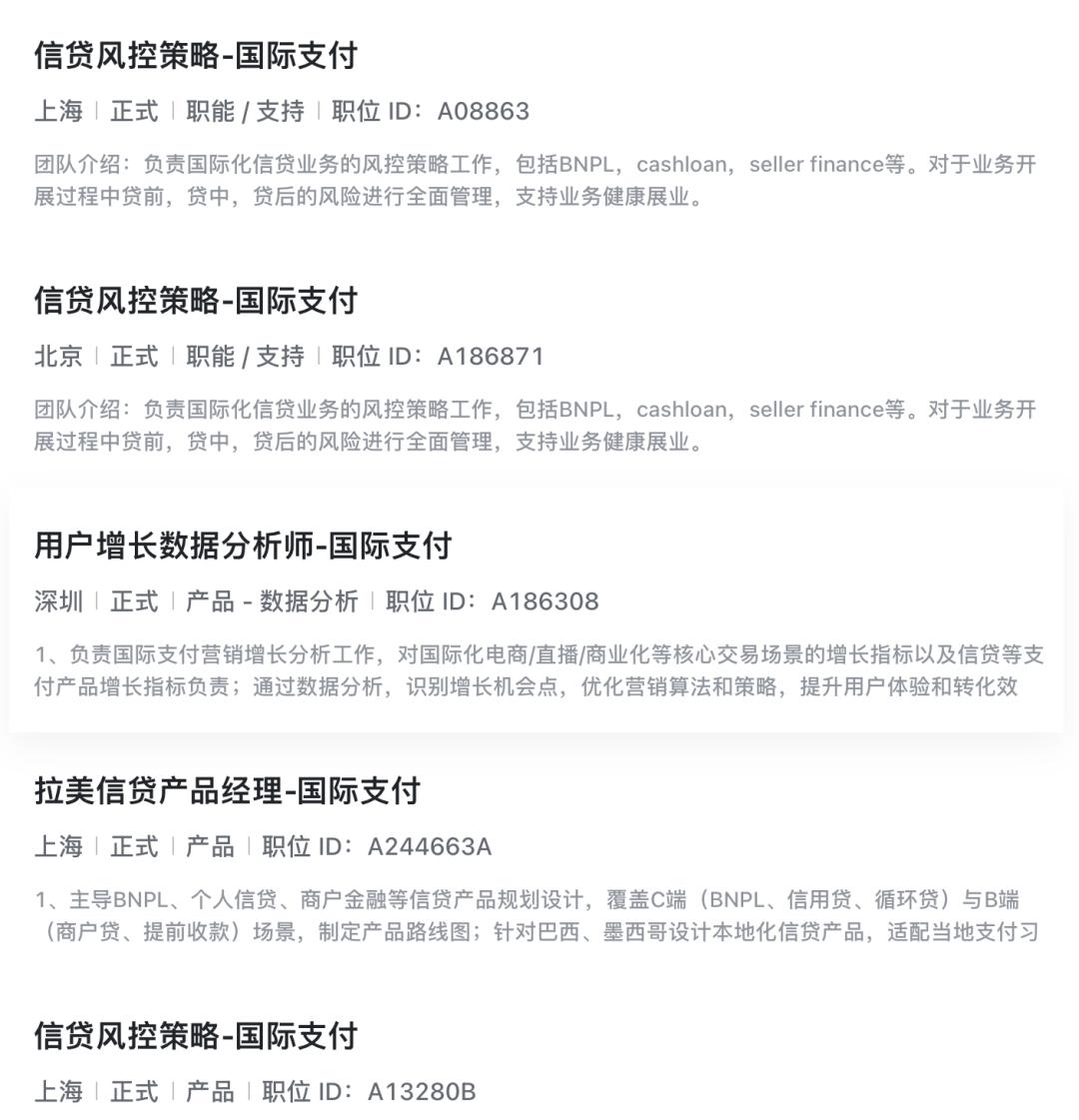
字节跳动「国际信贷」业务隐秘布局
3 6 Ke· 2025-12-23 23:48
Core Insights - Domestic internet traffic growth has peaked, leading major internet companies to shift focus towards overseas credit markets as domestic credit regulations tighten [1] - Chinese fintech players are replicating successful digital finance models in emerging markets such as Southeast Asia, Latin America, and Africa [1] - Major internet firms are adopting a more cautious approach, often seeking partnerships with licensed institutions to enter overseas credit markets [1] Group 1: Company Developments - Ant Group is actively recruiting a significant number of credit-related talents to accelerate its overseas credit business expansion [2] - ByteDance has also been rapidly expanding its overseas credit team, with a focus on specific roles related to international credit operations [3][4] - ByteDance is currently hiring for various international credit-related positions, including product managers for Latin America [5] Group 2: Product Focus - The roles being recruited by ByteDance include positions for BNPL (Buy Now Pay Later), personal loans, and merchant financing, indicating a broad scope of credit products [12] - Specific job descriptions highlight the need for localized credit products tailored to the payment habits and user preferences in Brazil and Mexico [7][8] Group 3: Market Strategy - ByteDance's overseas credit business is primarily centered around BNPL, leveraging its large TikTok user base and the growing TikTok Shop ecosystem [12] - The company is currently collaborating with licensed third-party institutions in various countries to offer BNPL services, as it does not yet hold relevant licenses in those markets [16][17] Group 4: Competitive Landscape - The entry of major players like ByteDance into overseas credit markets is expected to enhance local digital financial infrastructure and stimulate market demand [33][35] - However, there are concerns that the presence of such giants will raise compliance standards and customer acquisition costs, posing challenges for smaller players in the market [37]

Strategy (NasdaqGS:MSTR) Update / Briefing Transcript
2025-12-01 14:00
Company and Industry Summary Company Overview - The company discussed in the conference call is a digital credit vehicle focused on Bitcoin (BTC) holdings and digital credit instruments. The current enterprise value is $68 billion, with a Bitcoin reserve valued at $59 billion, equating to a 1.2x market net asset value (MNAV) ratio [5][6]. Key Updates on Bitcoin Holdings - The company has increased its Bitcoin holdings by 130 BTC, bringing the total to 650,000 BTC, valued at approximately $59 billion [1]. - The previous guidance for Bitcoin price was $150,000, which has been revised to a range of $85,000-$110,000 based on recent market conditions [2]. - The BTC yield percentage as of November 30, 2025, is 24.6%, with an expected year-end range of 22%-26% [2][3]. Financial Performance and Projections - The original target for BTC dollar gain was $20 billion, but current projections estimate a range of $8.4 billion to $12.8 billion based on the revised Bitcoin price assumptions [3][4]. - For the first three quarters of the year, the company reported $12 billion in operating income and $8.6 billion in net income, translating to $27.7 per share [4]. - If Bitcoin prices exceed $114,000 by year-end, the company anticipates improved financial metrics compared to previous quarters [4][5]. Capital Structure and Debt Management - The company has $8.2 billion in convertible debt and $7.8 billion in preferred equity, resulting in a conservative loan-to-value (LTV) ratio of 11% for convertible debt and 22%-23% when combined with preferred equity [5][6]. - The company has raised $1.44 billion to establish a USD reserve, which will be used to cover dividends and interest payments, targeting a minimum of 12 months of coverage [7][8][9]. Digital Credit Strategy - The company aims to enhance its creditworthiness and provide appealing credit options through its digital credit model, which includes various credit instruments [12][18]. - The BTC rating of the company is 3.7, with credit risks on debt at five basis points, while digital credit spreads range from 108-209 basis points [12]. - The introduction of the USD reserve is expected to improve the company's ability to manage dividend obligations and reduce credit risk [13][28]. Market Dynamics and Future Outlook - The company has access to multiple capital markets, including equity, commodity (Bitcoin), and derivatives, allowing for flexible funding strategies based on market conditions [20][24]. - The company believes that it can continuously increase its Bitcoin holdings while funding dividends through strategic sales of Bitcoin or derivatives [22][26]. - The management is committed to maintaining a robust digital credit vehicle that can adapt to market fluctuations and provide long-term value to shareholders [28][29]. Additional Insights - The company has a long-term vision of sustaining dividend payments for up to 74 years based on its Bitcoin reserve, even under conservative growth assumptions [6][14]. - The management emphasizes that selling Bitcoin to fund dividends does not indicate a lack of commitment to Bitcoin but rather a strategic decision to enhance shareholder value [25][26].
