
互联网信贷

Search documents
字节跳动「国际信贷」业务隐秘布局
3 6 Ke· 2025-12-23 23:48
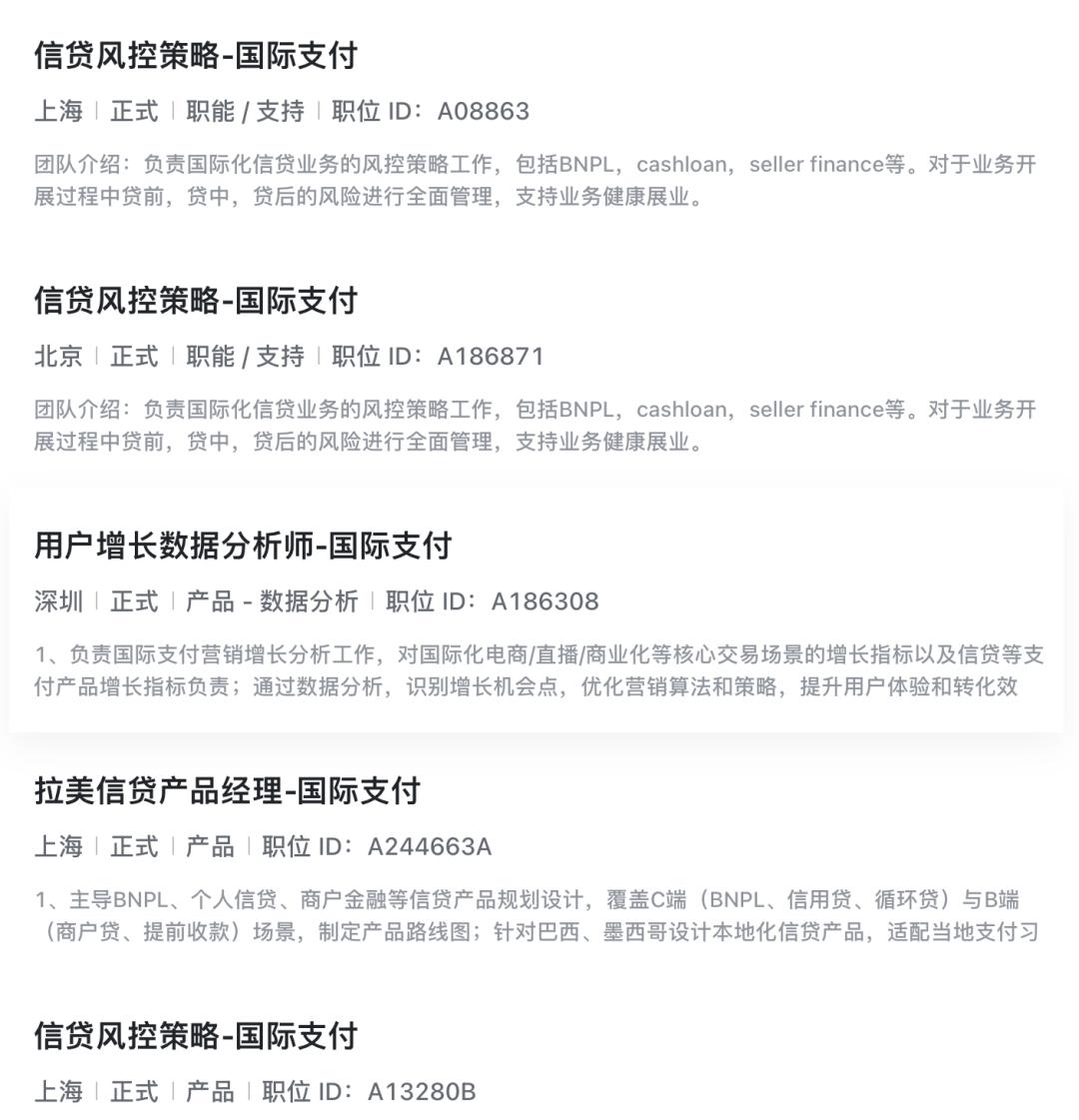
Core Insights - Domestic internet traffic growth has peaked, leading major internet companies to shift focus towards overseas credit markets as domestic credit regulations tighten [1] - Chinese fintech players are replicating successful digital finance models in emerging markets such as Southeast Asia, Latin America, and Africa [1] - Major internet firms are adopting a more cautious approach, often seeking partnerships with licensed institutions to enter overseas credit markets [1] Group 1: Company Developments - Ant Group is actively recruiting a significant number of credit-related talents to accelerate its overseas credit business expansion [2] - ByteDance has also been rapidly expanding its overseas credit team, with a focus on specific roles related to international credit operations [3][4] - ByteDance is currently hiring for various international credit-related positions, including product managers for Latin America [5] Group 2: Product Focus - The roles being recruited by ByteDance include positions for BNPL (Buy Now Pay Later), personal loans, and merchant financing, indicating a broad scope of credit products [12] - Specific job descriptions highlight the need for localized credit products tailored to the payment habits and user preferences in Brazil and Mexico [7][8] Group 3: Market Strategy - ByteDance's overseas credit business is primarily centered around BNPL, leveraging its large TikTok user base and the growing TikTok Shop ecosystem [12] - The company is currently collaborating with licensed third-party institutions in various countries to offer BNPL services, as it does not yet hold relevant licenses in those markets [16][17] Group 4: Competitive Landscape - The entry of major players like ByteDance into overseas credit markets is expected to enhance local digital financial infrastructure and stimulate market demand [33][35] - However, there are concerns that the presence of such giants will raise compliance standards and customer acquisition costs, posing challenges for smaller players in the market [37]

东南亚:金融科技下一站
HTSC· 2025-06-03 11:07
Investment Rating - The report maintains an "Increase" rating for the Southeast Asian fintech sector [8] Core Insights - Southeast Asia's fintech industry has significant growth potential, driven by a robust macroeconomic environment, improving infrastructure, and a friendly policy landscape [13][16] - The four main areas of fintech development are digital payments, internet lending, insurtech, and virtual assets [17][20] - The region's GDP growth is approximately 5%, with a population of 630 million, predominantly under 40 years old, providing a strong consumer base [22][23] Digital Payments - Digital payment penetration is expected to increase, with 44% of transactions still conducted in cash as of 2024, compared to 5.8% in China [39][40] - The COVID-19 pandemic has shifted consumer habits towards online payments, with 33% of consumers using e-wallets for the first time during the pandemic [40] - The main digital payment methods are card payments and e-wallets, with a competitive landscape lacking a dominant player like Alipay or WeChat Pay in China [38][50] Internet Lending - The internet lending market in Southeast Asia is projected to grow from $48 billion in 2022 to $71 billion in 2024, with a penetration rate of only 1.8% [4][14] - The lending market is characterized by high pricing limits (18-180%), small loan amounts (average $18), and short durations, providing substantial profit margins [4][14] - The risk profile is relatively stable, with SeaMoney's 90-day overdue rate at 1.1%, lower than domestic platforms in China [14][16] Insurtech - The insurtech market in Southeast Asia is in its early stages, with a market size of approximately $2.4 billion in 2024, expected to reach $7.5 billion by 2030 [5][14] - The penetration rate of insurtech is low, at about 1.5-3.1%, compared to 8.8% in China [5][14] - Three main business models exist: insurtech platforms, full-stack insurtechs, and insurtech enablers, with the latter focusing on B2B solutions [5][14] Virtual Assets - Southeast Asia shows high interest in virtual assets, with six countries ranking in the top 20 for global cryptocurrency adoption, and Indonesia ranked third [6][14] - The regulatory environment is generally supportive, with governments encouraging the development of the virtual asset market while managing risks [6][14] - Indonesia's cryptocurrency transaction volume reached $157.1 billion from July 2023 to June 2024, the highest in the region [6][14]