数字化养老

Search documents
首家线上专供养老助餐点投用
Xin Lang Cai Jing· 2026-02-04 22:38
Core Insights - JD's Qixian Kitchen has become the first officially registered online meal service for the elderly in Beijing, providing a new dining option for senior citizens [1] - The initiative aims to address the challenge of ensuring that elderly individuals can access hot, healthy, and affordable meals conveniently [1] Group 1: Company Initiatives - Qixian Kitchen has launched a "Senior Zone" in some of its stores to cater specifically to the needs of elderly customers [1] - The service allows seniors to place orders via mobile phones, ensuring meals are delivered directly to their homes, enhancing convenience during adverse weather conditions [1] Group 2: Industry Context - The Beijing Elderly Care Service Regulations encourage various methods, including market operations and volunteer services, to support meal delivery services for the elderly [1] - Qixian Kitchen has developed a comprehensive meal assistance solution, which has already been implemented in specific locations such as Dongcheng District [1] Group 3: Technological Integration - The platform has integrated online payment functionality for elderly care and assistance cards, aiming to make the ordering and payment process seamless for seniors [1] - The initiative is part of a broader effort to leverage digital technology to enhance the dining experience for elderly individuals [1]

爱连健康:“科技居家+专属管家”智慧养老平台 重构居家养老服务新生态
Jing Ji Guan Cha Wang· 2026-01-20 08:14
Core Insights - The article highlights the increasing trend of home-based elderly care in China, addressing the challenges of traditional services such as fragmentation, slow response, digital divide, and insufficient safety measures [1] Group 1: Company Overview - Guoyang Ailian Health Technology (Beijing) Co., Ltd. focuses on the health sector, creating an integrated smart elderly care service platform that combines technology and personalized care, aiming to provide comprehensive solutions covering medical, food, housing, and transportation for the elderly [1][4] - The platform aims to transition home care from a "passive response" model to a "proactive and precise service" model, addressing the diverse needs of high-age, chronic disease, and semi-disabled groups [1] Group 2: Technological Innovations - Ailian Health's core competitiveness lies in the deep integration of technology and services, featuring five smart IoT systems that include a fully intelligent butler system and a comprehensive medical service system, supported by AI and data engines [2] - The platform has achieved significant breakthroughs in technology integration, such as a 95% success rate in AI voice interaction, a dual-track remote medical system for seamless access to healthcare, and a 24-hour intelligent safety network that responds to risks within three minutes [2] Group 3: Service Model - The company has pioneered a service model that combines standardization and ecological logic, offering 720 standardized SKU service packages that can be flexibly combined based on the health status and family scenarios of the elderly [3] - The platform operates a tri-end collaborative architecture involving the elderly, their children, and the platform backend, enhancing family engagement by 70% and achieving a service punctuality rate of 99.2% [3] Group 4: Market Presence and Future Plans - Since its launch, the platform has been implemented in multiple cities, including Beijing and Tianjin, receiving widespread market recognition, with 152 effective safety alerts triggered and 23 safety incidents successfully avoided [3] - The platform has integrated with major insurance companies, achieving a 67% repurchase rate, and aims to expand its service coverage while enhancing collaboration with insurance, government, and real estate sectors [4]
培养既懂服务又通技术的养老服务人才队伍
Xin Lang Cai Jing· 2026-01-17 19:45
Core Insights - The aging population in China is becoming a significant societal issue, with projections indicating that by the end of 2024, there will be 310 million individuals aged 60 and above, and 220 million aged 65 and above [1] - The "14th Five-Year Plan" emphasizes the need to address aging population challenges and develop a coordinated policy mechanism for the pension industry [1] - The transition of caregiving roles from traditional caregivers to "smart rehabilitation caregivers" necessitates a workforce skilled in both elder care and digital technology [1] Group 1: Talent Development Challenges - There is a significant challenge in cultivating more elder care talent due to a lack of digital skills among caregivers, who may be familiar with daily care but struggle with operating smart devices and managing health data [2] - A systematic digital skills training program is essential, focusing on practical training for frontline caregivers and data analysis for management personnel [2] - For instance, a training initiative in Hangzhou improved the accuracy of caregivers using smart health monitoring devices from 65% to 92%, and reduced the time to detect abnormal conditions by 40% [2] Group 2: Collaborative Ecosystem for Talent Cultivation - The current approach to elder care talent development is fragmented, often limited to superficial cooperation between vocational schools and enterprises [3] - Establishing a "regional smart elder care education and industry integration community" is recommended to enhance collaboration among government, elder care institutions, tech companies, and educational institutions [3] - An example is the establishment of a smart health elder care industry academy in Shanghai, which involves deep participation from enterprises in curriculum development and provides students with real-world project experience [3] Group 3: Digital Platform Construction - There is a need for the development of a smart elder care service personnel learning platform that integrates online courses, virtual training, and skills certification [4] - This platform should facilitate collaboration among government, educational institutions, and enterprises, ensuring a comprehensive training-to-employment cycle [4] Group 4: Institutional Support for Career Development - To attract and retain high-quality talent in elder care, it is crucial to enhance the industry's appeal by addressing issues such as low social recognition, inadequate compensation, and limited career advancement opportunities [6] - The Ministry of Civil Affairs and the Ministry of Human Resources and Social Security have initiated a framework for skill level recognition in elder care, establishing an eight-level vocational skill hierarchy [6] - Local governments are encouraged to link skill levels with compensation and career advancement, as seen in Nanjing's policy that increased job applications by 25% for positions requiring higher skill levels [7] Group 5: Comprehensive Approach to Talent Development - The cultivation of elder care talent must be a coordinated effort involving capability enhancement, ecosystem building, and institutional support [8] - A focus on upgrading digital skills, fostering deep integration between government, education, and industry, and improving career development frameworks is essential for creating a professional workforce that meets the needs of an aging population [8]
数字食堂+适老焕新 老人家门口的“养老幸福网”
Xin Lang Cai Jing· 2025-12-26 16:58
Core Viewpoint - The article highlights the implementation of a digital canteen in Chongqing's Yubei community, which utilizes smart technology to facilitate elderly dining experiences through features like facial recognition and automatic weight-based billing [1] Group 1: Digital Canteen Features - The digital canteen allows elderly individuals to dine without the need for smartphones, utilizing facial recognition to identify users [1] - The system automatically weighs food and calculates costs, streamlining the payment process for seniors [1] Group 2: Government Support and Policies - Chongqing has introduced a subsidy policy for home modifications aimed at the elderly, promoting the purchase of smart home products tailored to their needs [1] - This initiative aligns with the personalized care requirements of the aging population, enhancing their quality of life [1] Group 3: Cultural and Social Impact - The digital canteen exemplifies a human-centered approach to technology, addressing the challenges faced by elderly individuals in adapting to smart devices [1] - It reflects a broader trend of integrating technology into daily life to support the aging demographic [1]


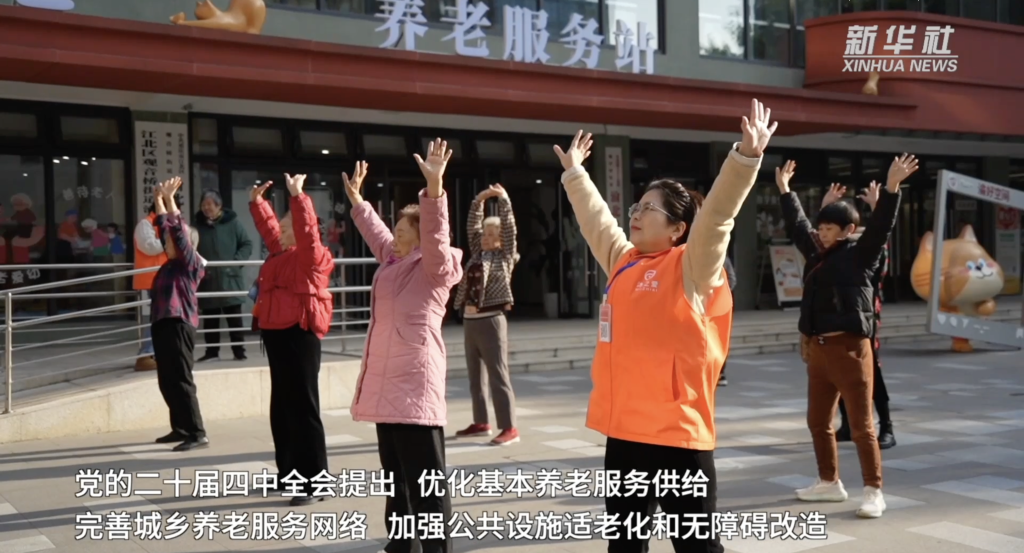
四中全会精神在基层丨数字食堂+适老焕新:家门口的“养老幸福网”
Xin Hua She· 2025-12-19 06:10
Group 1 - The 20th Central Committee of the Communist Party proposed optimizing basic elderly care services, improving urban and rural elderly care service networks, and enhancing the accessibility and barrier-free transformation of public facilities [1] Group 2 - In Chongqing's Guanyinqiao Street Yubei Community, a digital canteen allows elderly individuals to dine with smart, contactless payment methods, utilizing facial recognition and automatic weight-based billing [3] Group 3 - Chongqing has introduced a subsidy policy for home modifications aimed at the elderly, providing discounts for seniors purchasing smart home products tailored for elderly care, such as smart pillboxes and emergency alert devices [5] Group 4 - The Yubei Community has approximately 1,800 elderly residents, and a smart display records their basic data, making the community's elderly care service needs clear and accessible [6]