数字化智能化监管

Search documents
“十四五”时期广西解决800多万民众住房困难
Zhong Guo Xin Wen Wang· 2026-01-28 07:35
Group 1 - The core viewpoint of the article highlights that during the "14th Five-Year Plan" period, Guangxi has constructed and collected a total of 2.95 million units of various types of affordable housing and resettlement housing, addressing housing difficulties for over 8 million people [1][2] - The 2026 Guangxi Housing and Urban-Rural Development Work Conference reviewed the achievements of 2025 and outlined key tasks for 2026, emphasizing the need for continued reform and innovation in the housing sector [2][3] - In 2025, Guangxi achieved a 100% delivery rate in the "guaranteed housing" campaign, with 22 new "good housing" projects recognized by the market, and initiated urban inspections to improve living conditions [2][3] Group 2 - In 2026, Guangxi plans to focus on urban renewal to promote high-quality urban development and support the extension of county infrastructure to surrounding rural areas, while enhancing the historical and cultural preservation system [3] - To stabilize the real estate market, Guangxi aims to reduce inventory of non-residential properties, conduct housing promotion activities, and acquire over 10,000 units of existing properties for affordable housing [3][5] - Guangxi will continue to optimize the market environment for the construction industry, promote digital and intelligent regulation, and enhance support for enterprises, while advancing smart city initiatives and applications of AI in the construction sector [5]

2025年北京机动车结构达到全国最优
Zhong Guo Xin Wen Wang· 2026-01-04 06:57
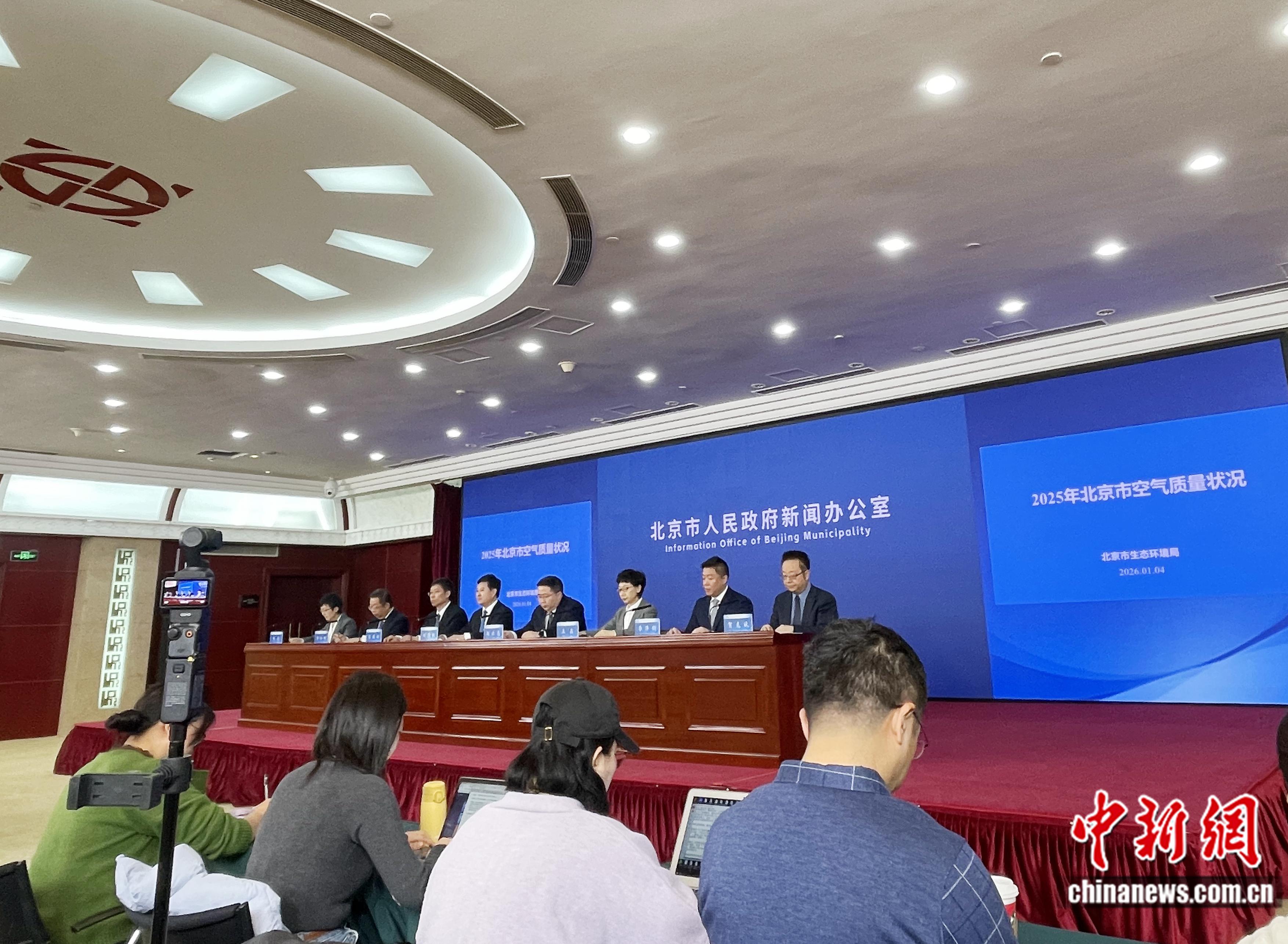
Core Viewpoint - By 2025, Beijing's air quality is expected to reach optimal levels, with PM2.5 annual average concentration dropping to 27.0 micrograms per cubic meter, marking a significant milestone in air pollution control efforts [1][4]. Air Quality Improvement - The annual average concentration of PM2.5 in Beijing is projected to be 27.0 micrograms per cubic meter in 2025, a year-on-year decrease of 11.5%, and the first time it falls below 30 micrograms [4]. - The number of days with good air quality is expected to reach 348 in 2025, an increase of 144 days compared to 2013, with the good air quality rate rising from 55.9% in 2013 to 95.3% in 2025 [4][6]. - From 2013 to 2025, PM2.5 levels have decreased by 69.8%, from 89.5 micrograms per cubic meter to 27.0 micrograms per cubic meter [4][6]. Pollution Reduction Metrics - In 2025, Beijing is expected to have only one heavy pollution day, a reduction of one day from the previous year, marking the lowest number of heavy pollution days recorded [6]. - Other major pollutants, including PM10, NO2, and O3, are also expected to show improvements, with annual average concentrations of 48, 22, and 159 micrograms per cubic meter, respectively, reflecting year-on-year decreases of 11.1%, 8.3%, and 7.0% [6]. - The annual average concentrations of PM2.5, PM10, NO2, and SO2 are projected to decrease by 69.8%, 55.6%, 60.7%, and 84.9%, respectively, compared to 2013 levels [6]. Vehicle Structure Optimization - By 2025, over 60% of new vehicles in Beijing are expected to be new energy vehicles, with the total number of new energy vehicles exceeding 1.28 million, three times the number at the end of the 13th Five-Year Plan [7]. - The proportion of new energy and National V and above vehicles is anticipated to exceed 80%, achieving the best vehicle structure in the country [7]. - The average road dust load in Beijing is projected to be 0.35 grams per square meter, a 40.7% reduction from 2020 levels [7]. Technological Advancements in Monitoring - Beijing is enhancing its air quality monitoring through digital and intelligent regulatory measures, creating a new generation of air quality monitoring network with high precision in problem identification [7]. - The monitoring system is designed to provide real-time data with a recognition accuracy of 90%, significantly improving the city's ability to manage air quality [7].
“我家大门常打开”,南钢底气何在?
Nan Jing Ri Bao· 2025-06-05 00:25
Core Viewpoint - Nanjing Iron and Steel Group (South Steel) has been recognized as one of the first national "new four categories" environmental facilities open to the public, showcasing its commitment to green and low-carbon development through significant investments in environmental upgrades and public engagement [1][5]. Group 1: Environmental Commitment - South Steel has invested over 13 billion yuan in environmental enhancements, including 11 desulfurization and denitrification units and 112 upgraded dust collectors, aiming for ultra-low emissions and ecological protection [5][6]. - The company has transformed its production site into a scenic area, with a focus on reducing pollution and enhancing the local environment, as evidenced by the conversion of a former raw material storage area into a public park [3][4]. Group 2: Digital and Smart Management - South Steel employs a digital environmental monitoring system that includes 75 smoke online monitoring devices and 318 TSP monitoring devices, allowing for real-time data tracking and management of environmental indicators [6][7]. - The smart management platform enhances operational efficiency and provides precise alerts for any abnormal emissions, ensuring immediate response to environmental issues [7]. Group 3: Energy Efficiency and Economic Benefits - The company initiated a "three-year action plan for extreme energy efficiency," focusing on energy-saving measures across various processes, resulting in significant improvements in energy consumption and economic benefits [8]. - In 2023, South Steel completed 150 energy-saving modifications, with an additional 53 planned for 2024, positioning itself among the industry leaders in energy efficiency [8]. Group 4: Industrial Tourism Development - South Steel has integrated industrial tourism into its operations, transforming its facilities into a national AAA-level tourist attraction, featuring over 20 industrial tourism sites, including museums and parks [9]. - The company aims to change the traditional perception of steel manufacturing by creating a welcoming environment for families and tourists, thus enhancing its public image and community engagement [9].