
数据修正

Search documents
金晟富:12.19黄金CPI过山车洗盘!今日收官警惕黑天鹅行情
Sou Hu Cai Jing· 2025-12-19 02:45
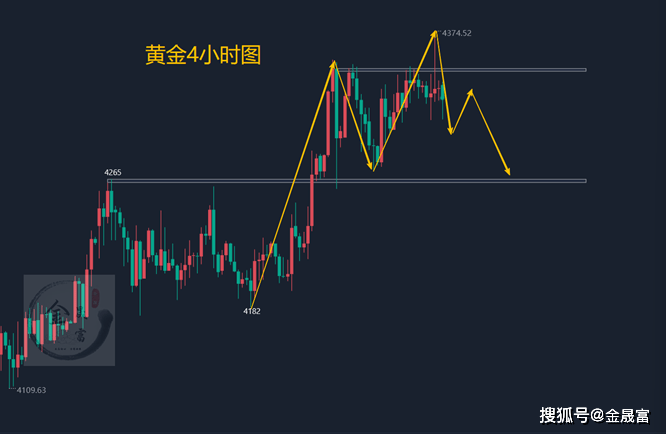
Core Viewpoint - The recent fluctuations in gold prices are significantly influenced by the lower-than-expected U.S. Consumer Price Index (CPI) data, which has affected gold's appeal as an inflation hedge and led to profit-taking among bullish investors [1][2]. Group 1: Market Analysis - On December 19, gold was trading around $4326 per ounce, having experienced a slight decline due to disappointing U.S. inflation data, which reduced gold's attractiveness as an inflation hedge [1]. - Gold prices reached a two-month high of $4374 per ounce on December 18 but closed at $4332.31 per ounce, indicating volatility driven by market reactions to CPI data [1][2]. - The CPI data's impact has led to a slight increase in the probability of a Federal Reserve rate cut in January, causing U.S. Treasury yields to drop, which initially supported gold prices [2]. Group 2: Technical Analysis - The recent price action in gold has shown a textbook-like spike and subsequent drop, with the Relative Strength Index (RSI) indicating a weakening bullish momentum [3]. - Key resistance levels for gold are identified between $4340 and $4350, while support is noted around $4300, with a potential breakdown opening further downside [5]. - The market is currently in a consolidation phase, with indications of a possible double top formation at the previous high of $4381, suggesting a bearish outlook in the short term [3][5]. Group 3: Investment Strategy - Short-term trading strategies suggest selling on rebounds near the $4335-$4340 range, with a target of $4310-$4280, while buying on dips around $4265-$4270 is also recommended [5]. - Investors are advised to monitor the market closely for potential volatility, especially given the historical patterns of price drops on Fridays [3][5].

美国劳工部对就业人数大幅下修展开调查 美联储:数据独立性至关重要
智通财经网· 2025-09-10 22:36
Core Viewpoint - The U.S. Department of Labor is investigating the recent data processing changes made by the Bureau of Labor Statistics (BLS), amid growing concerns about the reliability of government economic data, which has sparked widespread attention in the market and political circles [1] Group 1: Investigation and Changes - The investigation will focus on the challenges faced by BLS in collecting and publishing key economic data, following two significant decisions: reducing data collection for two key inflation reports and announcing substantial downward revisions to employment data [1] - The BLS has historically been viewed as a standard for objective data, but recent revisions have caused market turbulence and raised concerns about potential political interference [1][2] Group 2: Political Context - The investigation is set against the backdrop of President Trump's recent dismissal of the former BLS director and the nomination of E.J. Antoni, an economist from the right-wing think tank "Heritage Foundation," which has been criticized as a move to politicize the BLS and undermine its independence [1][2] - Trump's dissatisfaction with the Federal Reserve's policies and his accusations of data manipulation by BLS have been seen as part of a broader effort to increase influence over economic decision-making institutions [2] Group 3: Data Reliability and Challenges - Despite concerns, the Federal Reserve Chairman Jerome Powell emphasized the importance of high-quality and trustworthy government data, asserting that the Fed continues to receive the necessary data for policy-making while stressing the need for statistical independence [2] - The BLS faces increasing challenges due to budget constraints and declining survey response rates, which complicate data collection efforts; however, recent studies indicate that these issues have not significantly diminished the reliability of employment and inflation reports [3]