
通胀对冲

Search documents
Top 6 Ways to Invest in Gold
Yahoo Finance· 2026-03-27 15:24
Core Insights - The price of gold reached $5,000 per ounce in March 2026, leading to increased interest in gold as a long-term investment, with 23% of Americans considering it the best option according to a 2025 Gallup poll, an increase of five percentage points from the previous year [1][2]. Investment Options - There are various ways to invest in gold, including physical gold, gold ETFs, gold mutual funds, gold stocks, gold futures and options, and gold IRAs. The best option depends on the investor's financial goals and upfront investment [4][23]. Physical Gold - Minimum investment starts at $250, with low liquidity and fees including dealer premiums and storage costs. It is subject to collectibles tax rates [5]. - Pros include direct ownership and no reliance on brokerages, while cons involve added storage and insurance costs [6][7]. Gold ETFs - Minimum investment is $5, offering high liquidity with expense ratios as fees. Capital gains taxes apply [5]. - Pros include ease of buying and selling shares, while cons involve ETF fees and potential price variations from the gold spot price [10][14]. Gold Mutual Funds - Minimum investment is $1,000, with moderate liquidity and management fees. Capital gains taxes apply [5]. - Pros include easy diversification and incorporation into retirement accounts, while cons involve higher fees and less liquidity compared to ETFs [15]. Gold Stocks - Minimum investment is $5, with high liquidity and brokerage fees. Capital gains taxes apply [5]. - Pros include potential for higher returns, while cons involve higher risk and less liquidity compared to ETFs [16]. Gold Futures and Options - Minimum investment varies, often starting at $1,000, with high liquidity and complex tax rules. These are best suited for experienced investors [5][17]. - Pros include the ability to speculate on future prices, while cons involve high risk and the potential for significant losses [19][20]. Gold IRAs - Minimum investment is $5,000, with low liquidity and custodian/storage fees. These accounts are tax-advantaged but subject to strict IRS rules [5][21][26]. - Pros include tax-deductible contributions and potential for higher returns, while cons involve high custodian fees and less liquidity compared to other investment types [22][26]. Market Trends - Between December 31, 2015, and December 31, 2025, gold's price increased by 308%, from $1,062.25 to $4,339.64 [8]. - As of March 22, 2026, gold was approximately $4,500 per ounce, indicating that a $1,000 investment would buy about 0.22 ounces of gold [24]. - Historical data shows that a $10,000 investment in gold in 2006 would be worth approximately $74,570 by March 2026, reflecting the asset's strong performance over the years [25].
伊朗战争后黄金反而下跌!摩根大通:接下来怎么走?
华尔街见闻· 2026-03-16 10:18
Core Viewpoint - The recent decline in gold prices, despite the outbreak of conflict in Iran, raises questions about its safe-haven status, with prices dropping approximately 6% since the onset of the conflict [1]. Group 1: Market Dynamics and Gold Price Behavior - Historical data indicates that gold is often sold off during initial market stress, which is a documented structural pattern, rather than a failure of its safe-haven function [3][4]. - The recent sell-off in gold was driven by multiple factors, including rising energy prices increasing inflation expectations, leading to a significant reduction in market expectations for Federal Reserve rate cuts, alongside a rapid rebound in the dollar [1][4]. - The VIX index's rise, indicating increased market volatility, has led to widespread risk reduction among investors, forcing them to liquidate positions in gold as part of a broader strategy to enhance liquidity [1][4]. Group 2: Historical Patterns and Future Predictions - Analysis of past events shows that sell-offs in gold due to risk aversion are typically short-lived, with prices often rebounding quickly and significantly after initial declines [5][6]. - In 25 historical instances where the VIX first closed above 30, gold prices averaged a decline of about 0.5% in the first two trading days, followed by a rebound that typically recovers losses by the fourth trading day [5][6]. - The relationship between the VIX's movement and gold prices is crucial, with a declining VIX historically correlating with stronger gold performance [6]. Group 3: Long-term Outlook for Gold - If disruptions in energy supply persist, the macroeconomic backdrop for gold could shift rapidly and significantly towards bullish sentiment, particularly if the Federal Reserve adopts a more accommodative monetary policy [2][12]. - The inflation-hedging value of gold is expected to become more pronounced if current oil price shocks lead to a stagflation environment, as historical data shows gold tends to outperform other commodities during inflationary periods [12]. - The expectation of a shift in Federal Reserve policy, particularly if oil prices rise significantly, could further enhance gold's upward momentum, as the Fed may be compelled to lower interest rates in response to economic pressures [12][13].



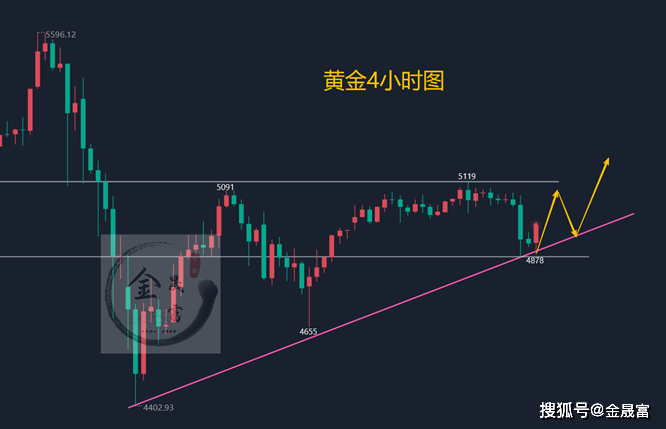
金晟富:2.13黄金爆涨暴跌洗盘加剧!周线收官黄金何去何从?
Sou Hu Cai Jing· 2026-02-13 02:47
Group 1 - The core viewpoint of the articles revolves around the volatility of gold prices, particularly in light of recent economic data and market sentiment, indicating a potential shift in investor behavior and expectations regarding Federal Reserve interest rate policies [1][2][3]. - Recent fluctuations in gold prices saw a significant drop, with gold trading at $4,980 per ounce, reflecting a 0.4% increase, after a previous decline that saw it fall below the $5,000 mark [1][2]. - The U.S. employment report for January showed an increase of 130,000 non-farm jobs, contradicting market expectations of a cooling labor market, which has led to a reassessment of the belief that the Federal Reserve would soon lower interest rates [2][3]. Group 2 - The technical analysis indicates that gold is currently in a wide range of fluctuations, with key resistance levels identified around $5,090 to $5,100, while support levels are noted between $4,900 and $4,930 [3][5]. - Despite the recent price drop, the overall bullish trend for gold remains intact, as long as the price does not fall below $4,400, suggesting that the market may still present buying opportunities [3][5]. - The articles suggest that investors should focus on the upcoming U.S. Consumer Price Index (CPI) data, as it could significantly influence gold prices and market sentiment moving forward [2][5].
强劲非农难阻美联储超预期降息?对冲基金大佬坚定看多黄金!
Jin Shi Shu Ju· 2026-02-12 02:36
Group 1 - Billionaire investor David Einhorn expects the Federal Reserve to cut interest rates more than the market anticipates, increasing his confidence in gold holdings [1] - Despite strong non-farm payroll data in January, market expectations for rate cuts have slightly cooled, with traders still betting on two rate cuts of 25 basis points each by the end of the year, with a probability exceeding 88% [1] - Einhorn believes that using employment data as a reason to avoid rate cuts is "wrong" and predicts more cuts due to Kevin Warsh's influence as a potential Fed chair [1] Group 2 - The core reason for the recent rise in gold prices is that gold is becoming a reserve asset for global central banks [2] - Einhorn highlights the instability of U.S. trade policies, prompting other countries to seek settlement methods outside of the dollar [3] - The combination of current fiscal and monetary policies is deemed "illogical," with other major currencies performing poorly compared to the dollar [3] Group 3 - Following Trump's statement about not worrying about a weak dollar, the dollar index experienced its largest single-day drop since April 2025 [4] - Einhorn anticipates significant issues with some major currencies in the coming years [5] - He views betting on more rate cuts as "one of the best trades currently" and holds long positions in Secured Overnight Financing Rate (SOFR) futures, essentially betting on continued declines in short-term rates [5]
Precious Metals ETFs: IAU Has Lower Costs, But SLV Has Delivered Greater Returns
Yahoo Finance· 2026-02-10 15:06
Core Insights - The iShares Silver Trust (SLV) has higher fees and greater volatility compared to the iShares Gold Trust (IAU), but it has shown stronger recent returns [1][2] - IAU is characterized by lower costs and a larger asset pool, making it appealing for cost-conscious investors [1][4] Cost & Size Comparison - SLV has an expense ratio of 0.50%, while IAU has a lower expense ratio of 0.25% [3][4] - As of February 6, 2026, SLV's one-year return is 138.9%, compared to IAU's 73.0% [3] - SLV has assets under management (AUM) of $47.3 billion, whereas IAU has a larger AUM of $78.0 billion [3] Performance & Risk Analysis - Over a five-year period, a $1,000 investment in SLV would grow to $2,764, while the same investment in IAU would grow to $2,672 [5] - SLV provides targeted access to silver, while IAU offers pure-play exposure to gold [5][6] - Both funds do not disclose individual holdings as they hold physical metals, and they are designed for straightforward exposure to the underlying metal prices [6] Investment Implications - Owning a precious metals ETF can diversify a portfolio and serve as a hedge against inflation, with SLV and IAU being two respected options in this category [7]
Echo45 Advisors Bets Big on the Harbor Commodity All-Weather Strategy ETF With a 127,000 Share Purchase
The Motley Fool· 2026-02-07 20:19
Core Viewpoint - The Harbor Commodity All-Weather Strategy ETF (HGER) provides diversified exposure to commodities, focusing on inflation-sensitive assets and dynamically adjusting gold weighting to optimize returns in inflationary conditions [6]. Fund Activity - Echo45 Advisors LLC reported a new position in HGER, acquiring 127,402 shares valued at approximately $3.16 million for the fiscal fourth quarter ending December 31, 2025 [2]. - This acquisition represents 1.8% of Echo45 Advisors' reportable assets under management as of December 31, 2025 [8]. ETF Overview - As of February 5, 2026, HGER's share price was $26.50, with a 1-year total return of 21.5%, outperforming the S&P 500 by 9.35 percentage points [8]. - The ETF offers a dividend yield of 6.54% [4]. Investment Strategy - The fund targets efficient diversification across at least 15 of the 24 most liquid commodity futures, with a focus on inflation sensitivity and economic significance [9]. - The strategy includes a dynamic gold weighting based on a proprietary scarcity debasement indicator, with quarterly rebalancing [9]. Performance Metrics - Over the past year, including dividends, HGER has produced a total return of 22.8%, and a total return of 46.1% over the past three years [10]. - Gold constitutes 40.9% of the ETF's total holdings, which may pose risks for conservative investors [11].

FXGT:金银大幅回调 利空打压多头信心
Xin Lang Cai Jing· 2026-02-06 13:05
Group 1 - The recent significant decline in precious metals prices is attributed to profit-taking by bullish investors after previous highs, with gold closing around $4803.10 and silver experiencing more volatility [1][3] - Silver prices dropped over $8 in a single day, closing at $76.25, with Bloomberg reporting a 17% overnight plunge, reducing its value by more than one-third from late January's historical highs [1][3] - The strong rebound of the US dollar index and the decline in oil prices have created an unfavorable macroeconomic backdrop for precious metals, leading to significant pressure on April gold and silver futures [1][3] Group 2 - Geopolitical risk easing has impacted commodity prices, with Brent crude oil falling to $68 and WTI crude oil dropping to around $64, which indirectly diminishes gold's appeal as an inflation hedge [2][4] - Technical analysis indicates a bearish reversal signal for gold futures, suggesting a potential establishment of a short-term top, with bulls needing to reclaim the $5250.00 resistance level [2][4] - For silver, a bearish flag pattern has emerged, and if prices fall below the $70.00 mark, the potential for further declines increases [2][4]

资金短缺的黎巴嫩坐拥金矿,恰逢贵金属价格飙升
Xin Lang Cai Jing· 2026-02-06 08:28
Core Viewpoint - Lebanon is considering utilizing its significant gold reserves to revive its struggling economy, as citizens view gold as a means to protect their diminished assets amid ongoing economic turmoil [1][2][3]. Economic Context - Lebanon's economy is projected to remain stagnant in 2026, with persistent inflation and deteriorating governance, while anti-corruption reforms are delayed [1][3]. - The banking system collapsed in late 2019 during a severe financial crisis, leading to the loss of deposits for many citizens, with approximately half of the 6.5 million population now living in poverty [1][3]. - The financial sector has incurred losses of about $70 billion, compounded by an estimated $11 billion loss from the 2024 conflict with Israel and Hezbollah [1][3]. Gold Reserves - The Central Bank of Beirut has held 286 tons of gold reserves since the 1960s, equivalent to approximately 9 million ounces, making it one of the largest in the region, surpassed only by Saudi Arabia [1][8]. - The value of Lebanon's gold reserves once reached $50 billion, more than double the country's GDP [9]. Government Considerations - The government is contemplating using part of the gold reserves to assist banks and compensate depositors who have lost their savings, a move that contradicts historical practices and a law from the 1980s [2][10]. - Some economists suggest that a small portion of the gold could be used to repair the failing electricity sector or to revitalize the damaged education and healthcare systems [10]. Public Sentiment - There is widespread distrust among the Lebanese population towards the authorities, with many believing that gold should be preserved for future generations rather than being utilized [4][11]. - Citizens are increasingly turning to gold and silver as tangible assets to mitigate their financial losses, with long queues forming outside metal dealers in Beirut [5][12]. Cultural Significance - The tradition of purchasing gold as a hedge against inflation is deeply rooted in Lebanese culture, with many viewing gold as both a decorative and a financial asset [6][13]. - Women often retain gold jewelry as a form of security, reflecting the cultural importance of gold in personal wealth management [13].
21评论丨黄金定价逻辑为何变了?
2 1 Shi Ji Jing Ji Bao Dao· 2026-02-04 23:56
Core Viewpoint - The price of gold has surged from around $2,000 to approximately $5,000 per ounce since early 2024, reflecting an increase of over 100%, while the actual yield on U.S. Treasury bonds has remained stable around 1.9% [1] Group 1: Changes in Gold Pricing Logic - Traditional analysis suggests a strong negative correlation between actual interest rates and gold prices, where rising rates increase the opportunity cost of holding gold, thus pressuring its price [1] - The shift in gold's pricing logic is attributed to a fundamental change in its role, transitioning from a tool for hedging inflation to an "absolute value" asset that does not rely on sovereign credit backing [3][6] - The modern monetary theory (MMT) posits that governments issuing their own currency theoretically will never run out of money, but it faces challenges regarding inflation management [4] Group 2: Implications of Persistent Inflation - High inflation can lead to a debt crisis by pushing bond yields higher, which in turn increases borrowing costs for governments, creating a negative feedback loop between inflation and fiscal health [5] - As inflation erodes the purchasing power of currencies like the dollar, trust in these currencies diminishes, prompting investors to seek alternative assets like gold [6] - The investment attributes of gold have shifted from being an inflation hedge to a credit hedge, emphasizing its role as a safe haven when confidence in fiat currencies wanes [6] Group 3: Strategic Considerations for Investors - The significance of gold allocation has changed, with a focus on long-term positioning to hedge against potential declines in currency credit risk rather than short-term trading [7] - The correlation between gold and equities or bonds may evolve, with gold potentially rising alongside risk assets during periods of heightened credit risk [7] - Monitoring signals of dollar credit risk is crucial, as persistent inflation, rising debt pressures, and expanding fiscal deficits will enhance the value of gold as a strategic asset [7]
黄金定价逻辑为何变了?
2 1 Shi Ji Jing Ji Bao Dao· 2026-02-04 22:47
Core Viewpoint - The international gold price has surged from around $2000 to approximately $5000 per ounce since the beginning of 2024, reflecting an increase of over 100%, while the actual yield on U.S. Treasury bonds has remained stable around 1.9% [2][12] Group 1: Changes in Gold Pricing Logic - Traditional analysis suggests a strong negative correlation between actual interest rates and gold prices, where rising rates increase the opportunity cost of holding gold, thus pressuring its price [2][12] - The shift in gold's pricing logic is attributed to a fundamental change in its role from a relative value asset to an absolute value asset, as market confidence in sovereign currencies like the dollar begins to wane [6][17] Group 2: Modern Monetary Theory (MMT) Implications - MMT posits that governments issuing their own currency theoretically will never run out of money or default, with inflation being the primary constraint [6][14] - The optimistic low-inflation assumption of MMT may be challenged as favorable global conditions reverse, potentially leading to higher-than-expected inflation in economies like the U.S. [14] Group 3: Debt Crisis Dynamics - High inflation can lead to a debt crisis through several stages, starting with rising bond yields as investors demand higher nominal returns to compensate for purchasing power loss [7][14] - The relationship between inflation rates and debt yields is critical; when debt yields exceed inflation rates, the actual borrowing cost for governments increases, potentially triggering a self-reinforcing debt cycle [7][14] Group 4: Market Reactions to Currency Credibility - As inflation erodes the purchasing power of currencies like the dollar, market trust in these currencies diminishes, prompting investors to seek alternative assets such as gold [8][15] - Central banks increasing gold purchases indicate a reassessment of currency credibility, while institutional investors adjust their asset allocations in response to perceived currency risks [8][15] Group 5: Gold as a Hedge - The investment property of gold has transformed from an inflation hedge to a credit hedge, focusing on absolute value rather than relative value [17] - Holding gold now serves as a potential risk hedge against declining currency credibility, suggesting a longer investment horizon for gold allocations [9][17] - The correlation between gold and risk assets may change, with gold potentially rising alongside risk assets during periods of increased currency credit risk [9][17]