外汇交易

Search documents
外汇交易入门学习:降息推迟与PCE数据对黄金的影响分析
Sou Hu Cai Jing· 2026-02-25 04:26
Core Viewpoint - Recent statements from Federal Reserve officials have created a divergence in market expectations regarding the "interest rate cut timeline," with the Chicago Fed President suggesting that interest rates should not be lowered until inflation returns to 2%, while the latest core PCE remains around 3%, significantly above the target level [1]. Group 1: Importance of PCE Data - The core PCE (Personal Consumption Expenditures Price Index) is the primary inflation indicator that the Federal Reserve focuses on, and its current level of 3% indicates that inflation has not yet returned to a "safe zone" [3]. - The trajectory of PCE directly influences the interest rate path; if the data exceeds expectations, the timeline for rate cuts will be pushed back, typically resulting in a stronger dollar, which exerts downward pressure on gold prices [3]. Group 2: Systematic Pressure on Gold Assets from Delayed Rate Cuts - Gold does not generate interest income, making the interest rate environment significantly impactful on its pricing; a delay in rate cuts could keep real interest rates high, increasing the opportunity cost of holding gold [4]. - Sustained high interest rate expectations will support a stronger dollar index, which directly suppresses gold prices from a currency valuation perspective [4]. Group 3: Policy Uncertainty and Hedging of Risk Aversion - In addition to inflation data, uncertainties stemming from tariff policies create a complex environment for gold, where high interest rates exert pressure while fluctuating trade policies heighten economic outlook concerns, increasing demand for safe-haven assets [6]. Group 4: Establishing Rational Investment Decisions in a Complex Environment - For investors in the early stages of foreign exchange trading, establishing an analytical framework is more crucial than chasing short-term price movements [9]. - Key observations should include whether inflation trends show sustained downward momentum, monitoring real-time pricing of rate cut probabilities in the interest rate futures market, and utilizing technical tools to identify support and resistance levels [9].


非农数据大“变脸”!降息预期被迫推迟,黄金多头的底气在哪?
Sou Hu Cai Jing· 2026-02-12 04:24
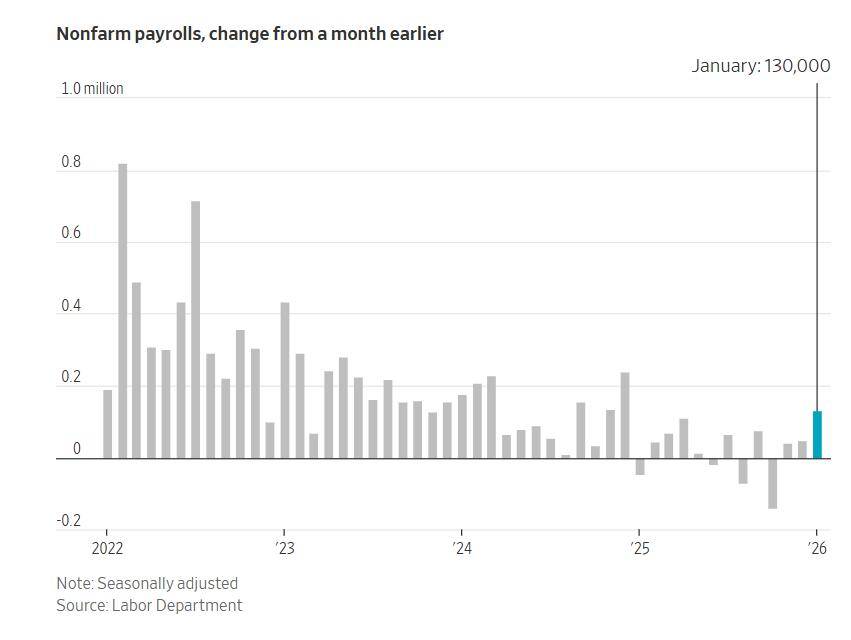
Group 1 - The non-farm payroll report reflects the real state of the economy and the policy direction, acting as a mirror rather than just a "market amplifier" [1] - The January non-farm data shows a strong monthly performance with 130,000 new jobs and a drop in the unemployment rate to 4.3%, but the annual benchmark revision significantly lowers the 2025 employment growth forecast from 584,000 to 181,000, indicating a weaker labor market than previously reported [4] - The contradiction of strong monthly data against a backdrop of long-term weakness highlights the need for investors to understand the cautious hiring trends and the overall economic context [4] Group 2 - The strong monthly job growth has led to a delay in interest rate cuts, pushing the first expected cut from June to July, as the labor market shows no significant deterioration [6] - This shift in interest rate expectations has resulted in rising U.S. Treasury yields and a temporary strengthening of the dollar, while gold prices are under pressure due to the high real interest rates [6] - Despite the short-term pressure on gold, there remains significant anticipation for future policy shifts, as the underlying vulnerabilities exposed by the annual revision persist [6] Group 3 - In a volatile macroeconomic environment, investors need to establish a systematic cognitive framework for asset allocation and risk hedging, rather than relying solely on simplistic relationships between interest rates and asset prices [8] - Gold is positioned as a risk hedging tool within asset allocation, suitable for mitigating long-term currency credit risks and balancing portfolio volatility before policy shifts occur [8] - The non-farm report conveys dual signals of strength and revision, widening the divergence in interest rate paths, emphasizing the importance of understanding the underlying logic rather than merely predicting market direction [9]
RIKSBANK EXCHANGES EU PAYMENT
Globenewswire· 2026-02-10 13:37
Group 1 - Sweden's EU membership requires monthly contributions to the EU budget, with payments made in Swedish kronor and exchanged into euro by a recipient central bank within the EU [1] - The Riksbank has scheduled an exchange of an EU payment amounting to SEK 5,764 million in February 2026, previously opting for exchanges to mitigate large fluctuations in the exchange rate [1] Group 2 - The exchanges conducted by the Riksbank do not serve any monetary policy purpose, and the impact on banking system liquidity is neutralized through FX-swaps [2] - The Riksbank plans to repurchase the equivalent euro amount in the foreign exchange market within two months following the exchange [2]

全球外汇交易:美元开局遇冷-Global FX Trader_ Dollar's Cold Open
2026-02-02 02:22
Summary of Global FX Trader Conference Call Industry Overview - The report discusses the foreign exchange (FX) market dynamics, focusing on major currencies including USD, CNY, JPY, AUD, NZD, BRL, and Scandi FX. Key Points USD (United States Dollar) - The Dollar is expected to fall modestly this year due to strong but less exceptional US economic performance [1] - Recent volatility in trade and currency policies has significantly impacted the Dollar's performance, with new tariff threats shaking investor expectations [1] - FX volatility has increased similarly to last April, while rates and equities have not, prompting global investors to increase FX hedges [1] - The Dollar's recent decline is attributed to policy uncertainty, which is expected to persist [1] CNY (Chinese Yuan) - Gradual but sustained appreciation of CNY is anticipated, driven by its cheap valuation and manufacturing competitiveness [4] - Recent CNY appreciation has exceeded expectations, supported by policymakers' comments favoring flexibility in the exchange rate [4] - The new USD/CNY forecast path is adjusted to 6.90, 6.80, and 6.70 over 3, 6, and 12 months, respectively, which is stronger than previous forecasts [4] JPY (Japanese Yen) - USD/JPY experienced fluctuations due to a "rate check" by the NY Fed, impacting the currency's value [5] - The report emphasizes the importance of upcoming political developments in Japan, particularly regarding the Lower House election, which could influence the Yen's performance [5] - A cautious bearish outlook on the Yen is maintained, with potential for further upside if the ruling coalition gains a majority [5] Scandi FX (Scandinavian Currencies) - Both NOK and SEK have shown strong performance, driven by rising oil and natural gas prices [5] - The report suggests that the sell-off in EUR/SEK and EUR/NOK has overshot fundamentals, indicating a likely retracement [5] - Domestic macro events in Norway and Sweden may become more significant later in the year as financial conditions evolve [5][6] AUD & NZD (Australian and New Zealand Dollars) - AUD has outperformed NZD due to FX-specific factors rather than growth or policy expectations [8] - A trade recommendation to short AUD/NZD was closed at a potential loss, but long positions in NZD against USD are still favored [8] - The RBA is expected to hike rates, but the timing remains uncertain [8] BRL (Brazilian Real) - USD/BRL has trended lower, trading close to a forecast of 5.20, with expectations of continued pro-cyclical support from commodity prices [12] - The Brazilian central bank has opened the door to rate cuts, but the impact on BRL is expected to be limited due to elevated real rates [12] Trading Commodity Terms of Trade - A potential 10% increase in precious and industrial metals prices could benefit currencies like CLP, PEN, NOK, and CHF [16] - Investors are advised to consider long positions in CHF as a hedge against geopolitical risks and for potential gains from a rally in gold prices [16] FX Manipulation - The US Treasury's semiannual FX report includes Thailand in the Monitoring List, indicating a broader scope for FX investigations [19] - The report outlines a more flexible approach to defining currency manipulation, considering various economic factors [19] - Strengthened consequences for manipulators are highlighted, with potential recommendations for investigations into currency practices [19] Additional Insights - The report includes forecasts for various currency pairs, indicating expected movements over the next 3, 6, and 12 months [22] - The analysis emphasizes the importance of geopolitical developments and macroeconomic data in shaping FX trends [19][20] This summary encapsulates the key insights and forecasts from the conference call, providing a comprehensive overview of the current state and expectations for the FX market.
三态股份:通过第三方支付机构连连、万里汇等支付采购货款
Sou Hu Cai Jing· 2026-01-29 07:57
Core Viewpoint - The company, SanTai Co., Ltd. (301558), is a technology-driven enterprise focused on cross-border e-commerce retail and third-party logistics, actively engaging in various payment methods for international transactions [1] Group 1: Company Overview - SanTai Co., Ltd. specializes in cross-border e-commerce, providing comprehensive services in retail and logistics [1] - The company utilizes specific payment methods based on the overseas business model, indicating a flexible approach to payment solutions [1] Group 2: Payment Strategies - The company employs third-party payment institutions such as LianLian and WanLiHui for settling procurement payments [1]
韩元在岸交易开盘报1美元兑1450韩元
Mei Ri Jing Ji Xin Wen· 2026-01-27 00:43
Core Viewpoint - The South Korean won opened at 1,450 KRW per USD, showing a depreciation from the previous closing price of 1,443.9 KRW per USD [1] Group 1 - The onshore trading of the Korean won indicates a weakening trend against the US dollar, with a notable increase in the exchange rate [1]
韩元兑美元下跌0.7%
Mei Ri Jing Ji Xin Wen· 2026-01-27 00:43
Group 1 - The South Korean won depreciated by 0.7% against the US dollar after the market opened on January 27 [1]
闫瑞祥:美系下破关键支撑后维持空 非美多头延续
Xin Lang Cai Jing· 2026-01-26 10:52
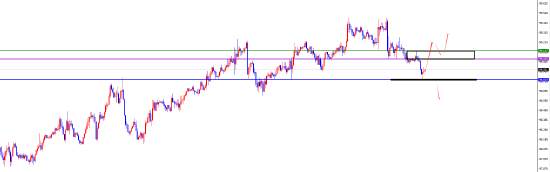
Group 1 - The article discusses various currency pairs and their resistance and support levels across different time frames, indicating potential trading strategies based on these levels [1][3][19][20]. - For USDJPY, the short-term critical level is identified at the 98-98.20 range, suggesting a bearish outlook until a reversal signal appears [16]. - USDCHF shows a critical level at 1.3750-60, with a recommendation to look for short positions until a reversal signal is confirmed [5][18]. Group 2 - EURUSD has a critical level at 0.7840-50, indicating a bearish stance until a reversal signal is observed [6][20]. - GBPUSD is highlighted with a support level at 1.1670 and a critical level at 1.1770-80, suggesting a bullish outlook if the price remains above this range [9][20]. - AUDUSD has a critical level at 1.3570-80, with a recommendation to look for long positions until a reversal signal is confirmed [10][21]. Group 3 - NZDUSD shows a critical level at 0.6870-80, indicating a bullish outlook if the price remains above this range [11][22]. - The article also mentions key economic data releases that may impact market movements, including the German IFO Business Climate Index and U.S. Durable Goods Orders [15][26].
2025年韩国日均外汇交易额创历史新高,因跨境股票交易增加
Xin Lang Cai Jing· 2026-01-23 05:03
Core Insights - The Bank of Korea reported that the average daily foreign exchange trading volume in the banking sector is expected to reach a historical high in 2025, primarily driven by increased cross-border stock trading [1][3] - In the previous year, the average daily foreign exchange trading volume, including derivatives, reached $80.71 billion, a 17% increase from $68.96 billion the previous year, marking the highest annual level since the Bank of Korea began compiling such data in 2008 [1][3] - A Bank of Korea official noted that extended trading hours in the foreign exchange market have significantly boosted stock-related transactions by residents and foreign investors [1][3] Foreign Exchange Trading Details - The average daily spot foreign exchange trading volume increased by 26.1% year-on-year, reaching $32.38 billion, while the average daily foreign exchange derivatives trading volume grew by 11.6% to $48.33 billion [1][3] - In the first 11 months of the previous year, the total overseas stock investment by South Korean residents amounted to $129.4 billion, surpassing the total for the entire year of 2024, which was $72.2 billion [1][3] Foreign Investment in Korean Stocks - Foreign investors' investments in Korean stocks are projected to increase by 129% in 2025, reaching $50.4 billion [2][3]
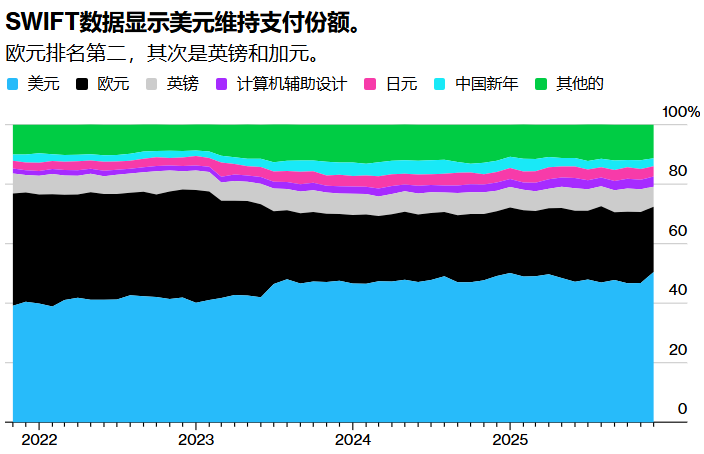
“世界货币”地位依然稳固!SWIFT最新数据:美元国际结算占比跃升至2023年来高点,重返50%以上
智通财经网· 2026-01-22 03:58
Group 1 - The core point of the article highlights that despite ongoing uncertainties surrounding U.S. President Trump's policies, the U.S. dollar maintains its dominant position in global trade, with its share in international transactions rising to 50.5% in December, up from 46.8% the previous month, marking the highest level since 2023 [1] - The euro follows the dollar as the second major reserve currency, accounting for approximately 22%, with other currencies like the British pound, Canadian dollar, Japanese yen, and Chinese yuan trailing behind [1] - A report from JPMorgan strategists indicates that the dollar continues to dominate foreign exchange trading and international currency usage, while central banks are increasingly accumulating gold reserves, which are expected to represent a larger portion of reserve assets by 2025 [1] Group 2 - According to SWIFT's latest annual report, the number of transaction instructions sent through SWIFT in 2024 is projected to reach approximately 13.4 billion, an increase from 11.9 billion the previous year [3] - The data from SWIFT demonstrates that despite market volatility and policy confusion triggered by Trump's administration, the dollar's position in international finance and trade remains robust, with the last time its global payment share exceeded 50% being in January 2025 [3] - As of April 2025, independent data from the Bank for International Settlements shows that 89% of foreign exchange transactions involve at least one party using the dollar, and the Federal Reserve estimates that about 60% of foreign currency debt is issued in dollars [3]