
文化共建

Search documents
从“管理”到“共建”:文化治理的现代转型
Xin Hua Ri Bao· 2025-12-24 23:23
Core Perspective - The article discusses the paradigm shift in cultural governance from a traditional top-down management model to a collaborative "co-construction" model involving multiple stakeholders, reflecting a fundamental change in national governance philosophy and its interaction with modern development strategies [1][2]. Historical Transition of Governance Paradigm - The traditional cultural governance model is characterized by government dominance, administrative drive, and one-way transmission, which has led to structural limitations such as suppressed cultural creativity and insufficient social participation [2]. - The emergence of the "co-construction" paradigm addresses these limitations by shifting the relationship from "managing culture for the people" to "co-creating culture with the people," emphasizing collaboration and multi-stakeholder governance [2]. Logic of Transformation Driven by Modernization - The deep-seated motivation for the transformation in cultural governance is rooted in the structural changes and tensions inherent in the modernization process, which demands a more inclusive and collaborative governance approach [3]. - The ongoing changes in social structure challenge the traditional governance model, necessitating a shift towards a governance framework that aligns with the core tasks of national governance modernization [3]. Technological Innovations Reshaping Cultural Production - Advances in digital media technologies, such as mobile internet and artificial intelligence, have disrupted centralized cultural dissemination, fostering a decentralized and participatory cultural production environment [4]. - The rapid development of technology and the increasing complexity of cultural stakeholders require adaptive adjustments in governance systems to enhance openness and collaboration [4]. Practical Pathways for Co-construction Model - Cultural co-construction necessitates guidance from the government to clarify cultural development directions and provide opportunities for public participation [5]. - Successful cultural co-construction should involve a clear framework for participation, allowing various social forces to contribute actively, transitioning from passive response to proactive engagement [6].
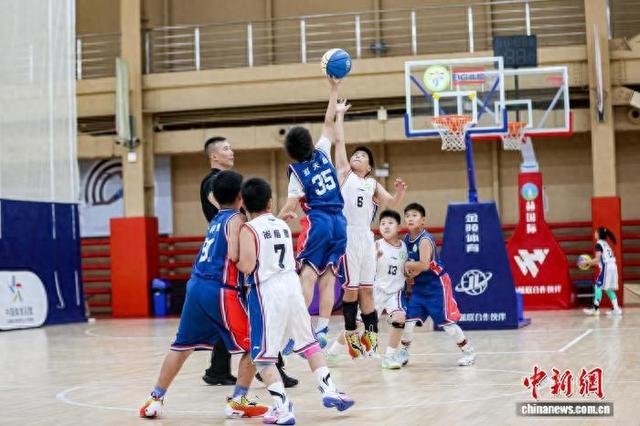
2025年北京市青少年篮球俱乐部联赛总决赛收官
Zhong Guo Xin Wen Wang· 2025-10-13 02:32
Core Insights - The "Run, Youth" Li Ning Cup 2025 Beijing Youth Basketball Club League Finals showcased the achievements of the youth basketball system in Beijing, featuring teams from 12 districts competing across nine age groups [1][3] Event Overview - The 2025 season marked a significant upgrade in the league's structure, transitioning from a two-tier system to a three-tier system that includes preliminary rounds, regional competitions, and finals, enhancing competitive balance and coverage [3] - A record 740 teams and 6,821 youth players participated, covering age groups from U8 to high school, reflecting a comprehensive age structure in youth basketball development [3] Operational Enhancements - A three-tier operational mechanism was established to ensure standardized management across various aspects such as organization, refereeing, medical support, and security [4] - The introduction of an intelligent information system improved efficiency and transparency in event management, allowing for real-time updates and data management [4] Integration of Education and Sports - The league emphasizes the integration of sports and education, promoting a holistic development model where competitions enhance training and learning opportunities for youth athletes [5] - The league connects school sports with social club resources, creating a seamless "learn-train-compete" cycle [5] Cultural Development - The 2025 season focused on cultural construction, introducing a new logo and mascot inspired by local culture, and engaging youth in creating event slogans, fostering a sense of community and belonging [6][10] - The league aims to build a unique cultural ecosystem for youth basketball in Beijing, enhancing the emotional connection to the sport [5][6] Professional Standards - The league adopted a standardized event management system, ensuring that referees and coaches are certified and trained, and that logistical support is well-coordinated [8][9] - High-quality facilities and training resources have been highlighted as crucial for athlete performance, contributing to a positive competitive environment [9] Long-term Vision - Since its inception in 2017, the league has aimed to popularize basketball and nurture talent, becoming a key component of Beijing's youth sports ecosystem [10] - The finals represent not just a culmination of the season but a new starting point for high-quality development in youth basketball in Beijing [10]

从“靠山吃山”到“绿富同兴” 句容青山村绘就生态宜居新图景
Zhen Jiang Ri Bao· 2025-08-03 23:29
Group 1 - The transformation of Qingshan Village from a mining area to an ecological paradise is highlighted, showcasing the successful environmental restoration efforts [1][3] - The village has received multiple accolades such as "National Ecological Cultural Village" and "National Civilized Village and Town," reflecting its improved living conditions and community engagement [1][2] - The implementation of a "Cultural Co-construction Points System" has encouraged community participation in environmental and social initiatives, leading to a significant increase in the number of civilized families [2][3] Group 2 - The village has developed a "Research + Homestay + Agricultural Tourism" industry chain, with six farmhouses and three boutique homestays, attracting 30,000 visitors annually and generating over 3.5 million yuan in collective economic income [4] - The average annual income of villagers has risen to 32,000 yuan, indicating a positive economic impact from the tourism and agricultural initiatives [4] - Cultural heritage is being preserved and promoted through investments in historical sites and regular exhibitions of traditional crafts, enhancing the village's cultural identity [4]