
国家治理体系和治理能力现代化

Search documents
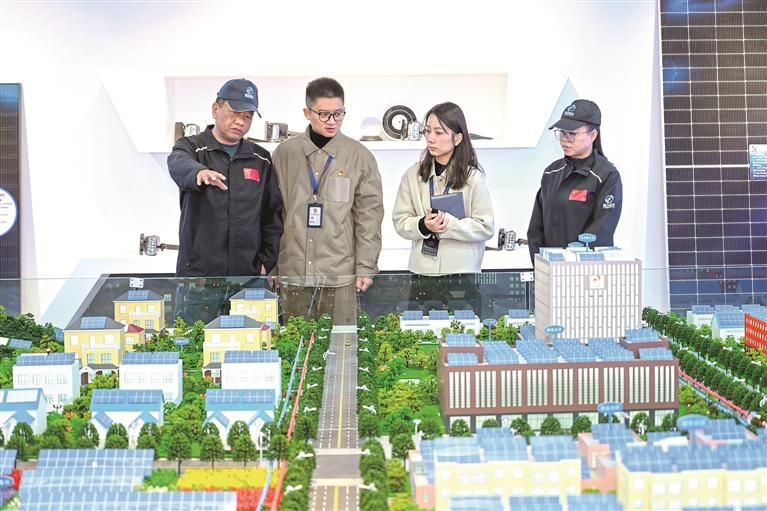
强化数智赋能网格支撑 更好服务群众造福群众
Zheng Zhou Ri Bao· 2026-02-27 00:50
Group 1 - The core message emphasizes the importance of high-quality development and efficient governance through smart city initiatives and refined management practices, aligning with the principles outlined by General Secretary Xi Jinping [1][2] - The city aims to enhance governance platform efficiency by focusing on algorithm analysis and data application, optimizing grassroots governance functionalities, and improving data connectivity and emergency management [1][2] - The integration of "Party building + grid + big data" governance methods is highlighted as essential for modernizing the governance system and capabilities, with a focus on advanced technologies and methodologies [2] Group 2 - The city is committed to creating a comprehensive smart city that enhances perception, intelligent analysis, and precise execution, ensuring a more efficient urban management system [2] - There is a strong emphasis on meticulous urban management, particularly in addressing key areas of disorder and increasing safety and order in urban environments, thereby improving citizens' sense of security and happiness [2]
理论视野丨为中国式现代化提供有力制度保障
Zhong Yang Ji Wei Guo Jia Jian Wei Wang Zhan· 2026-02-26 00:23
Core Viewpoint - The article emphasizes the importance of institutional construction as the main line for advancing Chinese-style modernization, highlighting its historical significance and practical implications for national governance and development [4][5][6]. Group 1: Institutional Construction as the Main Line - Institutional construction is identified as a fundamental, systemic, and long-term issue related to the development of the Party and the state [4]. - The historical practice of modernization in China has been closely linked with the construction, reform, and improvement of institutions [4][5]. - The 14th Five-Year Plan outlines strategic deployments for institutional construction to support the modernization process [5]. Group 2: Characteristics of Chinese-style Modernization - The unique characteristics of Chinese-style modernization require institutional construction to reflect and achieve its goals, including large population management and common prosperity [6]. - Institutional construction must ensure the coordination of material and spiritual civilization, as well as harmony between humanity and nature [6]. Group 3: Transformation of Institutional Advantages into Governance Efficiency - The transformation of institutional advantages into governance efficiency is crucial for addressing social contradictions and meeting high-quality development requirements [7]. - Continuous institutional optimization and innovation are necessary to eliminate barriers to development and ensure the effectiveness of the socialist system [7]. Group 4: Advantages of Institutional Construction - Institutional construction injects continuous vitality into Chinese-style modernization by breaking down barriers to development and enhancing social productivity [8]. - It serves as a driving force for social vitality by ensuring rights and promoting social equity [8]. Group 5: Ensuring Stability and Continuity - Institutional construction guarantees the direction of Chinese-style modernization, ensuring it progresses steadily along the socialist path [9]. - The stability of institutions is essential for maintaining national stability and ensuring the continuity of reform and modernization efforts [9]. Group 6: Methodology for Advancing Modernization - The methodology for advancing Chinese-style modernization is shaped by institutional construction, emphasizing a balanced approach between establishing new systems and reforming old ones [10]. - The integration of rule of law and moral governance is highlighted as a key aspect of the governance paradigm [10]. Group 7: Unique Characteristics of Chinese-style Modernization - Institutional construction fosters a unified civilization form that integrates material, spiritual, and institutional civilization [11]. - The development path led by institutional civilization reflects the pursuit of comprehensive progress and sustainable development in Chinese-style modernization [11]. Group 8: Pathways for Implementing Institutional Construction - The article stresses the importance of the Party's leadership in the institutional construction process, ensuring that modernization aligns with the Party's guiding principles [12][13]. - A problem-oriented approach combined with top-level design is essential for effective institutional construction [13]. - The strategy of "breaking and establishing" is emphasized for balancing existing institutions with new reforms [14].


悟规律 明方向 学方法 增智慧丨把各方面监督贯通起来
Zhong Yang Ji Wei Guo Jia Jian Wei Wang Zhan· 2026-02-24 02:57
Core Viewpoint - The article emphasizes the importance of integrating various forms of supervision to enhance governance efficiency and effectiveness, as mandated by the leadership of the Communist Party of China [2][3][5]. Group 1: Importance of Integrated Supervision - Establishing a unified, comprehensive, and authoritative supervision system is crucial for modernizing national governance capabilities [3][4]. - The integration of different supervisory mechanisms is essential for strengthening the Party's leadership and improving the overall effectiveness of governance [4][5]. Group 2: Mechanisms for Coordination - The article discusses the need for clear responsibilities and collaborative processes among various supervisory bodies, including the establishment of mechanisms for information sharing and joint actions [8][10]. - Specific examples include the creation of coordination mechanisms with local councils and audit departments to enhance oversight of state-owned enterprises and other key areas [8][9]. Group 3: Practical Implementation - The article highlights practical measures taken to ensure effective supervision, such as the establishment of a comprehensive supervision system that includes various levels of government and integrates different supervisory functions [12][14]. - It mentions the development of a data resource center to enhance the efficiency of supervision through technology, allowing for better analysis and monitoring of governance issues [16][19]. Group 4: Results and Outcomes - The article notes that the integration of supervision has led to significant improvements in governance, with a reported 93.1% increase in the transfer of problem leads to disciplinary inspection agencies by 2025 [12]. - It also emphasizes the importance of using supervisory outcomes to inform policy improvements and enhance the overall governance framework [17][22].
推动党校思政教育深度融入基层治理实践
Xin Lang Cai Jing· 2026-01-25 20:19
Core Viewpoint - The core of ideological and political education in party schools is to cultivate the political quality and capabilities of party members, which is crucial for building a high-quality governance backbone. The integration of theoretical education and grassroots governance practices is essential for enhancing the effectiveness of governance and ensuring long-term stability and happiness for the people [1]. Group 1: Optimization of Teaching Content - Establish a "dynamic case updating mechanism" to regularly collect and integrate successful experiences and lessons from grassroots governance into the ideological education curriculum [2]. - Implement a "problem-oriented thematic design" that directly addresses real issues in grassroots governance, encouraging students to propose solutions based on their theoretical knowledge [2]. - Develop a "localized teaching resource library" that utilizes regional resources and examples to enhance students' understanding and connection to the material [2]. Group 2: Innovation of Interactive Mechanisms - Create a dual interaction mechanism that allows for the integration of classroom learning and grassroots experiences, enabling a feedback loop between theory and practice [3]. - Expand "mobile classrooms" and "practical study" opportunities by bringing courses to various grassroots settings and involving local leaders as guest instructors [3]. - Encourage party school teachers to conduct research on significant grassroots governance issues and produce high-quality decision-making reports to support local governance [4]. Group 3: Improvement of Evaluation Systems - Establish a comprehensive evaluation system that shifts the focus from traditional exam scores to actual improvements in governance capabilities, emphasizing practical skills [6]. - Introduce a "tracking effectiveness" mechanism to monitor the real-world performance of students after training, assessing their application of learned theories to solve governance challenges [6]. - Provide timely feedback on evaluation results to students and their units, helping them identify strengths and weaknesses and guiding future learning [7]. Group 4: Overall Integration and Future Outlook - The collaborative improvement of teaching content, interactive mechanisms, and evaluation systems aims to eliminate barriers between ideological education and grassroots governance practices, fostering mutual enhancement of theory and practice [8]. - Continuous reform in these areas is expected to inject vitality into the development of the party and the country, ensuring a reliable talent reserve and capability support for modernizing grassroots governance [8].
聚焦发展全过程人民民主
Ren Min Ri Bao· 2026-01-23 06:43
Core Viewpoint - The development of whole-process people's democracy is an essential requirement for Chinese-style modernization, as emphasized in the decision made by the 20th Central Committee of the Communist Party of China [1][2]. Group 1: Significance of Whole-Process People's Democracy - The focus on developing whole-process people's democracy is strategically significant for deepening reforms and advancing Chinese-style modernization, reflecting a comprehensive and systematic approach [1][2]. - It plays a crucial role in promoting reforms across various sectors, enhancing the overall effectiveness of governance and the modernization of the national governance system [2][3]. Group 2: Integration of Leadership and Governance - The integration of the Party's leadership, people's mastery, and the rule of law is fundamental to the development of whole-process people's democracy, ensuring that the will of over 1.4 billion people is effectively expressed and realized [5][6]. - The Party's leadership is essential for the realization of people's mastery and the orderly advancement of the rule of law, which provides a framework for governance [6][10]. Group 3: Collaborative Advancement of Democracy and Rule of Law - The goals of enhancing people's mastery and improving the socialist rule of law are interdependent and must progress together to ensure the effectiveness of whole-process people's democracy [7][8]. - Historical experiences indicate that democracy must be institutionalized and legalized to avoid chaos, while the rule of law must be guided by democratic principles to prevent the concentration of power and ensure social vitality [7][8]. Group 4: Practical Implementation and System Improvement - The development of whole-process people's democracy is a complex system project that requires strengthening various democratic mechanisms and ensuring effective law enforcement and judicial systems [9][10]. - Emphasis on addressing systemic weaknesses and enhancing institutional advantages is crucial for maximizing governance effectiveness and ensuring the realization of democratic ideals [9][10].
内蒙古青年突击队融入高质量发展主战场
Zhong Guo Qing Nian Bao· 2026-01-23 06:32
Core Viewpoint - The Inner Mongolia Youth Commando Team is transitioning from temporary efforts to a permanent support system, integrating youth into high-quality development through institutional design and practical engagement in various sectors [1][3]. Group 1: Youth Initiatives and Achievements - The Inner Mongolia Youth Commando Team is actively involved in ecological and technological projects, such as using drones for forest protection and developing digital platforms for green energy management [1]. - The 2025 Youth Skills Showcase event highlighted the practical experiences and innovative insights of youth from various sectors, with 111 teams competing in nine categories related to technology and ecological sustainability [1]. - The "Three North Desertification Youth Commando Team" has successfully implemented an integrated desertification control solution, earning recognition and ongoing support from the Inner Mongolia Youth Committee [2]. Group 2: Systematic Support and Collaboration - The establishment of a "1+4+5" work system by the Inner Mongolia Youth Committee aims to create a dynamic management and resource allocation framework, fostering a model of precise cultivation for industries and teams [3]. - The initiative includes forming cross-regional and cross-industry youth commando teams to address critical energy supply challenges, breaking down barriers between regions and sectors [2]. - The Youth Commando Teams are positioned as essential contributors to national governance modernization, with a focus on practical problem-solving and innovation in local contexts [3].

范勇鹏:美国有向下的自由,中国还要让人有向上的自由
Xin Lang Cai Jing· 2026-01-18 01:56
Group 1 - The core argument presented by Fan Yongpeng emphasizes that no social system is inherently immune to challenges, and static systems cannot ensure long-term stability [1] - The modernization of governance in China, as proposed by the 18th National Congress, requires a focus on serving the people and addressing their needs, rather than relying solely on established procedures [1] - The grassroots organizations play a crucial role in monitoring and serving the needs of the populace, as evidenced by the dedication of poverty alleviation workers and state-owned enterprises providing essential services [1] Group 2 - The Chinese system should not merely offer a set of procedures but also ensure that the people understand the underlying principles and logic of governance [2] - The goal is to empower individuals with the ability to change their circumstances and address systemic issues, rather than just providing freedom from oppression [2]
以永远在路上的坚韧和执着把党的自我革命进行到底——习近平总书记在二十届中央纪委五次全会上的重要讲话为推进全面从严治党指引方向
Xin Hua She· 2026-01-14 15:16
Group 1 - The core message of Xi Jinping's speech emphasizes the importance of self-revolution within the Party and the need to advance strict governance to ensure the implementation of major decisions by the Central Committee [1][2] - The speech acknowledges significant achievements in strict governance over the past year, highlighting the effectiveness of centralized leadership in combating corruption [2] - There is a call for enhanced political supervision and the need to ensure that major decisions are effectively implemented at all levels of governance [2][3] Group 2 - The importance of institutional frameworks in regulating power and preventing corruption is underscored, with a focus on making regulations more effective and operational [4][5] - The necessity for continuous education on laws and regulations for Party members is highlighted, aiming to integrate legal awareness into daily practices [6] - The speech stresses the need for a collaborative approach in governance, promoting a comprehensive supervision system that includes various departments to tackle corruption effectively [8][9]
坚持依法治国和依规治党有机统一
Ren Min Ri Bao· 2026-01-12 01:35
Group 1 - The core viewpoint emphasizes the importance of integrating the rule of law and party regulations to ensure the long-term governance of the party and the stability of the state [2][3][4] - The "Twelve Adherences" outlined in the "Xi Jinping Thought on the Rule of Law Learning Outline (2025 Edition)" highlight the organic unity of governing the country by law and governing the party by regulations as a significant milestone [2][3] - The mutual complementarity of the rule of law and party regulations is essential for achieving the goals of modernizing the national governance system and governance capacity [3][4][5] Group 2 - The rule of law serves as a foundational role in establishing regulations for the state, defining boundaries for power, and ensuring good governance [7][8] - The relationship between the party and the law reflects the political and legal relationship, emphasizing that the party must operate within the framework of the constitution and laws [8][9] - The effective implementation of the rule of law is crucial for the party's governance and the realization of the people's sovereignty [8][10] Group 3 - The integration of disciplinary regulations and legal enforcement is necessary to enhance governance effectiveness and ensure that both the party and the state operate within established legal frameworks [16][19] - The reform of the national supervision system aims to create a robust oversight mechanism that integrates party supervision with legal enforcement, addressing past issues of fragmented oversight [18][19] - The continuous improvement of the party's internal regulatory system is vital for maintaining discipline and ensuring compliance with both party and state laws [15][19]
坚持依法治国和依规治党有机统一(深入学习贯彻习近平新时代中国特色社会主义思想·习近平法治思想学习贯彻众论)
Ren Min Wang· 2026-01-12 01:24
Group 1 - The core viewpoint emphasizes the importance of integrating the rule of law and party regulations to ensure the long-term governance of the party and the stability of the state [2][3][4] - The publication of the "Xi Jinping Thought on the Rule of Law Learning Outline (2025 Edition)" systematically explains the significance and core essence of Xi Jinping's legal thought, highlighting the organic unity of governing the country by law and governing the party by regulations as a milestone [2][3] - The mutual complementarity of the rule of law and party regulations is rooted in their shared essence and aligned goals, ultimately serving the objective of building a modern socialist country under the rule of law [3][4][5] Group 2 - The integration of the rule of law and party regulations is essential for modernizing the national governance system and governance capabilities, ensuring that both frameworks work together to enhance governance effectiveness [4][5][6] - The rule of law serves as a foundational role in establishing regulations for the state and society, providing a legal framework that supports the development of party regulations [7][8][9] - The relationship between the party and the law reflects the broader political and legal relationship, emphasizing that the party must operate within the constitutional and legal framework to maintain its leadership role [8][9][10] Group 3 - The effective implementation of party regulations relies on the rule of law, which provides a necessary environment and foundation for the enforcement of party discipline [10][11][12] - The integration of disciplinary measures and legal enforcement is crucial for enhancing governance effectiveness, ensuring that both frameworks are aligned and mutually reinforcing [16][18][19] - The reform of the national supervision system aims to create a robust oversight mechanism that integrates party supervision with legal enforcement, addressing past issues of fragmented oversight [18][19][20]