文化壁垒

Search documents
中国电影出海,到底还要过几道坎?
3 6 Ke· 2025-12-22 09:20
Core Insights - The article discusses the overseas performance of Chinese films, particularly focusing on "Ne Zha 2," which has achieved significant milestones in international box office revenue [2][5]. Group 1: Box Office Performance - "Ne Zha 2" has generated over $50 million in overseas box office, approximately 400 million RMB, accounting for about 2.5% of its global box office [2]. - The highest-grossing Chinese film overseas is "Crouching Tiger, Hidden Dragon," which earned $213 million, followed by "Hero" and "House of Flying Daggers" with $149 million and $80 million, respectively [5][8]. - Most of the top-performing Chinese films in overseas markets were released between 2000 and 2010, indicating a historical trend in the industry's international success [8]. Group 2: Cultural and Market Challenges - The article highlights that despite the growth of Chinese films in international markets, there is still significant room for improvement [5][21]. - Cultural barriers are identified as a primary obstacle for Chinese films in gaining traction overseas, as many cultural references may not resonate with international audiences [23][31]. - The lack of robust infrastructure for film distribution and marketing in international markets is a critical issue, limiting the potential success of Chinese films abroad [34][39]. Group 3: Industry Infrastructure - The article emphasizes the importance of a well-established distribution network for the success of films in international markets, noting that only 10%-20% of films produced globally make it to theaters [41]. - The distribution capabilities of major studios like Disney are highlighted as a key factor in their global success, contrasting with the limited resources available to Chinese films [42]. - The financing and risk management mechanisms in the Chinese film industry are underdeveloped, making it difficult for filmmakers to venture into international markets [44][48]. Group 4: Future Prospects - The article calls for a more ambitious approach from the Chinese film industry to enhance its global presence, suggesting that the production of high-quality films comparable to international standards is essential [50][60]. - It stresses the need for the industry to focus on internal development and quality improvement to be prepared for future opportunities in international markets [60].



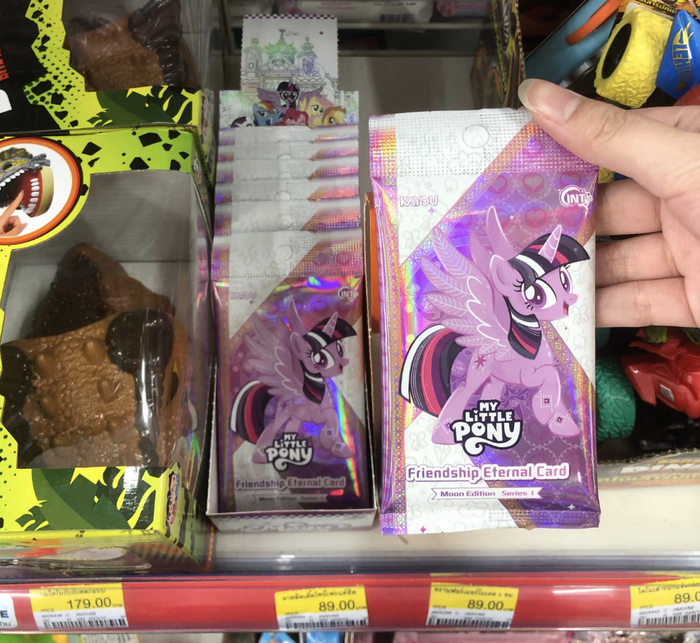
卡游出海,「卡」在没有自己的Labubu
Xin Lang Ke Ji· 2025-09-22 02:24
Core Viewpoint - The article discusses the expansion strategy of Kayou, a card game company, as it attempts to replicate the success of Pop Mart by entering Southeast Asian markets, particularly Thailand, with localized products like My Little Pony cards [2][4]. Group 1: Market Entry Strategy - Kayou plans to establish a presence in Southeast Asia by utilizing various retail models, including regional agency partnerships, single-store franchises, collaborations with chain supermarkets, and e-commerce platforms [5][7]. - The company emphasizes the importance of local distributors to facilitate market entry and brand promotion, similar to Pop Mart's successful collaborations with local partners [7][8]. Group 2: Product Localization - Kayou's My Little Pony cards in Thailand feature Thai language packaging, indicating a tailored approach to meet local consumer preferences while maintaining product familiarity [2]. - The company has launched several popular IPs overseas, including Harry Potter and DC Comics, which have strong global recognition and appeal to younger audiences [11][13]. Group 3: Challenges and Opportunities - Kayou faces challenges in finding a breakout product akin to Pop Mart's Labubu, as its current IPs lack the same level of cultural impact and global reach [14][16]. - The company must navigate cultural barriers in Southeast Asia, where card culture is less established, and ensure that its marketing strategies resonate with local consumers [16][23]. Group 4: Competitive Landscape - Kayou's strategy includes learning from successful American card companies like Panini and Topps, which have effectively built market ecosystems and user habits over decades [20][21]. - The article highlights the need for Kayou to enhance its IP portfolio and user engagement strategies to compete effectively in the global market [23][24]. Group 5: IPO and Future Prospects - Kayou has submitted its IPO application, which could bolster its credibility and support its international expansion efforts, although there are concerns regarding compliance and IP management [24][26]. - The potential for cultural exchange through its products may also serve as a positive narrative for its IPO, enhancing its market positioning [24][26].