
文化底蕴

Search documents
合肥,2026年央视春晚分会场!
Xin Lang Cai Jing· 2026-01-11 01:44
Core Viewpoint - The 2026 CCTV Spring Festival Gala will feature Hefei as its first sub-venue in Anhui, highlighting the city's rapid development and cultural significance [2][10][26]. Group 1: Hefei's Selection as a Sub-Venue - Hefei has been chosen as a sub-venue for the Spring Festival Gala, marking a significant achievement for the city [2][6]. - The selection reflects Hefei's efforts in development and innovation, akin to a student achieving good grades through hard work [7][10]. - The theme for the 2026 gala is "Qiji Chicheng," symbolizing the spirit of progress and innovation, which aligns with Hefei's recent advancements [8][9]. Group 2: Cultural and Technological Significance - Hefei is positioned centrally in Anhui, with strong geographical advantages that support its growth [11]. - The city is known for its technological innovations, such as the "artificial sun" and air imaging technology, showcasing its capabilities on a global stage [12][13]. - Hefei's rich cultural heritage, with a history of 4,000 years of written records and 3,000 years of city establishment, adds depth to its representation at the gala [14]. Group 3: Youth and Educational Influence - Hefei attracts over 300,000 university students annually, contributing to a youthful population where over half are under 35 years old [16]. - The city's vibrant atmosphere and youthful energy are expected to resonate well with the gala's efforts to connect with younger audiences [16]. Group 4: Anticipated Highlights of the Gala - The Hefei sub-venue will have approximately 7 minutes of airtime during the gala, showcasing local culture and technology [19]. - Potential performances may include traditional Anhui elements such as Huangmei opera and local crafts, emphasizing the city's cultural identity [21].
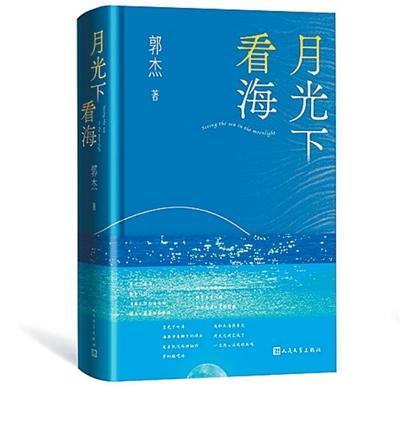
融汇传统与现实的诗歌创作
Ren Min Ri Bao Hai Wai Ban· 2025-12-06 06:05
Core Viewpoint - The poetry collection "Looking at the Sea Under the Moonlight" by Guo Jie reflects a rich emotional landscape, showcasing themes from childhood memories to philosophical reflections in later life, emphasizing a deep sense of patriotism and human connection [2][3][4]. Emotional Expression - The collection captures a wide range of emotions, including familial love, friendship, and national pride, with notable works like "Using Life to Interpret Glory," which honors the heroism of soldiers [2]. - Guo Jie’s poetry resonates with a strong sense of national sentiment, providing readers with a profound emotional experience [2]. Cultural Depth - Guo Jie draws from ancient Chinese poetry and traditional culture, incorporating titles and themes from classical works such as "The Song of the Fisherman" and "Dream of the Red Chamber," while infusing them with contemporary relevance [3]. - The poet explores traditional motifs to express modern sentiments, as seen in works like "Impression of Tao Yuanming," which reflects on the poet's noble character [3]. Philosophical Insights - The collection features philosophical reflections derived from everyday life and dialogues with historical philosophers like Kant and Heidegger, prompting deep contemplation [4]. - Poems such as "A Lonely Tree on the Waterloo Plain" evoke historical narratives, linking personal and collective experiences through metaphor [4]. Natural Imagery - The poetry includes vivid depictions of nature and landscapes, with works like "Nine-Color Valley" and "Song of Wan Green Lake," evoking a sense of beauty and nostalgia [5]. - Guo Jie’s use of contrasting imagery, such as in "Written at the Crater of the Black Mountain," creates a powerful visual impact, enhancing the reader's experience [5].

建德牌坊的底蕴
Si Chuan Ri Bao· 2025-12-04 22:53
Core Viewpoint - The article highlights the historical and cultural significance of the ancient city of Yan Zhou (now known as Jian De) in Zhejiang, particularly focusing on its stone archways (pai fang) that symbolize the region's rich heritage and the stories of notable figures from its past [1][2]. Summary by Sections Historical Background - Jian De's history dates back to the Three Kingdoms period, with the establishment of Jian De County in 225 AD. It later became a prosperous hub due to the confluence of rivers, but its significance declined with the rise of road transport [1][2]. Cultural Significance of Pai Fang - The ancient city once had 199 stone archways, which served to honor achievements and commemorate scholars. Currently, 14 have been rebuilt since 1993, following significant destruction during historical conflicts [2][3]. Notable Archways - The Jian De Hou Fang, built in 225 AD, commemorates Sun Shao, a military figure from the Three Kingdoms era. It symbolizes the origin of Jian De's name and has been reconstructed based on historical remnants [3][4]. - The Si Fan Fang honors the Song Dynasty statesman Fan Zhongyan, who contributed to education and local governance. His legacy is reflected in the archway's inscriptions [3][4]. Influence of Historical Figures - The article discusses the impact of figures like Yan Guang, who chose a life of humility over wealth, and Fan Zhongyan, whose educational initiatives shaped the region's intellectual landscape. Their stories are integral to the cultural narrative of Jian De [4][5]. Modern Cultural Reflection - The illuminated archways at night serve as beacons of the region's cultural stories, reflecting the values of governance and civic responsibility. They embody the spirit of the local populace and their historical legacy [6].
踏歌行 | 世界文化遗产 杭州西湖文化景观
Yang Shi Wang· 2025-10-25 07:04
Core Viewpoint - The beauty of West Lake lies in its integration of mountains, water, and city, exemplifying the intertwining of nature and culture [1] Summary by Relevant Sections - The program will explore the world cultural heritage of the Hangzhou West Lake cultural landscape, inviting viewers to experience the delicate and gentle ink painting style [1] - It aims to share legendary stories from the depths of the mountains and waters, showcasing the rich cultural heritage accumulated over thousands of years [1]
构建科技与文化并行的城市赛道
Jing Ji Ri Bao· 2025-08-24 22:06
Group 1 - The core idea emphasizes the importance of integrating cultural development with technological advancement, highlighting that cities should not prioritize technology at the expense of cultural growth [1][2] - The Shanghai Book Fair serves as a model for cultivating regional cultural IPs, promoting classic reading activities, and ensuring that cultural initiatives are a standard part of urban life [2] - A multi-layered cultural exchange platform is essential, as demonstrated by the diverse offerings at the Shanghai Book Fair, which include classic literature and cutting-edge digital publishing [2] Group 2 - Effective pathways for cultural value transformation should be explored, such as linking book fair tickets to discounts in commercial areas, thereby extending cultural consumption into everyday life [2] - Establishing a dialogue mechanism between technology and humanities is crucial, ensuring that advancements in AI and digitalization do not compromise the essence of cultural heritage [3] - A great city should balance technological precision with cultural depth, measuring progress not only by technological advancements but also by the engagement of its citizens with literature and culture [3]