
文化认同感

Search documents
全球媒体聚焦 | 新加坡媒体:传统服装体验在中国为何如此火爆
Yang Shi Xin Wen Ke Hu Duan· 2025-12-30 01:11
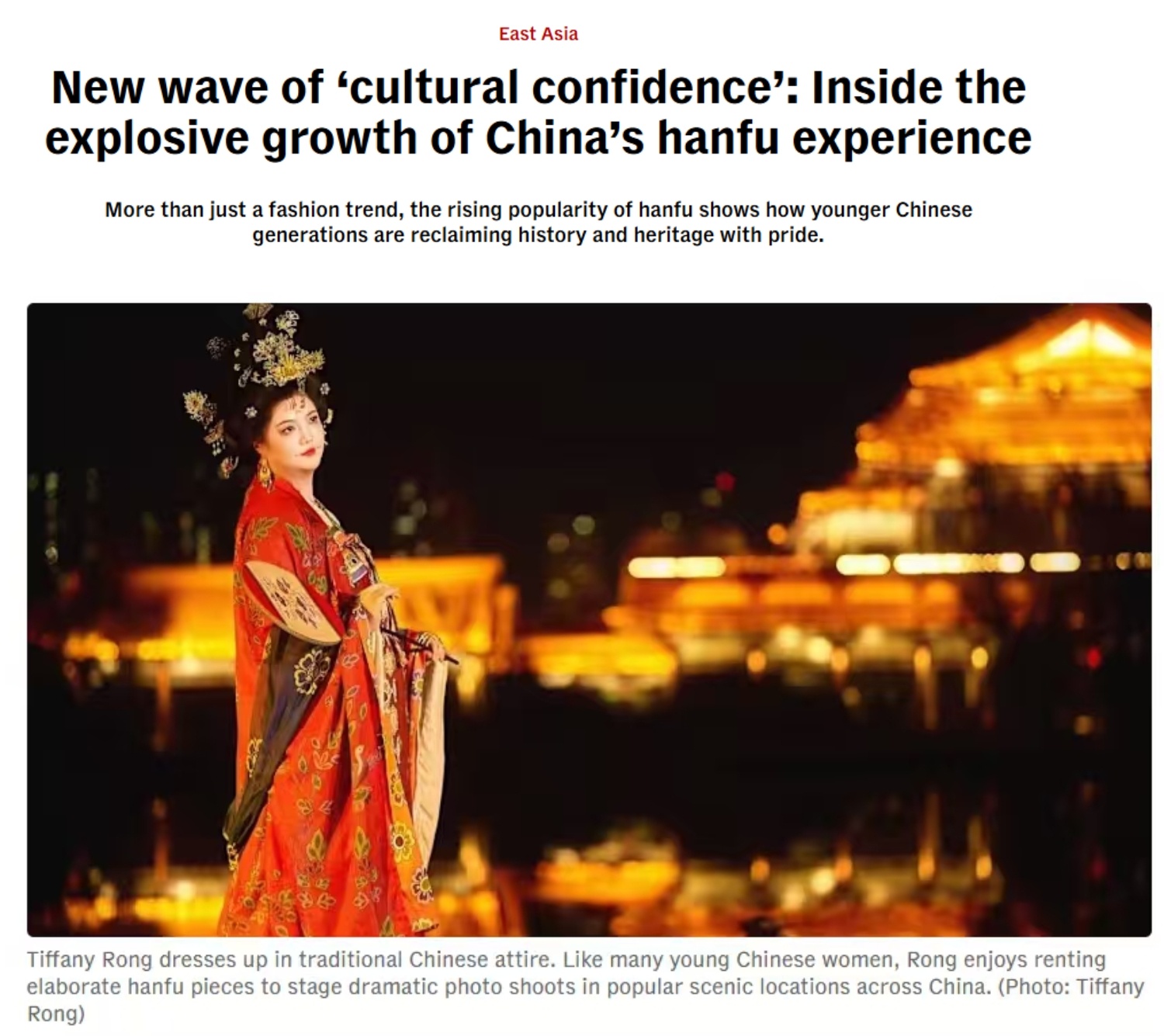
Group 1 - The resurgence of traditional Chinese clothing has been notable over the past decade, with a 662% increase in group orders and experiences during the recent "May Day" holiday compared to the previous year [5] - Traditional clothing rental shops and styling services are prevalent at major tourist attractions across China, indicating a cultural shift and growing cultural confidence among the younger generation [5] - Young people in China are increasingly integrating traditional clothing into their daily aesthetics and identity, reflecting a deeper cultural recognition and engagement [5] Group 2 - The traditional clothing industry has evolved into a significant economic growth driver, with experience centers offering comprehensive cultural services beyond simple rentals [6] - In Xi'an, thousands of traditional clothing rental stores have established the city as a preferred destination for enthusiasts, providing services that include hairstyling, professional photography, and post-editing [6] - Businesses are leveraging digital platforms for content marketing, utilizing live streaming and collaborations with influencers to attract both domestic youth and international tourists, thereby expanding the cultural influence of traditional Chinese clothing [6]

年轻一代:青睐老品牌 爱上“新国潮”
Xin Hua Wang· 2025-08-12 05:55
Core Insights - Traditional Chinese brands are successfully attracting younger consumers by modernizing their products and marketing strategies, leading to a resurgence in "Guochao" (national trend) consumption [1][2][6] Group 1: Consumer Trends - The 90s generation is the largest group purchasing traditional brands, while the 00s generation shows the fastest growth in orders, with a year-on-year increase of 95% [1] - High cost-performance ratio is a significant factor for young consumers, with many finding traditional products surprisingly effective and affordable [3] - Emotional connection to traditional culture drives younger consumers to purchase, as they seek to express their aspirations for a better life [3][5] Group 2: Brand Innovation - Many traditional brands are innovating by incorporating modern elements into their products, appealing to the younger demographic [6][8] - Collaborations between established brands, such as the partnership between Guangming Dairy and Guanshengyuan to create the White Rabbit ice cream, have successfully attracted young consumers [8] - Brands are focusing on unique consumer experiences, such as themed stores and interactive activities, to engage younger audiences [7][10] Group 3: Marketing Strategies - Traditional brands are leveraging digital platforms and live streaming to reach younger consumers, with significant growth in online sales and engagement [10][11] - The use of short videos and engaging storytelling has become a popular method for brands to connect with the youth market [12][13] - There is a growing emphasis on cultural heritage and storytelling in marketing, which resonates well with younger consumers seeking authenticity [5][9]