钟表

Search documents
纺织服装行业周报:Amer Sports公布FY2025财报,预计FY2026营收同比增长16%-18%
Shanxi Securities· 2026-03-03 08:24
Investment Rating - The report maintains an investment rating of "Synchronize with the market - A" for the textile and apparel industry [1]. Core Insights - Amer Sports reported a revenue of $6.566 billion for FY2025, a year-on-year increase of 26.7%, and a net profit of $427 million, up 488.7% [4][21]. - For FY2026, Amer Sports expects revenue growth of 16%-18%, with specific segments like Technical Apparel and Outdoor Performance projected to grow by 18%-20% [7][23]. - The textile and apparel sector has shown a mixed performance, with some companies like New Balance achieving significant growth, while others like Moncler Group reported modest increases [9][62]. Summary by Sections Company Performance - Amer Sports achieved regional revenues of $2.126 billion in the Americas, $1.806 billion in EMEA, $1.862 billion in Greater China, and $0.773 billion in Asia-Pacific for FY2025, with respective growth rates of 14.3%, 19.3%, 43.4%, and 50.7% [5][21]. - New Balance's sales surged by 19% to $9.2 billion in 2025, marking its fifth consecutive year of double-digit growth [9][60]. Market Trends - The textile and apparel sector saw a 1.47% increase in the SW textile and apparel index, outperforming the Shanghai Composite Index by 0.39 percentage points [10][24]. - The SW textile manufacturing PE-TTM is at 25.72, while the apparel and home textile PE-TTM is at 30.86, indicating high valuations in the sector [28]. Segment Analysis - In FY2025, Technical Apparel, Outdoor Performance, and Ball & Racquet Sports generated revenues of $2.856 billion, $2.404 billion, and $1.307 billion, respectively, with growth rates of 30.1%, 31.0%, and 13.3% [6][22]. - The report highlights the importance of product innovation and quality channel management for companies like Bosideng and Jiangnan Buyi, which are expected to perform well in the upcoming fiscal year [12]. Consumer Behavior - The report notes a shift towards emotional consumption, with companies like Jin Hong Group capitalizing on IP licensing across various product categories [12]. - The retail sector is seeing a recovery, with companies like Miniso and Yonghui Supermarket reporting improved sales performance [12]. Raw Material Prices - As of February 27, 2026, the cotton price index in China is at 16,713 yuan/ton, reflecting a 3.9% increase from February 14 [36]. - The report also tracks the price trends of wool and leather, indicating fluctuations that could impact production costs in the textile sector [37]. Export Data - In 2025, China's textile and apparel exports amounted to $142.585 billion and $151.182 billion, showing a slight increase and a decrease of 5.0% respectively [42]. Retail Sales - In December 2025, China's total retail sales reached 4.51 trillion yuan, with a year-on-year growth of 0.9%, indicating a slow recovery in consumer spending [50]. Real Estate Data - The report notes a significant increase in real estate transactions in major cities, with a 479.81% week-on-week growth in the number of transactions [56]. This comprehensive analysis provides insights into the current state and future outlook of the textile and apparel industry, highlighting key players, market trends, and economic indicators that could influence investment decisions.
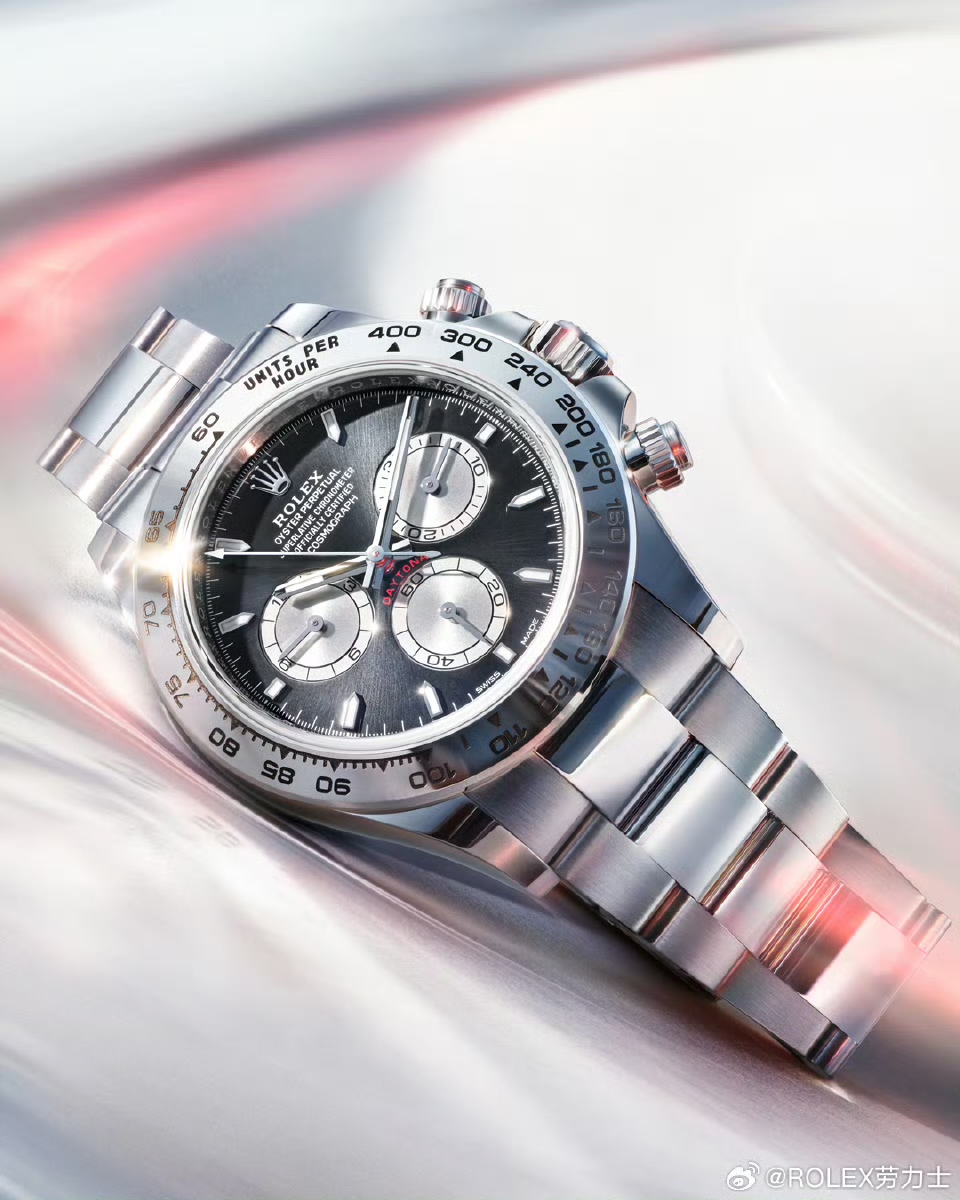
瑞士钟表业年度报告:出货量创新低,劳力士一枝独秀
Di Yi Cai Jing· 2026-02-26 14:16
Core Insights - The Swiss watch industry has experienced a cumulative sales decline of 51% since 2011, with lower sales volumes and higher prices becoming the norm moving forward [1][3][4] Group 1: Market Performance - Rolex leads the market with a wholesale sales figure of 11 billion Swiss francs, estimated retail value of 16.06 billion Swiss francs (approximately 141.9 billion RMB), surpassing the combined sales of Cartier, Audemars Piguet, Patek Philippe, Omega, and Richard Mille, capturing a market share of 33% [1] - The total shipment of Swiss watches is projected to be only 14.6 million pieces in 2025, marking a record low in decades [3] - Cartier has maintained its position as the second-largest brand for six consecutive years since 2020, while Omega has dropped from third to fifth place [3] Group 2: Market Dynamics - The top four brands (Rolex, Cartier, Audemars Piguet, and Omega) account for 55% of the industry's sales, an increase from 52.4% in 2024, indicating a trend towards market polarization [4] - High-end products are becoming the growth engine, with watches priced over 50,000 Swiss francs representing 37% of Swiss watch export value and 89% of growth, despite only accounting for 1.4% of total quantity [4] - The market is shifting from a competitive landscape to a "winner takes all" scenario, adversely affecting smaller independent and mid-range brands [4] Group 3: Profit Distribution - The profit pool of the Swiss watch industry is estimated to be around 7.9 billion Swiss francs in 2025, with an overall operating profit margin of approximately 22% [5] - The top four independent brands (Rolex, Patek Philippe, Audemars Piguet, and Richard Mille) capture about 76% of the profit pool, with an operating profit margin of around 33% [5] - Publicly listed companies like Swatch Group, Richemont, and LVMH account for about 18% of the profit pool, with a significantly lower operating profit margin of 10% [5]

时计宝发布中期业绩,股东应占亏损3685.3万港元 同比增加237.67%
Zhi Tong Cai Jing· 2026-02-26 11:00
Core Viewpoint - The company reported a significant decline in revenue and an increase in losses, primarily attributed to decreased sales from its flagship product, the Tianwang watch, amid ongoing international trade tensions and high tariffs imposed by the new U.S. government [1] Financial Performance - The company achieved revenue of HKD 281 million for the six months ending December 31, 2025, representing an 18.2% year-on-year decrease [1] - The loss attributable to owners for the period was HKD 36.85 million, a substantial increase of 237.67% compared to the previous year [1] - Basic loss per share was reported at 1.8 HKD cents [1] Market Conditions - The decline in revenue is primarily due to a drop in sales from the Tianwang watch, influenced by high tariffs on imports to the U.S., particularly those from China, which are above the average tariff rates [1] - Ongoing international trade disputes and tariff wars have negatively impacted China's economic growth and employment, further weakening consumer confidence in the Chinese retail market, which in turn affected product demand during the reporting period [1]
时计宝(02033)发布中期业绩,股东应占亏损3685.3万港元 同比增加237.67%
Zhi Tong Cai Jing· 2026-02-26 10:20
Core Viewpoint - The company reported a significant increase in losses and a decline in revenue, primarily due to the impact of high tariffs on imports, particularly from China, amid ongoing international trade tensions [1] Financial Performance - The company achieved revenue of HKD 281 million, representing a year-on-year decrease of 18.2% [1] - The loss attributable to shareholders was HKD 36.853 million, which is an increase of 237.67% compared to the previous year [1] - The basic loss per share was HKD 0.018 [1] Market Impact - The decline in revenue is attributed to decreased sales from the Tianwang watch brand [1] - The new U.S. government's imposition of high tariffs on a wide range of imported goods, particularly those from China, has intensified global trade tensions [1] - Ongoing international trade friction and tariff wars have negatively affected China's economy and employment growth, further weakening consumer confidence in the Chinese retail market, which in turn impacted product demand during the reporting period [1]
时计宝(02033.HK)中期净亏损约3690万港元
Ge Long Hui· 2026-02-26 10:15
Core Viewpoint - The company reported a significant decline in revenue and an increase in losses for the first half of the 2026 fiscal year compared to the same period in the previous year [1] Financial Performance - Revenue for the first half of the 2026 fiscal year was approximately HKD 281 million, a decrease of about HKD 62.4 million from approximately HKD 343 million in the first half of the 2025 fiscal year [1] - The loss attributable to shareholders for the first half of the 2026 fiscal year was approximately HKD 36.9 million, compared to a loss of about HKD 10.9 million in the first half of the 2025 fiscal year [1] - The basic loss per share for the first half of the 2026 fiscal year was HKD 0.018, while it was HKD 0.005 for the first half of the 2025 fiscal year [1]
春晚广告位争夺战:四十年国民记忆与商业暗流
凤凰网财经· 2026-02-19 10:54
Core Viewpoint - The evolution of the Spring Festival Gala sponsorship reflects the transformation of China's economy and consumer behavior over the past 40 years, showcasing the shift from material scarcity to technological innovation and brand storytelling [4][5]. Group 1: 1980s to Early 1990s - The Era of Material Scarcity - The transition from a planned economy to a market economy in the 1980s led to a scarcity of goods, making items like watches and bicycles symbols of wealth and status [6][7]. - The first brand to sponsor the Spring Festival Gala was Kambas watches in 1984, which used 3,000 quartz watches as payment, marking the beginning of brand sponsorship in the event [7][9]. - Kambas became a household name, with production reaching 1.26 million units by 1987 and over 2 million by 1991, highlighting the impact of the Gala on brand visibility and market demand [9][10]. Group 2: Mid-1990s to Early 2000s - The Rise of Consumerism - The late 1990s saw a surge in consumer spending, with households moving from basic necessities to larger purchases like televisions and refrigerators [12][14]. - In 1995, Shandong Kongfu Banquet Wine became the first "advertising king" of the Spring Festival Gala, paying 30.79 million yuan, initiating a trend among liquor companies [12][14]. - The sales of Qin Pool Wine skyrocketed from 180 million yuan in 1995 to 950 million yuan in 1996 after winning the sponsorship, demonstrating the immediate impact of Gala advertising [17]. Group 3: 2000s to 2010s - The Era of Brand Awareness - The early 2000s marked a shift towards household appliances as the main consumer focus, with Midea becoming a prominent sponsor, securing 16 sponsorships from 2003 to 2019 [18][20]. - The cost of advertising during the Gala increased significantly, with Midea's sponsorship rising from 6.8 million yuan in 2005 to 57.2 million yuan in 2011, reflecting the growing value of the event [20]. - Brands began to focus on storytelling and emotional connections with consumers, as seen with Haier and Gree, indicating a maturation of brand marketing strategies [21]. Group 4: Mid-2010s to Present - The Digital Economy and Technological Innovation - The rise of internet companies has transformed the Spring Festival Gala into a platform for digital engagement, with WeChat's "red envelope war" in 2015 significantly increasing viewer interaction [24][26]. - The Gala has become a battleground for tech giants, with platforms like Douyin and Kuaishou participating in interactive sponsorships, showcasing the shift towards a two-way communication model [29]. - The introduction of robots and AI technologies in recent Galas reflects China's transition from manufacturing to intelligent manufacturing, highlighting the importance of innovation in the economy [31].


春晚广告位争夺战:四十年国民记忆与商业洪流
Xin Lang Cai Jing· 2026-02-19 07:21
Core Insights - The evolution of the CCTV Spring Festival Gala sponsorship reflects the transformation of Chinese society and economy over the past 40 years, showcasing the changing consumer demands and emerging industries [20][21]. Group 1: 1980s to Early 1990s - The Era of Scarcity - In the 1980s, as China transitioned from a planned economy to a market economy, consumer goods were scarce, leading to a high demand for basic commodities [22]. - The first brand to sponsor the Spring Festival Gala was Kambas watches in 1984, which used 3,000 quartz watches as payment, marking the beginning of brand sponsorship in the gala [22][23]. - Kambas became a household name, with production reaching 1.26 million units in 1987 and over 2 million by 1991, despite the high price of its watches relative to average incomes [23][24]. Group 2: Mid-1990s to Early 2000s - The Rise of Consumerism - The mid-1990s saw a shift in consumer spending from basic goods to electronics, with Shandong Kongfu Banquet Wine becoming the first "advertising king" by paying 30.79 million yuan for sponsorship in 1995 [26]. - The competition among liquor brands for sponsorship reflected the rise of "social consumption," where premium liquor became a status symbol for social gatherings [28]. - After winning the Spring Festival sponsorship, Qin Pool Wine's sales skyrocketed from 180 million yuan in 1995 to 950 million yuan in 1996, demonstrating the immediate impact of gala sponsorship [29]. Group 3: 2000s to Early 2010s - The Home Appliance Boom - The early 2000s marked a shift towards home appliances as the primary consumer focus, with Midea becoming the most frequent sponsor, securing 16 sponsorships from 2003 to 2019 [30]. - The cost of advertising during the gala increased significantly, with Midea's sponsorship fee rising from 6.8 million yuan in 2005 to 57.2 million yuan in 2011, an increase of 840% [30]. - Midea's revenue grew from 17.5 billion yuan in 2003 to over 140 billion yuan in 2014, reflecting the effectiveness of its gala sponsorship strategy [12][30]. Group 4: Mid-2010s to Present - The Digital Economy and Technological Innovation - The rise of internet companies has transformed the Spring Festival Gala into a platform for digital engagement, with WeChat's "red envelope war" in 2015 significantly boosting viewer interaction [15][35]. - The gala's advertising has evolved from one-way promotion to interactive engagement, with platforms like Douyin and Kuaishou participating in sponsorships [16][35]. - The presence of technology companies has increased, with innovations such as AI and robotics showcased during the gala, indicating a shift from traditional advertising to technology-driven marketing [19][37].


春晚40年赞助商变迁史,从康巴丝到机器人见证中国经济跃迁
Sou Hu Cai Jing· 2026-02-18 02:17
Group 1 - The article discusses the evolution of sponsorship in the CCTV Spring Festival Gala over the past 40 years, reflecting changes in Chinese society and consumer behavior [2][3] - The first sponsor, 康巴丝 (Kambas), set a precedent in 1984 by using 3,000 quartz watches as payment, marking the beginning of brand sponsorship in the gala [6][8] - The transition from watches to bicycles as the next major sponsor in 1995 illustrates the shift in consumer goods that represented status during the era of material scarcity [10][12] Group 2 - The late 1990s saw a surge in consumer spending on new household appliances, with 山东孔府宴酒 (Shandong Confucius Banquet Wine) becoming the first "mark king" of the gala in 1995, paying 30.79 million yuan [10][12] - The rapid growth of the liquor industry during this period was fueled by "human consumption," where premium liquor became a social currency [12][14] - The article highlights the consequences of over-reliance on advertising without maintaining product quality, as seen in the case of 秦池酒 (Qin Pool Wine), which faced a significant drop in sales after quality issues emerged [14][15] Group 3 - From the early 2000s, the focus shifted to home appliances, with 美的 (Midea) becoming a prominent sponsor, securing 16 sponsorships from 2003 to 2019 [17][19] - The cost of advertising during the gala increased significantly, with Midea's sponsorship fee rising from 6.8 million yuan in 2005 to 57.2 million yuan in 2011, reflecting the growing viewership [17][19] - The brand storytelling approach adopted by companies like 海尔 (Haier) and 格力 (Gree) during this period indicates a shift towards building emotional connections with consumers [20] Group 4 - The rise of internet companies post-2010 transformed the gala's advertising landscape, with platforms like WeChat leveraging the event for massive user engagement through interactive features like the "red envelope battle" [21][23] - The article notes that the 2015 Spring Festival Gala saw WeChat's user engagement peak, with over 10.1 billion red envelopes sent, showcasing the event's potential as a digital marketing platform [21][23] - The involvement of tech giants in the gala reflects a broader trend of digital economy reshaping traditional advertising methods, with companies like 快手 (Kuaishou) and 抖音 (Douyin) entering the sponsorship arena [25][27] Group 5 - The article concludes by emphasizing the transition from showcasing products to highlighting technological advancements, as seen with the introduction of robots in recent galas [27] - This shift signifies a broader change in China's economic landscape, moving from manufacturing to innovation-driven growth, with a focus on high-tech industries [27] - The future of the Spring Festival Gala sponsorship landscape remains uncertain, raising questions about which industries will dominate the next decade [27]


春晚的广告牌 印刻着中国经济的一次次跃迁
Nan Fang Du Shi Bao· 2026-02-17 15:27
Core Insights - The sponsorship history of the CCTV Spring Festival Gala reflects China's economic development and industrial upgrades over the past four decades, showcasing three major transitions: from basic needs to consumer electronics and automobiles, from virtual economy to hard technology, and from demographic dividend to engineer dividend [1][2]. Group 1: Historical Sponsorship Trends - In the 1980s, the main sponsors represented basic household needs, with brands like 康巴丝 leading the way, highlighting the public's desire for precision and the prosperity of light industry [1]. - The 1990s saw a shift towards quality consumption, with liquor brands and home appliance giants like 美的集团 becoming prominent sponsors, marking a transition from survival to quality-focused consumption [1]. Group 2: The Rise of Internet and Technology - The year 2015 marked a turning point with the emergence of internet giants like WeChat and Alipay, initiating a "red envelope war" that transformed user engagement and payment methods [2]. - As the internet traffic peaked, the focus shifted to hard technology, with a notable increase in sponsorship from the electric vehicle sector, indicating a fundamental shift in China's competitive edge from demographic to engineer dividends [2]. Group 3: Future Trends and Cultural Consumption - The upcoming 2026 Spring Festival Gala will feature new partnerships with brands like 名创优品 and 卡游, suggesting a potential shift towards "emotional value" and "cultural consumption" as new wealth drivers in a mature market [3]. - The evolution of sponsors serves as a "value anchor" migration, reflecting China's economic transitions from production capabilities to creative intelligence, providing a lens to observe the pulse of the times [3].
春晚广告位争夺战:四十年国民记忆与商业暗流
创业邦· 2026-02-17 10:32
Core Viewpoint - The evolution of the Spring Festival Gala sponsorship reflects the changing landscape of China's economy and consumer behavior over the past 40 years, showcasing the transition from material scarcity to technological innovation and brand storytelling [4][24]. Group 1: 1980s to Early 1990s - The 1980s marked a period of material scarcity, where items like watches and radios were symbols of wealth and status, leading to the first brand sponsorship by 康巴丝 (Kangbasi) at the Spring Festival Gala [5][7]. - 康巴丝 sponsored the gala by trading 3,000 quartz watches for advertising, which significantly boosted its brand recognition and sales, reaching an annual production of 1.26 million watches by 1987 [8]. - The sponsorship model evolved, with 中华自行车 (Zhonghua Bicycle) taking over the sponsorship in 1995, reflecting the changing consumer demands and economic conditions [9][14]. Group 2: Mid-1990s to Early 2000s - The mid-1990s saw a surge in consumer spending, with the emergence of "标王" (advertising king) sponsorships, particularly in the liquor industry, exemplified by 山东孔府宴酒 (Shandong Confucius Feast Wine) and 秦池酒 (Qinchijiu) [11][12]. - 秦池酒's sponsorship led to a dramatic increase in sales from 1.8 billion yuan in 1995 to 9.5 billion yuan in 1996, highlighting the impact of gala sponsorship on brand visibility and sales [16]. - The era was characterized by a shift towards consumerism, with brands leveraging the gala to enhance their market presence, although some faced backlash due to quality issues [16]. Group 3: 2000s to Early 2010s - The early 2000s marked the rise of home appliance brands, with 美的 (Midea) becoming a prominent sponsor, securing 11 sponsorships from 2003 to 2014, reflecting the growing importance of brand trust [17][19]. - The cost of advertising skyrocketed, with Midea's sponsorship fee increasing from 6.8 million yuan in 2005 to 57.2 million yuan in 2011, indicating the gala's significant viewership and advertising value [21]. - Brands began to focus on storytelling and emotional connections with consumers, moving beyond mere product promotion to build brand loyalty [23]. Group 4: Mid-2010s to Present - The 2010s saw the rise of internet companies as key players in the advertising space, with platforms like WeChat revolutionizing audience engagement through interactive features like the "red envelope battle" during the gala [25][26]. - The digital transformation of the gala allowed for unprecedented levels of interaction, with WeChat reporting 10.1 billion red envelope transactions on New Year's Eve, significantly enhancing its user base [26]. - The emergence of technology companies in the gala sponsorship landscape reflects a broader shift towards innovation and digital engagement, with brands like Xiaomi and AI robotics showcasing advancements in technology [32].