
文旅共融

Search documents
从元旦假期“开门红”看香港文旅市场新趋势
Xin Hua Wang· 2026-01-05 01:47
Group 1: Tourism Market Recovery - Hong Kong's tourism market experienced a strong start in 2026, with over 3.2 million people entering and exiting the region during the New Year holiday, including more than 1.63 million inbound visitors [1] - The influx of tourists is attributed to large-scale events and the positive effects of central government policies aimed at benefiting Hong Kong [1][2] - The tourism sector is expected to continue expanding throughout the year, focusing on new customer sources and enhancing visitor experiences [1] Group 2: New Year Celebrations and Economic Impact - The "New Year Countdown Event" organized by the Hong Kong Tourism Board attracted significant participation, with local bars and restaurants reporting a 100% reservation rate and a 50% increase in revenue compared to the previous year [2] - Hotel occupancy rates reached 100% during the New Year period, driven by mainland travelers and festive events [2] - The 59th Industrial Exhibition attracted large crowds, with exhibitors reporting a 20-30% increase in sales, highlighting the ongoing consumer enthusiasm [2] Group 3: Infrastructure and Event Hosting - Hong Kong's venue infrastructure and event management capabilities are solidifying its status as a "City of Events," with the first New Year concert at Kai Tak Sports Park drawing over 120,000 visitors [3] - The retail space at Kai Tak Sports Park has an occupancy rate exceeding 90%, with many restaurants extending hours to accommodate event attendees [3] - The opening of new cultural venues, such as the East Kowloon Cultural Centre, is expected to further enhance Hong Kong's cultural and creative industries [3] Group 4: Future Development Plans - The Hong Kong government is actively promoting tourism through the establishment of a "Tourism Hotspot Working Group," which has launched nine tourism hotspot projects [5] - The integration of "events and tourism" is seen as a way to showcase Hong Kong's international appeal and the vibrancy of the Greater Bay Area [5] - The tourism industry is encouraged to adapt to changing visitor demographics and enhance cross-sector collaboration to enrich the overall travel experience [5]
财经观察|从元旦假期“开门红”看香港文旅市场新趋势
Xin Hua Wang· 2026-01-04 14:09
Core Insights - The Hong Kong tourism market experienced a strong start in 2026, with over 3.2 million people entering and exiting the region during the New Year holiday, including more than 1.63 million inbound visitors, driven by large events and supportive central government policies [1] - The "New Year Countdown" event in Central attracted significant participation, boosting local consumption, with bars and restaurants reporting a 50% increase in revenue and full booking rates [2] - The opening of new cultural venues like the East Kowloon Cultural Centre and the ongoing development of the West Kowloon Cultural District are expected to enhance Hong Kong's cultural and creative industries [4] Tourism Trends - The influx of visitors is supported by the Greater Bay Area's increasing connectivity, with a projected 49.9 million visitors to Hong Kong in 2025, 74% of whom are expected to be from mainland China [5] - The "Industrial Brand Tourism" initiative is set to enhance the visitor experience, with three brands participating in the first phase [5] Event-Driven Consumption - Major events like the New Year concert at Kai Tak Sports Park attracted over 120,000 visitors in a single day, showcasing the potential of event-driven consumption to boost retail and hospitality sectors [3] - The occupancy rate of hotels during the New Year period reached 100%, indicating strong demand from mainland travelers [2] Infrastructure Development - Hong Kong's venue infrastructure, including the Kai Tak Sports Park, is being upgraded to support large-scale events, reinforcing its status as a "City of Events" [3] - The government is actively promoting the integration of arts and technology through new cultural facilities, which will further enhance the tourism landscape [4]
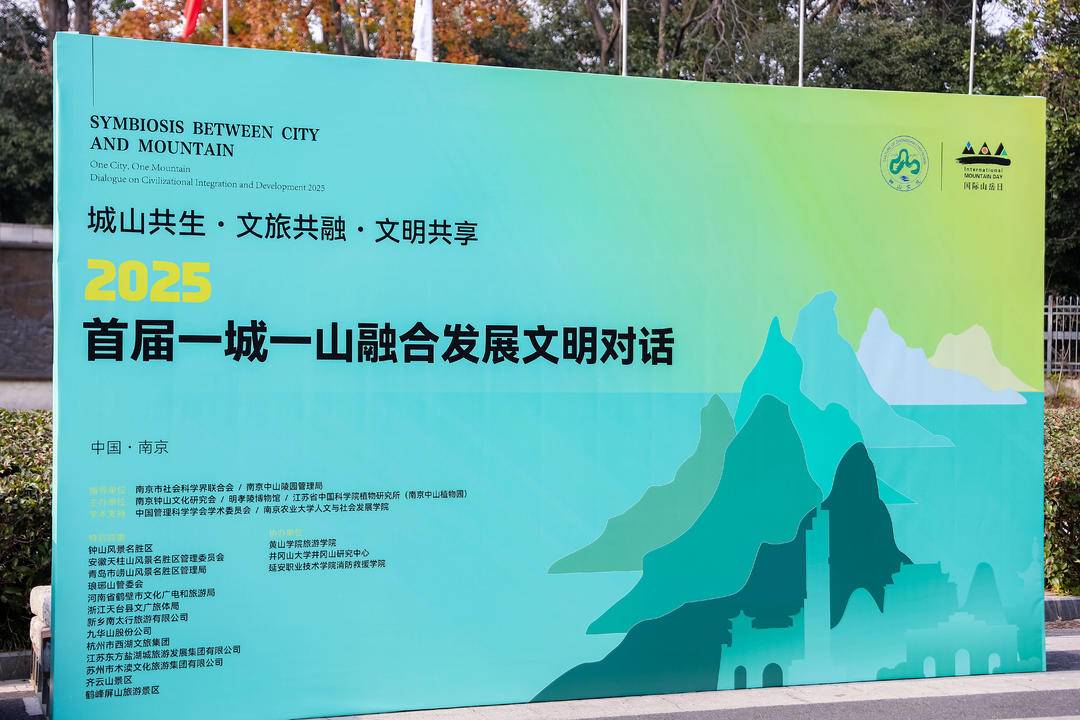
城山共生·文旅共融·文明共享——2025首届“一城一山融合发展文明对话”在南京启幕
Yang Zi Wan Bao Wang· 2025-12-12 11:54
Core Insights - The event "2025 First City-Mountain Integrated Development Civilization Dialogue" was held in Nanjing, focusing on sustainable development paths between cities and mountains, promoting the inheritance and innovation of Chinese mountain culture [1][3] Group 1: Event Overview - The event was initiated by the Nanjing Zhongshan Cultural Research Association and supported by over 20 institutions, including the Nanjing Social Science Federation and Nanjing Agricultural University [3] - Representatives from 16 mountains participated, forming a cross-sector collaboration model involving government guidance, academic support, enterprise participation, and scenic area interaction [3] Group 2: Academic Contributions - Key discussions included the realization of green space value, traditional mountain agriculture civilization, and the inheritance of mountain culture [5] - Experts shared experiences on balancing mountain resource protection and cultural tourism development, emphasizing that mountains are not only natural landscapes but also carriers of cultural genes [5] Group 3: Future of Cultural Tourism Integration - Representatives discussed strategies for cultural tourism integration, highlighting the importance of cultural IP in empowering tourism [7] - Insights were shared on the relationship between cities and mountains, urban performance, and tourism scene experiences, with a focus on talent development in the cultural tourism sector [7] Group 4: Establishment of Exchange Platform - The event launched the "One City, One Mountain" exchange platform and published a research project aimed at building a theoretical and practical framework for city-mountain integration [8] - The initiative aims to reshape the value of urban mountains and promote cultural heritage, contributing to the narrative of "City-Mountain Symbiosis" [8]

提升“税服力”,广州南沙着力打造演艺产业高地
Nan Fang Du Shi Bao· 2025-06-18 12:29
Core Viewpoint - The collaboration between the tax authority and the cultural and tourism bureau in Nansha aims to enhance the development of the performing arts industry and the broader cultural tourism sector in the Greater Bay Area through policy support and resource integration [1][2]. Group 1: Policy Collaboration - A memorandum was signed to establish a cooperative mechanism for tax source cultivation in the performing arts industry, focusing on policy coordination and resource integration [2]. - The initiative aims to ensure that various enterprise-friendly policies are effectively communicated and implemented, promoting compliance and sustainable growth in the performing arts sector [2][4]. - The Nansha district is positioning itself as a vibrant hub for cultural and tourism activities, with plans to host regular events like music festivals and sports competitions to attract a younger demographic [2][6]. Group 2: Tax Incentives - The "Nansha Plan" offers significant tax incentives, including a reduced corporate income tax rate of 15% for qualifying businesses in designated areas [8]. - For Hong Kong and Macau residents working in Nansha, any personal income tax burden exceeding that of their home regions will be exempted, making it financially attractive for talent to work in the area [8]. - The local government has introduced a comprehensive policy package aimed at stimulating the cultural industry, including support for overseas tours of local productions and financial incentives for hosting large-scale performances [8]. Group 3: Support Measures - The Nansha district has implemented various support measures for the cultural tourism industry, including financial rewards for attracting visitors and enhancing service quality [9][10]. - Specific incentives include up to 300,000 yuan for fixed asset investments exceeding 5 million yuan in new or expanded cultural tourism projects [10]. - The policies are designed to cater to a wide range of enterprises, ensuring that both startups and established companies can benefit from the supportive environment [10].