
新型毒品犯罪

Search documents
最高法:一些医院、诊所、药店等成为麻精药品流出的一个渠道
Zhong Guo Jing Ying Bao· 2026-02-03 17:35
Core Viewpoint - The rise of new psychoactive substances has surpassed traditional drugs, with some provinces reporting that new drug cases account for over half of all drug-related incidents. The involvement of minors in drug abuse is increasing, leading to a cycle of addiction and criminal activity [1][2]. Group 1: Current Drug Crime Trends - New psychoactive substances are becoming a significant issue, with a notable increase in cases involving medical narcotics and psychoactive drugs as substitutes for traditional drugs [2][3]. - In 2023-2025, courts are expected to adjudicate approximately 93,000 drug cases, with 133,000 defendants, of which 27,000 will receive prison sentences of five years or more, resulting in a heavy sentencing rate of 20% [2]. - The number of drug cases has significantly decreased, with a reported 23,732 cases concluded in 2025, marking an 82.93% decline from the peak in 2015 [1]. Group 2: Sources and Channels of Drug Distribution - Medical institutions, pharmacies, and clinics have become channels for the illegal distribution of narcotic drugs, with some medical professionals exploiting their positions for profit [3][4]. - The types of abused narcotic drugs are diverse but concentrated on specific substances such as etomidate, methadone, and synthetic cannabinoids [3]. Group 3: Legal and Regulatory Responses - The Supreme People's Court has issued guidelines to strengthen the judicial handling of cases involving narcotic drugs, particularly focusing on medical narcotics and psychoactive substances [3][5]. - Recent judicial recommendations have been made to the National Health Commission to enhance the regulatory framework surrounding narcotic drugs, addressing loopholes and weak points in current systems [5].
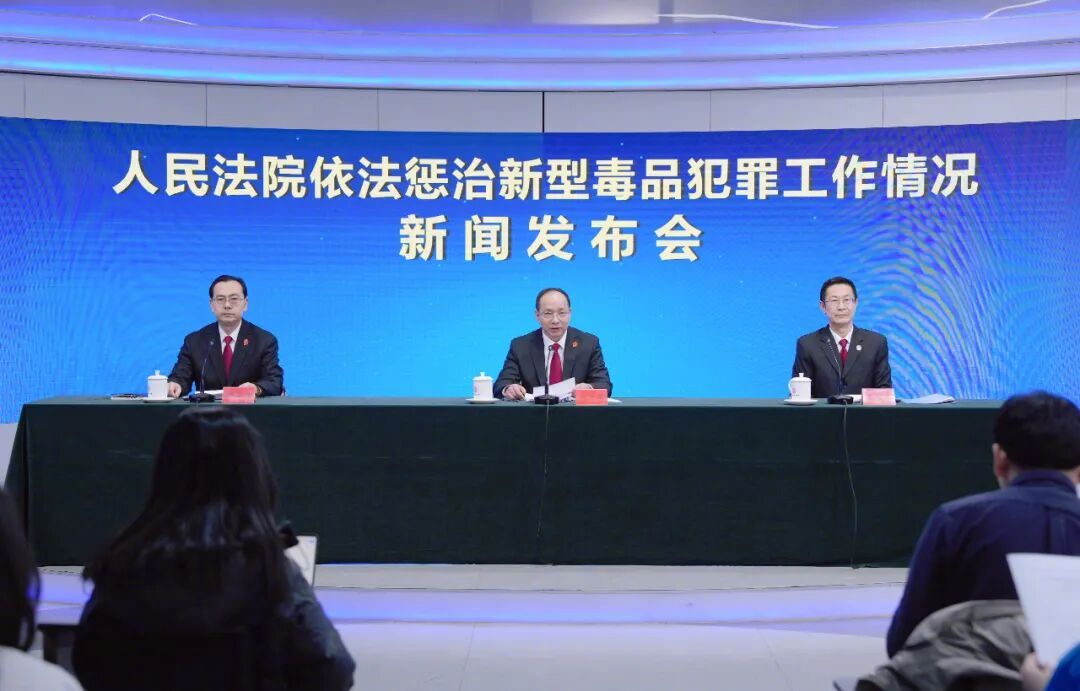
最高法举行“人民法院依法惩治新型毒品犯罪工作情况”新闻发布会
Xin Lang Cai Jing· 2026-02-02 12:49
Core Viewpoint - The Supreme People's Court of China is actively addressing the issue of new drug crimes in preparation for the upcoming National People's Congress, highlighting the importance of strict and fair judicial practices in combating drug-related offenses and ensuring public safety and welfare [1][4]. Group 1: Current Situation of New Drug Crimes - The number of drug cases in China has significantly decreased, with 23,732 drug cases concluded in 2025, marking an 82.93% decline from the peak in 2015 [4]. - New drug crimes are on the rise, with approximately 4,000 new drug cases concluded in 2023, and this number is expected to surge to about 14,000 in 2024, accounting for 39.1% of all drug cases [5]. - The structure of drug abuse is changing, with new drugs like etomidate surpassing traditional drugs like heroin in some provinces, indicating a shift in drug consumption patterns [5]. Group 2: Characteristics of New Drug Crimes - New drug cases are characterized by fluctuating growth and an increasing proportion of total drug cases, with new drugs becoming more prevalent as traditional drugs are effectively curtailed [5]. - The sources of involved substances are diverse, including smuggling from abroad and illegal production within the country, with medical institutions also being a source of abused drugs [6]. - New drugs often have strong concealment and disguise features, being sold in forms that resemble everyday products, which complicates enforcement efforts [6]. Group 3: Judicial Measures and Achievements - From 2023 to 2025, courts concluded 93,000 drug cases, with 133,000 defendants sentenced, including 27,000 receiving prison terms of five years or more, reflecting a strict approach to drug crime [10]. - The courts are implementing a dual approach of strict punishment and precise targeting, focusing on serious offenses such as trafficking and manufacturing new drugs [10]. - The Supreme People's Court has issued guidelines and case studies to enhance judicial responses to new drug crimes, ensuring consistent application of laws [12][13]. Group 4: Prevention and Governance - The courts are emphasizing a combination of punishment and prevention, issuing judicial recommendations to improve the regulation of medical drugs and enhance public awareness [14][15]. - Collaborative efforts with various departments are being strengthened to create a comprehensive governance model for drug-related issues, including initiatives to improve postal safety against drug trafficking [16].

最高法:未成年人成为新型毒品滥用高危人群 有的已沦为犯罪者
Xin Lang Cai Jing· 2026-02-02 09:46
Core Viewpoint - The rise of new drug abuse among minors, including middle school students, poses significant risks, leading to addiction and potential involvement in drug-related crimes [1][2]. Group 1: Characteristics of New Drug Abuse - Minors are particularly vulnerable to new types of drugs due to their immature judgment and strong curiosity, making them susceptible to misuse and manipulation [1]. - New drugs exhibit strong concealment and disguise characteristics, often being disguised as everyday items like chocolates, snacks, and beverages, complicating enforcement efforts [1]. Group 2: Specific Substances and Legal Response - The abuse of nitrous oxide ("laughing gas") and other unregulated addictive substances has increased significantly, with a notable proportion of users being minors [2]. - The legal system is adapting to address the challenges posed by unregulated substances, ensuring that even if substances are not classified as drugs, related criminal activities are prosecuted [2][3]. Group 3: Preventive Measures and Public Awareness - Courts are actively engaging in public legal education to raise awareness about the dangers of unregulated substances, particularly among youth [3]. - There is a push for regulatory bodies to assess and potentially classify substances like nitrous oxide to enhance control and prevention efforts [3].
2025年中国法院一审审结毒品案件量回落至2000年前水平
Zhong Guo Xin Wen Wang· 2026-02-02 09:25
Core Insights - The number of drug cases concluded by Chinese courts in 2025 has decreased to levels seen before 2000, with a total of 23,732 cases, marking an 82.93% decline from the peak in 2015 of 139,000 cases and a 33.82% decrease from 2024 [1][2] Group 1: Trends in Drug Cases - The decline in traditional drug cases has been significant, while new types of drug cases, particularly involving medical narcotics and new psychoactive substances, are on the rise [1] - The total number of drug cases concluded from 2023 to 2025 reached 93,000, with 133,000 defendants sentenced, including 27,000 receiving prison terms of five years or more, resulting in a heavy sentence rate of 20% [2] Group 2: Enforcement and Legal Measures - The Supreme Court is intensifying penalties and targeting source crimes related to smuggling, manufacturing, and large-scale trafficking of new drugs, especially those affecting minors [2] - Courts are considering the harmfulness, purity, and abuse potential of the drugs involved when adjudicating new drug cases to ensure appropriate sentencing [2]
2025年全国法院一审审结毒品案件23732件 较高峰时下降82.93%
Yang Shi Xin Wen· 2026-02-02 02:21
Core Viewpoint - The Supreme People's Court of China reported significant progress in combating drug-related crimes, with a notable decrease in drug cases and a shift in the types of drugs being abused, particularly towards new psychoactive substances and medical narcotics [1][2]. Group 1: Drug Crime Statistics - From 2023 to 2025, Chinese courts concluded 93,000 drug cases, with 133,000 defendants sentenced, including 27,000 receiving prison terms of five years or more, resulting in a heavy sentence rate of 20%, which is 13 percentage points higher than the overall criminal case heavy sentence rate during the same period [1]. - The number of drug cases has significantly decreased, with 23,732 cases concluded in 2025, marking an 82.93% decline from the peak of 139,000 cases in 2015 and a 33.82% decrease from 36,000 cases in 2024, returning to levels seen before 2000 [1]. Group 2: Characteristics of Drug Crimes - Traditional drugs are being effectively curtailed, leading offenders to focus on medical narcotics and new psychoactive substances. In 2023, approximately 4,000 new drug cases were concluded, with new psychoactive substances accounting for 39.1% of drug cases [2]. - The number of new drug cases surged to about 14,000 due to the regulation of etomidate, but later decreased to 10,600, with new psychoactive substances now representing 45% of drug cases. Some provinces report new drug cases exceeding half of all drug cases, with Guangdong courts seeing new psychoactive substances comprising 82.6% and 70.7% of cases in 2024 and 2025, respectively [2]. Group 3: Sources and Types of Drugs - The sources of drugs are diverse, including smuggling from abroad, illegal production, and diversion from medical institutions and pharmacies. There are cases of collusion with foreign entities to smuggle narcotics like triazolam, and some medical professionals are illegally supplying narcotics to offenders [3]. - The types of abused narcotics are varied but concentrated on etomidate, methohexital, dextromethorphan, and synthetic cannabinoids [3]. Group 4: Trends in Drug Abuse - There is a notable increase in drug abuse among younger populations, with adolescents being particularly vulnerable due to their lack of maturity and understanding of the dangers of new psychoactive substances [4]. - Drug trafficking methods have become more networked and intelligent, with online and offline activities increasingly intertwined. Non-contact methods such as "Internet + logistics + electronic payment" have become the new norm in drug trafficking, complicating law enforcement efforts [4].
最新:最高检介绍历时10年、5次审理的“绝命毒师”案
Xin Lang Cai Jing· 2026-02-01 16:11
Core Viewpoint - The Supreme People's Procuratorate emphasizes the importance of addressing major criminal cases, highlighting a significant focus on political security and the effective handling of serious crimes to maintain social stability and public safety [2][3]. Group 1: Major Crime Prosecution - In 2025, the Major Crime Prosecution Office approved the prosecution of 264 individuals involved in serious criminal cases that had been unresolved for over 20 years [2]. - Despite a decline in the proportion of serious violent crimes, the evolving nature of crime, characterized by information technology, concealment, organization, and cross-regional features, necessitates ongoing vigilance [2]. Group 2: Case Handling and Guidance - The Major Crime Prosecution Office is committed to efficiently managing self-handled cases, including criminal appeals and death penalty reviews, while also providing guidance and oversight for lower-level cases [3]. - The office has prioritized the timely handling of significant responsibility accident cases, such as the major fire incidents in Hebei and Liaoning, to ensure legal compliance and address public concerns [3]. Group 3: Notable Case Example - A high-profile case involving Zhang Zhengbo, known as the "Chinese Breaking Bad," has drawn significant public attention due to its complexity and the lengthy judicial process spanning 10 years [4][5][6]. - The case was recently re-evaluated, resulting in a new judgment that reflects the strict stance of the country on drug-related crimes, with Zhang receiving a 15-year sentence for drug trafficking [6].

任何来路不明的赠品都别碰 警惕果冻曲奇巧克力等伪装毒品
Xin Lang Cai Jing· 2026-01-15 13:17
Core Viewpoint - The article highlights the increasing sophistication of drug-related crimes, particularly the use of disguised drugs in the form of common food items targeting the youth demographic [1] Group 1: Drug Disguise Techniques - Criminals are disguising drugs as jelly, cookies, chocolates, and milk tea powder to facilitate covert distribution through social media and logistics [1] - These disguised drugs often contain synthetic cannabinoids and cathinones, which can lead to severe health issues including memory loss, agitation, organ damage, and long-term immune system deterioration [1] Group 2: Target Demographic and Risks - The youth population is particularly vulnerable, with statistics indicating that nearly half of minors exposed to drugs do so through "gifts" from friends [1] - There is a strong warning against accepting unknown gifts or food items, emphasizing the importance of rejecting products without proper labeling or unclear ingredients [1]
最高检发布检察机关惩治毒品犯罪典型案例
Ren Min Wang· 2025-06-26 00:42
Core Viewpoint - The Supreme People's Procuratorate has highlighted the increasing trend of new drug-related crimes, particularly the abuse of medical narcotics, while traditional drug crimes are on the decline [1][2]. Group 1: Characteristics of Typical Cases - The typical cases released cover various new types of drug crimes, with a notable rise in cases involving the abuse of medical narcotics due to mismanagement by some medical professionals [1]. - New drugs are characterized by their diverse types and low production costs, with criminals increasingly using non-contact methods such as "internet + logistics + electronic payment" for transactions, making them more concealed and harmful [1]. Group 2: Legal Enforcement and Supervision - The prosecution has adopted a comprehensive approach to combat drug-related crimes, emphasizing the "dual investigation" mechanism to simultaneously address drug crimes and money laundering [2]. - The prosecution has improved its effectiveness by correcting errors in sentencing and ensuring that all related crimes are pursued through integrated legal supervision across various departments [2]. Group 3: Comprehensive Governance of Drug Issues - The prosecution has enhanced collaboration with law enforcement and judicial agencies to create a cooperative mechanism for handling drug cases, promoting consensus on drug control [3]. - The implementation of the "No. 7 Procuratorial Recommendation" aims to ensure strict compliance with regulations in logistics and delivery services, while also expanding drug prevention publicity efforts [3].
最高法介绍人民法院禁毒工作情况并发布典型案例
Ren Min Wang· 2025-06-24 00:52
Core Viewpoint - The Supreme People's Court of China has reported significant progress in drug control efforts, highlighting a decrease in traditional drug crime cases while new types of drug crimes are on the rise, particularly among younger demographics [1][2][3] Summary by Sections Drug Crime Statistics - In 2024, the national courts concluded 35,859 drug crime cases, while from January to May 2025, 9,343 cases were concluded, representing a year-on-year decrease of 29.31% [1] - Over the past decade, the overall number of drug crime cases has shown a downward trend, indicating an improving drug situation [1] Judicial Actions and Sentencing - The courts have maintained a strict approach to punishing drug-related crimes, with 49,177 defendants sentenced in 2024, of which 8,332 received prison terms of five years or more, resulting in a heavy sentence rate of 16.94% [3] - In the first five months of 2025, 14,456 defendants were sentenced, with 2,821 receiving heavy sentences, leading to a heavy sentence rate of 19.51% [3] New Drug Crime Challenges - New types of drug crimes are increasingly problematic, particularly those targeting minors and involving the use of narcotics for committing other crimes [4][8] - The courts are focusing on precise punishment for new drug crimes and enhancing judicial guidance through case databases and legal resources [4] Comprehensive Drug Control Efforts - The courts are emphasizing a dual approach of punishment and governance, aiming to address the root causes of drug issues through legal education and judicial recommendations [5][6] - Various local courts are innovating methods to engage in drug governance, such as issuing "anti-drug awareness cards" to improve the ability of workers to resist drugs [5] Collaboration and Coordination - Courts are enhancing cooperation with law enforcement and health departments to address legal application and drug regulation issues [6] - Initiatives have been taken to establish long-term supervision and support mechanisms for drug users to reduce relapse rates [6] Impact of Typical Cases - The release of typical drug crime cases serves as a strong deterrent against drug offenses, with severe penalties for serious offenders [7] - The cases highlight the commitment to protecting minors and addressing systemic issues in drug regulation and healthcare [8][9] Success in Sichuan Province - Sichuan's Liangshan region has achieved notable success in drug control through a coordinated approach involving various government levels and a focus on both legal enforcement and community support [9]
最高法:新型毒品呈现滥用群体低龄化、犯罪主体年轻化特征
2 1 Shi Ji Jing Ji Bao Dao· 2025-06-23 10:05
Group 1 - The core viewpoint of the articles highlights the ongoing efforts and effectiveness of the Chinese judiciary in combating drug-related crimes, particularly focusing on new types of drug offenses and their rising prevalence among younger populations [1][2][3] - In 2024, Chinese courts concluded 35,859 drug crime cases, with a notable 29.31% year-on-year decrease in the first five months, indicating a long-term downward trend in drug crime cases over the past decade [1] - New types of drug crimes are increasingly surpassing traditional drug offenses, with a concerning trend of younger individuals being involved in these crimes, prompting the judiciary to take stringent measures against such offenses [1][2] Group 2 - The Supreme People's Court has released seven new drug-related cases to raise public awareness about the dangers of new types of drugs, particularly targeting youth education on the risks associated with substances disguised as harmless [2] - The judiciary is actively enhancing its judicial response to new drug crime situations, with drug crime cases constituting 7.46% of all criminal cases in the court's case database [2] - There is a commitment to strictly punish crimes that lead to the illegal distribution of medical narcotics while ensuring the protection of legitimate medical use, highlighting the need for accurate case classification and appropriate penalties [2] Group 3 - Future initiatives will focus on leveraging judicial resources to enhance public education about new drugs and their dangers, particularly aimed at improving youth awareness and prevention capabilities [3]