新职伤

Search documents
【聚焦新就业形态劳动者】从试点扩围到全面覆盖,“新职伤”哪些方面还需发力?
Xin Lang Cai Jing· 2026-02-26 19:41
Core Viewpoint - The "New Occupational Injury" (新职伤) program is set to expand nationwide by 2026, providing essential support for new employment groups and addressing their concerns regarding occupational safety and insurance coverage [1][2]. Group 1: Program Expansion and Implementation - The "New Occupational Injury" program began as a pilot in July 2022 across seven provinces and cities, with plans to expand to ten more provinces and four additional platform companies by July 2025 [1]. - By 2026, the program will cover all provinces and all platform companies in the ride-hailing, instant delivery, and local freight industries [1]. - The program aims to enhance the occupational safety net for new employment forms, encouraging platform companies to diversify their insurance offerings [1][8]. Group 2: Challenges and Legal Issues - Issues have arisen regarding the recognition of occupational injuries and the payment of benefits, highlighted by a case where an insurance claim was denied due to the location of the incident [2][4]. - The concept of "work time" and "work position" is evolving, with legal interpretations suggesting a need for flexibility in recognizing injuries that occur during or as a result of work-related activities [2][4]. - Disputes between the "New Occupational Injury" program and other insurance types have been noted, with courts emphasizing the complementary nature of social security and commercial insurance [4][6]. Group 3: Innovations and Best Practices - Various provinces have implemented innovative practices to streamline the claims process, such as Beijing's "small injury quick compensation" mechanism, which simplifies the claims process for minor injuries [6]. - Guangdong has introduced fast-track procedures for small claims, enhancing the efficiency of the compensation system [6]. - The integration of occupational injury prevention and rehabilitation into the "New Occupational Injury" program is being emphasized, with initiatives aimed at reducing injury occurrences and improving recovery processes [7]. Group 4: Future Directions - The program is expected to extend beyond current industries to include sectors like online streaming, domestic services, and other emerging employment forms [8]. - There is a call for mandatory insurance coverage in industries with frequent claims to ensure comprehensive protection for workers [8]. - Continuous refinement of the "New Occupational Injury" system is recommended, focusing on injury recognition, processing efficiency, and operational models [8].
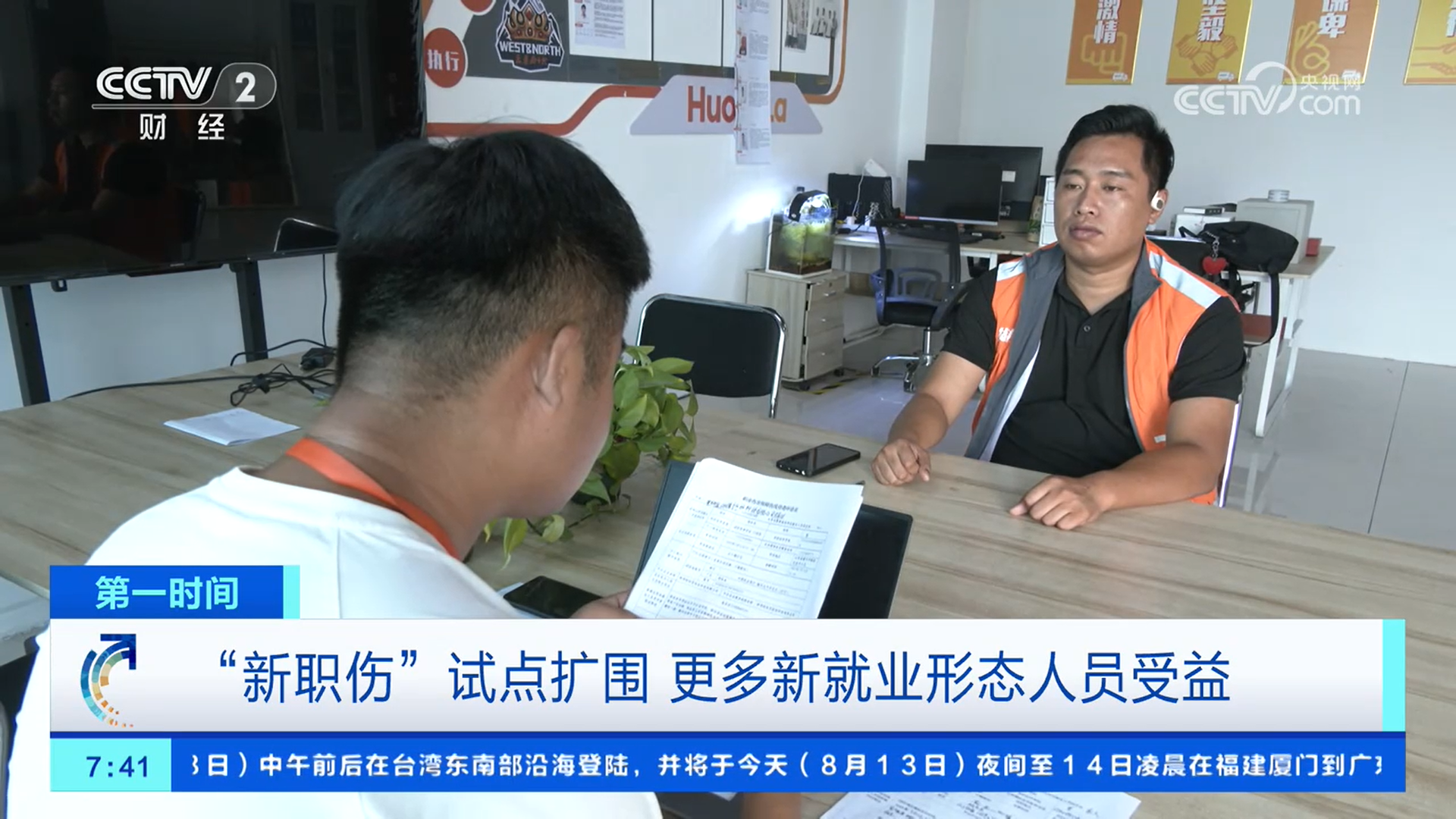
“新职伤”试点扩围 更多新就业形态人员受益
Yang Shi Wang· 2025-08-13 03:04
Core Viewpoint - The "New Occupational Injury" insurance is designed to provide protection for workers employed through internet platforms, with a recent expansion of pilot programs to include ten additional provinces and larger platform companies, significantly increasing the number of beneficiaries [1][5]. Group 1: Policy Expansion - As of July 1, the Ministry of Human Resources and Social Security and nine other departments decided to expand the pilot program for occupational injury protection to include Hebei, Zhejiang, Shandong, and other provinces [1]. - The new pilot program has been in effect for over a month, and its implementation is being closely monitored through interviews in various regions [1]. Group 2: Coverage and Benefits - Unlike traditional commercial accident insurance, the "New Occupational Injury" insurance does not require personal contributions, as all costs are covered by the platform [5]. - The program covers both full-time and part-time workers, ensuring a broader safety net for gig economy participants [5]. - Data shows that by June of this year, 12.3457 million people had enrolled in the "New Occupational Injury" insurance across seven pilot provinces [5]. Group 3: Future Developments - The Ministry of Human Resources and Social Security plans to explore the inclusion of other high-risk industries and platform companies into the occupational injury protection pilot by 2027 [5]. - The initiative aims to establish a safety net for new employment forms, benefiting both insured individuals and platform companies [5].