新能源商用车转型

Search documents
广汽与吉利“抱团”新能源商用车
经济观察报· 2026-02-07 05:53
Core Viewpoint - The collaboration between GAC and Geely in the new energy commercial vehicle sector aims to break the historical trend of unsuccessful partnerships among domestic automakers, with both companies seeking to leverage each other's strengths to enhance market presence and technological capabilities [2][10]. Group 1: GAC's Transformation - GAC's transformation from GAC Hino to GAC Lingcheng marks a strategic shift towards new energy commercial vehicles, with a goal of achieving 30 billion yuan in revenue by 2030 [3]. - The company has launched several new energy products, including the GACPICKUP01 and T9 electric heavy truck, but still lacks a strong foundation in the bus and VAN segments [3][4]. - GAC Lingcheng's "light asset" strategy emphasizes cost efficiency in product development, aiming to reduce R&D costs significantly compared to competitors [4][5]. Group 2: Geely's Expansion - Geely's commercial vehicle division, established in 2016, has seen rapid growth, with a compound annual growth rate exceeding 120% over the past five years, reaching nearly 25,000 units sold monthly by 2025 [7]. - The company aims to achieve an annual sales target of 1 million units by 2030, positioning itself as a leader in both domestic and global new energy commercial vehicle markets [7][8]. - Geely's focus on methanol technology and its partnership with GAC could facilitate entry into the competitive Guangdong market, leveraging local resources to reduce operational costs [8]. Group 3: Industry Context - The commercial vehicle industry is undergoing structural adjustments, with a shift towards low-speed growth and increased competition in the new energy sector [11]. - The market has seen fluctuations, with sales peaking at 5.13 million units in 2020 and dropping to 3.873 million units in 2024, while exports have become a significant growth driver [11]. - Collaborations among commercial vehicle manufacturers to share the costs and risks of new energy transitions have become a common strategy, as seen in recent partnerships across the industry [12].


郑州新能源商用车按下转型升级“加速键”
Zheng Zhou Ri Bao· 2025-11-19 00:49
Group 1: Industry Trends - A wave of electrification and intelligence is sweeping through China's commercial vehicle sector, with electric heavy-duty trucks transitioning from demonstration operations to market-driven applications, marking a significant step in the country's "dual carbon" strategy [1][9] - The penetration rate of new energy heavy-duty trucks has rapidly increased, reaching a historical high of 28.8% in September 2023, indicating explosive growth in this market segment [1] Group 2: Regional Development - Zhengzhou, as the core of Henan Province's automotive industry, is set to produce over 1.12 million vehicles in 2024, positioning itself among the top cities in the nation [2] - The city has attracted major manufacturers like Yutong, Dongfeng Nissan, and BYD, creating a comprehensive ecosystem for commercial vehicles, including light, heavy, and mining trucks [2] Group 3: Technological Advancements - Yutong has made significant strides in overcoming operational challenges for new energy heavy-duty trucks, achieving a low energy consumption of 0.66 kWh per kilometer over a 479-kilometer test route [3] - Innovations such as dual-gun fast charging technology and lightweight vehicle designs have improved operational efficiency and alleviated range anxiety [3][4] Group 4: Economic Benefits - Yutong's electric cargo trucks can reduce per-kilometer energy costs to under 0.5 yuan, saving over 1 yuan compared to similar fuel vehicles, leading to annual fuel cost savings of up to 120,000 yuan per vehicle [4] - The "Anruitong" intelligent management system helps users optimize energy costs by managing charging strategies effectively [4] Group 5: Hydrogen Fuel Cell Development - Zhengzhou has initiated the delivery of hydrogen fuel cell heavy-duty trucks, marking a significant milestone in the city's hydrogen energy transportation system [5] - Yutong has established a comprehensive lineup of hydrogen fuel commercial vehicles, maintaining a leading position in global production and sales [5] Group 6: Challenges and Future Outlook - Despite significant growth, new energy heavy-duty trucks face challenges in long-distance applications, with diesel trucks still holding a 50% penetration rate in the first nine months of 2025 [7] - The logistics industry is undergoing a transformation, with increasing demand for efficient and green transportation solutions, supported by the rapid development of charging infrastructure [8] - The future development path for new energy heavy-duty trucks is becoming clearer, with a focus on battery technology improvements and a shift from policy-driven to market-driven growth [8][9]

重塑新能源微客价值标准,五菱之光EV305km进取型5.78万元起售
Zhong Guo Jing Ji Wang· 2025-07-24 03:01
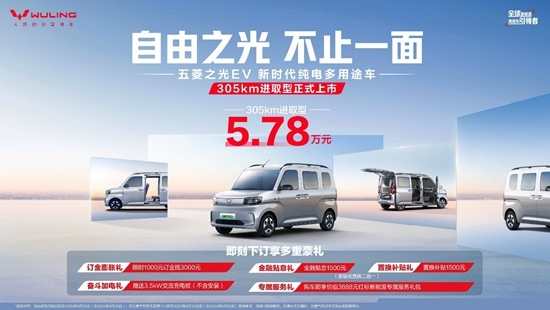
Core Insights - The launch of the Wuling Zhi Guang EV305km model at a price of 57,800 yuan aims to meet user demands and reshape the micro-van market [1] - Wuling Zhi Guang has been a significant product for SAIC-GM-Wuling since its debut in 2002, achieving notable sales milestones and establishing itself as a market leader [3] - The traditional micro-van market has faced challenges due to evolving consumer demands and competition from compact MPVs and SUVs, prompting Wuling to redefine its product offerings [3] Sales Performance - In the first half of the year, Wuling Zhi Guang EV achieved cumulative sales of 13,532 units, becoming the top seller in the new energy micro-van market [4] - The overall sales of Wuling Hongbiao reached 309,928 units, reflecting a year-on-year growth of 10.4%, with new energy vehicle sales surging by 293% [4] Product Features and Market Positioning - The Wuling Zhi Guang EV305km model features seven core upgrades across three dimensions: range, safety, and comfort, catering to diverse user needs [6] - The vehicle offers a range of 305 km, addressing operational efficiency for urban logistics and enhancing user experience with flexible storage and layout options [6] - The model is positioned as a versatile tool for both business and personal use, appealing to young entrepreneurs and families with its affordability and various subsidies [6]
福田汽车旗下卡文汽车获12亿元Pre-A轮融资
Zheng Quan Shi Bao Wang· 2025-06-19 14:44
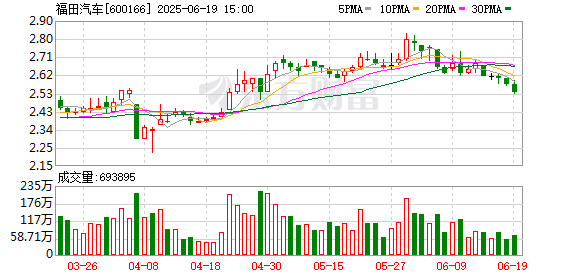
Group 1 - The core point of the article is that Beijing Kaven New Energy Co., Ltd. (Kaven Auto), a subsidiary of Foton Motor (600166), is about to complete a Pre-A round financing exceeding 1.2 billion yuan, which will help it move closer to becoming a unicorn in the global new energy vehicle sector [2][3] - Kaven Auto has signed an investment agreement with three private investors, including Foton Motor, Bosch Venture Capital, and an employee stock ownership platform, along with five publicly listed investors, raising a total of 1.209 billion yuan with a new registered capital of 806 million yuan [2] - The estimated valuation of Kaven Auto after this financing round is approximately 2 billion yuan, indicating progress towards its goal of becoming a unicorn [2] Group 2 - After the capital increase, Foton Motor will remain the controlling shareholder of Kaven Auto, holding a 63.59% stake, and aims to leverage shared resources to address funding issues and enhance its new energy commercial vehicle business [3] - Kaven Auto's first product, the VAN-type new energy vehicle "Lefu," is set to launch by the end of 2024, with a starting price of 81,800 yuan, and the company has already sold nearly 3,300 units from January to April 2025 [3] - The commercial vehicle sector is experiencing a significant shift towards new energy, with expected sales of 576,000 new energy commercial vehicles in 2024, a year-on-year increase of approximately 28.8%, and projections for 2025 indicating sales could reach 840,000 units, representing a growth of about 45% [3][4] Group 3 - Foton Motor has identified new energy as a key focus for 2025, with plans to launch new platform products such as Kaven VAN and light trucks, while also developing a comprehensive strategy around energy storage, electric systems, and business models for all categories of commercial vehicles [4]