
轻资产策略

Search documents
广汽与吉利“抱团”新能源商用车
经济观察报· 2026-02-07 05:53
Core Viewpoint - The collaboration between GAC and Geely in the new energy commercial vehicle sector aims to break the historical trend of unsuccessful partnerships among domestic automakers, with both companies seeking to leverage each other's strengths to enhance market presence and technological capabilities [2][10]. Group 1: GAC's Transformation - GAC's transformation from GAC Hino to GAC Lingcheng marks a strategic shift towards new energy commercial vehicles, with a goal of achieving 30 billion yuan in revenue by 2030 [3]. - The company has launched several new energy products, including the GACPICKUP01 and T9 electric heavy truck, but still lacks a strong foundation in the bus and VAN segments [3][4]. - GAC Lingcheng's "light asset" strategy emphasizes cost efficiency in product development, aiming to reduce R&D costs significantly compared to competitors [4][5]. Group 2: Geely's Expansion - Geely's commercial vehicle division, established in 2016, has seen rapid growth, with a compound annual growth rate exceeding 120% over the past five years, reaching nearly 25,000 units sold monthly by 2025 [7]. - The company aims to achieve an annual sales target of 1 million units by 2030, positioning itself as a leader in both domestic and global new energy commercial vehicle markets [7][8]. - Geely's focus on methanol technology and its partnership with GAC could facilitate entry into the competitive Guangdong market, leveraging local resources to reduce operational costs [8]. Group 3: Industry Context - The commercial vehicle industry is undergoing structural adjustments, with a shift towards low-speed growth and increased competition in the new energy sector [11]. - The market has seen fluctuations, with sales peaking at 5.13 million units in 2020 and dropping to 3.873 million units in 2024, while exports have become a significant growth driver [11]. - Collaborations among commercial vehicle manufacturers to share the costs and risks of new energy transitions have become a common strategy, as seen in recent partnerships across the industry [12].


广汽与吉利“抱团”新能源商用车
Jing Ji Guan Cha Bao· 2026-02-07 05:23
Core Viewpoint - GAC Lingcheng and Geely Remote have signed a strategic cooperation agreement to collaborate on electric commercial vehicles, methanol electric power applications, and energy refueling infrastructure, marking a significant step for both companies in the competitive new energy commercial vehicle market [2][6]. Company Overview - GAC Lingcheng, formerly GAC Hino, has undergone a brand transformation to accelerate its shift towards new energy commercial vehicles, following a restructuring that increased GAC Group's stake to nearly 90% [2][3]. - Geely Remote, established in 2016, has achieved a compound annual growth rate of over 120% in sales over the past five years, with monthly sales reaching nearly 25,000 units as of 2025 [5]. Market Context - The collaboration between GAC Lingcheng and Geely Remote is seen as a strategic move to break regional market barriers and seek new growth opportunities in the competitive landscape dominated by players like BYD and Yutong in the Guangdong market [2][3][5]. - The commercial vehicle market in China is experiencing structural adjustments, with a shift towards low-speed growth and increasing competition in the new energy sector [8][9]. Strategic Implications - GAC Lingcheng's "light asset" strategy aims to minimize research and development costs by leveraging partnerships rather than solely relying on internal development, which is crucial given its limited R&D budget [4][6]. - The partnership is expected to enhance GAC Lingcheng's product offerings in the VAN and bus segments, where it currently lacks a strong foundation [3][4]. Technological Collaboration - The cooperation includes the development of methanol electric power applications, with Geely Remote being one of the few companies in China to focus on this technology, which has the potential to address energy infrastructure challenges in the region [6][8]. - The collaboration is positioned to utilize GAC's local resources to reduce market entry costs for Geely Remote in key cities like Guangzhou, enhancing their competitive edge [6][8]. Industry Trends - The trend of collaboration among commercial vehicle manufacturers to share the costs and risks associated with new energy transitions is becoming more common, as seen in recent partnerships across the industry [9].



创业者:全球规模效益与本土化创新需求的双螺旋平衡战略
Sou Hu Cai Jing· 2025-10-29 17:05
Core Insights - The article discusses the inherent strategic tension entrepreneurs face between scaling global technology platforms and addressing local market differences, termed the "dual helix strategy" [3][4] - It emphasizes that successful global expansion requires a mechanism that balances technological consistency with business differentiation, rather than merely replicating models across markets [3][4] Strategic Framework - Entrepreneurs must focus on three strategic priorities: leveraging internal technology for operational efficiency, implementing flexible local business model innovations, and establishing a global governance system to enhance organizational resilience [3][4][6] - The framework suggests that technology should drive organizational and business model flexibility, moving beyond mere product functionality [3][4] Globalization vs Localization - The core value of global technology platforms lies in economies of scale and minimizing marginal costs, necessitating high levels of standardization and efficient global iteration [4][5] - Companies must navigate the challenge of local market demands, which include cultural preferences, competitive landscapes, and regulatory requirements, without compromising global consistency [4][5] Tension Analysis - The article highlights the common pitfalls of localizing platform features without proper management, which can lead to increased complexity and hinder efficient iteration [5] - A balance must be struck between maintaining a unified core platform and allowing for local adaptations through modular architecture [5][6] Localized Strategy Considerations - Successful localization strategies should contribute to macroeconomic goals, such as improving public services and creating quality employment opportunities [6][7] - Companies are encouraged to align their technological investments with local economic objectives to reduce regulatory risks and enhance long-term sustainability [6][7] Business Model Innovation - Business model innovation is driven by four core dimensions: revenue model, enterprise model, industry model, and technology-driven innovation [8][9] - Entrepreneurs should prioritize technology-driven global innovation while adapting revenue and enterprise models to local market conditions [8][9] SaaS Model Localization - Implementing usage-based billing presents both challenges and opportunities, requiring robust automated billing systems to manage complexity [10][11] - The flexibility of business models can lower customer churn but complicate financial forecasting, necessitating investment in advanced financial systems [10][11] Organizational Resilience - Companies must transition from a "light asset" strategy to a "heavy asset" approach, investing in local R&D and strategic acquisitions to build long-term resilience [12][13] - A differentiated governance model is essential for managing overseas subsidiaries, balancing global consistency with local adaptation [12][13] Talent Management - Establishing a global talent management system is crucial for managing the entire talent lifecycle, ensuring knowledge and experience flow back to the organization [14][15] - Cross-cultural integration and collaboration are vital for enhancing global competitiveness, particularly in sectors requiring supply chain coordination [14][15] Implementation Roadmap - A comprehensive set of KPIs is necessary to measure the balance between technological consistency and business differentiation [16][17] - Entrepreneurs should take phased actions to strengthen technological foundations, build organizational resilience, and ensure deep integration of local market contributions [21][22][23]


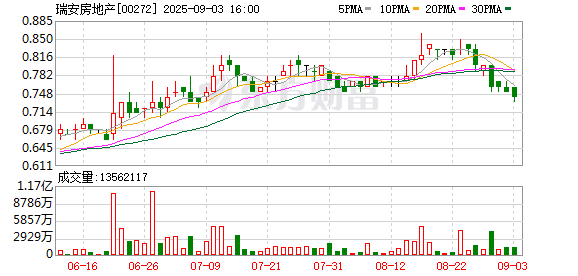
上半年实现利润8100万元 瑞安房地产加速落地轻资产策略
Zhong Guo Jing Ying Bao· 2025-09-03 23:17
Core Viewpoint - The real estate market in China is still undergoing significant adjustments, with uncertainties remaining. The company emphasizes maintaining financial stability and focusing on cash flow management while exploring high-potential opportunities in first-tier cities, particularly in the Yangtze River Delta and Guangdong-Hong Kong-Macau Greater Bay Area [2][5]. Financial Performance - In the first half of 2025, the company reported revenue of 2.074 billion yuan, unchanged year-on-year, and a profit of 81 million yuan, down 56% year-on-year. However, core profit, excluding fair value impairment of investment properties, increased by 144% to 263 million yuan [2]. - The company achieved a contract property sales amount of 3.473 billion yuan, a significant increase of 457% year-on-year, with residential sales contributing 3.29 billion yuan and commercial property sales 183 million yuan [3]. Market Insights - The company’s chairman noted that the real estate market, especially in third and fourth-tier cities, is still in a "bottoming" phase. However, there are structural opportunities in the high-end segment driven by improving demand [2]. - The high-end residential market in Shanghai is particularly strong, with sales of luxury homes priced over 30 million yuan reaching 313,000 square meters in the first half of 2025. Nearly 60% of the top luxury homes sold in China are located in Shanghai [3]. Future Sales and Projects - The company plans to have approximately 131,000 square meters of residential properties available for sale and pre-sale in the second half of the year, with significant projects in Shanghai and Wuhan [4]. - As of June 30, 2025, the company had a total saleable value of residential properties amounting to 48.6 billion yuan, with its equity value at approximately 24.9 billion yuan [4]. Strategic Focus - The company will continue to adopt a cautious approach, focusing on first-tier cities while maintaining financial health. It aims to enhance its brand influence in the mid-to-high-end market through its "Best-in-class" product strategy [5]. - The company has expanded its portfolio by adding three light-asset projects, including a significant collaboration in Shanghai, which is expected to generate over 30 billion yuan in residential value [6][7]. Market Outlook - The chairman expressed that the bottoming process of the real estate industry will take time, but the overall market is expected to stabilize despite facing challenges [8].

北控水务集团(00371):2025H1业绩点评:减值拖累利润,中期每股派息额提升5.0%
Changjiang Securities· 2025-08-29 04:45
Investment Rating - The investment rating for the company is "Buy" and is maintained [6]. Core Views - The company reported a revenue of 10.46 billion HKD for H1 2025, a decrease of 7.5% year-on-year, and a net profit attributable to shareholders of 0.897 billion HKD, down 20.0% year-on-year. The interim dividend per share is 0.0735 HKD, reflecting a 5.0% increase from 0.0700 HKD in the same period last year [2][4]. Summary by Sections Revenue Breakdown - The total revenue of 10.46 billion HKD consists of 86.1% from operational services, 6.8% from construction services, and 7.1% from technical consulting and equipment sales. The operational business's proportion increased by 10.8 percentage points year-on-year [7]. - Water treatment services generated 4.52 billion HKD in revenue, up 3.0% year-on-year, with a domestic gross margin of 60%, an increase of 1 percentage point. Water supply services achieved 1.45 billion HKD, a slight increase of 0.4% year-on-year, with a domestic gross margin of 41%, down 2 percentage points due to changes in customer structure [7]. - Construction services revenue fell to 0.712 billion HKD, a decline of 56.6% year-on-year, attributed to the company's light asset strategy and the completion of existing projects [7]. - Technical services and equipment sales generated 0.742 billion HKD, down 35.5% year-on-year, with a gross margin of 34%, up 4 percentage points [7]. - Urban resource services reported 3.04 billion HKD in revenue, a 13.1% increase year-on-year, with a gross margin of 20%, down 1 percentage point due to intensified competition and reduced demand from upstream industrial enterprises [7]. Financial Performance - The company recognized an asset impairment loss of 0.259 billion HKD in H1 2025, which negatively impacted performance but did not affect cash flow. Financial expenses were optimized, resulting in a reduction of 0.37 billion HKD [7]. - Capital expenditure significantly decreased to 0.943 billion HKD, down 40.0% from 1.57 billion HKD in the same period last year. Free cash flow has turned positive since 2022, with a favorable trend expected to continue as capital expenditures decline [7]. Profit Forecast and Valuation - The company is projected to achieve net profits attributable to shareholders of 1.66 billion HKD, 1.70 billion HKD, and 1.71 billion HKD for 2025, 2026, and 2027, respectively. Assuming a 3%-5% increase in dividends for 2025, the corresponding dividend yield for the stock price as of August 28, 2025, is estimated to be between 6.4%-6.6% [7].
华住集团-S发布中期业绩 股东应占净利润24.38亿元 同比增加41.25%
Zhi Tong Cai Jing· 2025-08-20 10:51
Financial Performance - In Q2 2025, the company achieved total revenue of 6.426 billion RMB, a year-on-year increase of 4.52% [1] - The net profit attributable to shareholders for Q2 2025 was 1.544 billion RMB, reflecting a year-on-year increase of 44.7% [1] - For the first half of 2025, total revenue reached 11.821 billion RMB, up 3.46% year-on-year, with net profit attributable to shareholders at 2.438 billion RMB, an increase of 41.25% [1] Dividend Announcement - The company proposed a cash dividend of 0.081 USD per ordinary share for the first half of 2025 [1] Hotel Operations - As of June 30, 2025, the company operated 12,016 hotels, including 547 leased and owned hotels, and 11,469 managed and franchised hotels [1] - The total number of operating hotel rooms was 1,159,086, with 80,587 rooms in leased and owned hotels, and 1,078,499 rooms in managed and franchised hotels [1] - There are 2,925 hotels in the pipeline, comprising 8 leased and owned hotels, and 2,917 managed and franchised hotels [1] Strategic Insights - The CEO highlighted that despite a slight decline in average revenue per available room, strong operating profit growth was achieved due to network expansion [2] - The company opened 595 hotels in the quarter and aims to open a total of 2,300 hotels in 2025 [2] - The company remains cautious about the short-term industry outlook due to macroeconomic uncertainties, increased supply, and weak business travel demand, but maintains optimism for long-term growth in China's tourism and hotel industry [2] International Operations - The Legacy-DH segment reported an 8.1% year-on-year increase in average revenue per available room in Q2 2025, driven by a 5.6 percentage point increase in occupancy rate [2] - The company plans to continue enhancing hotel operations, focusing on cost reduction and efficiency, while developing its asset-light portfolio [2]
新势力又一盈利新王浮现:零跑上半年营收翻1.7倍,下半年继续"量价齐升"?
3 6 Ke· 2025-08-19 09:42
Core Viewpoint - The Chinese electric vehicle market in 2025 is characterized by intense competition, with companies like Leap Motor setting ambitious sales targets, aiming for a significant increase in both volume and profitability, challenging the notion that new entrants cannot achieve profitability [1][3]. Group 1: Financial Performance - Leap Motor's revenue for the first half of 2025 reached 24.249 billion yuan, a 174% increase from 8.845 billion yuan in the same period last year, significantly outpacing the industry average and the company's own sales growth of 155.7% [3][4]. - The company achieved a net profit of approximately 33 million yuan, a turnaround from a loss of over 2.2 billion yuan in the previous year, making it the second new force after Li Auto to report a half-year profit [3][4]. - Leap Motor's gross margin improved dramatically from 1.1% to 14.1%, with expectations to reach around 15% in the second half of the year [3][4]. Group 2: Strategic Focus - Leap Motor's success is attributed to a dual strategy of cost control and product structure optimization, with sales costs increasing by only 137.9%, significantly lower than revenue growth [4][5]. - The company has shifted from a "money-for-market-growth" approach to a model that emphasizes efficiency for profit growth, with a revised sales target of 580,000 to 650,000 units for 2025 [5][6]. Group 3: Competitive Positioning - Leap Motor differentiates itself by targeting the mass market with high-value configurations, avoiding the pitfalls of the high-end market, and leveraging a platform strategy that enhances cost control through high parts commonality [6][7]. - The company employs a "light asset" strategy, utilizing leasing and contract manufacturing to minimize capital expenditure while maintaining cost control through centralized procurement and strict expenditure oversight [7][8]. Group 4: Market Challenges and Future Outlook - Despite its achievements, Leap Motor faces significant competition from established players like BYD, which has a strong market presence and vertical integration advantages [8][9]. - The company plans to launch its D series, targeting the 200,000 to 250,000 yuan segment, which will face intense competition from brands with higher recognition and established technological advantages [9][10]. - Leap Motor aims to enhance its smart driving capabilities and is investing heavily in R&D to compete with industry leaders by the end of 2025 [10][11].

瑞安房地产(00272)拟增加对基金的出资
智通财经网· 2025-06-25 11:31
Group 1 - The company announced a cooperation agreement involving a total investment commitment of RMB 3.54 billion (approximately HKD 3.875 billion) for equity transfer and project asset holding [1] - The total consideration for the equity transfer is approximately RMB 3.49 billion (approximately HKD 3.82 billion), with the fund acquiring 100% equity of Foshan Ruian and Foshan Anying [1] - Following the completion of the transaction, the fund will be considered a subsidiary of the company, and its financial performance will be consolidated into the company's financial statements [1] Group 2 - The transaction aligns with the company's "light asset strategy," aimed at improving capital circulation and establishing strategic partnerships with long-term partners [2] - The transaction is expected to generate a net cash amount of approximately RMB 683 million (approximately HKD 748 million) after tax and transaction costs [2] - The company anticipates that the transaction will not have a significant impact on its profit or loss [2]
华住集团-S(01179)一季度归母净利润8.94亿元 同比增加35.66%
智通财经网· 2025-05-20 10:22
Group 1 - The core financial performance of Huazhu Group for Q1 2025 shows total revenue of 5.395 billion RMB, a year-on-year increase of 2.22%, and a net profit of 899 million RMB, reflecting a 34.78% increase [1] - The hotel revenue for Q1 2025 increased by 14.3% to 22.5 billion RMB, with a 15.3% increase when excluding Steigenberger Hotels GmbH and its subsidiaries [1] - The net profit attributable to Huazhu Group Limited was 894 million RMB, marking a 35.66% year-on-year increase, with basic earnings per share at 0.29 RMB [1] Group 2 - As of March 31, 2025, Huazhu operates a total of 11,685 hotels and 1.1422 million rooms globally, including 11,564 hotels from Legacy-Huazhu and 121 from Legacy-DH [2] - In Q1 2025, Huazhu opened 694 new hotels while closing 155, with a target of approximately 2,300 new openings for the year [2] - The Legacy-DH segment reported a 12.7% year-on-year increase in average daily room revenue, with a 2.8% rise in daily room rates and a 5.3 percentage point increase in occupancy rate [2]