新能源汽车车辆购置税

Search documents
最高补两万元! 超20个省份以旧换新、购车补贴落地
Mei Ri Jing Ji Xin Wen· 2026-02-11 13:51
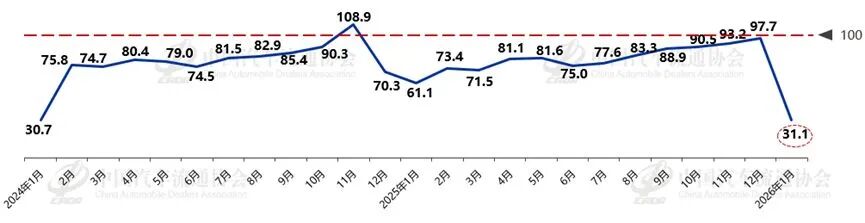
Group 1 - In January 2026, most car manufacturers reported a year-on-year increase in sales but a month-on-month decline, with the automotive consumption index dropping to 31.1 from 97.7 in the previous month [1] - The implementation of the "old-for-new" subsidy policy is expected to stimulate consumer demand for car purchases, despite a gradual reduction in subsidy amounts compared to the previous year [1][2] - Over 20 provinces, including Beijing, Shanghai, and Hubei, have launched specific implementation plans for the "old-for-new" subsidy, with some regions offering up to 20,000 yuan in subsidies [1][2] Group 2 - A series of consumer promotion policies have been introduced at both central and local levels to boost the automotive market, particularly ahead of the traditional sales peak during the Spring Festival [2][4] - Specific subsidies for replacing old vehicles with new energy vehicles and fuel-efficient cars have been announced, with maximum subsidies of 20,000 yuan for new energy vehicles and 15,000 yuan for fuel vehicles [2][3] - The "2026 'Happy Shopping Spring' Special Activity Plan" encourages local governments to increase the number of subsidies for the "old-for-new" program during the Spring Festival [4] Group 3 - The automotive market is expected to face a phase of adjustment in February 2026 due to multiple factors, including the impact of the Spring Festival, previous demand exhaustion, and changes in the new energy vehicle purchase tax policy [6] - January 2026 saw a significant decline in retail sales of passenger vehicles, with a year-on-year drop of 28% and a month-on-month drop of 37%, indicating pressure on the market [6] - Despite adjustments in the "old-for-new" policy and the new energy vehicle purchase tax, the overall stimulating effect of these policies on the market remains significant [7] Group 4 - The total sales volume of automobiles in China is projected to reach 34.75 million units in 2026, with a year-on-year growth of 1%, while new energy vehicle sales are expected to grow by 15.2% to 19 million units [7] - The ongoing implementation of the "old-for-new" policy is anticipated to stabilize new car market prices, creating a favorable environment for the used car market [7]
车市开年波动?政策火速落地,超20省市突击补贴,最高2万
3 6 Ke· 2026-02-06 01:40
Core Viewpoint - The automotive market in January 2026 showed a trend of year-on-year sales growth but a month-on-month decline, with expectations of further decreases in February due to the impact of the Spring Festival holiday [1][9]. Group 1: Sales Performance - In January 2026, the automotive consumption index dropped to 31.1, significantly lower than the previous month's 97.7, indicating a weakening market [1]. - Retail sales of passenger vehicles from January 1 to January 18 were 679,000 units, a year-on-year decrease of 28% and a month-on-month decrease of 37% [9]. - Wholesale sales from manufacturers reached 740,000 units, reflecting a year-on-year decline of 35% and a month-on-month decline of 30% [9]. Group 2: Policy Impact - The implementation of the "2026 Automobile Trade-in Subsidy Implementation Rules" is expected to stimulate consumer demand, with over 20 provinces and cities already launching specific subsidy plans [2][5]. - The subsidy for consumers trading in old vehicles for new energy vehicles can reach up to 20,000 yuan, while for fuel vehicles with an engine size of 2.0 liters or less, the maximum subsidy is 15,000 yuan [3][5]. - The central and local governments are introducing a series of consumption promotion policies to boost market activity, especially before the traditional sales peak during the Spring Festival [3][7]. Group 3: Market Forecast - The automotive market is projected to achieve a total sales volume of 34.75 million units in 2026, representing a year-on-year growth of 1%, with passenger vehicle sales expected to reach 30.25 million units, a growth of 0.5% [12]. - New energy vehicle sales are forecasted to reach 19 million units, reflecting a significant year-on-year growth of 15.2% [12]. - The market is anticipated to enter a phase of adjustment in February 2026 due to various factors, including the adjustment of the new energy vehicle purchase tax and consumer expectations for post-holiday promotions [9][11].

房产税和城镇土地使用税申报常见误区及基本政策和申报指南
蓝色柳林财税室· 2025-10-26 01:20
Core Viewpoint - The article discusses the regulations and common misconceptions regarding property tax and urban land use tax in China, emphasizing the criteria for tax exemption and the obligations of taxpayers [4][5][6][7][10]. Group 1: Property Tax Regulations - Property tax is applicable to underground buildings that have housing functions, including those connected to above-ground structures [4]. - Self-built properties are subject to property tax starting from the month following their completion, while properties constructed by commissioned enterprises are taxed from the month after acceptance [5]. - Not all properties owned by exempt units are free from property tax; only specific types of properties are exempt [6][7]. Group 2: Exemptions and Taxpayer Obligations - Exemptions from property tax include properties used by state organs, public organizations, military, and certain religious and cultural sites [7][9]. - Properties rented out by exempt units do not qualify for tax exemption and are subject to property tax [9]. - Urban land use tax is applicable to units and individuals using land in urban areas, with specific exemptions for certain public and agricultural uses [10][11]. Group 3: Tax Calculation and Payment - Property tax is calculated based on the original value of the property after a deduction of 10% to 30%, with a standard rate of 1.2% or 12% based on rental income [13][14]. - Urban land use tax is based on the actual area of land occupied, with specific rates determined by local governments [13][14]. - Tax payments are made biannually, with deadlines in April and October for the respective halves of the year [14]. Group 4: Recent Policy Changes - From January 1, 2023, to December 31, 2027, small-scale taxpayers and micro-enterprises will benefit from a 50% reduction in property tax and urban land use tax [15].