新能源资产证券化

Search documents
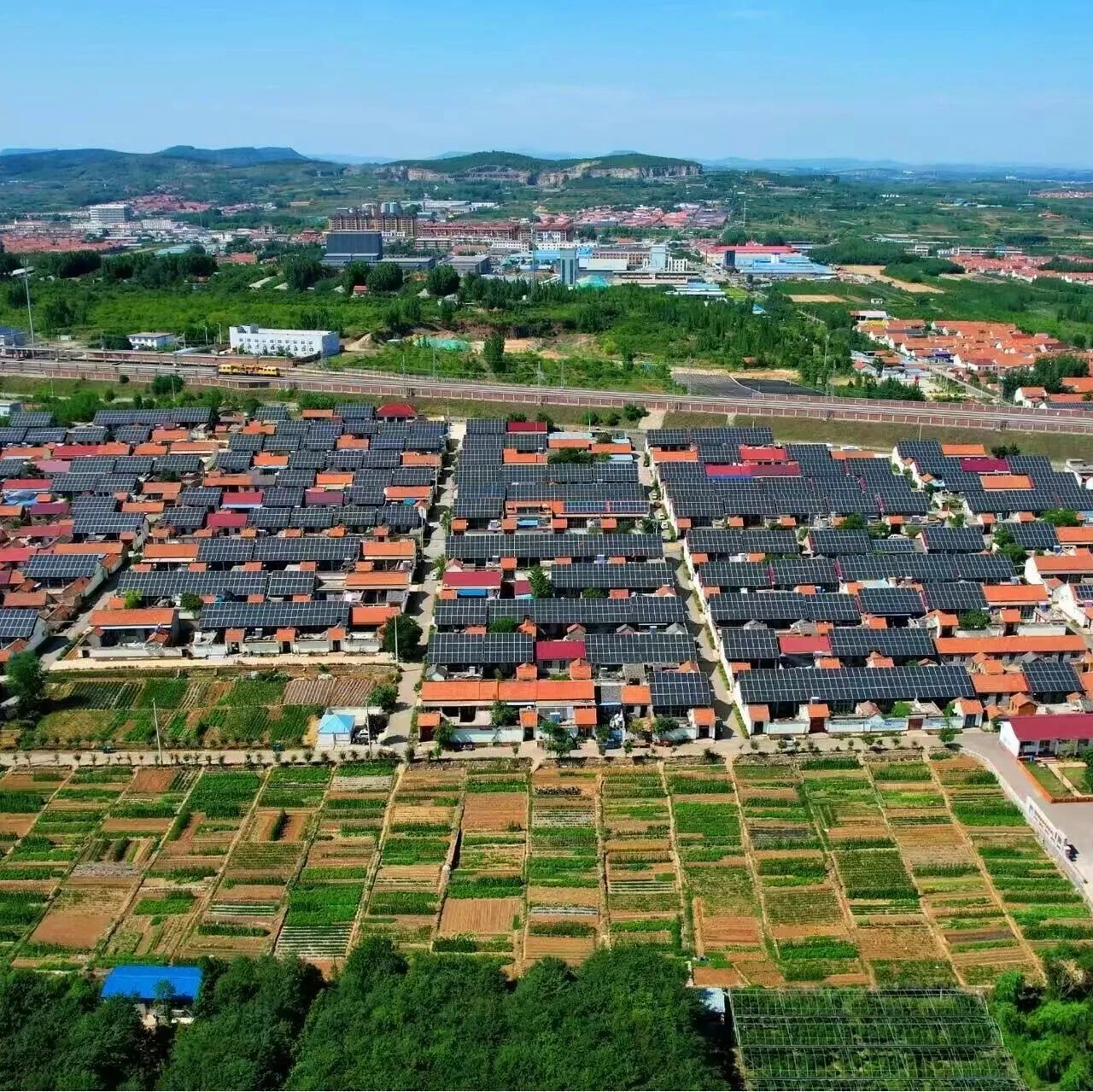
全国首单户用分布式光伏ABS挂牌上市,新能源行业资产证券化提速
第一财经· 2026-03-17 14:04
Core Viewpoint - The article discusses the listing of the first asset-backed securities (ABS) in China based on household distributed photovoltaic assets, which aims to optimize the asset-liability structure and financing channels for companies in the renewable energy sector [3][4]. Group 1: Asset-Backed Securities Overview - The ABS issued by Taiping Asset is the first of its kind in the country, backed by over 28,000 household distributed photovoltaic power stations across 10 provinces, with a total installed capacity of 990.34 MW and an issuance scale of 1.216 billion yuan [3][4]. - The primary purpose of issuing ABS is to "activate" stable operating power stations without affecting company control, thereby reducing asset-liability ratios and broadening financing channels [3]. Group 2: Industry Challenges and Responses - The renewable energy sector, particularly photovoltaic power, is facing significant challenges, including rising asset-liability ratios and tightening external financing, exacerbated by a prolonged period of losses among leading companies since Q4 2023 [6]. - The conversion of stable operating power stations into liquidity through asset securitization is seen as a key method for companies to optimize their asset-liability structures and expand financing options [6]. Group 3: Expansion of Asset Securitization in the Industry - There has been a noticeable acceleration in asset securitization within the renewable energy sector, with various types of underlying assets being explored beyond just photovoltaic and wind power, including hydropower and thermal power [8]. - Notable examples include the issuance of ABS by Envision Group and Sichuan Energy Development Group, with scales of 2.85 billion yuan and 2.5449 billion yuan respectively, showcasing the growing trend of securitization in the energy sector [8].


明阳智能2025年扣非净利润预增超2倍 发力深远海+全球化市场
Sou Hu Wang· 2026-01-29 00:01
Core Viewpoint - Mingyang Smart Energy (601615.SH) expects a significant increase in net profit for the year 2025, projecting a range of 800 million to 1 billion yuan, representing a year-on-year increase of 131.14% to 188.92% [1] Group 1: Financial Performance - The company anticipates a net profit increase of 454 million to 654 million yuan compared to the previous year, with a non-recurring net profit growth of 230.66% to 344.68% [1] - The growth is attributed to a substantial increase in wind turbine delivery scale and sales revenue, along with cost reduction and efficiency improvement measures [1] Group 2: Market Expansion - Mingyang Smart Energy is deepening its global layout, achieving significant breakthroughs in both domestic and international markets, including winning a 600MW offshore wind project in Hainan and a 1500MW wind project in Saudi Arabia [1] - The company plans to invest 1.5 billion pounds to establish the largest integrated wind turbine manufacturing base in Scotland, aligning with the green development goals outlined in the Hamburg Declaration signed by multiple European countries [1] Group 3: Technological Advancements - The company has launched the Ocean X, the world's first 50MW ultra-large floating wind turbine, which can reduce floating wind power costs by 1.5 to 4 times, making it competitive with current offshore wind development costs [2] - Mingyang Smart Energy has developed a new mid-speed compact direct-drive technology product that enhances reliability, efficiency, user-friendliness, economy, and intelligence [2] Group 4: Operational Efficiency - The company is implementing refined management and intelligent upgrades to achieve cost reduction and efficiency improvements, utilizing the "Mingzhi Consultant" wind power model that integrates knowledge graphs and large language model technology [3] - The deployment of this model has led to significant improvements in overall power generation, equivalent utilization hours, and a reduction in failure rates and downtime, with diagnostic accuracy exceeding 90% [3] Group 5: Asset Management - Mingyang Smart Energy is advancing the securitization of renewable energy assets, with the successful listing of the first inter-institutional REITs in China, marking the establishment of a dual asset activation platform [3] - The company aims to leverage continuous product iteration and technological innovation to enhance its competitive edge and expand resource development boundaries [3]

明阳智能:2025年净利润预计翻倍 全球海风订单强劲增长
Quan Jing Wang· 2026-01-28 12:18
Core Viewpoint - Mingyang Smart Energy (601615.SH) expects a significant increase in net profit for the year 2025, projecting a range of 800 million to 1 billion yuan, which represents a year-on-year increase of 131.14% to 188.92% [1] Group 1: Financial Performance - The company anticipates a substantial growth in net profit, with an increase of 454 million to 654 million yuan compared to the previous year [1] - The non-recurring net profit is expected to rise by 230.66% to 344.68% year-on-year [1] Group 2: Market Expansion - Mingyang Smart Energy has made significant breakthroughs in both domestic and international markets, including winning a bid for a 600MW offshore wind project in Hainan, China, and a 1500MW wind project in Saudi Arabia [1] - The company plans to invest 1.5 billion pounds to establish the largest integrated wind turbine manufacturing base in Scotland, aligning with the green development goals of multiple European countries [1] Group 3: Technological Advancements - The company has launched the Ocean X, the world's first 50MW ultra-large floating wind turbine, which can reduce the cost of floating wind power by 1.5 to 4 times [2] - Mingyang Smart Energy has developed a new mid-speed compact direct-drive technology product that enhances reliability, efficiency, and economic viability [2] Group 4: Operational Efficiency - The company has implemented refined management and intelligent upgrades to achieve cost reduction and efficiency improvement [3] - The "Mingzhi Consultant" wind power model integrates knowledge graphs and large language model technology, significantly improving operational efficiency and reducing downtime [3] Group 5: Asset Management - Mingyang Smart Energy has initiated the securitization of renewable energy assets, with the first public REITs issued by a private energy company successfully listed on the Shanghai Stock Exchange [3] - The company aims to leverage continuous product iteration and technological innovation to maintain a leading edge in technology and product innovation [3]
新能源REITs底层资产为何扩容?
Jing Ji Guan Cha Wang· 2025-12-30 01:31
Core Viewpoint - The underlying assets of new energy REITs are diversifying from solely "wind and solar power stations" to include hydropower, as demonstrated by the recent expansion of the China Aviation Energy Photovoltaic REITs, which raised 2.92215 billion yuan and added hydropower assets to stabilize returns [2][3]. Group 1: Expansion and Financial Impact - The recent expansion raised 2.92215 billion yuan at a unit price of 9.712 yuan, adding two hydropower stations to the existing solar projects [2]. - The internal rate of return (IRR) is expected to increase from 1.29% to 3.94%, a rise of 2.65 percentage points due to the stable income from hydropower assets [2]. - The expansion aims to mitigate climate risks associated with relying solely on solar energy by diversifying into hydropower [2]. Group 2: Market Conditions and Risks - The revenue from new energy REITs is sensitive to policy changes, particularly regarding electricity prices and subsidies, which can significantly impact asset yield and valuation [3]. - The projects face a risk of a 60% decline in revenue starting in 2034 due to the reduction of national subsidies [4]. - The increasing number of new energy stations and grid absorption capacity will also affect revenue, as indicated by the impact of new solar projects on existing ones [4]. Group 3: Operational Considerations - Natural conditions, such as solar radiation levels, can affect the performance of photovoltaic stations, prompting the need for technical upgrades [5]. - The inclusion of hydropower is seen as a way to smooth out revenue fluctuations from solar energy, with specific hydropower stations designed to mitigate risks associated with low water flow during dry seasons [6]. Group 4: Investment Landscape - The expansion attracted eight strategic investors, including trust funds, insurance companies, and asset management firms, indicating strong institutional interest in the sector [7]. - Institutional investors prefer low-risk, stable-return products, making new energy REITs appealing, with expected internal rates of return typically between 5% and 10% [9]. - Prior to the emergence of new energy REITs, state-owned enterprises were the primary buyers of renewable energy assets, with significant acquisitions occurring post-2021 [10]. Group 5: Development Models and Challenges - Many private photovoltaic developers are adopting a "build-hold-sell" model to recycle capital, with companies like JinkoSolar reporting substantial revenues from their solar project operations [11]. - Challenges in asset securitization include lengthy approval processes and high compliance requirements, which can hinder the development of new energy projects [11].

日播时尚14亿元跨界收购实控人持股资产 是否构成借壳有待考证
Xin Lang Zheng Quan· 2025-07-22 08:33
Core Viewpoint - The acquisition of 71% stake in Yindile by Ribor Fashion for 1.42 billion yuan is seen as a crucial move to improve its financial situation amidst declining performance, with Yindile showing strong profitability [1][2] Group 1: Acquisition Details - Ribor Fashion plans to purchase 71% of Yindile for a total consideration of 1.42 billion yuan, funded through a combination of cash and share issuance [1] - The acquisition is structured as a linked transaction, meaning that if one part fails to receive approval, the other will also not proceed [1] - The valuation of Yindile's total equity is estimated at 2.005 billion yuan, significantly exceeding Ribor Fashion's total assets of 1.037 billion yuan [2] Group 2: Financial Performance - Ribor Fashion reported a net loss of 159 million yuan in 2024, with revenue also declining, highlighting the urgency of the acquisition [1] - Yindile's net profit was 181 million yuan in 2023, projected to grow to 204 million yuan in 2024, indicating a strong financial performance that could benefit Ribor Fashion [1] Group 3: Strategic Implications - The acquisition is part of a broader strategy by Liang Feng, the controlling shareholder, to integrate lithium battery adhesive assets into Ribor Fashion, creating a dual business model of "apparel + lithium battery" [1] - Liang Feng's indirect ownership of 29% of Yindile through Purtai raises questions about potential backdoor listing implications [2] Group 4: Risks and Considerations - The transaction is expected to generate goodwill of 640 million yuan, which poses a risk of impairment if Yindile fails to meet performance targets, potentially impacting Ribor Fashion's financial health [2] - Historical precedents indicate that companies often experience significant performance declines post-acquisition, necessitating caution from investors [2]

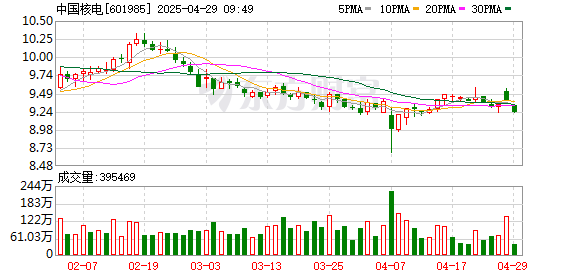
中国核电一季报发布:核电主业增长强劲 新能源协同发展显成效
Xin Hua Cai Jing· 2025-04-29 01:48
Core Viewpoint - China Nuclear Power Co., Ltd. reported a steady growth in its nuclear power business and accelerated expansion in its renewable energy sector, leading to a solidified competitive advantage and optimized asset structure in the first quarter of 2025 [2][3]. Group 1: Financial Performance - In Q1 2025, the company achieved an operating revenue of 20.273 billion yuan, a year-on-year increase of 12.70% [3]. - The net profit attributable to shareholders was 3.137 billion yuan, up 2.55% year-on-year, while the net profit excluding non-recurring items was 3.133 billion yuan, reflecting a 2.95% increase [3]. - The nuclear power segment demonstrated strong performance with a revenue growth of 10.46% and a net profit growth of 11.52% [3]. Group 2: Renewable Energy Expansion - The renewable energy segment saw a significant revenue increase of 24.64% year-on-year, becoming a key driver for overall revenue growth [4]. - Despite a 51.32% decline in net profit attributable to shareholders in the renewable sector, this was attributed to the dilution effects from two REITs projects and market-based debt-to-equity swaps, rather than operational decline [4]. - The company is focusing on a dual strategy of "nuclear power + renewable energy," which is expected to enhance long-term growth potential [4][6]. Group 3: Asset and Capital Management - As of the end of the reporting period, total assets reached 687.7 billion yuan, a 4.24% increase from the beginning of the year, with equity attributable to shareholders at 113.6 billion yuan, up 3.11% [7]. - The company has a substantial construction project pipeline, with ongoing projects valued at 207.8 billion yuan, which is expected to support revenue growth in the medium to long term [7]. - The company maintains a strong liquidity position with cash reserves of 22.668 billion yuan, despite a 39.50% year-on-year decline in operating cash flow, which is considered a normal phase in capital expenditure [7][8]. Group 4: Strategic Outlook - The company aims to enhance its global influence and valuation support by progressing towards becoming a world-class clean energy listed company, focusing on safety, green transformation, and high-quality development [8]. - The strategic initiatives include optimizing capital structure and improving funding efficiency through various financing tools, which will help mitigate financial pressures from large-scale construction investments [7][8].