
核电电力

Search documents
【中国广核(003816.SZ)】政策利好叠加新项目投产,2026年业绩及估值提升均值得期待——2025年报点评(殷中枢/宋黎超)
光大证券研究· 2026-03-29 23:05
Core Viewpoint - The company reported a decline in revenue and net profit for 2025, with a revenue of 75.697 billion yuan, down 4.11% year-on-year, and a net profit of 9.765 billion yuan, down 9.9% year-on-year. The company plans to distribute a cash dividend of 0.086 yuan per share, with a payout ratio of 44.47% and a corresponding dividend yield of 1.85% based on the stock price as of March 27, 2026 [4]. Group 1 - In 2025, the company's controlled power generation and grid-connected electricity were 194.738 billion kWh and 183.498 billion kWh, respectively, representing year-on-year increases of 2.06% and 2.51%. The main contributors to the power generation increase were Fangchenggang Nuclear Power Station and Daya Bay Nuclear Power Station, with generation volumes of 32.953 billion kWh and 16.544 billion kWh, respectively, up 8.02% and 11.31% year-on-year [5]. - The company's grid-connected electricity price (including tax) was 0.380 yuan per kWh, down 8.8% year-on-year, primarily due to an increase in the proportion of market-based trading and a decrease in market trading prices. Consequently, the nuclear power generation revenue for 2025 was 61.757 billion yuan, down 6.33% year-on-year [5]. - The operating cost of the power generation business for 2025 was 38.602 billion yuan, up 3.81% year-on-year, with a corresponding cost per kWh of 0.210 yuan, an increase of 0.003 yuan per kWh. The costs for nuclear fuel, depreciation, fuel disposal, and operation and maintenance were 9.657 billion yuan, 11.729 billion yuan, 4.378 billion yuan, and 12.839 billion yuan, respectively, with year-on-year increases of 1.4%, 0.57%, 7.85%, and 7.51% [6]. Group 2 - The company's joint venture, Hongyanhe Nuclear Power, achieved revenue of 15.811 billion yuan in 2025, with a grid-connected electricity price (excluding tax) of 0.322 yuan per kWh, contributing 1.576 billion yuan in investment income. Recently, Liaoning Province introduced a nuclear power pricing mechanism for 2026, which is expected to enhance the investment returns from the Hongyanhe nuclear units [7]. - The average mechanism electricity price for the Hongyanhe units is set at 0.3798 yuan per kWh (including tax), equivalent to 0.3361 yuan per kWh (excluding tax). This pricing mechanism is anticipated to improve the overall grid-connected electricity price for the Hongyanhe nuclear power units, thereby increasing the company's investment income. Additionally, Units 1 and 2 of Huizhou are expected to be operational in 2026, contributing to the company's performance growth for that year [7].


中广核电力20260326
2026-03-26 13:20
Summary of China General Nuclear Power Corporation (CGN) Conference Call Industry Overview - The conference call focused on the nuclear power industry in China, particularly the developments and strategies of China General Nuclear Power Corporation (CGN) as it aligns with national energy goals and market dynamics. Key Points Installed Capacity and Targets - By the end of 2025, CGN aims to have an operational and under-construction installed capacity of 56.06 million kilowatts, with a projection to double this to 110 million kilowatts by 2030 [2][5] - The company has the resource reserve to approve four new units annually [2] Financial Performance - In 2025, CGN expects revenue of approximately 75.697 billion yuan, a year-over-year decrease of 4.11%, and a net profit attributable to shareholders of about 9.765 billion yuan, down 9.9% [2][14] - The decline in profit is attributed to a decrease in market electricity prices in Guangdong and Guangxi, with an average tax-inclusive electricity price dropping by 0.034 yuan per kilowatt-hour [2][9] Electricity Trading - Market-based electricity trading is projected to account for 56.2% of total electricity sales in 2025, an increase of 5.3 percentage points from the previous year [2][9] - The unified settlement price for Hongyanhe Nuclear Power is set at 0.3798 yuan per kilowatt-hour [2][17] Operational Efficiency - CGN achieved zero unplanned outages across its 28 operational units, with an average utilization hour of 7,767 hours [2][8] - The average overhaul period for major repairs has been reduced to under 40 days, with 85% of WANO indicators meeting world-class standards [2][8] Cost and Dividends - The average debt financing cost is expected to decrease to 2.5% in 2025, down 53 basis points [2][14] - CGN plans to maintain a dividend payout ratio of 44.47% in 2025, with a proposed dividend of 0.086 yuan per share [2][6] Research and Development - CGN has invested over 19.33 billion yuan in R&D over the past five years, focusing on the optimization of the "Hualong One" design and advanced reactor types [2][4] - The company has applied for 2,031 patents, with 1,196 granted [2][11] Strategic Development and Market Opportunities - CGN is positioned to leverage national policies to support the nuclear energy sector, aiming to meet the "14th Five-Year Plan" and "15th Five-Year Plan" goals [2][5] - The company is exploring the integration of nuclear energy with heating and gas supply, with ongoing projects in various regions [2][10][28] Future Plans and Goals - For 2026, CGN plans to continue expanding its market development, ensuring the safe operation of existing units, and increasing participation in electricity market trading [2][12] - The company anticipates a rise in capital expenditures as it prepares for the construction of additional units [2][25] Nuclear Safety and Management - All operational units have maintained a clean safety record, with no significant incidents reported [2][7] - The average capacity factor for operational units is approximately 93% [2][8] Regulatory and Market Dynamics - The introduction of price difference contracts in Liaoning and Guangxi is expected to influence future pricing strategies [2][17][18] - CGN is actively engaging in discussions regarding the potential for nuclear energy to be recognized as a green energy source [2][23] Conclusion - CGN is strategically positioned to capitalize on the growing demand for nuclear energy in China, with a focus on operational efficiency, financial stability, and innovative research and development initiatives. The company is committed to maintaining a robust dividend policy while navigating the evolving regulatory landscape and market conditions.
中国广核(003816):核电机制托底有望带来盈利拐点
HTSC· 2026-03-26 12:36
Investment Rating - The investment rating for the company is "Buy" [7] Core Views - The report indicates that the nuclear power pricing mechanism in Liaoning is expected to provide a significant profit turning point for the company, with approximately 70% of the electricity volume in 2026 being under this mechanism [1][3] - The company's revenue for 2025 is projected at 75.697 billion RMB, reflecting a year-over-year decline of 4.11%, while the net profit attributable to the parent company is expected to be 9.765 billion RMB, down 9.90% year-over-year [1][2] - The report anticipates that the commissioning of the Huizhou 1 and 2 units in 2026 will enhance the company's profitability [4] Summary by Sections Financial Performance - In 2025, the company achieved a total electricity generation of 1,834.98 billion kWh, a growth of 2.5% year-over-year, with a stable cost structure for fuel and depreciation [2] - The net profit for 2026 is projected to be 10.612 billion RMB, reflecting an increase of 8.67% from 2025 [11] Profitability Forecast - The report forecasts net profits for 2026-2028 to be 10.612 billion RMB, 11.651 billion RMB, and 12.952 billion RMB respectively, with a slight downward adjustment for 2026 due to market pressures [5] - The expected earnings per share (EPS) for 2026 is 0.21 RMB, with a price-to-earnings (PE) ratio of 21.46x [11] Market Dynamics - The report highlights that the implementation of the nuclear pricing mechanism is expected to mitigate the negative impact of declining market prices in Liaoning, reducing the adverse effect on net profit by nearly 700 million RMB [3] - The company is also expected to benefit from the commissioning of new units, which will contribute positively to its earnings [4]
中国广核(003816) - 中国广核投资者关系活动记录表2026-002
2026-03-26 10:36
Group 1: Company Performance - In 2025, the company achieved a total electricity generation of 232.648 billion kWh, a year-on-year increase of 2.36% [3] - The total operating revenue for 2025 was RMB 75.697 billion, a decrease of 4.11% compared to the previous year [3] - The net profit attributable to shareholders for 2025 was RMB 9.765 billion, down 9.9% year-on-year [3] - The average utilization hours of the 28 operating nuclear power units in 2025 were 7,767 hours, an increase of 57 hours from 2024 [3] - The company completed 19 major overhauls in 2025, with a total overhaul duration of approximately 655 days, a decrease from 2024 [3] Group 2: Financial and Dividend Information - The board proposed a cash dividend of RMB 0.086 per share (including tax) for 2025, with a dividend payout ratio of 44.47%, maintaining a growth trend [3] - The company's marketization ratio was approximately 56.2% in 2025, an increase from 2024 [3] - The average market transaction price for electricity was approximately RMB 0.3531 per kWh, a decrease from 2024 [3] Group 3: Future Plans and Strategies - In 2026, the company aims to promote project approvals and high-quality construction of nuclear power and comprehensive utilization projects [4] - The company plans to conduct 19 major overhauls in 2026 and maintain close communication with national and local governments regarding long-term policies for nuclear power market participation [4] - The company is preparing for more projects to meet the approval conditions set by national authorities, aiming for a nuclear power installed capacity of around 110 million kW by the end of the "14th Five-Year Plan" [5] Group 4: Market and Supply Chain Insights - The company’s Red River Nuclear Power will enter the market for all electricity sales, implementing a price difference settlement mechanism [4] - The net profit for Q4 2025 was approximately RMB 1.2 billion, a year-on-year increase of 40.3% [4] - The company has long-term contracts with uranium suppliers to stabilize the supply and control price fluctuations [4]
机制电价重塑核电
2026-03-24 01:27
Summary of Key Points from Conference Call Records Industry Overview - The conference call discusses the nuclear power industry in China, focusing on the recent changes in pricing mechanisms and their implications for companies like China General Nuclear Power Group (CGN) and the overall nuclear power sector. Core Insights and Arguments 1. **Pricing Mechanism Shift**: The nuclear power pricing mechanism is transitioning from a "fixed price similar to hydropower" to a "market entry + off-market compensation" model, with pilot programs in Liaoning and Guangxi expected to expand nationwide by 2026 [1][2][3]. 2. **Profit Impact**: The policy adjustment is projected to increase CGN's profits by approximately 1 billion yuan in 2026, revising the profit expectation from 9.5 billion yuan (down 5% year-on-year) to 10.5-10.6 billion yuan (up 5%-6% year-on-year) [1][8]. 3. **Long-term Growth**: With the doubling of installed capacity and the implementation of price guarantees, CGN's performance targets are expected to reach 13-14 billion yuan and 18 billion yuan by 2031 for the nuclear power sector [1][8]. 4. **Valuation Logic**: The price-to-book (PB) ratio for nuclear assets is anticipated to recover from current levels to previous highs of 2.4-2.5 times, driven by a clear profit floor established by policy [1][10]. 5. **Comparative Analysis**: The fundamentals of nuclear power are seen as more favorable than hydropower, with thermal power benefiting from capacity price increases and spot pricing authority, likely exceeding expectations in 2026 [1][11]. Additional Important Content 1. **Market Misconceptions**: In 2024, market perceptions of nuclear power as a stable, high-priced asset led to inflated valuations, ignoring the market-driven nature of nuclear pricing [2]. 2. **Compensation Mechanism**: A proposed compensation mechanism aims to ensure reasonable returns for nuclear power in market transactions, following a model similar to the "Document 136" for renewable energy [3]. 3. **Liaoning and Guangxi Policies**: The specific policies in Liaoning and Guangxi include time-segmented compensation for 80% of electricity, with the average settlement price around 0.3798 yuan/kWh, indicating a favorable pricing environment [4][5][6]. 4. **Future National Policy Trends**: The pilot policies in Liaoning and Guangxi are expected to serve as a blueprint for national nuclear pricing policies, providing a clear profit floor and stabilizing asset returns [7][10]. 5. **Performance Projections**: The new pricing mechanisms in Liaoning and Guangxi are expected to significantly enhance CGN's profits, with estimates indicating a total profit increase of around 1 billion yuan for 2026 [8][9]. Conclusion The nuclear power sector in China is undergoing significant changes in pricing mechanisms, which are expected to enhance profitability and stabilize valuations for companies like CGN. The transition to a market-driven pricing model, coupled with compensation mechanisms, aims to address the challenges posed by the increasing participation of renewable energy sources in the market.

——《2026年辽宁省核电机组参与电力市场化交易有关事项》解读:核电差价合约机制落地有望提振企业盈利&估值
Hua Yuan Zheng Quan· 2026-03-23 10:05
Investment Rating - The investment rating for the nuclear power sector is "Positive" (maintained) [4] Core Insights - The recent announcement by the Liaoning Provincial Development and Reform Commission regarding the participation of nuclear power units in market transactions is expected to enhance corporate profitability and valuation. This includes the establishment of a sustainable pricing settlement mechanism for nuclear power and an off-market price difference settlement mechanism [4] - The policy aims to stabilize nuclear power pricing, with 2026 mechanism electricity volume set at 80% of the monthly grid electricity volume, excluding specific hours, and a mechanism price of 0.3798 yuan/kWh [4] - The introduction of this pricing mechanism is anticipated to be extended to other provinces, with early indications of similar mechanisms in Guangxi [4] - The report estimates that a 1 cent increase in the electricity price could lead to a net profit increase of 8 million yuan for China General Nuclear Power and 6 million yuan for China National Nuclear Power, representing 7% of their respective net profits for 2024 [4] - The stability of electricity prices and growth in nuclear power installations reaffirm the investment value in nuclear power, with recommendations to focus on China General Nuclear Power and China National Nuclear Power [4]
环保公用-行业观点更新
2026-03-22 14:35
Summary of Key Points from the Conference Call Industry Overview - The conference call focuses on the nuclear power industry in China, particularly the recent pricing policies implemented in Liaoning and Guangxi provinces [1][2][3]. Core Insights and Arguments - **Liaoning Nuclear Pricing Policy**: - The policy ensures that 80% of the nuclear power generated is included in a pricing mechanism, with an overall guarantee of about 70% of annual generation [1][2]. - The average price for the six operational units at Hongyanhe Nuclear Power Plant is set at 0.3,798 RMB/kWh, reverting to initial pricing levels [2][3]. - **Guangxi Nuclear Pricing Mechanism**: - Guangxi has introduced a "nuclear power price difference contract fee" to be shared by industrial and commercial users, with expected compensation prices above 0.4 RMB/kWh [1][4]. - **National Pricing Framework**: - A national nuclear pricing policy framework is anticipated to be released in the second half of 2026, guiding the full market entry of nuclear power in 2027 [1][5]. - **Performance Forecast**: - The new policies are expected to alleviate performance pressures in 2026, with projected earnings of approximately 110 billion RMB for China Nuclear Power and 120 billion RMB for China General Nuclear Power in 2027, indicating significant growth [1][6][7]. - **Valuation Assessment**: - Current price-to-book (PB) ratios for nuclear assets are between 1.6 and 1.7. The establishment of a stable pricing mechanism is expected to enhance valuations, potentially surpassing previous highs of 2.4 to 2.5 [1][8]. Additional Important Insights - **Investment Opportunities**: - China has joined the global "Triple Nuclear Power Plan," with domestic approvals for about 10 new units annually, suggesting potential for increased approvals in the future. This creates investment opportunities not only in operators like China General Nuclear Power and China Nuclear Power but also in upstream uranium fuel sectors, including companies like China National Nuclear Corporation Uranium and China General Nuclear Power Mining [1][8]. - **Market Performance**: - The public utilities sector saw a rise of approximately 1.77% from March 16 to March 19, outperforming the CSI 300 index by about 4 percentage points [2]. - **Cost Sharing Mechanism**: - The costs associated with the new pricing policy will be shared among industrial and commercial users, providing stable revenue expectations for nuclear power [3]. This summary encapsulates the critical developments and insights from the conference call regarding the nuclear power sector in China, highlighting the implications of new pricing policies and their expected impact on industry performance and investment opportunities.
重启即翻车!日本最大核电站为何“烂而不倒”?
Xin Lang Cai Jing· 2026-02-14 11:26
Core Viewpoint - The recent operational issues at the Kashiwazaki-Kariwa Nuclear Power Plant, including equipment malfunctions and public distrust, highlight the ongoing challenges faced by Tokyo Electric Power Company (TEPCO) in managing nuclear energy safely and effectively [1][3][27]. Group 1: Operational Issues - On February 12, a measurement instrument at the Kashiwazaki-Kariwa Nuclear Power Plant's Unit 6 became stuck during insertion, leading to a delay in the planned trial power generation set for February 15 [1]. - This incident follows a series of operational failures, including a control rod extraction alarm shortly after the plant's restart on January 21, which was attributed to a sensitivity setting error [3][8]. - The repeated technical failures raise questions about TEPCO's capability to operate nuclear power plants safely [3][27]. Group 2: Public Sentiment and Trust - Local residents express significant distrust towards TEPCO, questioning the company's ability to manage complex nuclear operations safely [3][5]. - The public's anger is rooted in the historical context of the Fukushima disaster, with many believing that TEPCO should have been dissolved following the incident [5][6]. - The sentiment reflects a broader concern about the safety and reliability of nuclear energy in Japan, particularly in light of recent operational issues [6][26]. Group 3: Economic and Political Factors - The Kashiwazaki-Kariwa plant, with a total capacity of approximately 8.212 million kilowatts, is crucial for Japan's energy supply, providing nearly half of the electricity needed for the Tokyo metropolitan area [8]. - TEPCO has invested over 800 billion yen in upgrades to meet new safety standards post-Fukushima, making the plant's closure economically unfeasible due to high dismantling costs [8][10]. - The plant is seen as essential for TEPCO's financial recovery, potentially generating an additional 100 billion yen in annual revenue, which is critical given the company's liabilities from the Fukushima disaster [10][27]. Group 4: Regulatory and Systemic Issues - The regulatory framework in Japan has been criticized for its failure to effectively verify the data submitted by TEPCO, leading to a culture of complacency and lack of accountability [19][26]. - There are concerns about the collusion between TEPCO and political entities, as the company is a significant source of political funding and support for many politicians [19][26]. - Japan's energy policy has shifted towards maximizing nuclear power usage due to the country's limited natural resources, further entrenching the reliance on problematic nuclear facilities [19][27]. Group 5: Nuclear Ambitions - Japan's nuclear energy strategy is intertwined with its geopolitical considerations, as the country maintains a significant stockpile of separated plutonium, raising concerns about potential military applications [21][22]. - The ongoing operation of nuclear power plants is viewed as a strategic asset in Japan's broader security framework, despite public opposition and safety concerns [22][27]. - The situation reflects a complex interplay of energy needs, economic pressures, and national security considerations, leading to a reluctance to permanently close problematic nuclear facilities [26][27].
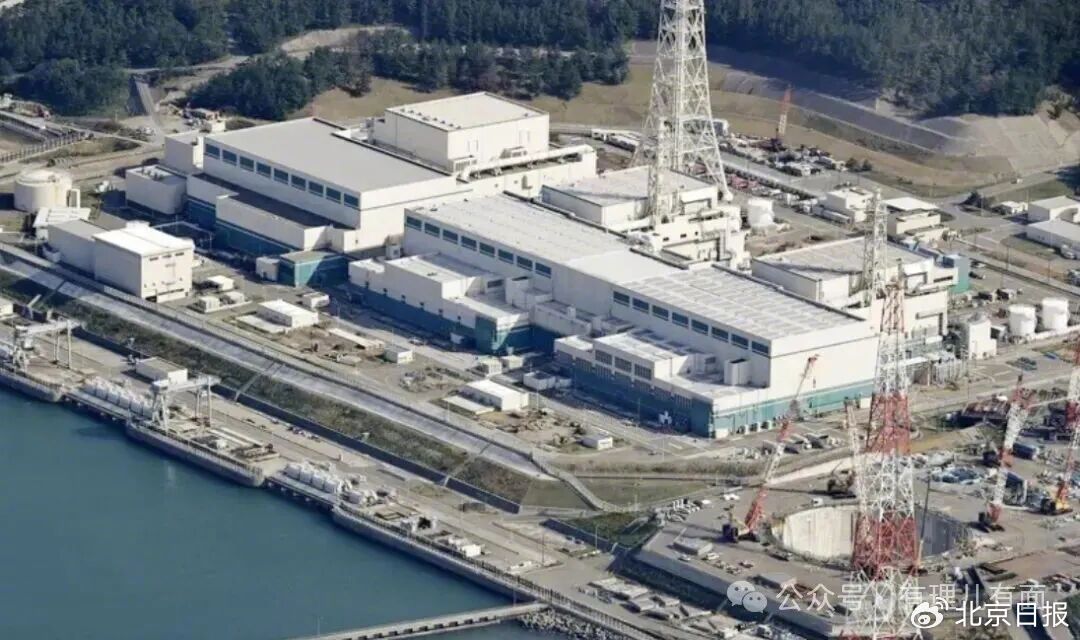
日本柏崎刈羽核电站再次启动
Xin Hua Wang· 2026-02-09 07:47
Core Viewpoint - Tokyo Electric Power Company (TEPCO) has restarted the No. 6 reactor at the Kashiwazaki-Kariwa Nuclear Power Plant after a temporary shutdown for fault investigation, marking a significant step in the company's nuclear operations post-Fukushima disaster [1] Group 1: Reactor Restart Details - The No. 6 reactor was restarted on February 9, 2023, at 14:00 local time, with plans to reach critical status on the same day and begin trial power generation and transmission on February 15 [1] - Following the trial phase, TEPCO will conduct further inspections and a comprehensive load performance test on March 18 before commencing commercial operations [1] Group 2: Previous Shutdown and Fault Investigation - The reactor was initially restarted on January 21, 2023, marking the first restart of a TEPCO nuclear plant since the Fukushima incident in 2011 [1] - A fault occurred on January 22 during the control rod extraction process, triggering alarms due to overly sensitive settings of a frequency converter, which misinterpreted normal current fluctuations as anomalies [1] - TEPCO determined that the alarm from the frequency converter was not essential for safety and decided to disable it, as there is an alternative alarm system for the control rods [1]
到2030年,可再生能源与核电将提供全球一半电力
Jin Rong Jie· 2026-02-07 06:41
Core Insights - The International Energy Agency (IEA) predicts that global electricity demand will grow at an average annual rate of over 3.5% from now until 2030, with renewable energy and nuclear power together accounting for 50% of the global electricity mix by 2030 [1] Group 1: Electricity Demand Growth - The report indicates that the growth rate of electricity demand is expected to be at least 2.5 times that of overall energy demand from now until 2030 [1] - Key drivers of this growth include increased industrial electricity usage, the ongoing adoption of electric vehicles, rising air conditioning electricity consumption, and increased electricity use by data centers and artificial intelligence [1] Group 2: Regional Insights - Emerging and developing economies remain the primary engines of electricity demand growth [1] - Developed economies, which have experienced a 15-year stagnation in electricity consumption, are beginning to see an increase in electricity usage [1]