
风电电力

Search documents
新春走基层|文旅打底、产业发力,这座粤西小岛不止于山海
2 1 Shi Ji Jing Ji Bao Dao· 2026-02-24 12:06
Group 1: Tourism Development - The Spring Festival period saw a significant influx of tourists to Hailing Island, with 450.13 million visitors recorded in Yangjiang city from February 15 to 23, and 180.85 million visitors to scenic spots, indicating a strong demand for coastal tourism and cultural experiences [1][7] - Hailing Island has become a popular destination for tourists from Sichuan and Chongqing, with many families returning annually, highlighting the island's appeal and the effectiveness of marketing strategies initiated in 2019 to promote the area [8][9] - The island's tourism strategy includes a comprehensive package of activities and routes, integrating 17 unique events and various cultural experiences to enhance visitor engagement [9] Group 2: Industrial Development - Hailing Island is diversifying its economy by developing new industries, including commercial aerospace and wind power, with plans for a satellite launch base and related infrastructure already in the bidding phase [2][11] - The wind power sector is projected to generate significant energy, with an expected cumulative output of 5,533 million kilowatt-hours by 2025, showcasing the island's commitment to renewable energy [10] - The establishment of a commercial aerospace industry park in Yangjiang, with an estimated investment of 9.2 billion yuan, aims to enhance the region's capabilities in satellite and rocket assembly, as well as launch operations [11][12]

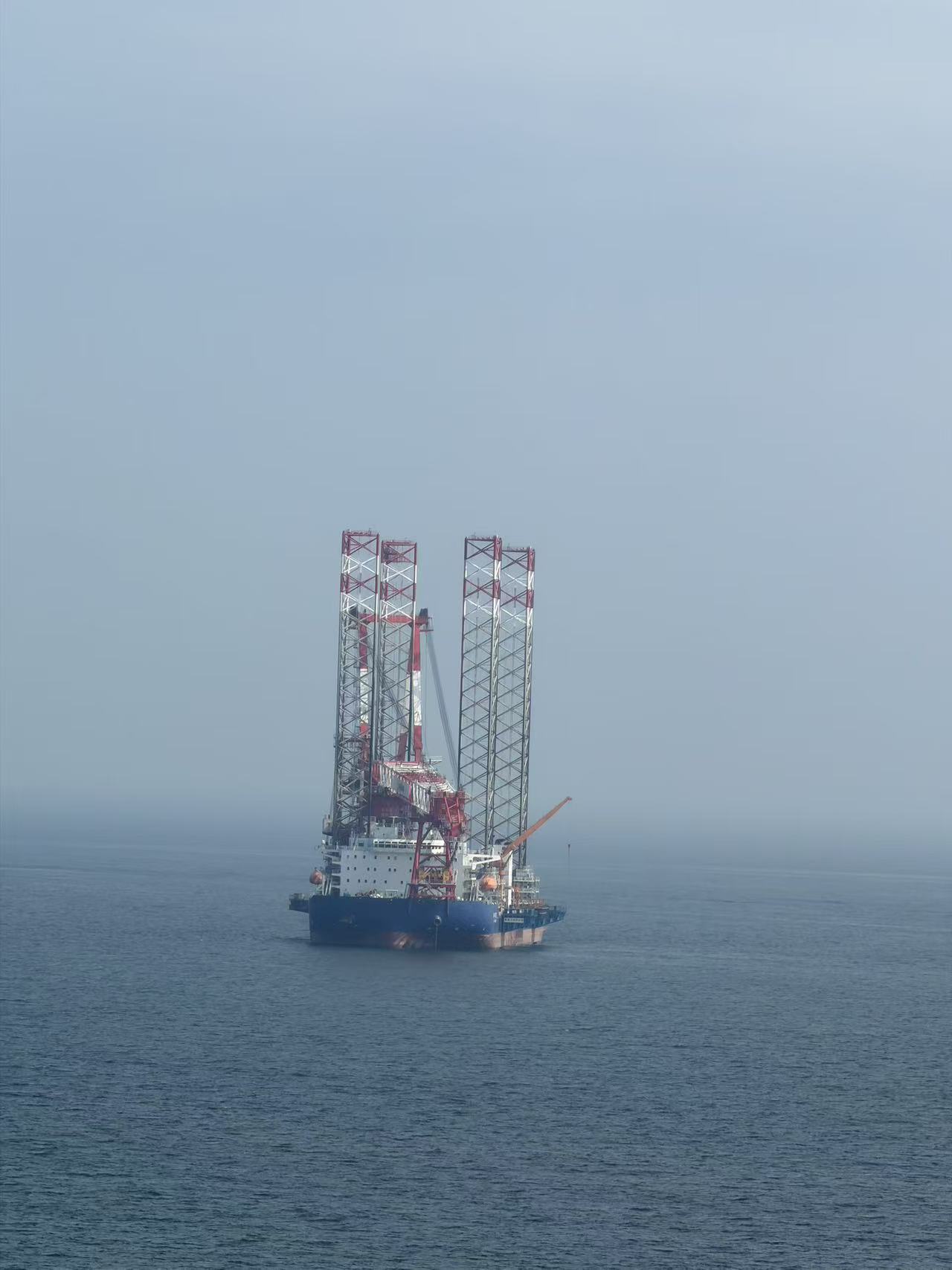
中国四地光伏利用率跌破90%,局地弃电抬头如何解
Di Yi Cai Jing· 2026-02-06 13:36
Core Viewpoint - The decline in renewable energy utilization rates below 95% for the first time during the "14th Five-Year Plan" period is attributed to a combination of market clearing, system safety constraints, and rapid industry development, rather than a failure of renewable energy policies [4] Group 1: Renewable Energy Utilization Rates - In 2025, the overall utilization rates for wind and solar power in China remained high at over 94%, but for the first time, the annual utilization rate fell below 95%, with wind utilization at 94.3% and solar utilization at 94.8% [1] - Specific provinces such as Qinghai, Tibet, Xinjiang, and Gansu saw solar utilization rates drop below 90%, with Tibet having the lowest at 64.9%, while wind utilization in Tibet was also the lowest at 68.6% [1] Group 2: Installed Capacity Growth - During the "14th Five-Year Plan" period, the annual new installed capacity for wind and solar power in China is expected to remain at a high level, exceeding 430 million kilowatts in 2025, with cumulative installed capacity surpassing 1.8 billion kilowatts, a 2.4-fold increase from the end of the "13th Five-Year Plan" [2] - The proportion of renewable energy in total installed capacity increased from 25.7% at the end of 2020 to 48.5% by the end of 2025 [2] Group 3: Challenges in Energy Consumption - The increasing randomness, volatility, and intermittency of renewable energy generation are leading to heightened pressure on the power system for consumption [2] - The phenomenon of "curtailment" is showing clear seasonal and time-based concentration, with over 70% of curtailment occurring during peak solar hours from 10 AM to 5 PM, and two-thirds of curtailment happening in spring and autumn [2] Group 4: Future Outlook and Recommendations - The China Photovoltaic Industry Association forecasts a year-on-year decline of 23.8%-42.9% in new solar installations for 2026, with consumption difficulties being a core constraint [3] - Industry experts suggest that addressing consumption challenges through system-side optimization and developing new business models is essential, although the potential for increasing consumption capacity through traditional methods is limited and may raise system costs significantly [3] - New scenarios for renewable energy utilization, such as green electricity direct connection and zero-carbon parks, are seen as promising avenues for improving overall project profitability [3]
20余省份机制电价揭晓! 上海比山东高约85%,浙江比辽宁高约31%……
Mei Ri Jing Ji Xin Wen· 2026-01-11 12:46
Core Viewpoint - The introduction of the mechanism electricity price system for renewable energy projects in China, effective from June 1, 2025, is leading to significant changes in investment strategies and project profitability in the solar and wind energy sectors. The disparity in electricity prices across different regions is causing companies to reassess their investment plans and focus on more profitable projects [1][3][4]. Group 1: Mechanism Electricity Price Implementation - The "136 Document" mandates that all new renewable energy projects must participate in market trading, replacing the previous guaranteed purchase system, which has extended the payback period for existing solar projects from 6.5 years to 8 years [1][3]. - The mechanism electricity prices for renewable energy projects vary significantly across regions, with prices for wind and solar projects showing a disparity of over 100% between the highest and lowest [2][5]. - The mechanism electricity prices for existing projects range from 0.26 to 0.45 yuan/kWh, while new projects must enter market trading with prices determined through competitive bidding [3][4]. Group 2: Regional Price Disparities - In economically developed provinces like Shanghai and Beijing, mechanism electricity prices are close to coal benchmark prices, with Shanghai at 0.4155 yuan/kWh and Beijing at 0.3598 yuan/kWh [4][5]. - In contrast, regions with abundant renewable resources, such as Gansu and Xinjiang, have significantly lower mechanism electricity prices, with Gansu's wind and solar prices as low as 0.1954 yuan/kWh and 0.1500 yuan/kWh, respectively [4][5]. - The differences in mechanism electricity prices are attributed to local resource endowments, consumption capacity, and specific policy preferences [7][8]. Group 3: Impact on Investment Strategies - The extended payback periods and reduced profitability are causing many companies to adopt a cautious approach towards new investments in renewable energy projects, particularly in the solar sector [13][14]. - Companies are now prioritizing projects that ensure stable consumption, such as those close to load centers, rather than focusing solely on the area of rooftops for solar installations [19]. - The shift in focus is also influenced by the need to secure mechanism electricity volume, leading companies to adopt low pricing strategies to ensure qualification for bidding [15][19]. Group 4: Market Dynamics and Future Outlook - The competitive bidding process for mechanism electricity prices is expected to reflect the true costs of renewable energy generation, potentially leading to lower prices in the long term [12][17]. - The transition to a market-driven pricing mechanism may initially exacerbate issues like negative electricity prices, but it is anticipated to promote more rational market behavior over time [22][23]. - The overall trend indicates that while the mechanism electricity price system poses challenges, it also opens avenues for companies to enhance their operational efficiency and adapt to market demands [20][21].

20余省份机制电价揭晓:上海比山东高84%,浙江比辽宁高31%⋯⋯
Mei Ri Jing Ji Xin Wen· 2026-01-09 12:36
Core Viewpoint - The implementation of the new mechanism electricity pricing system has led to significant regional disparities in electricity prices for renewable energy projects, particularly in solar and wind energy, affecting investment decisions and project profitability across various provinces in China [1][2][4]. Group 1: Mechanism Pricing Changes - The "136 Document" issued by the National Development and Reform Commission and the National Energy Administration mandates that all new renewable energy projects must participate in market trading, replacing the previous guaranteed purchase system [1][4]. - The mechanism electricity prices for new projects vary significantly across regions, with the highest prices exceeding 0.40 yuan/kWh in places like Shanghai and the lowest dropping to 0.15 yuan/kWh in Xinjiang [2][7]. - The pricing for existing projects ranges from 0.26 yuan/kWh to 0.45 yuan/kWh, with higher prices generally found in economically developed provinces [4][5]. Group 2: Regional Price Disparities - The price differences for solar and wind energy are pronounced, with solar prices in Shanghai at 0.4155 yuan/kWh, significantly higher than 0.225 yuan/kWh in Shandong, representing an 84% difference [2][6]. - Factors contributing to these disparities include local resource endowments, consumption capacity, and specific policy preferences of different provinces [9][10]. - The competition among renewable energy companies in regions with abundant resources, such as Gansu, has led to lower mechanism prices due to oversupply in the market [10][12]. Group 3: Impact on Investment Strategies - The extended payback periods for solar projects, now averaging 12 to 13 years instead of the previous 8 to 9 years, have prompted many companies to pause new investments and shift focus to EPC (Engineering, Procurement, and Construction) services [1][21]. - Companies are adopting a "minimize losses" approach, often bidding low to secure participation in the mechanism pricing system, which further drives down prices [24][30]. - The upcoming changes in 2027, where non-natural person distributed solar projects will exit the mechanism pricing system, are expected to further impact investment strategies in the sector [25][26]. Group 4: Changes in Electricity Costs - The implementation of the mechanism pricing system is expected to increase system operation costs for companies, but the overall electricity prices may decrease due to intensified market competition and technological advancements [32][33]. - The transition to a fully market-based pricing system may exacerbate the occurrence of negative electricity prices, particularly during periods of oversupply, although the new pricing mechanism provides some revenue stability for renewable energy producers [34][35].
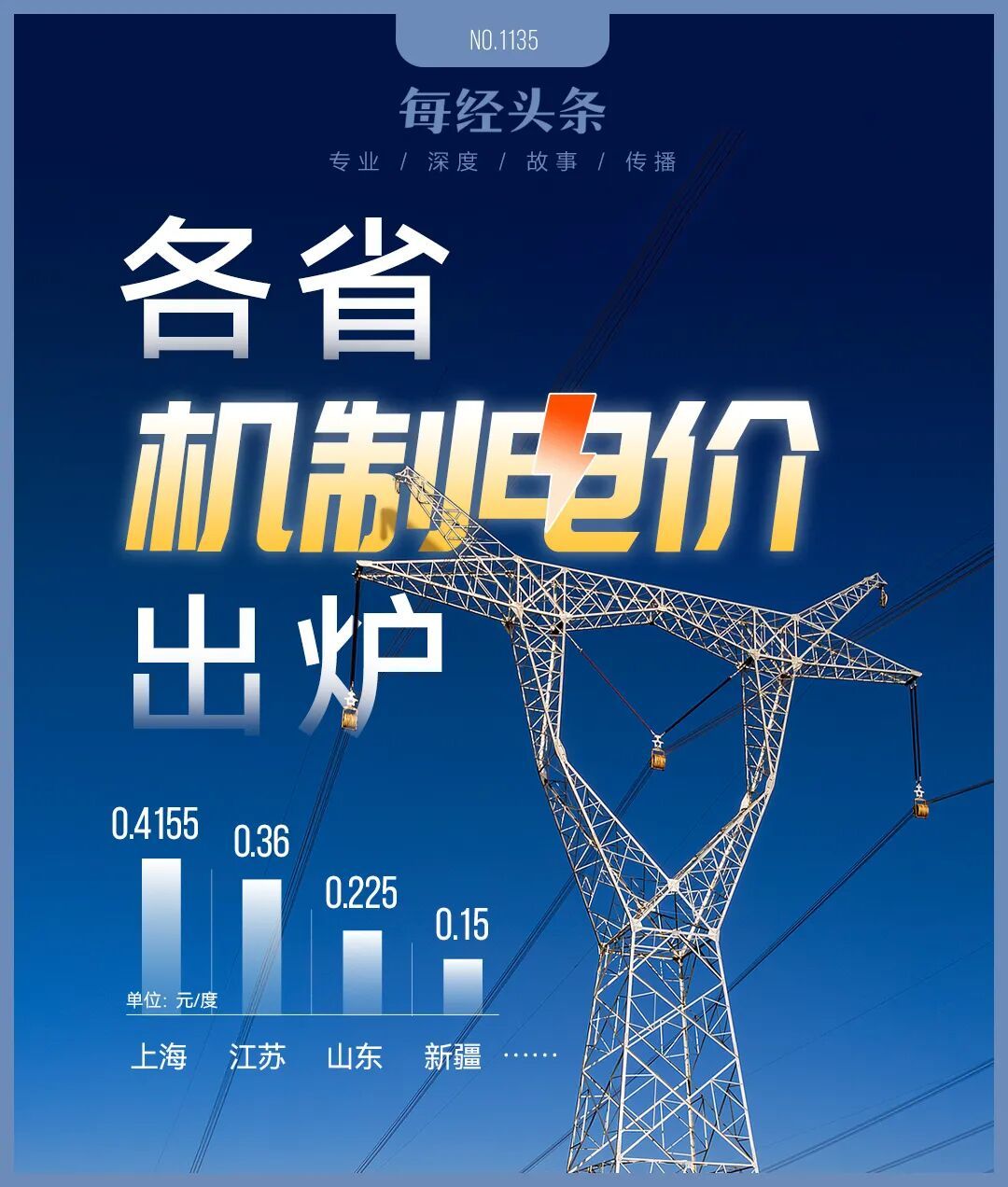
20余省份机制电价揭晓!上海比山东高84%,浙江比辽宁高31%⋯⋯专家:企业用电成本仍有下降空间
Mei Ri Jing Ji Xin Wen· 2026-01-09 11:43
Core Insights - The article discusses the impact of the new pricing mechanism for renewable energy projects in China, particularly focusing on the differences in electricity prices across various provinces and the implications for investment strategies in the solar and wind energy sectors [2][3][4]. Group 1: Pricing Mechanism Changes - The introduction of the "136 Document" has led to a shift from guaranteed purchase systems to a market-based pricing mechanism for renewable energy, requiring all new projects to participate in market transactions [2][4]. - The mechanism prices for new wind and solar projects vary significantly across regions, with the highest prices exceeding 0.40 yuan/kWh in some areas, while others, like Xinjiang, are as low as 0.15 yuan/kWh [3][7]. - The pricing disparities are attributed to regional resource endowments, demand for renewable energy, and local government policies [8][9]. Group 2: Investment Strategies and Market Reactions - Many energy companies are adopting a cautious approach to new investments in renewable projects, particularly in solar energy, due to the extended payback periods resulting from lower mechanism prices [21][22]. - The competitive bidding process has led to lower mechanism prices, with companies often submitting low bids to secure a place in the market, which further depresses prices [20][25]. - The shift in focus from full-grid projects to self-consumption projects is becoming prevalent, as companies seek to ensure stable revenue streams by targeting areas with high electricity demand [29]. Group 3: Impact on Electricity Costs and Market Dynamics - The implementation of the new pricing mechanism is expected to increase system operation costs for companies, but the overall electricity prices may decrease due to intensified market competition and technological advancements [30][31]. - The transition to a market-based system may exacerbate the occurrence of negative electricity prices, particularly during periods of oversupply, but the new pricing structure provides some revenue stability for renewable energy producers [31][32]. - The article highlights the need for renewable energy companies to adapt their pricing strategies in response to market conditions, emphasizing the importance of rational participation in the electricity market [25][31].
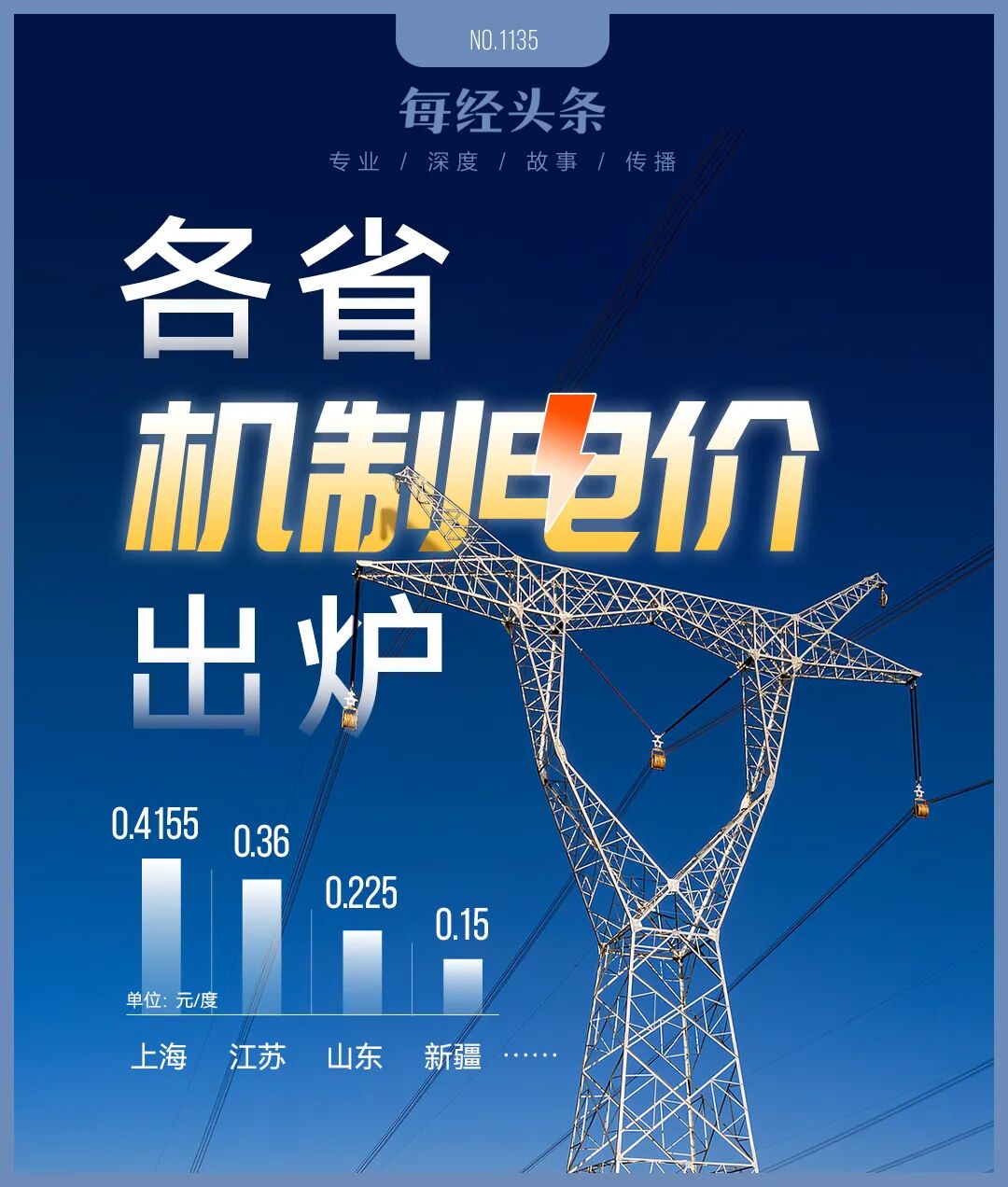
光伏0.35元/度、风电0.352元/度!陕西机制电价出炉
Xin Lang Cai Jing· 2025-12-04 03:19
Core Insights - The State Grid New Energy Cloud announced the results of the mechanism electricity price bidding for the Shaanxi power grid, with 6,501 projects qualifying [1][2]. Group 1: Bidding Results - For photovoltaic projects in 2026, the mechanism electricity volume is 5,229,999.988 MWh, with a mechanism price level of 0.3500 CNY/kWh, involving 6,433 projects [2][4]. - For wind power projects in 2026, the mechanism electricity volume is 6,270,000.006 MWh, with a mechanism price level of 0.3520 CNY/kWh, involving 68 projects [2][4]. Group 2: Bidding Parameters - The total mechanism electricity volume for the Shaanxi bidding is set at 11.5 billion kWh, with wind power accounting for 6.27 billion kWh and photovoltaic power for 5.23 billion kWh [2][3]. - The bidding price range is established with an upper limit of 0.3545 CNY/kWh and a lower limit of 0.23 CNY/kWh [2][3].
兴证国际:维持大唐新能源(01798)“增持”评级 Q3业绩承压但现金流大幅改善
智通财经网· 2025-11-21 08:52
Core Viewpoint - The report from Xingsheng International maintains a "Buy" rating for Datang New Energy (01798), noting a slight increase in revenue for the first three quarters, but a decline in net profit primarily due to falling electricity prices and credit impairment provisions [1][3]. Performance Summary - As of the end of Q3 2025, Datang New Energy achieved a revenue of 9.409 billion yuan, a year-on-year increase of 3.56% (or 323 million yuan), while the net profit attributable to shareholders was 1.653 billion yuan, a year-on-year decrease of 11.59% (or 217 million yuan) [1]. - In Q3 alone, the company reported a revenue of 2.564 billion yuan, a year-on-year increase of 4.25% (or 105 million yuan), but a net loss of 35 million yuan compared to a profit of 105 million yuan in the same period last year [1][2]. Revenue and Cash Flow Analysis - The company's wind and solar power generation increased by 7.40% and 42.22% year-on-year, respectively, with Q3 figures showing a 5.13% and 71.70% increase [2]. - The average revenue per kilowatt-hour in Q3 decreased by 0.04 yuan compared to the previous year, with a more significant decline than in the first half of the year [2]. - The company accelerated its cash flow due to faster national subsidy payments, with accounts receivable and notes receivable totaling 21.6 billion yuan, a decrease of approximately 2.8 billion yuan from the end of the first half [2]. - Operating cash flow for the first three quarters was 7.890 billion yuan, a year-on-year increase of 54.35%, while capital expenditures were 4.293 billion yuan, a decrease of 50.91% [2]. Investment Recommendation - The report maintains a "Buy" rating, acknowledging short-term performance pressures due to fluctuations in green electricity prices, but remains optimistic about the company's competitive advantages as a leading wind power enterprise and the cash flow flexibility from national subsidy payments [3]. - The forecast for net profit attributable to shareholders for 2025-2027 is 1.694 billion, 1.751 billion, and 1.911 billion yuan, reflecting year-on-year changes of -9.7%, +2.7%, and +7.2%, respectively [3].
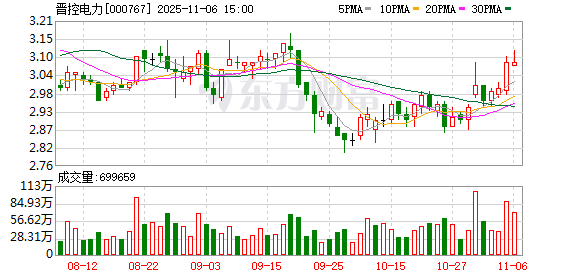
晋控电力:公司2025年前三季度新能源业务的电力收入合计13.50亿元
Zheng Quan Ri Bao· 2025-11-06 07:07
Core Viewpoint - Jin控电力 announced that its renewable energy business revenue is expected to increase in the first three quarters of 2025 compared to the same period in 2024, indicating a positive trend in the company's renewable energy segment [2] Summary by Category Financial Performance - The total revenue from the renewable energy business (including wind, solar, and hydropower) for the first three quarters of 2025 is projected to be 1.35 billion yuan, accounting for 12.07% of total operating revenue [2] - In comparison, the renewable energy business revenue for the same period in 2024 was 1.38 billion yuan, representing 11.64% of total operating revenue [2] - The share of renewable energy revenue in total operating revenue is expected to increase by approximately 0.43 percentage points from 2024 to 2025 [2]

海上风电正成新蓝海,这些基金已重仓布局!
Sou Hu Cai Jing· 2025-11-03 10:41
Core Viewpoint - The wind power sector, particularly offshore wind, is poised for explosive growth by 2025, driven by large-scale turbine deployment and the goals set in the 14th Five-Year Plan [1][5]. Group 1: Wind Power Advantages - Wind power, especially offshore, is gaining attention from investors due to its efficiency and compatibility with electricity demand curves, outperforming solar power in terms of generation efficiency [2][3]. - In 2024, wind power generation in China is projected to reach 991.6 billion kWh, surpassing solar power's 834.1 billion kWh, despite lower installed capacity [2]. Group 2: Offshore Wind Power Potential - Offshore wind power has significant advantages, including higher average wind speeds and more stable wind directions, leading to greater generation efficiency compared to onshore wind and solar [3][5]. - The offshore wind sector is not land-intensive and is strategically located near major electricity consumption centers, reducing transmission losses [5]. Group 3: Installation Growth and Market Dynamics - The domestic offshore wind installation is expected to reach 51.4 GW in the first half of 2025, a year-on-year increase of 98.9%, with offshore and onshore wind contributing 2.5 GW and 48.9 GW respectively [5]. - The industry is entering a recovery phase, as evidenced by increasing installation data and rising bid prices from 2024 to 2025 [11]. Group 4: International Market Opportunities - European markets represent a significant opportunity for Chinese wind power companies, with 34% of global offshore wind installations expected in Europe in 2024 [15]. - Companies with core technologies and cost advantages are likely to benefit from higher profit margins in overseas markets [17]. Group 5: Company Performance and Investment Trends - For instance, a company named Dajin Heavy Industry is leading in the European market with a 29.1% market share, reporting a revenue of 4.6 billion yuan in the first three quarters of 2025, a 99.2% year-on-year increase [19]. - The company's gross margin improved by 3.9 percentage points to 31.1%, with a net profit margin of 19.3%, reflecting strong financial performance [20]. Group 6: Investment Funds and Strategies - Currently, there are no dedicated wind power ETFs in the A-share market, leading investors to rely on actively managed funds for exposure to the wind sector [23]. - One actively managed fund, Qianhai United Yonglong Mixed Fund, has achieved a 56.1% return this year by focusing on wind power stocks [24].
北方国际(000065):Q3业绩环比有所改善 焦煤业务弹性仍值期待
Xin Lang Cai Jing· 2025-11-01 00:34
Core Insights - The company reported a decline in revenue and net profit for the first three quarters of 2025, primarily due to decreased margins from the Mongolia mining project, but remains optimistic about the resilience of its coking coal business [1] Financial Performance - For Q1-Q3 2025, the company achieved revenue of 9.915 billion yuan, down 29.79% year-on-year, with a net profit attributable to shareholders of 485 million yuan, down 36.02% year-on-year [1] - In Q3 2025, the company recorded revenue of 3.181 billion yuan, a year-on-year decrease of 14.2%, with a net profit of 176 million yuan, down 19.49% year-on-year, but showing a quarter-on-quarter increase of 33.08% [1] - The gross margin for Q1-Q3 2025 was 14.24%, up 2.54 percentage points year-on-year, with Q3 gross margin at 16.68%, reflecting a significant year-on-year increase of 45% [2] Cost and Cash Flow - The company’s expense ratio for Q1-Q3 2025 was 8.25%, up 2.96 percentage points year-on-year, with specific increases in sales, management, R&D, and financial expense ratios [2] - Cash flow from operations (CFO) for Q1-Q3 2025 was 899 million yuan, a substantial increase of 1.355 billion yuan year-on-year, with cash collection and payment ratios at 106.77% and 102.13%, respectively [2] Project Updates - The company signed new contracts worth 466 million USD in Q1-Q3 2025, a decrease of 40.8% year-on-year, but has a substantial backlog of active projects totaling 5.948 billion USD [3] - Key operational projects include the Mongolia mining project, which saw a 6.9% decline in coking coal sales volume year-on-year, and the Croatia wind power project, which achieved a 7.8% increase in electricity generation [3]
