旅行文学

Search documents
一双皮鞋,一支钢笔,一个保温杯,旅行本身就意味着失去
Xin Lang Cai Jing· 2026-02-12 12:19
Core Perspective - The article discusses the evolving nature of travel literature in the context of the mobile internet era, emphasizing its role in providing a sense of self and connection to the past while exploring new experiences [3]. Group 1: Travel Literature Evolution - Travel literature has transitioned from a peak to a more balanced state over the past 15 years, now leaning towards sociocultural writing and local narratives [3]. - The essence of travel literature lies in its ability to help individuals escape their immediate surroundings and explore their inner ideals [3]. Group 2: The Art of Losing - The author reflects on the various items lost during travels, such as shoes and luggage, highlighting the emotional connections and the sense of loss associated with these experiences [5][6]. - The narrative illustrates how losing items can lead to a deeper understanding of one's journey and the transient nature of possessions [7][8]. Group 3: The Impact of Loss on Travel Experience - The experience of losing a suitcase during a trip to London creates a sense of anxiety and fear, transforming the nature of the loss into something more profound [6][7]. - The eventual recovery of the lost suitcase serves as a metaphor for the unexpected joys that can arise from loss, reinforcing the idea that sometimes one must lose to find [7][8]. Group 4: Philosophical Reflections on Travel - Travel inherently involves loss, as it forces individuals to confront the choices between their current lives and the lives they could lead in new places [10][12]. - The conclusion of travel narratives often revolves around the inevitability of returning to one's original life or making a permanent change, emphasizing the transformative power of travel [12][14].

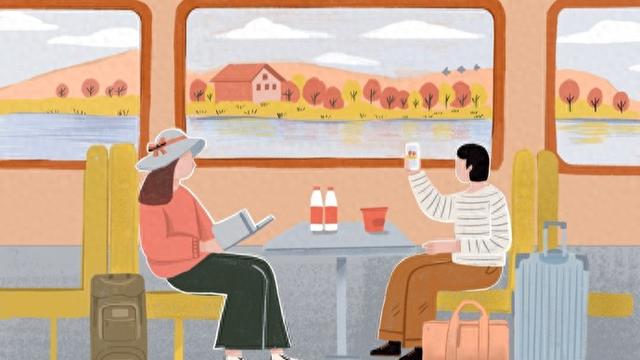
短暂的旅游,是打工人的暂停键,但旅游,你说了算吗?
Xin Lang Cai Jing· 2026-02-12 12:19
Core Perspective - The article discusses the evolution of travel literature in the context of modern society, emphasizing its role as a means of escape and self-discovery in an increasingly connected world [3][5][6]. Group 1: Historical Context of Travel - Travel has been a part of human culture for centuries, with significant growth during the Ming and Qing dynasties in China, where economic prosperity allowed for increased travel among the affluent [5]. - In 18th century Europe, the publication of travel narratives surged, with approximately 2,000 maritime narrative works published in England, reflecting a growing interest in exploration and adventure [5]. Group 2: Modern Travel Trends - The popularity of travel literature and travel-related content, such as short videos, indicates a sustained human fascination with exploration, often driven by a desire to break free from mundane routines [5][6]. - Contemporary travel is characterized by a duality of purpose, serving both as a means of escape from daily life and as a necessary break to recharge for work, creating a cycle of "long-term work—intermittent travel" [6][7]. Group 3: The Paradox of Travel - Modern travel often blurs the line between leisure and obligation, with many travelers unable to fully disconnect from work, leading to a situation where travel becomes merely a physical relocation rather than a true escape [6][7]. - The article highlights the irony that while travel is perceived as a break from routine, it often reinforces the same patterns of efficiency and productivity found in daily work life [7][8]. Group 4: Perspectives from Travel Writers - Travel writers, while seemingly free, often experience their own constraints, as the pressure to produce meaningful narratives can lead to a sense of creative anxiety [8]. - The works of travel writers like Liu Zichao and Ryszard Kapuściński illustrate the complexities of capturing the essence of travel while grappling with the demands of their craft [8].

视觉占优势的时代,如何用文字讲旅行故事?
Xin Lang Cai Jing· 2026-02-12 12:19
Core Perspective - The article discusses the evolution of travel literature in the context of modern society, emphasizing its shift from a peak to a more sociocultural writing style, reflecting a healthy development curve in seeking personal meaning through travel [3]. Group 1: Travel Literature Evolution - Travel literature has transitioned from being an exclusive domain of the wealthy to a more inclusive narrative where everyone can share their stories, enriching the poetic image of travel in contemporary life [6]. - The rise of platforms like "Mafengwo" and "Qiongyou" has democratized travel storytelling, allowing for a broader range of voices and experiences [6]. - The initial excitement surrounding travel literature is now facing challenges as the novelty of personal travel stories diminishes, leading to a need for deeper and more nuanced narratives [9]. Group 2: Cultural and Historical Context - Historically, both Eastern and Western cultures have sought solace through retreat or seclusion, with ancient Chinese poetry often reflecting a desire to return home rather than travel far [5]. - The modern obsession with travel as a means of finding meaning contrasts with past practices of seeking peace through withdrawal from the world [5]. - The article highlights that the allure of travel has been intertwined with consumerism, which has fueled the desire for exploration and new experiences [7][8]. Group 3: Challenges and Future of Travel Narratives - Recent global changes have diminished the appeal of travel, as the initial excitement of exploration is met with skepticism regarding the manufactured nature of travel desires [8]. - The overwhelming amount of information available online has led to a sense of fatigue, making personal travel stories less captivating to audiences [8]. - The article suggests that the decline of dreamlike perceptions of travel may lead to a more authentic understanding of distant places, emphasizing the importance of genuine exploration and storytelling [10].

避雷、打卡和疗愈,如何毁掉你的旅行?
Hu Xiu· 2025-05-25 02:18
Group 1 - Travel is often seen as a pause in life, with the idea that distance can smooth out life's wrinkles, as noted by Alain de Botton [1] - Travel writing is not merely a replication of scenery but a reconstruction of dialogue with the world through personal perspectives [2] - In an age where travel guides are readily available, the significance of writing about landscapes is questioned, prompting discussions on the meaning of documenting travel experiences [3] Group 2 - Recent travels of the participants include a trip to South Korea, highlighting severe demographic issues such as low birth rates [4][5] - Another participant traveled through Vietnam, noting its youthful population and vibrant social atmosphere, contrasting with South Korea's aging demographic [8][9][10] - The importance of capturing unique moments during travel that compel writers to document their experiences is emphasized [13] Group 3 - The evolution of travel writing is discussed, with a focus on how personal experiences and historical context shape narratives [35][39] - The concept of "landscape pornography" is introduced, where the focus on picturesque views often excludes human presence, raising questions about the authenticity of travel experiences [28][31] - The impact of social media on travel perceptions, including the rise of "avoidance posts" and the dichotomy between overly beautified content and negative reviews, is analyzed [58] Group 4 - The role of history in travel writing is debated, with some arguing that it is not essential, while others believe it enriches the narrative [35][39] - Engaging with local people and understanding their historical context is seen as crucial for meaningful travel writing [38][39] - The blending of travel literature with natural writing is anticipated as a future trend, reflecting a deeper thematic focus [54] Group 5 - The necessity of experiencing hardship for producing quality travel writing is highlighted, suggesting that good works often stem from challenging experiences [72] - Plans for future travels include investigations into historical sites, such as the Great Wall of China and Hadrian's Wall, indicating ongoing engagement with travel literature [74][76]