
日本再军事化

Search documents
日本自卫队官员为何持刀强闯我使馆?外交部揭底
券商中国· 2026-03-31 11:52
Group 1 - The core viewpoint of the article highlights the dangers of Japan's right-wing ideology and distorted historical perspective, as evidenced by a recent incident involving a self-defense force officer breaching the Chinese embassy in Japan [1] - The Japanese Self-Defense Forces have a troubling tradition of collective visits to the Yasukuni Shrine, with a high-ranking official from the Maritime Self-Defense Force set to take on a significant role at the shrine for the first time, indicating a concerning trend towards militarization [1] - The incident raises questions about the indoctrination and education provided to self-defense personnel, particularly regarding the historical narratives they are taught, which may include extreme nationalist views [1] Group 2 - The Chinese government urges Japan to thoroughly investigate the embassy breach incident and take measures to prevent similar occurrences in the future, emphasizing the need for international vigilance regarding Japan's militarization [1]


钟声:以实际行动阻击日本“再军事化”狂飙
Xin Lang Cai Jing· 2026-02-28 02:43
Group 1 - Japan's re-militarization and nuclear ambitions pose a serious threat to regional security and stability, prompting China to implement export control measures on entities contributing to Japan's military capabilities [1][4] - The Chinese Ministry of Commerce has listed 20 entities involved in enhancing Japan's military strength under export control, aiming to safeguard national security and fulfill international non-proliferation obligations [2][3] - Japan's defense spending has increased for 14 consecutive years, with a significant doubling in the last three years, leading to a military-industrial complex that benefits companies like Mitsubishi Heavy Industries and IHI Corporation, whose stock prices have surged dramatically [3] Group 2 - Japan's right-wing politicians are increasingly advocating for nuclear armament, seeking to amend the long-standing "Three Non-Nuclear Principles," while Japan has stockpiled 44.4 tons of separated plutonium, indicating its capability to produce weapon-grade materials [4] - The current Japanese administration is prioritizing defense spending and plans to establish a "National Intelligence Agency," which will further intertwine military expenditure with specific industrial interests, creating a self-reinforcing policy loop [3][4] - The international community views Japan's nuclear ambitions as a destabilizing factor in Southeast Asia, emphasizing the need for reduced arms races and conflict risks to maintain regional stability [4][5]
以实际行动阻击日本“再军事化”狂飙
Xin Lang Cai Jing· 2026-02-28 00:40
Group 1 - Japan's "re-militarization" and nuclear ambitions pose a serious threat to regional security and stability, prompting China to implement export control measures on entities involved in enhancing Japan's military capabilities [1][4] - The Chinese Ministry of Commerce has listed 20 entities involved in Japan's military enhancement under export control, aiming to safeguard national security and fulfill international obligations against proliferation [2][3] - Japan's defense spending has increased for 14 consecutive years, with a significant doubling in the last three years, leading to a "military bubble" in the capital market, as evidenced by the stock price surges of major defense companies [3] Group 2 - Japan's right-wing politicians are increasingly vocal about nuclear ambitions, seeking to amend the long-standing "Three Non-Nuclear Principles," with a significant stockpile of separated plutonium materials [4] - As of the end of 2024, Japan is expected to have accumulated 44.4 tons of separated plutonium, indicating a robust nuclear industrial capability that could lead to the production of weapon-grade plutonium [4] - The current political climate in Japan is fostering a self-reinforcing cycle of defense spending and industrial interests, with plans for a national intelligence agency and new defense taxes to support military expenditures [3]
以实际行动阻击日本“再军事化”狂飙(钟声)
Ren Min Ri Bao· 2026-02-27 23:07
Group 1 - The core viewpoint of the articles is that Japan's "remilitarization" and nuclear ambitions pose a serious threat to regional security and stability, necessitating actions to counteract these developments [1][4][5] - China has implemented export control measures on 20 entities involved in enhancing Japan's military capabilities, aiming to safeguard national security and fulfill international non-proliferation obligations [1][2] - Japan's defense spending has increased significantly, with a doubling of the budget projected within three years, indicating a shift towards a more aggressive military posture [3] Group 2 - Japanese companies such as Mitsubishi Heavy Industries and IHI Corporation are heavily involved in the defense industry, producing military equipment that threatens regional peace [2][3] - The stock prices of major Japanese defense contractors have surged dramatically, with Mitsubishi Heavy Industries seeing an increase of over 650% since November 2022, highlighting the financial implications of Japan's military expansion [3] - Japan's political leadership under Prime Minister Kishi has prioritized military readiness, proposing measures such as large-scale bond issuance and a special defense tax to support military funding [3]
国际锐评|中方精准反击日本“再军事化”符合全球利益
Xin Lang Cai Jing· 2026-02-27 16:24
Core Viewpoint - The Chinese Ministry of Commerce has announced the inclusion of 20 Japanese entities in an export control list, aiming to counter Japan's militarization and nuclear ambitions, thereby maintaining regional and global peace [1][4]. Group 1: Export Control Measures - The export control measures target specific Japanese military enterprises, including Mitsubishi Heavy Industries and Kawasaki Heavy Industries, which are seen as key players in Japan's militarization efforts [3][6]. - These companies have historical ties to Japan's militaristic past and are currently involved in significant military contracts, such as a $2.84 billion missile development contract and a $6.8 billion order for Australian warships [3]. Group 2: Japan's Military Expansion - Japan's defense budget is projected to rise to 9.04 trillion yen (approximately $57.9 billion) for the fiscal year 2026, exceeding 2% of its GDP, indicating a shift towards a more aggressive military posture [4]. - The Japanese government is also attempting to amend its constitution to allow for a more robust military presence, which includes plans to export weapons to 12 countries [4][6]. Group 3: Historical Context and International Response - The current actions of Japan's government are reminiscent of pre-World War II militarism, raising concerns among regional countries about a potential arms race and destabilization of international order [6][7]. - China's export control measures are framed as a necessary response to Japan's military expansion, aligning with international norms and aimed at preventing the resurgence of militarism [7][8].
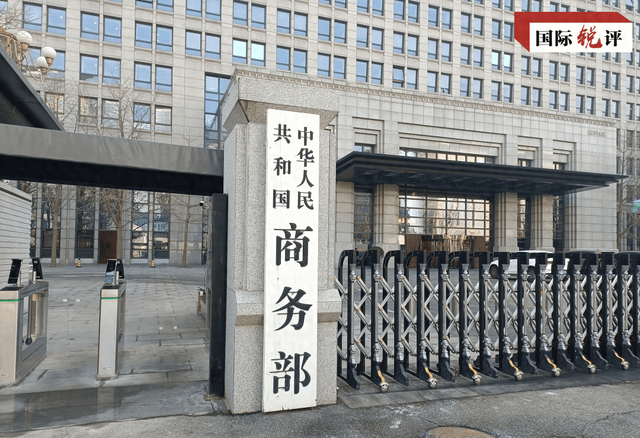
国际锐评丨中方精准反击日本“再军事化”符合全球利益
Xin Lang Cai Jing· 2026-02-27 13:20
Core Viewpoint - China has announced the inclusion of 20 Japanese entities in an export control list as a response to Japan's military expansion and nuclear ambitions, aiming to maintain regional and global peace [1][4]. Group 1: Export Control Measures - The Chinese Ministry of Commerce has implemented export controls on 20 Japanese entities, following a previous announcement to strengthen controls on dual-use items [1]. - This action is seen as a legitimate and necessary measure to cut off resources supporting Japan's military expansion [3][6]. Group 2: Japanese Military Industrial Complex - Companies like Mitsubishi Heavy Industries and Kawasaki Heavy Industries are identified as key players in Japan's military resurgence, with historical ties to wartime weapon manufacturing [3]. - These companies are projected to achieve a total sales revenue of $13.3 billion in 2024, marking a 40% increase from the previous year [3]. Group 3: Political Context and Military Budget - The current Japanese government, led by the Liberal Democratic Party, is pushing for significant military budget increases, with plans to raise the defense budget to ¥9.04 trillion (approximately $57.9 billion) by 2026 [4]. - Japan is also seeking to amend its constitution to allow for a more aggressive military posture, including the potential export of weapons to 12 countries [4]. Group 4: Historical and International Implications - The resurgence of militarism in Japan is viewed as a threat to regional stability, echoing pre-World War II dynamics between military and industrial sectors [6]. - China's export control measures are framed as a responsible action to prevent the revival of militarism and to uphold international norms established post-World War II [7].
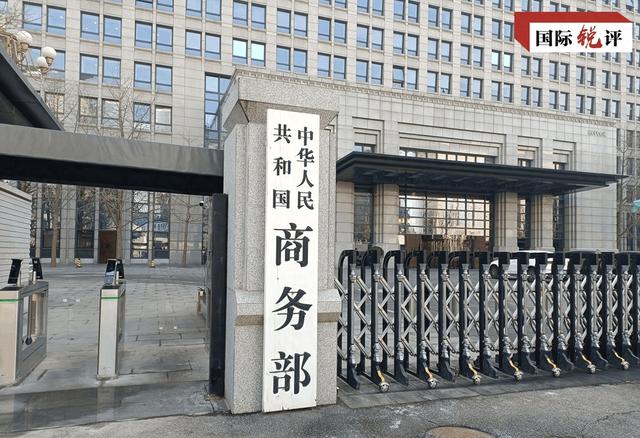
中方为何将40家日本企业列入管控、关注名单?商务部回应
Nan Fang Du Shi Bao· 2026-02-26 11:27
Core Viewpoint - The Chinese Ministry of Commerce has placed 20 Japanese entities on an export control list due to their involvement in enhancing Japan's military capabilities, reflecting concerns over Japan's militarization and nuclear ambitions [1][2]. Group 1: Export Control Measures - The Ministry of Commerce has listed entities such as Mitsubishi Heavy Industries on the control list, prohibiting export operators from exporting dual-use items to these entities [1]. - Additionally, it is forbidden for foreign organizations and individuals to transfer or provide dual-use items originating from China to the listed entities, with ongoing activities needing to cease immediately [1]. Group 2: Entities of Concern - Another 20 entities, including Subaru Corporation, have been placed on a watch list due to the inability to verify the end users and end uses of dual-use items [1]. - Export operators are not allowed to apply for general licenses or obtain export certificates for these entities without submitting a risk assessment report and a written commitment that the items will not be used to enhance Japan's military capabilities [1]. Group 3: Regional and Global Implications - The spokesperson highlighted Japan's accelerated military expansion and attempts to revise its "Three Non-Nuclear Principles," indicating a dangerous trend towards re-militarization and nuclear ambitions that threaten regional and global peace [2]. - The actions taken by China are framed as a legitimate response to Japan's militarization efforts, emphasizing China's commitment to fulfilling international non-proliferation obligations [2].
日本自民党批准提案,要求政府取消武器出口限制,外交部:再次暴露日右翼势力谋求“再军事化”野心,应坚决抵制日本新型军国主义的妄动
Zhong Guo Ji Jin Bao· 2026-02-25 10:38
Core Viewpoint - The Japanese Liberal Democratic Party has approved a proposal to request the government to lift restrictions on arms exports, raising concerns about Japan's militarization ambitions and the potential for a resurgence of militarism in the country [1][1][1] Group 1: Japan's Military Policy Changes - Japan's military security movements have been a focus of concern for neighboring Asian countries and the international community due to its historical context of aggression [1] - In recent years, Japan has significantly adjusted its security policies, including public discussions by officials advocating for nuclear armament and seeking to amend the "Three Non-Nuclear Principles" [1][1] Group 2: International Response - The international community is urged to remain vigilant and work together to safeguard the outcomes of World War II and the post-war international order [1] - There is a call to firmly resist Japan's new militaristic actions, which are seen as a challenge to established international norms and domestic laws [1][1]
日本拟放宽防卫装备出口限制 中方表示严重关切
Zhong Guo Xin Wen Wang· 2026-02-25 07:38
Core Viewpoint - Japan's ruling party has proposed to relax restrictions on defense equipment exports, allowing the export of previously banned resource-based weapons, which raises serious concerns from China regarding Japan's military intentions and historical context [1] Group 1: Japan's Defense Policy Changes - The proposal from Japan's ruling party indicates a significant shift in its security policy, moving towards the potential re-militarization of the country [1] - There is a growing trend in Japan to modify its "Three Non-Nuclear Principles" and to openly discuss nuclear armament, which reflects the influence of right-wing forces in Japan [1] Group 2: Regional and International Reactions - China's Foreign Ministry has expressed serious concerns about Japan's military security developments, emphasizing the need for vigilance from the international community [1] - The statement highlights the importance of safeguarding the outcomes of World War II and the post-war international order against Japan's perceived militaristic ambitions [1]
连发两条公告,中国为何此时对日本军工“亮剑”?
Huan Qiu Wang· 2026-02-24 12:13
Group 1 - The Chinese Ministry of Commerce has announced export control measures against 20 Japanese entities involved in enhancing Japan's military capabilities, including Mitsubishi Heavy Industries and Subaru [1][2] - The measures include a ban on exporting dual-use items to these entities and stricter scrutiny for those on the watch list, which includes 20 additional Japanese firms [2][6] - The announcement has led to significant market reactions, with defense and heavy machinery stocks in Japan experiencing declines, particularly Mitsubishi Heavy Industries and Kawasaki Heavy Industries [1][3] Group 2 - The listed Japanese companies are primarily engaged in the development of offensive military capabilities, including hypersonic weapons and naval vessels, which pose threats to regional stability [3][4] - The measures are seen as a response to Japan's accelerated militarization and increased military budget, marking a shift from general prohibitions to specific, actionable controls [5][6] - Analysts suggest that the measures serve as a warning to Japan regarding its military ambitions and are intended to maintain regional peace and stability [9][10] Group 3 - The export control measures are based on China's legal framework, including the Export Control Law and regulations on dual-use items, emphasizing compliance with international obligations [2][6] - The actions are characterized as precise and comprehensive, targeting key entities in Japan's military-industrial complex while avoiding broader economic impacts on civilian sectors [8][9] - Japanese scholars have noted that the measures reflect China's concerns over Japan's military expansion and the potential implications for regional security dynamics [7][9]