时间

Search documents
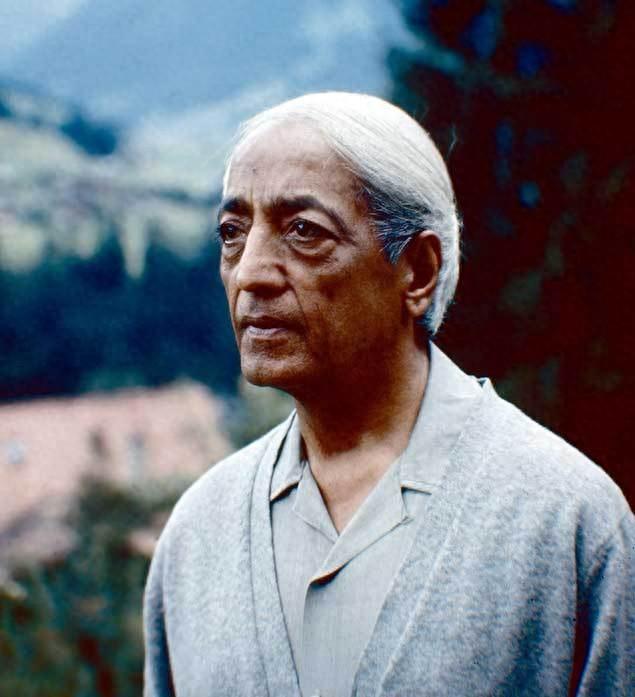
克里希那穆提逝世40周年|成为更好的自己是一个伪命题
Xin Lang Cai Jing· 2026-02-17 02:48
Core Ideas - Krishnamurti's philosophy emphasizes the importance of understanding time and its impact on human perception and consciousness [3][4][12] - The concept of awareness is central to Krishnamurti's teachings, advocating for a non-judgmental observation of oneself and the world [7][8][11] - Freedom, according to Krishnamurti, is an inner state that transcends cultural and societal constraints, achievable through self-exploration and awareness [12][13][16] Group 1: Time - Krishnamurti views time as a construct that affects human perception, suggesting that the past, present, and future exist only in consciousness [3][4] - He critiques the human tendency to live in a state of anticipation for a better future, which distracts from the present moment [4][5] - The struggle with time leads to a cycle of desire and dissatisfaction, preventing individuals from experiencing their true selves [5][7] Group 2: Awareness - Awareness, as defined by Krishnamurti, is a pure observation devoid of judgment, comparison, or motivation, which can lead to profound personal transformation [7][8][11] - He encourages individuals to engage all their senses in a holistic manner to dissolve the fragmented perception of reality [8][9] - This state of awareness allows for a deeper connection with the present, breaking down the barriers between the observer and the observed [9][10] Group 3: Freedom - Krishnamurti posits that true freedom is not about liberation from external constraints but rather an internal state of being that arises from self-awareness [12][13][16] - He challenges the notion that freedom can be achieved gradually, asserting that it is an immediate realization rather than a process over time [16] - The essence of freedom lies in the ability to observe life without the influence of past experiences or societal expectations [12][16]

飞矢不动处,时光切片时
Xin Lang Cai Jing· 2026-01-15 22:31
Core Insights - The article explores the philosophical concept of time, emphasizing the duality of its fleeting nature and the moments of stillness that can be found within it [1][5]. Group 1: Philosophical Reflections - The author reflects on the nature of time, suggesting that while moments may seem static, they are part of a continuous flow, akin to an arrow in flight [1][5]. - The text draws parallels between the experience of riding the subway in Chengdu and the philosophical idea of "flying arrow not moving," indicating that time is both transient and eternal [1][2]. Group 2: Literary Analysis - The author employs vivid imagery and relatable scenes from urban life to convey the essence of time, capturing the warmth and texture of everyday experiences in Chengdu [2][3]. - The writing style is characterized by clarity and simplicity, allowing deep philosophical thoughts to emerge from ordinary moments, thus enhancing the depth and breadth of the essays [2][3]. Group 3: Symbolism of the Subway - The subway serves as a metaphor for the passage of time, illustrating how encounters in life are often fleeting, yet significant [4][5]. - The author emphasizes that each face and thought encountered during subway rides represents valuable moments in the continuum of life [4][5].
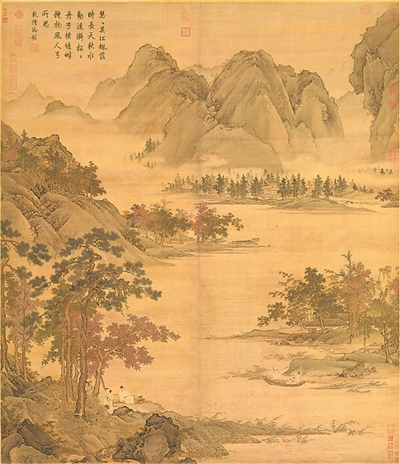
约个不赶时间的秋(读画)
Ren Min Ri Bao· 2025-10-18 22:02
Core Viewpoint - The article highlights the significance of the classic Chinese painting "Autumn River Waiting for Crossing" by the Ming Dynasty artist Qiu Ying, emphasizing its artistic and cultural value while connecting it to contemporary life and reflections on time and existence [4][5]. Group 1: Artistic Analysis - Qiu Ying's "Autumn River Waiting for Crossing" features a "Z" shaped spatial extension, showcasing a vast landscape filled with rich autumn colors, including distant mountains and a serene river [4]. - The painting depicts a scene of waiting and interaction among characters, symbolizing themes of anticipation, meeting, and parting, set against a backdrop of autumn scenery [5]. Group 2: Cultural Reflection - The article draws parallels between the painting's themes and modern life, encouraging individuals to appreciate the journey and moments in life rather than solely focusing on the destination [5]. - It suggests that the painting evokes philosophical reflections on time, life, and the human experience, resonating with the tranquil and profound sentiments found in Chinese literati art [5].
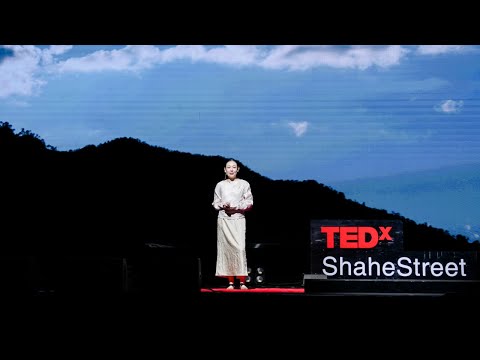
我不喜欢等待,却在时间中创作 | Jinya Zhao | TEDxShahe Street
TEDx Talks· 2025-08-18 15:58
Artistic Perspective - The talk explores the concept of "waiting" as a valuable process, contrasting it with the perception of it being a waste of time [1] - It draws parallels between the time required for glass cooling in art and the time needed for personal growth and finding life's answers [1] - The speaker, Zhao Jinya, is an artist, PhD researcher, and founder of JA Yijian Studio [1] Event Information - The talk was presented at a TEDx event, which is independently organized but uses the TED conference format [1] - More information about TEDx events can be found at the provided URL [1]
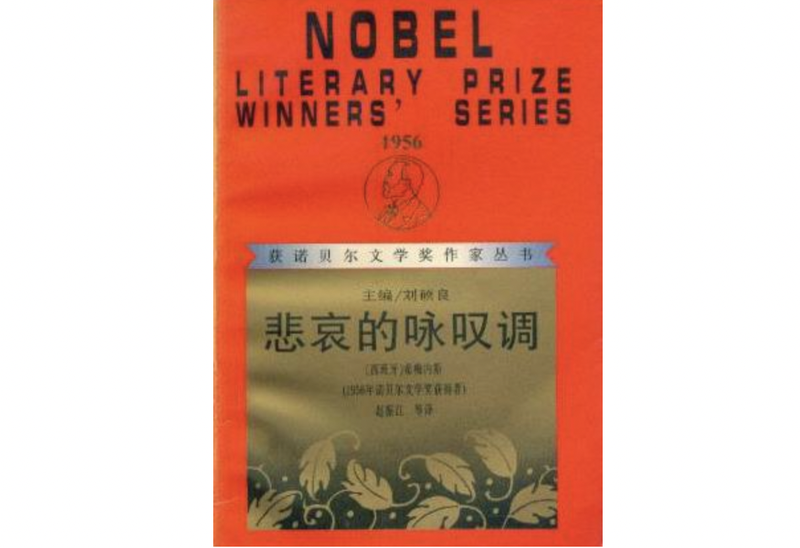
一滴水中的声音:西班牙的童诗
Xin Jing Bao· 2025-04-07 13:27
Group 1 - The essence of poetry is depicted as a driving force of the soul, representing the first voice of childhood, where music and time are repeatedly released and then vanish into fairy tales [1] - The poet expresses uncertainty about how to leap from the present to the future, illustrating the flow of time as a river leading to an uncertain ocean [1][3] - The poem reflects a sense of anxiety and confusion, akin to the philosophical notion that time flows continuously, echoing the sentiment of Confucius about the relentless passage of time [3] Group 2 - The structure of "time-space-time" in the poem suggests that even in fleeting moments, eternity is contained, resonating with Borges' idea of eternity as pure present [5] - The imagery in the poetry is rich with natural colors and sounds, symbolizing the journey of life from confusion to fulfillment, akin to a child's growth [6] - The poet's relationship with his poetry is likened to a beautiful bond, emphasizing the transformative power of language and imagination [6] Group 3 - The poem "The Sea Snail" illustrates the integration of the poet with the sea snail, symbolizing the mysterious depths of inspiration and the connection between imagination and language [17] - The metaphor of the moon as a mirror of time is explored, creating a whimsical narrative that connects the natural world with the poet's inner experiences [12] - The poem "The Hunter" uses the imagery of pigeons and their shadows to convey themes of life, death, and the ephemeral nature of existence, employing a minimalist yet profound style [25]