诗歌

Search documents
光明文化周末:在臧家庄
Xin Lang Cai Jing· 2026-01-15 20:25
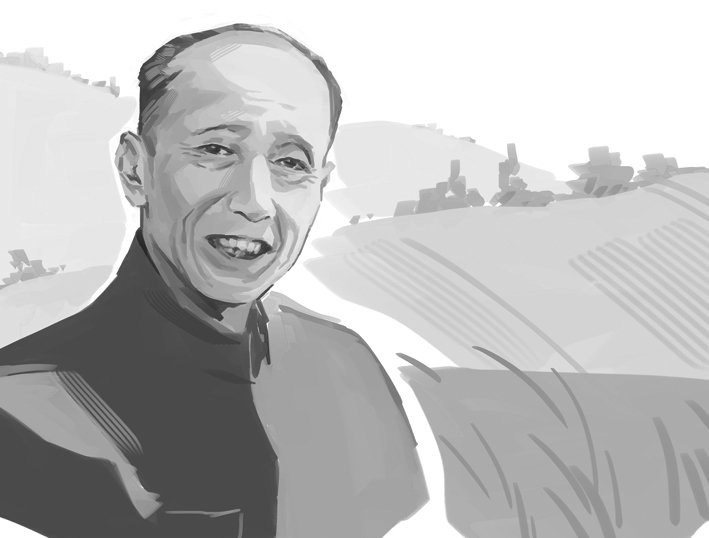
Group 1 - The article reflects on the legacy of the poet Zang Kejia, highlighting the emotional connection to his hometown of Zangjiazhuang and the significance of commemorating his life and work as his 120th birthday approaches in 2025 [1][7] - The author recounts personal memories and interactions with Zang Kejia, illustrating the poet's warmth and generosity, particularly towards the youth in his community [3][5][6] - The narrative emphasizes the poet's deep-rooted affection for his homeland, as evidenced by his wishes for his ashes to be scattered among the graves of his childhood companions, showcasing his lifelong bond with the land and its people [8][9][10] Group 2 - The article describes the setting of Zangjiazhuang during autumn, creating a vivid backdrop for the reflections on Zang Kejia's life and contributions to literature [1] - It details the poet's early life, including his departure from Zangjiazhuang and the influences that shaped his literary journey, such as his experiences during the war and his pursuit of education [7] - The piece concludes with a poignant ceremony where Zang Kejia's ashes are laid to rest, symbolizing his eternal connection to his roots and the community that nurtured him [9][10]

【著作者说】 在诗歌里相遇
Xin Lang Cai Jing· 2026-01-09 16:41
Group 1 - The evolution of Chinese poetry can be categorized into four main forms: four-character, ci and fu, five-character, and seven-character poetry, with notable representatives for each form [1] - The "Nineteen Old Poems" is recognized for its ability to express shared human emotions, reflecting on aspirations and the inevitability of separation, making it a timeless literary work [2] - The distinction between poetry and literature is questioned, emphasizing that poetry transcends mere technical aspects and serves as a means for self-discovery and understanding of human existence [3] Group 2 - The appreciation of ancient Chinese poetry is rooted in traditional critical methods, which are often more impactful than modern lengthy analyses, though understanding these critiques can be challenging due to language barriers [4] - The notion that anyone can engage with poetry, regardless of their literary prowess, is highlighted, suggesting that poetry serves as a medium for personal awakening and connection with others [5]
C视觉|用一场音乐会 让杜甫笔下的成都美成听觉画卷
Xin Lang Cai Jing· 2025-12-27 14:34
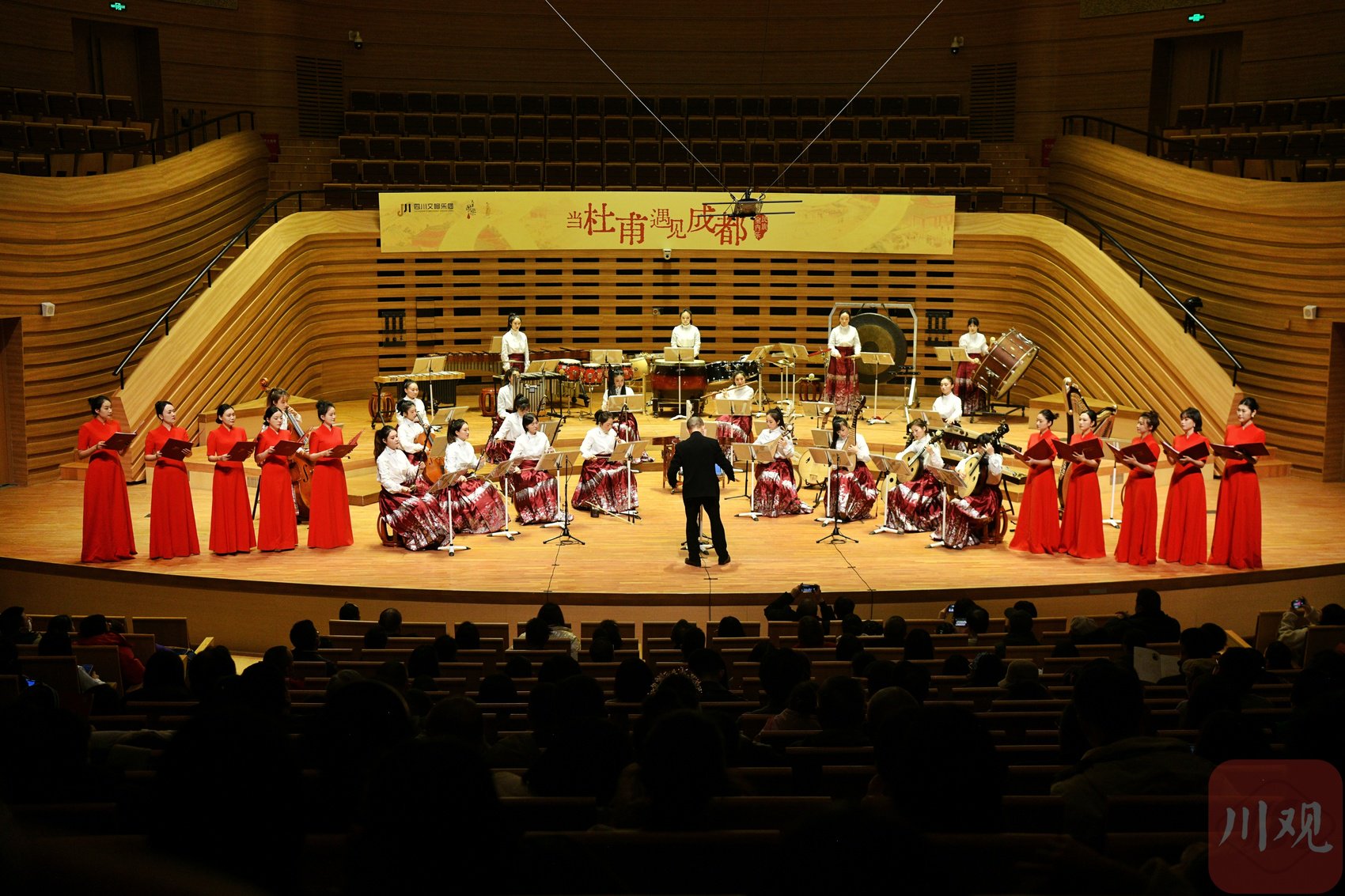
Core Viewpoint - The concert "When Du Fu Meets Chengdu" by the Sichuan Symphony Orchestra showcases the connection between the poet Du Fu and Chengdu through 14 original compositions, highlighting the cultural and historical significance of Du Fu's life and works in the city [1][3]. Group 1 - The concert is structured into four main chapters: "New Moon and Silk Pipes," "Cao Tang and Flowers," "Snow Mountain and Rivers," and "Autumn Wind and the World," which progressively illustrate the elegant natural and cultural landscape of Chengdu while exploring Du Fu's spirit of "home and country" [3]. - The musical pieces include various forms such as ensemble, duet, and trio, with titles like "Eternal Love," "Cao Tang Years," and "Mingjiang Universe," each contributing to a rich auditory experience that blends Tang dynasty aesthetics with contemporary sensibilities [3][11][15][17]. - This artistic dialogue integrates poetry, national music, and cultural elements, serving as a contemporary tribute to Du Fu's spirit while innovatively expressing Chengdu's cultural heritage, allowing the audience to experience a resonance of life and cultural transmission that spans over a millennium [3][17].
【诗意盎然】 生动在词语里生长
Xin Lang Cai Jing· 2025-12-26 16:59
Core Perspective - The poetry collection "What I Placed Inside Myself" by Wu Pie reflects the poet's deep emotional connection to his homeland and explores themes of nature, existence, and personal introspection through over 200 short poems divided into three sections [1] Group 1: First Section - The first section occupies nearly half of the collection, indicating its significance to the poet, focusing on themes of nostalgia, growth, and attachment to his homeland using imagery like mountains, spring, and magpies [2] - The poet emphasizes the intertwining of natural imagery and inner monologue, exploring existence, loneliness, and the essence of life, expressing sorrow and compassion through various motifs [2] - The collection invites readers to find the "I" within the poems, presenting a rich and unique exploration of emotional depth and personal reflection [2] Group 2: Second Section - The second section addresses social realities and individual destinies, capturing the subtle changes of the times with delicate language and imagery [3] - The poet uses evocative imagery to create a strong emotional resonance, illustrating the complexity of human experiences and the essence of poetry as a form of art [3] - The poet's efforts to connect with readers through language and imagery highlight the personal nature of poetry, making it both an individual and collective experience [3] Group 3: Third Section - The third section reflects the poet's engagement with different cultural and human experiences, showcasing a broader perspective on societal changes and personal growth [3] - The poet's writing practice emphasizes the importance of place and cultural context, capturing the emotional conflicts and transformations experienced throughout life [3] - The collection demonstrates the poet's ability to evoke empathy across geographical boundaries, resonating with readers from diverse backgrounds [4]
没有哪一种岁月能绕过春天 | 王 计兵 | TEDxNanjing
TEDx Talks· 2025-12-16 17:55
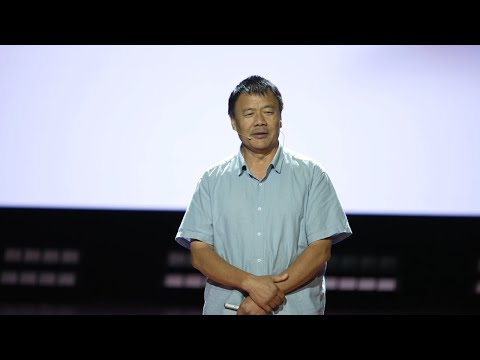
从拾荒者、建筑工人、外卖骑手到中国最知名的平民诗人,王计兵的故事展示了一个普通人平凡生活中不屈的诗意与尊严 王计兵是一位独特的外卖诗人,笔名拾荒,中国作家协会会员。他1969年生于江苏徐州,长期生活在昆山,50岁注册成为外卖骑手,骑行16万公里穿梭于城市街巷间,利用送外卖的间隙创作5000余首诗,出版《手持人间一束光》《赶时间的人》等五部诗集,获第八届紫金山文学奖诗歌奖,并受邀2025央视春晚。他的故事被央视、《人民日报》等媒体报道,感动无数人。王计兵的特质在于其坚韧和诗意敏感,在平凡打工生涯中捕捉生活真谛,像一位“街头哲人”般,用诗歌联结烟火与远方。他从捞沙、拾荒到外卖骑手,经历丰富却始终坚守初心,他的诗歌源于真实、质朴的劳动生活,因其深沉的情感力量与生命韧性,引发了广泛的社会共鸣,他的文字展现了平凡生活中不屈的诗意与尊严。 This talk was given at a TEDx event using the TED conference format but independently organized by a local community. Learn more at https://www ...
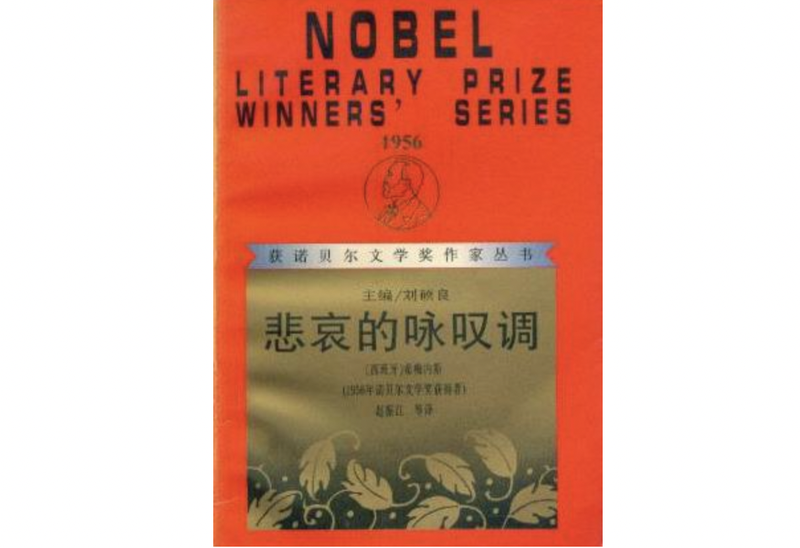
一滴水中的声音:西班牙的童诗
Xin Jing Bao· 2025-04-07 13:27
Group 1 - The essence of poetry is depicted as a driving force of the soul, representing the first voice of childhood, where music and time are repeatedly released and then vanish into fairy tales [1] - The poet expresses uncertainty about how to leap from the present to the future, illustrating the flow of time as a river leading to an uncertain ocean [1][3] - The poem reflects a sense of anxiety and confusion, akin to the philosophical notion that time flows continuously, echoing the sentiment of Confucius about the relentless passage of time [3] Group 2 - The structure of "time-space-time" in the poem suggests that even in fleeting moments, eternity is contained, resonating with Borges' idea of eternity as pure present [5] - The imagery in the poetry is rich with natural colors and sounds, symbolizing the journey of life from confusion to fulfillment, akin to a child's growth [6] - The poet's relationship with his poetry is likened to a beautiful bond, emphasizing the transformative power of language and imagination [6] Group 3 - The poem "The Sea Snail" illustrates the integration of the poet with the sea snail, symbolizing the mysterious depths of inspiration and the connection between imagination and language [17] - The metaphor of the moon as a mirror of time is explored, creating a whimsical narrative that connects the natural world with the poet's inner experiences [12] - The poem "The Hunter" uses the imagery of pigeons and their shadows to convey themes of life, death, and the ephemeral nature of existence, employing a minimalist yet profound style [25]