景区商业化

Search documents
5A景区,越来越水?
3 6 Ke· 2025-10-10 12:41
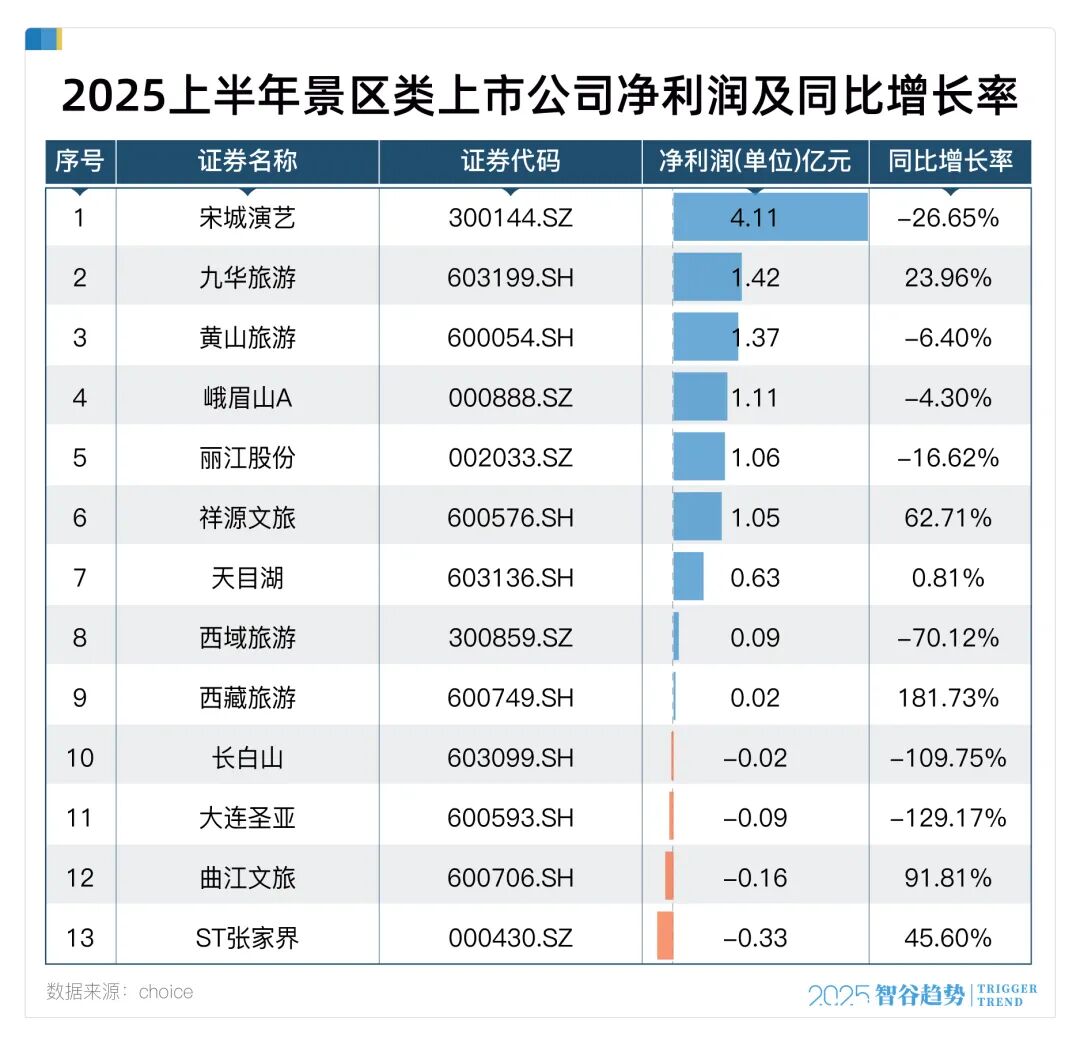
Core Insights - The value of 5A scenic spots is declining despite a booming tourism market, with domestic travel increasing significantly in 2023 [1][3] - Among 13 listed scenic companies, 8 reported negative growth, indicating poor performance in the sector [1][2] Group 1: Industry Performance - In the first half of 2023, domestic travel reached 3.285 billion trips, a year-on-year increase of 20.6%, with spending at 3.15 trillion yuan, up 15.2% [1] - Of the 13 listed scenic companies, 8 experienced negative profit growth, with notable declines in companies like Songcheng Performing Arts (-26.65%) and Lijiang Co. (-16.62%) [2] - The total revenue of A-level scenic spots decreased by nearly 20 billion yuan from 2019 to 2024, despite the number of such spots increasing from 12,402 to 16,541 [3] Group 2: Changes in Scenic Spot Ratings - The number of 5A scenic spots has surged from 66 in 2007 to 358 in 2024, marking a 4.4-fold increase [4] - The rapid increase in 5A ratings has led to concerns about the quality and uniqueness of these spots, with many new additions lacking distinct appeal [4][6] - The evaluation criteria for 5A scenic spots focus heavily on service and environmental quality, with scenic quality and visitor feedback being less emphasized [14][16] Group 3: Visitor Experience and Market Trends - Many 5A scenic spots are criticized for overcrowding and prioritizing short-term profits over visitor experience, leading to a perception of "one-time business" [22] - In contrast, lesser-known attractions that offer innovative experiences are gaining popularity, such as the 4A-rated Wansui Mountain, which has seen a significant increase in visitors and revenue [23][26] - The changing preferences of younger travelers towards local and experiential tourism highlight the need for 5A scenic spots to rethink their offerings to attract repeat visitors [27]

5A景区,正在被抛弃
首席商业评论· 2025-09-30 04:02
Core Viewpoint - The tourism market is shifting from traditional scenic spots to lesser-known destinations, driven by changing consumer preferences and dissatisfaction with the commercialization of popular attractions [8][9][26]. Group 1: Changes in Tourism Preferences - The popularity of destinations like Xinjiang has surged, but the influx of tourists has led to overcrowding and logistical issues, prompting some travelers to seek out less commercialized locations [6][8]. - Data indicates a 200% increase in interest for "less crowded" travel options, with small towns becoming popular destinations, while the brand index of the top 100 5A scenic spots has halved over the past four years [9][11]. Group 2: Issues with 5A Scenic Spots - Visitors often face excessive fees at 5A scenic spots, where additional charges for activities and amenities can lead to a total cost significantly higher than the initial ticket price [12][15]. - The traditional model of tourism, where visitors follow a fixed itinerary, is being challenged as tourists seek more authentic experiences and value for money [15][18]. Group 3: Competition from Alternative Destinations - The rise of lesser-known destinations is attributed to their unique offerings and the perception that they provide better value compared to overcrowded 5A scenic spots [27][29]. - The search volume for "hidden gem" locations has increased by 300%, while visitor growth at major attractions has stagnated, indicating a shift in consumer behavior [29][30]. Group 4: Quality and Experience Concerns - Many 5A scenic spots are criticized for their lack of originality and increasing commercialization, leading to a decline in visitor satisfaction and a negative reputation [26][35]. - The experience at these attractions is often marred by overcrowding and a focus on profit over quality, resulting in a loss of appeal to younger travelers who prefer more personalized and unique experiences [26][35].
5A景区,正在被抛弃
36氪· 2025-09-29 13:35
Core Insights - The tourism market is shifting from traditional scenic spots to a more diverse range of destinations, with a notable increase in interest for lesser-known locations [10][13]. - The popularity of 5A scenic spots has declined significantly, with their brand index halving over the past four years, while interest in smaller towns has surged [13][26]. - The experience at many 5A scenic spots has deteriorated, with rising costs and declining quality leading to negative perceptions among tourists [27][39]. Group 1 - The influx of tourists to Xinjiang has led to overcrowding and logistical challenges, prompting some travelers to avoid popular 5A scenic spots altogether [8][9]. - The rise of alternative destinations, such as industrial cities and lesser-known towns, reflects a broader trend in the tourism industry where diverse experiences are becoming more valued [12][13]. - Data indicates a 200% increase in searches for less crowded travel options, highlighting a shift in consumer preferences [13][46]. Group 2 - The financial performance of traditional scenic spots is under pressure, with revenue growth not keeping pace with rising operational costs [23][24]. - The introduction of policies to lower ticket prices for key national scenic spots has further strained their profitability [22]. - Despite the challenges, some 5A scenic spots are investing heavily in infrastructure and attractions to attract visitors, indicating a competitive response to changing market dynamics [26][50]. Group 3 - The commercialization of 5A scenic spots has led to a homogenization of experiences, with many locations offering similar attractions and dining options, resulting in visitor fatigue [26][39]. - Tourists are increasingly seeking authentic experiences, such as local cuisine and cultural immersion, rather than traditional sightseeing [56][61]. - The rise of music festivals and other alternative entertainment options has drawn younger audiences away from traditional scenic spots, indicating a shift in leisure preferences [60][61].