智能眼镜行业发展

Search documents
中国智能眼镜行业发展状况与用户行为调查数据-艾媒智库
Sou Hu Cai Jing· 2026-02-28 01:25
Market Overview - The global smart glasses market is projected to grow from $1.03 billion in 2022 to $138.73 billion by 2029, indicating a significant growth potential [1][14] - The Chinese smart glasses market is expected to increase from ¥450 million in 2022 to ¥119.11 billion by 2029, reflecting a strong upward trend [1][18] Consumer Behavior - Consumer awareness of smart glasses is nearly universal in China, with evaluation articles and recommendations from friends being the primary sources of information [1][25] - Major brands attracting consumer attention include Xiaomi, DJI, and Thunderbird Innovation, with over 80% of consumers acknowledging the importance of brand reputation in their purchasing decisions [1][28] - Currently, only 34.21% of consumers have purchased smart glasses, while 46.15% express a willingness to buy in the future [1][8] Purchase Drivers and Barriers - Key factors driving purchase intentions include the desire for daily functionality and technological appeal, while high prices, concerns about vision health, and privacy issues are the main barriers to purchase [1][8] - E-commerce platforms are identified as the primary channels for purchasing smart glasses [1][8] Product Preferences - AR glasses and video glasses are the most popular types among consumers, with battery life, comfort, and functionality being the core considerations for purchase [2][11] - Consumers prefer head-mounted designs and show a strong interest in features like voice interaction and health monitoring, with expectations for new functionalities such as smart home control and translation [2][11] User Experience and Expectations - Satisfaction with battery life is low, with over half of consumers expecting a battery life of one week or more, and acceptable weight is generally below 40 grams [2][12] - The psychological price range for consumers is concentrated between ¥1001 and ¥3000, while issues such as unstable functionality, discomfort, and high prices are seen as major pain points [2][12] Demographics and Satisfaction - The primary consumer demographic consists of males, married individuals, and those living in new first-tier and third-tier cities, with over 70% earning more than ¥10,000 monthly [2][12] - Overall satisfaction with smart glasses is moderate, with comfort and design being the most appreciated aspects, while many consumers believe the technology will only find applications in specific fields or demographics [2][12]


百镜大战,Rokid能扛得住吗?
3 6 Ke· 2025-11-25 10:21
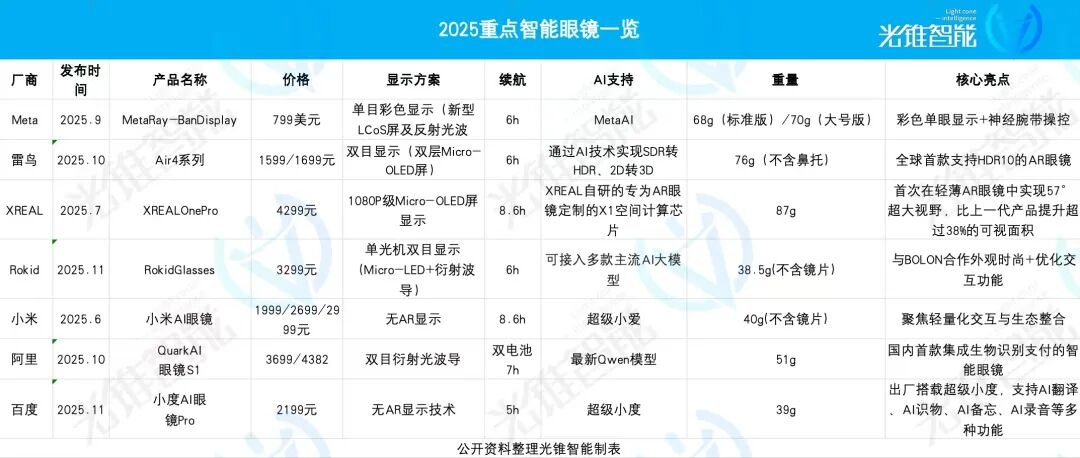
Core Insights - The smart glasses industry is experiencing a significant surge in demand, with Rokid founder Zhu Mingming acknowledging underestimating the market potential for 2025, as the company has already received 200,000 orders this year, far exceeding initial expectations of 100,000 to 150,000 units [1][5][10] - The global smart glasses market saw a shipment of 4.065 million units in the first half of 2025, representing a year-on-year growth of 64.2%, with major sales events like Tmall's Double 11 showing a staggering 25-fold increase in transaction volume [1][10][11] - Rokid's strategic shift towards consumer-grade products is evident, focusing on enhancing the functionality of Rokid Glasses, which has become the company's primary product amid fierce competition from tech giants like Xiaomi, Alibaba, and Baidu [4][6][8] Market Dynamics - The smart glasses market is becoming increasingly competitive, with dozens of new products launched this year, leading to a crowded landscape [2][4] - Major brands are releasing products with similar features, resulting in a high degree of homogeneity in the market, particularly in AI capabilities and basic functionalities [3][4][16] - Rokid's market share remains relatively low despite the overall industry growth, with the company facing challenges from emerging competitors and the prevalence of less sophisticated products dominating sales [10][13][16] Product Development and Strategy - Rokid has shifted its focus to consumer applications, moving away from a mixed B2B and B2C approach, and is now prioritizing features that cater to entertainment and daily use [6][8] - The company has launched Rokid Glasses with a strong emphasis on an open ecosystem, allowing developers to create diverse applications, which has attracted nearly 30,000 developers and 5,000 enterprises [9][8] - Despite the positive reception of Rokid Glasses, the company is currently facing production capacity constraints, leading to delays in fulfilling orders and a halt on new product launches for the remainder of the year [5][6] Future Outlook - Rokid aims to achieve ambitious sales targets of 1 million units in the next year and 2 to 3 million units in the following year, but these goals may be overly optimistic given current market conditions [10][11] - The company is at a critical juncture, needing to differentiate its products significantly to avoid further commoditization in a rapidly evolving market [18][20] - The overall smart glasses market is projected to grow substantially, with IDC forecasting shipments to exceed 40 million units by 2029, indicating a robust future for the industry despite Rokid's current challenges [10][11][15]