智能网联汽车标准

Search documents
四部门谈道路交通标准化
Xin Lang Cai Jing· 2026-02-04 17:29
Group 1 - The core viewpoint of the articles emphasizes the importance of road traffic standards in ensuring safety, efficiency, and convenience in transportation, as highlighted by various government departments [1][2][3] - The National Standards for road traffic in China have reached a total of 970, covering key areas such as automobiles, traffic infrastructure, and management, providing a solid foundation for safe and efficient road traffic development [1] - The Ministry of Industry and Information Technology has revised and published mandatory national standards for electric vehicles and battery safety, enhancing product safety measures [2] - The introduction of electronic driving licenses has been successful, with 360 million drivers having obtained them, catering to the demand for digital services in the information age [2] - The upcoming national standard for electronic driving licenses, set to be published in December 2025, will support the safe and convenient application of electronic documents in various scenarios [3] Group 2 - The Ministry of Transport is working on standardizing traffic signs and markings, optimizing their setup to improve road safety and efficiency for the public [3] - New standards for emergency facilities in tunnels and bridges have been established, including fire alarm and ventilation standards, to enhance safety measures [3] - The focus during the 14th Five-Year Plan period will be on rapidly updating key standards related to vehicle operation safety and smart transportation infrastructure [3]
盘前情报丨外交部:中美双方并没有就关税问题进行磋商或谈判;工信部发布2025年汽车标准化工作要点,强化智能网联汽车标准供给
2 1 Shi Ji Jing Ji Bao Dao· 2025-04-29 00:42
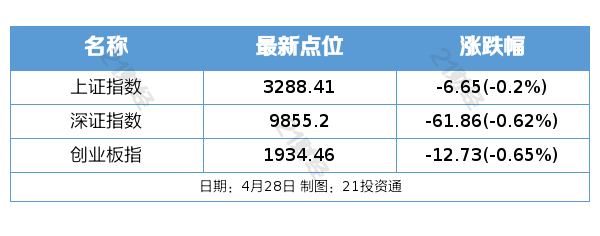
Market Overview - On April 28, A-shares saw a collective decline across the three major indices, with the Shanghai Composite Index down 0.2%, the Shenzhen Component Index down 0.62%, and the ChiNext Index down 0.65% [1][2] - The total market turnover was 1,076.7 billion, a decrease of 60.3 billion from the previous day, with over 4,100 stocks declining [1] - The banking sector showed volatility but ended up, while the real estate sector experienced significant declines [1] International Market - In the U.S. stock market on April 28, the Dow Jones Industrial Average rose by 114.09 points (0.28%) to close at 40,227.59 points, while the S&P 500 increased by 3.54 points (0.06%) to 5,528.75 points. The Nasdaq Composite fell by 16.81 points (0.10%) to 17,366.13 points [3][4] - European markets also saw gains, with the FTSE 100 up 0.02%, the CAC 40 up 0.50%, and the DAX up 0.13% [3][4] - International oil prices fell, with WTI crude oil down 1.54% to $62.05 per barrel and Brent crude down 1.51% to $65.86 per barrel [3][4] Policy and Regulation - The Ministry of Industry and Information Technology released key points for automotive standardization by 2025, focusing on enhancing standards for intelligent connected vehicles and promoting the safety of autonomous driving systems [5] - The National Medical Products Administration published the "Quality Management Specifications for Online Sales of Medical Devices," effective from October 1, 2025, which aims to enhance the responsibilities of online sales companies and e-commerce platforms [8] - The National Data Bureau emphasized the need to accelerate the implementation of public data development and utilization policies to unlock the value of public data and foster a data-driven economy [9] Investment Insights - Citic Securities noted a slight decrease in the proportion of bank stocks among actively managed fund heavyweights, suggesting a cautious outlook amid ongoing U.S.-China trade tensions [10] - Huatai Securities highlighted the ongoing support for innovative drug development policies, indicating a potential long-term growth phase for the domestic innovative drug sector [10] - The medical sector is expected to recover due to favorable policies and market demand, with a focus on innovative drugs and international strategies [10] Capital Flow - The chemical raw materials sector saw a net inflow of 132 million, while the steel industry experienced a slight gain of 0.15% [11] - The software development sector faced significant outflows, with a net outflow of 2.252 billion, indicating a challenging environment for this industry [11] - Notable individual stocks with significant net inflows included Dawi Technology and Jianghuai Automobile, while major outflows were observed in stocks like Tuowei Information and BYD [12]