暗夜星空保护

Search documents
【新华社】戈壁小镇的星空守望——青海冷湖新春走访见闻
Xin Hua She· 2026-02-24 02:27
Group 1 - The AIMS telescope is a significant national scientific research project aimed at precise measurement of solar magnetic fields, set to be operational by October 2025 [2] - The telescope operates during the day, tracking the sun and measuring its magnetic field through mid-infrared spectral analysis [2] - The AIMS telescope team is dedicated to collecting extensive observational data, which will be transmitted to servers in Beijing for analysis by scientists [4] Group 2 - The solar magnetic field is crucial for understanding phenomena such as sunspots and solar flares, which can impact spacecraft and communication systems [4] - Over 30 telescopes are currently engaged in observations or trial observations at the Cold Lake site, highlighting the growing importance of this location for astronomical research [4] - The implementation of the "Cold Lake Astronomical Observation Environment Protection Regulations" in 2023 marks a significant step in protecting the dark night sky, which is vital for astronomical observations [5] Group 3 - The local government is actively working on infrastructure improvements to support the increasing visitor flow and the development of astronomical observation and related industries [5] - Plans for the second phase of the Cold Lake astronomical observation research base are underway, which will include space for larger telescopes and support for commercial space industries [5]

从石油小镇到天文重镇——青海冷湖的转型故事
Xin Hua She· 2025-08-03 01:24
Core Viewpoint - The transformation of the Cold Lake area from an oil-rich region to a leading astronomical observation site highlights the potential of innovative resource utilization in response to resource depletion [1][2][3]. Group 1: Historical Context - Cold Lake, once the site of China's fourth-largest oil field, experienced a decline due to resource exhaustion, leading to a population decrease and infrastructure challenges [1][3]. - The region gained attention in the 1950s when significant oil production began, but by the 1990s, the oil workers had largely left as resources dwindled [2][3]. Group 2: Development of Astronomical Observations - The Cold Lake Astronomical Observation Base has become Asia's largest optical astronomy site, with the construction project initiated in July 2020 [1][2]. - The site was identified as having excellent observation conditions, with 70% of nights being clear, allowing for approximately 300 days of observation each year [3][4]. Group 3: Investment and Infrastructure - Since 2022, the Cold Lake World-Class Astronomical Observation Base has been included in Qinghai Province's top ten national science and technology innovation platforms, receiving annual funding of 10 million yuan [5]. - The region has attracted significant investment, with 30 billion yuan allocated for scientific equipment, and 12 organizations operating 45 telescopes at the site [6]. Group 4: Scientific Achievements - The "Mozi" telescope, operational since September 2023, has discovered over 4,200 supernovae and related transient sources, contributing to a significant database for astronomical research [6]. - Cold Lake has produced over 100 research papers and patents, with many findings at the international advanced level [6]. Group 5: Environmental Protection - The implementation of the "Cold Lake Astronomical Observation Environmental Protection Regulations" in 2023 aims to safeguard the dark night sky essential for astronomical observations [9]. - The regulations cover light source types and brightness, ensuring that outdoor lighting does not interfere with astronomical research [9][10]. Group 6: Future Prospects - The Cold Lake area is positioned to become a world-renowned astronomical site, fostering original scientific discoveries and enhancing humanity's understanding of the universe [10].
新华全媒头条|从石油小镇到天文重镇——青海冷湖的转型故事
Xin Hua She· 2025-08-02 10:57
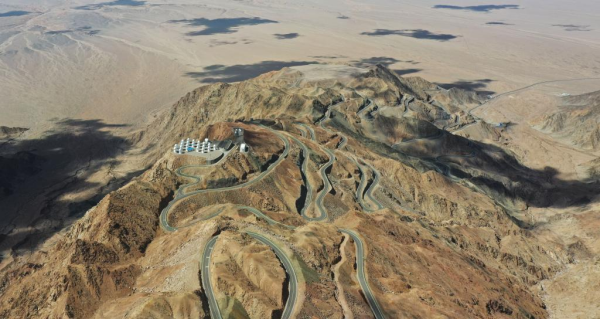
Core Perspective - The transformation of Qinghai's Cold Lake from a declining oil town to a prominent astronomical observation site highlights the potential of innovative resource utilization in driving regional development [1][2][3]. Group 1: Historical Context - Cold Lake was once home to China's fourth-largest oil field, with significant oil production starting in 1958, but faced decline due to resource depletion in the 1990s [1][2]. - The area saw a population decline and infrastructure challenges, prompting local leaders to seek new development avenues [2]. Group 2: Astronomical Development - The Cold Lake Astronomical Observation Base, initiated in 2020, is now recognized as Asia's largest optical astronomical observation site, providing a significant boost to China's optical astronomy research [1][3]. - The site boasts an impressive 70% clear night ratio, allowing for approximately 300 days of observation annually, making it an ideal location for astronomical studies [2][3]. Group 3: Infrastructure and Investment - The construction of access roads and the establishment of multiple telescope projects have been supported by significant government funding, with an annual budget of 10 million yuan allocated for the development of the Cold Lake World-Class Astronomical Observation Base [3][5]. - Investments in scientific equipment have reached 3 billion yuan, with 12 organizations operating 45 telescopes at the site [5]. Group 4: Research and Achievements - The "Mozi" telescope, operational since September 2023, has already discovered over 4,200 supernovae and is contributing to a comprehensive database for astronomical research [4][5]. - Cold Lake has produced over 100 research papers and patents, with many achieving international recognition [4][5]. Group 5: Environmental Protection - The implementation of the "Cold Lake Astronomical Observation Environment Protection Regulations" aims to safeguard the dark night sky essential for astronomical observations, addressing potential light pollution from tourism and development [6]. - A total area of 17,800 square kilometers has been designated as a dark sky protection zone to mitigate light pollution and ensure the sustainability of astronomical research [6].
呦呦鹿鸣 | “大地文心”征文展登
Zhong Guo Huan Jing Bao· 2025-05-15 04:19
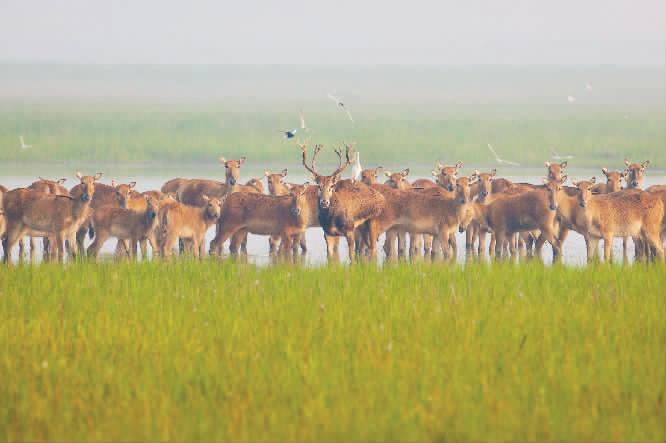
Core Viewpoint - Yeludang is not just a geographical name but a harmonious coexistence of humans and nature, representing an ideal ecological paradise [2][4]. Group 1: Location and Characteristics - Yeludang is located in Dafeng District, Yancheng City, Jiangsu Province, within the "China Yellow (Bo) Sea Migratory Bird Habitat (Phase I)" World Natural Heritage site, and is a coastal wetland [2]. - The area covers 200 hectares and is characterized by a flat coastal plain with interlaced ditches and abundant reeds, serving as a habitat for over 8,000 wild milu deer [2][9]. - The region has maintained its original features with minimal development, allowing for a natural environment where wild milu deer thrive [2]. Group 2: Historical Context - The land has undergone significant geological changes, with the coastline advancing due to sediment from the Yellow River, transforming from ocean to land over the past 200 years [4]. - Yeludang has experienced at least three cycles of land-sea transformation, reflecting the historical evolution of the area [4]. Group 3: Conservation Efforts - The creation of Yeludang involved six elderly individuals who self-funded the project, transforming barren land into a thriving ecosystem by clearing waterways and planting vegetation [9]. - Yeludang has become a major habitat for wild milu deer and a wintering ground for hundreds of thousands of migratory birds, including the red-crowned crane and black-faced spoonbill [9][12]. Group 4: Educational Initiatives - Since 2020, Yeludang has hosted a Nature Lecture Hall, offering over 400 educational sessions on various ecological topics to engage youth and promote environmental awareness [14]. - The initiative aims to inspire the younger generation to appreciate and protect their ecological heritage [15]. Group 5: Recognition and Future Goals - In August 2023, Yeludang was recognized as a national beautiful bay, highlighting its successful conservation efforts [9]. - Yeludang has been designated as a dark sky sanctuary, allowing for clear stargazing opportunities, with an average of 238 days per year suitable for observing the night sky [12][13].